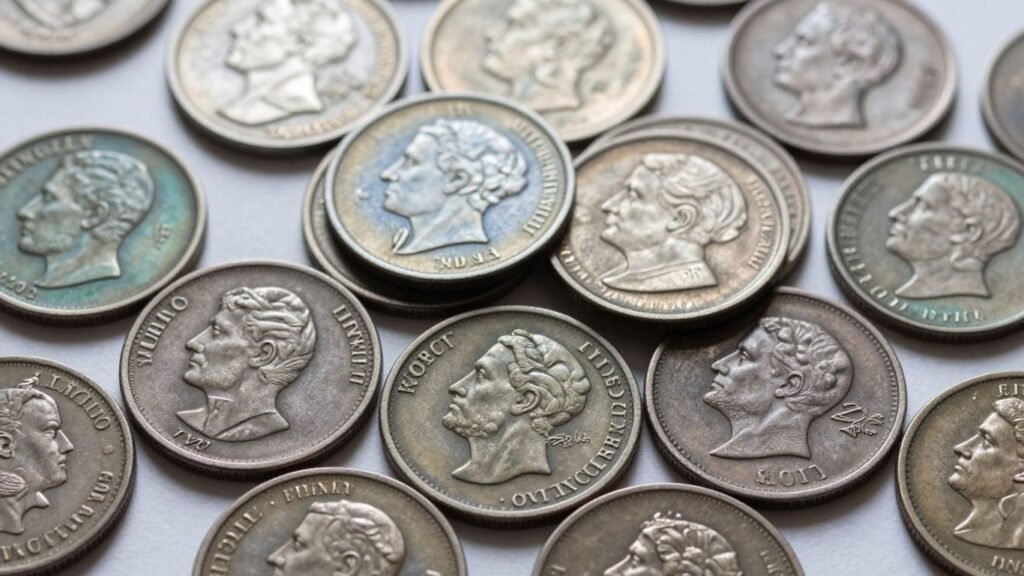
I’ve been collecting coins for a while now, and one of the things that always catches my eye is how some coins get these cool, colorful splotches. It’s called toning, and it happens when the metal reacts with stuff in the air over time. It can make a coin look really different, and sometimes it even changes how much it’s worth. Let’s break down coin toning patterns explained, so you can get a better handle on what’s going on with these colorful coins and what it means for collectors.
Key Takeaways
- Coin toning is the natural discoloration of a coin’s surface, usually silver, due to chemical reactions with its environment.
- The colors seen in coin toning range from subtle browns and blues to vibrant rainbows, each with different origins.
- Natural toning can sometimes increase a coin’s desirability and value to collectors, but artificial toning often decreases it.
- Proper storage is key to preserving a coin’s natural toning and preventing damage or artificial alterations.
- Understanding coin toning patterns explained helps collectors assess a coin’s authenticity, eye appeal, and potential market value.
Understanding Coin Toning Patterns Explained
The Science Behind Silver Coin Discoloration
Ever wonder why some silver coins develop those interesting colorful splotches or dark patches? It’s not magic, it’s chemistry! When silver sits around, especially in the air, it can react with sulfur compounds. Think of it like a slow-motion chemical reaction. These sulfur compounds form a thin layer on the coin’s surface, and this layer is what causes the color change. It’s often called "toning." The specific colors you see depend on the exact compounds involved and how long the coin has been exposed.
The longer a coin is exposed to these elements, the more pronounced the toning can become. This process is natural and, for many collectors, quite desirable. It’s a sign that the coin has a history and hasn’t been messed with.
Factors Influencing Toning Development
So, what makes one coin tone up beautifully while another stays bright and shiny? A few things play a role. The environment where the coin is stored is a big one. Coins kept in paper envelopes or cardboard holders might tone differently than those in sealed plastic flips. Humidity levels, the presence of certain chemicals in the air (like from wood or even certain glues), and even how the coin was handled can all influence the toning process. For instance, oils from your fingers can start a reaction. Even the metal composition of the coin itself can have a slight effect.
Here are some key factors:
- Environment: Air quality, humidity, and temperature.
- Storage Materials: What the coin is housed in (paper, plastic, inert materials).
- Handling: Contact with skin oils, perfumes, or cleaning agents.
- Time: The duration of exposure to environmental factors.
Distinguishing Natural Toning from Damage
This is where it gets a bit tricky, and it’s super important for collectors. Natural toning is generally seen as a positive attribute, adding character and often value. Damage, on the other hand, is almost always a negative. So, how do you tell the difference? Natural toning usually develops gradually and evenly, or in attractive patterns. You might see blues, greens, purples, or golds. Damage, however, often looks more aggressive. Think about:
- Artificial Coloration: Sometimes people try to "tone" coins artificially using chemicals to make them look old or valuable. This often results in harsh, unnatural colors or splotchy, uneven patches that look "painted on."
- Cleaning: If a coin looks unnaturally shiny or has a "scratched" appearance under magnification, it might have been cleaned. Cleaning removes the natural toning and can damage the coin’s surface, significantly lowering its value.
- Environmental Damage: This is different from natural toning. It can include things like corrosion, pitting, or heavy environmental crust that obscures details. It looks rough and detracts from the coin’s appearance.
It’s easy to get excited about a coin with vibrant colors, but always take a close look. Does the color look like it belongs there, or does it seem forced? A coin that has been cleaned or artificially toned will often feel "off" to an experienced eye, and its market value will reflect that. Authenticity is key in coin collecting.
The Spectrum of Coin Toning Colors
Subtle Hues and Their Origins
Coin toning isn’t always about dramatic colors. Sometimes, it’s a gentle shift, a soft blush across the surface that hints at the coin’s history. These subtle changes often come from exposure to sulfur compounds in the air, a natural process that can take years. Think of it like a fine wine aging in a cellar; the slow interaction with its environment creates a unique character. These lighter tones, often described as golden, tan, or light brown, can be quite appealing because they suggest the coin has been left undisturbed for a long time. They don’t scream ‘artificial’ and often indicate a coin that’s been stored carefully, away from harsh elements but still interacting with the ambient air.
Vibrant Rainbow Tones
Now, this is what many collectors dream of finding. Vibrant rainbow toning is when a coin displays a full spectrum of colors – reds, oranges, yellows, greens, blues, and purples – often in swirling patterns. This usually happens when a coin is exposed to a specific mix of gases and humidity over time, sometimes accelerated by proximity to certain materials or even slight temperature fluctuations. It’s a visual feast, and the more distinct and widespread the colors, the more desirable it can be. The intensity and pattern of these colors are key to their appeal.
Here’s a general idea of how different elements can contribute to rainbow toning:
| Element | Potential Color Contribution |
|---|---|
| Sulfur Compounds | Blues, Purples, Browns |
| Oxygen | Yellows, Oranges |
| Nitrogen | Reds, Pinks |
| Trace Elements | Greens, Golds |
Dark Tones and Their Implications
Dark toning, ranging from deep brown to black, is often the result of more aggressive chemical reactions. This can happen when a coin is exposed to higher concentrations of sulfur or other reactive elements for extended periods. While some collectors appreciate a deep, rich patina that speaks of age and stability, dark toning can sometimes be mistaken for damage or cleaning. It’s a fine line. If the dark color is uniform and appears natural, it might be accepted. However, if it looks patchy, uneven, or has a dull, lifeless appearance, it might suggest the coin was improperly stored or even artificially altered. It’s important to look closely at the surface beneath the dark color to assess its true condition and authenticity.
Impact of Toning on Coin Value
So, how does all this color stuff actually affect what a coin is worth? It’s not always a simple yes or no answer, and honestly, it can get pretty complicated. Sometimes, a coin that’s developed some nice, natural color can actually be worth more than a plain, shiny one. Other times, especially if the color looks artificial or just plain ugly, it can really hurt the value.
When Toning Enhances Collector Appeal
Naturally developed toning, particularly the vibrant, rainbow-like patterns on silver coins, can be a big draw for collectors. Think of it like a patina on an old piece of furniture – it shows age and character. These attractive colors often suggest the coin has been left undisturbed for a long time, hinting at its preservation. Collectors who appreciate these natural colors might pay a premium because they see it as a sign of authenticity and a unique aesthetic quality. It’s like finding a rare piece of art; the unique coloration makes it stand out.
- Eye Appeal: Striking, colorful toning can make a coin visually appealing, drawing in collectors who prioritize aesthetics.
- Perceived Authenticity: Natural toning often signals that a coin hasn’t been tampered with, increasing buyer confidence.
- Uniqueness: Each toned coin is different, offering collectors a one-of-a-kind piece.
Some collectors actively seek out toned coins, viewing the colors as a desirable characteristic that adds to the coin’s story and visual interest. This demand can drive prices higher than for otherwise identical, untoned examples.
Situations Where Toning Decreases Value
On the flip side, toning isn’t always a good thing. If the colors are dark, splotchy, or look like they were applied on purpose (artificial toning), collectors tend to shy away. Dark, heavy toning can sometimes be mistaken for damage or corrosion, which definitely lowers a coin’s worth. Also, if a coin has been artificially altered to look toned, it can be a major red flag. Many collectors and dealers will avoid these coins altogether, or offer significantly less for them, because they’re seen as deceptive.
- Artificial Toning: Intentional coloring, often done with chemicals, is usually seen as damage and drastically reduces value.
- Unattractive Colors: Dull, muddy, or overly dark toning can be off-putting to many buyers.
- Damage Resemblance: Toning that looks like corrosion or environmental damage will negatively impact a coin’s desirability.
The Role of Eye Appeal in Toned Coins
Ultimately, a lot of it comes down to what looks good to the person buying the coin. Even if toning is natural, if it doesn’t look appealing, it won’t add value. A coin with a dull, brown splotch might not fetch as much as a coin with a bright, full rainbow effect. It’s subjective, for sure, but there are general trends. Most collectors agree that vibrant, evenly distributed colors are more desirable than dark, uneven patches. The overall presentation matters a great deal.
Identifying Natural vs. Artificial Toning
Signs of Intentional Color Alteration
So, you’ve got a coin with some really cool colors on it. Awesome! But before you get too excited, it’s smart to figure out if those colors happened all on their own or if someone, well, helped them along. It’s not always obvious, and sometimes people try to make a coin look more appealing by messing with its natural toning. This can really mess with the coin’s value, and collectors usually aren’t fans of it.
Here are a few things to look out for:
- Uniformity of Color: Natural toning often shows up in splotches or gradients, kind of like a sunset. If the color is perfectly even across the entire coin, especially if it’s a bright, unnatural-looking hue, that’s a red flag. Think of it like spray paint versus a watercolor painting – one is applied evenly, the other blends.
- Unusual Color Palettes: While nature can be wild, some colors just don’t show up naturally on coins. If you see bright blues, purples, or greens that look almost artificial, or colors that don’t match known toning patterns for that specific metal and environment, be suspicious.
- Surface Texture Changes: Sometimes, artificial toning can alter the coin’s surface. Look for areas that seem too smooth, too rough, or have a strange sheen that doesn’t look like natural mint luster. It might feel a bit ‘off’ to the touch, though you should avoid actually touching it if you can.
- Edge Anomalies: Check the coin’s edge. Sometimes, artificial toning is applied unevenly, and you might see drips, brush strokes, or a different color on the edge compared to the faces of the coin.
Assessing Authenticity of Toning
Figuring out if a coin’s toning is the real deal takes a bit of detective work. It’s not just about the colors themselves, but how they’ve developed. Genuine toning is a slow process, a result of the coin interacting with its environment over time. Think of it like aging – it happens gradually and leaves its own unique marks.
Here’s how to get a better sense of authenticity:
- Compare to Known Examples: Look at other coins of the same type and date that are known to be naturally toned. See how their colors and patterns compare. Reputable coin dealers and online resources can be super helpful here.
- Consider the Coin’s History (if known): If you know where the coin came from – its previous owner, how it was stored – that can give you clues. A coin that’s been in a collection for decades is more likely to have natural toning than one that just appeared on the market.
- Look for "Target" Toning: Sometimes, artificial toning is applied to hide problems like scratches or cleaning. If the toning seems to be concentrated in a way that covers up flaws, it’s probably not natural.
- The "Smell Test" (Use with Caution): While not a definitive method, some artificial toning chemicals can leave a faint, unusual odor. This is really a last resort and requires a sensitive nose, and you should never intentionally try to smell a coin if it means handling it improperly.
When you’re looking at a toned coin, try to imagine its journey. Did it sit in a dark, humid place for years, slowly developing those subtle blues and golds? Or does it look like it was dipped in something colorful yesterday? The story the coin tells through its appearance is often the best indicator of its authenticity.
The Market's Perception of Artificial Tones
Okay, so what does the coin collecting world think about artificial toning? Generally speaking, it’s not a good thing. Most collectors and dealers prefer coins that have toned naturally. Why? Because natural toning is seen as a sign of a coin’s history and its journey through time. It’s like a fingerprint, unique to that specific coin and its environment.
- Value Reduction: Artificial toning almost always lowers a coin’s value compared to a similar coin with natural toning or no toning at all. It’s seen as an alteration, and collectors want original, unaltered pieces.
- Market Acceptance: Many professional grading services will note artificial toning on their labels, and some might even refuse to grade a coin if the toning is too extreme or obviously artificial. This can make it really hard to sell.
- Trust Factor: When a coin’s toning is questionable, it erodes trust. Buyers become wary, and it can be tough to find someone willing to pay a fair price for a coin that might have been tampered with.
So, while someone might try to make a coin look more exciting with artificial colors, it usually backfires in the long run. It’s best to appreciate the natural beauty that time and environment bestow upon a coin.
Preserving and Storing Toned Coins
Keeping your toned coins looking their best is pretty important if you want to maintain their appeal and value. It’s not just about tossing them in a drawer and forgetting about them, you know? A little care goes a long way.
Optimal Storage Environments
First off, where you keep your coins matters a lot. Think cool, dry, and stable. Fluctuations in temperature and humidity are the enemy of toned coins. They can speed up unwanted chemical reactions or even cause damage. I’ve found that a good quality safe, either at home or a bank safe deposit box, works well. It’s also a good idea to throw in some silica gel packets to absorb any extra moisture. These little packets are cheap and can make a big difference.
Handling Techniques to Prevent Damage
When you do need to handle your coins, always use gloves. Cotton gloves are best. Your fingers have oils and dirt on them, and even a quick touch can leave a mark or start a reaction on the coin’s surface. Seriously, I learned this the hard way with a silver dollar that got weird spots from my fingerprints. Always hold coins by their edges. Never touch the main surfaces, the part with the design. It sounds simple, but it’s a habit that protects your collection.
The Risks of Improper Storage Materials
Not all coin holders are created equal. Some plastics, especially older ones or those made with PVC (polyvinyl chloride), can break down over time and release chemicals. These chemicals can actually eat away at the coin’s surface, causing damage that’s hard, if not impossible, to fix. Always look for holders made from archival-quality materials like Mylar or polyethylene. These are inert and won’t harm your coins.
Storing coins in airtight containers away from light and humidity is key. This prevents unwanted chemical reactions and environmental damage that can dull or alter the natural toning.
Here are some common storage options and what to watch out for:
- Archival Albums: Great for organizing, but make sure the pages and pockets are PVC-free.
- 2×2 Cardboard Holders: A popular choice, but inspect them for any signs of discoloration or damage before use.
- Plastic Flips: Look for Mylar or polyethylene. Avoid anything that feels sticky or smells chemically.
- Coin Slabs: These are the hard plastic cases used by grading services. They offer excellent protection but are usually for higher-value coins.
Toning Patterns and Collector Demand
Historical Significance of Toned Coins
Coins aren’t just metal discs; they’re little time capsules. When a coin develops a patina, it’s often a sign of its journey through time and environment. Think about it – a coin that’s sat in a collection for decades, or even centuries, has a story. This history is what draws many collectors in. They aren’t just buying a piece of silver or gold; they’re buying a tangible link to the past. Some of the most sought-after coins are those that show clear signs of age, like a deep, even toning that suggests it’s been undisturbed for a long time. It’s like finding an old letter with faded ink – there’s a certain romance to it.
Market Trends Favoring Certain Tones
It’s funny how tastes change, even in coin collecting. Right now, there’s a definite buzz around coins with vibrant, natural toning. We’re talking about those beautiful rainbow effects that shimmer across the surface. These aren’t just random splotches; they’re the result of specific chemical reactions, often from exposure to sulfur compounds in the air or certain packaging materials. Collectors seem to really appreciate the artistry that nature has created. On the flip side, very dark, almost black toning can sometimes be seen as damage or tarnish, which can turn some buyers off. It really depends on the coin and the specific look.
Here’s a quick look at what’s generally popular:
- Rainbow Toning: Often commands a premium due to its visual appeal.
- Golden/Brown Tones: Can suggest age and stability, appealing to those who like a classic look.
- Blue/Green Patina: Especially on older copper or silver coins, these can be quite attractive.
- Dark/Black Toning: Can be polarizing; some see it as damage, others as a sign of significant age.
The Uniqueness Factor in Coin Collecting
What makes one coin more desirable than another, especially when they’re the same type and grade? Often, it’s that ‘wow’ factor, and toning plays a big part. No two toned coins are exactly alike. Each one has its own unique pattern, its own blend of colors. This individuality is a huge draw for collectors who want something special for their display. It’s like collecting art; you want pieces that stand out. A coin with a rare or particularly striking toning pattern can easily fetch a higher price than a similar coin with dull or unattractive coloration. This inherent uniqueness is a major driver of collector demand.
When you’re looking at toned coins, remember that what one person finds beautiful, another might not. It’s a subjective thing, but there are general trends. The key is to look for toning that is attractive, evenly distributed if possible, and doesn’t look like it was artificially applied. Natural toning, especially when it’s colorful and bright, is usually what gets the most attention and the highest prices.
Grading Toned Coins
How Toning Affects the Sheldon Scale
The Sheldon scale, that trusty number system from 1 to 70, is the main way we talk about a coin’s condition. It’s pretty straightforward for most coins – wear and tear, how sharp the details are, and that shiny mint luster all play a part. But toning? That’s where things get a little more complicated. Naturally developed toning, especially if it’s attractive and even, can sometimes be seen as a positive attribute, almost like a bonus feature. It doesn’t necessarily change the coin’s grade based on wear, but it can definitely influence how a grader perceives its overall appeal and, by extension, its value within that grade. Think of it this way: a coin might be a solid MS-65 based on wear and strike, but if it has beautiful, vibrant toning, it might be considered a high-end MS-65, or even approach MS-66 in the eyes of some collectors. On the flip side, dark, unsightly toning, or toning that looks artificial, can be a real downer. It can obscure details, look like damage, or just be plain ugly, which can lead to a lower grade or a significant price reduction, even if the coin itself is technically sound.
The Importance of Luster and Surface
When we talk about grading, luster and surface condition are huge. Luster is that original shine from the mint, how light dances across the coin. A coin with great luster usually looks more appealing. Surface condition means looking for all those little marks, scratches, or spots. Toning can sometimes hide minor surface issues, which might seem like a good thing, but graders are trained to look closely. If the toning is so heavy that it obscures details or looks like it’s eating away at the metal (like some green corrosion), that’s a problem. It can make a coin look less
Common Coin Toning Patterns Explained
Sulfur Compounds and Darkening
Ever notice how some silver coins get this dark, almost smoky look over time? That’s often thanks to sulfur compounds. These little guys are floating around in the air, and when they come into contact with the silver on your coin, they can react. Think of it like a slow-motion chemical reaction. This process, called tarnishing or toning, creates a layer of silver sulfide on the surface. It’s not really damage, more like a natural aging process for silver. The darker the tone, the more sulfur has likely bonded with the metal. It can make a coin look dull, but for some collectors, this deep, even toning is actually pretty desirable.
Environmental Exposure Effects
Where a coin hangs out really matters when it comes to its color. If a coin has been stored in a place with lots of humidity, or maybe near certain chemicals, it can speed up the toning process. Even just being in a paper envelope for a long time can leave its mark. Different environments will create different looks. For example, a coin kept in a volcanic region might develop different colors than one stored near the sea. It’s all about what’s in the air and how stable the conditions are. The environment is a huge factor in how a coin develops its unique patina.
Chemical Reactions and Color Shifts
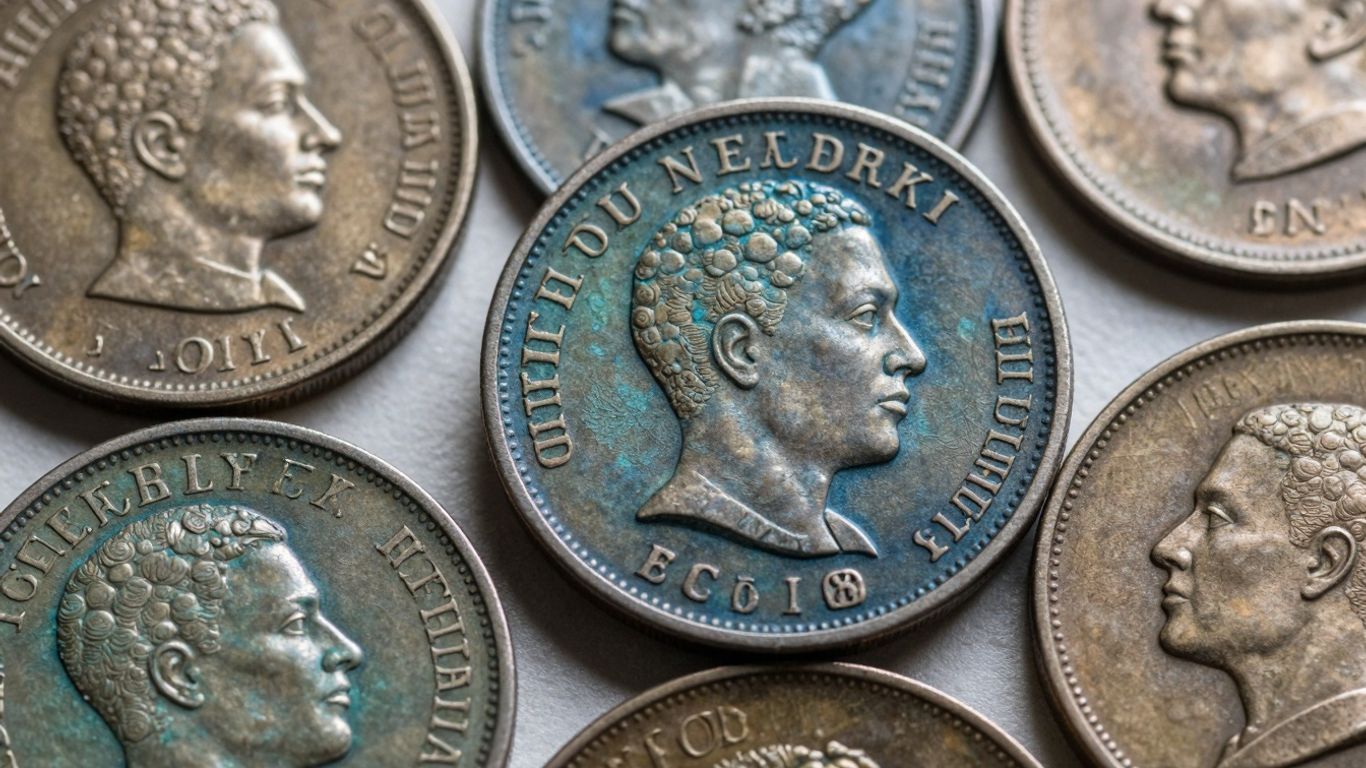
Beyond just sulfur, other chemical reactions can happen too. These can lead to a whole rainbow of colors, not just dark shades. Sometimes you’ll see blues, greens, purples, and even oranges. These colors often come from different types of compounds forming on the coin’s surface, like copper oxides or other trace elements reacting with the silver. The specific colors you see can give clues about the coin’s history and how it was stored. It’s like a fingerprint left by time and chemistry. These vibrant colors are often what collectors are really hunting for, as they can make a coin stand out dramatically.
Here’s a quick look at some common color associations:
| Color | Likely Cause |
|---|---|
| Light Blue | Thin sulfide layer |
| Yellow/Gold | Early-stage oxidation |
| Orange/Pink | More advanced oxidation, often with copper |
| Purple/Violet | Complex sulfur compounds, often attractive |
| Dark Brown/Black | Heavy sulfide formation, significant tarnishing |
The way a coin changes color isn’t random. It’s a direct result of its journey through time and exposure to its surroundings. Understanding these patterns helps collectors appreciate the coin’s history and potential value.
The Advantages of Naturally Toned Coins
Perceived Preservation and Authenticity
Sometimes, collectors actually look for coins that have developed natural toning. It can give the impression that the coin has been well-preserved over time, almost like a time capsule. This visual cue can reduce doubts about whether the coin is genuine. It’s like finding an old book with its original cover intact – it just feels more authentic, doesn’t it?
The Appeal of Unique Coloration
No two coins are exactly alike, especially when they’ve developed their own unique toning patterns. This individuality is a big draw for many collectors. While some might prefer a bright, shiny coin, others are drawn to the subtle blues, greens, oranges, and purples that can appear. It’s this one-of-a-kind look that makes a coin stand out in a collection.
Boosting Authentic Coin Value Over Time
When toning happens naturally and is visually appealing, it can actually increase a coin’s desirability and, consequently, its market value. This isn’t always the case, of course, but attractive, even toning can make a coin more sought after. It’s a bit like a patina on bronze sculpture; it adds character and history. The key is that the toning looks natural and complements the coin’s design, rather than obscuring it.
Here’s a quick look at what makes natural toning appealing:
- Origin Story: Natural toning suggests the coin has a history, having aged gracefully in its environment.
- Visual Interest: Unique color patterns can be more captivating than a plain, un-toned surface.
- Authenticity Indicator: It can serve as a sign that the coin hasn’t been tampered with or artificially altered.
It’s important to remember that not all toning is created equal. While natural toning can be a significant plus, artificial toning or damage can seriously hurt a coin’s value. The difference often comes down to how the colors developed and how they look to the eye. Collectors tend to favor toning that appears gradually and evenly, rather than harsh, splotchy discoloration.
The market generally rewards coins that show signs of natural aging, provided that aging is aesthetically pleasing and doesn’t indicate damage.
Navigating the Market for Toned Coins
Consulting Precious Metals Professionals
When you’re looking to buy or sell coins with interesting toning, talking to folks who really know their stuff is a smart move. These are the people who deal with precious metals all day, every day. They can tell you if a coin’s colors are natural or if someone messed with it. Plus, they often have a good stock of coins themselves, so you might find exactly what you’re after right there. It’s like having a guide when you’re exploring a new city – they know the shortcuts and the places to avoid.
Understanding Market Denials for Altered Coins
This is a big one. If a coin’s color looks off, like it’s been painted or treated to look a certain way, the serious collectors and dealers might just pass on it. It’s not just about the pretty colors; it’s about authenticity. A coin that’s been artificially toned can be a real headache. Some places won’t even touch them, and if they do, the price can drop significantly. It’s a bit like buying a used car that’s had its paint job redone to hide rust – you’re always going to wonder what’s underneath.
- Artificial toning often involves chemicals or treatments that aren’t part of the coin’s natural history.
- Reputable dealers and grading services can usually spot these alterations.
- Coins with artificial toning may be worth much less than similar naturally toned coins.
Making Informed Purchasing Decisions
So, how do you make sure you’re getting a good deal and a coin you’ll be happy with? It comes down to doing your homework and trusting your gut, but also trusting the experts. Think about what you like – do you prefer the subtle, earthy tones or the flashy rainbow effects? And always remember that a coin’s story, its journey through time, is part of its appeal. The market generally favors coins that have developed their toning naturally over many years.
Here are a few things to keep in mind:
- Check the coin’s background: Where did it come from? Was it stored in an old album, a wooden box, or somewhere else that might have contributed to its look?
- Look for consistency: Does the toning cover the coin evenly, or are there weird splotches or lines that look out of place?
- Compare prices: See what similar coins are selling for. If a deal seems too good to be true, it probably is.
Sometimes, a coin might have a dark appearance, but collectors see it as a sign of good preservation. This can make them feel more confident about the coin’s authenticity. While every coin is unique, especially those with color changes, this uniqueness can be a real plus. If you’re hoping your coins develop more toning, storing them near a heat source or a window might help the silver change color over time without causing damage, potentially boosting its genuine value.
| Factor | Impact on Value |
|---|---|
| Natural Toning | Often increases value due to eye appeal and rarity. |
| Artificial Toning | Typically decreases value; may be refused by market. |
| Even Color Distribution | Generally more desirable than splotchy toning. |
| Vibrant Colors | Can command a premium if attractive and natural. |
Wrapping It Up
So, we’ve looked at how silver coins can change color, what causes it, and how it might affect their worth. Sometimes, these color changes, called toning, can actually make a coin more interesting to collectors, especially if it happened naturally over time. Other times, people might see it as damage. It really depends on the coin and who’s looking at it. If you’re collecting, it’s good to know that how you store your coins matters, and touching them with bare hands can cause unwanted changes. And remember, if a coin looks like it’s been colored on purpose, that’s usually a different story and can affect its market. Keep learning about your coins, and you’ll get a better feel for what makes them special.
Frequently Asked Questions
What causes silver coins to change color over time?
Silver coins change color, a process called toning, mainly due to chemical reactions with things in the air, like sulfur compounds. Storing coins in damp or polluted environments can speed this up. Even touching coins with bare hands can transfer oils and chemicals that cause them to darken.
Can coin toning affect a coin's value?
Yes, toning can definitely impact a coin’s value, but it’s not always a good or bad thing. Some collectors love naturally developed, colorful toning because it shows the coin has been preserved well and is likely real. However, very dark or uneven toning might look like damage to some, which can lower the price.
What's the difference between natural toning and artificial toning?
Natural toning happens slowly over many years due to environmental exposure. Artificial toning is when someone intentionally tries to change a coin’s color, often using chemicals or heat. Collectors usually prefer natural toning because artificial changes can make a coin less desirable or even unauthentic.
How should I store my toned coins to keep them safe?
To protect your toned coins, store them in a cool, dry place. Using airtight containers or special coin holders made of inert materials is best. This helps prevent exposure to damaging elements like moisture, air pollution, and sunlight, which can cause further unwanted toning or damage.
Are rainbow-colored coins more valuable?
Often, yes! Coins with vibrant, rainbow-like toning patterns are highly sought after by collectors. These colors are rare and beautiful, making the coin stand out. The appeal of these unique colors can significantly increase a coin’s desirability and market value.
What are 'dark tones' on a coin, and do they hurt its value?
Dark tones, often appearing as brown, black, or gray, can result from prolonged exposure to sulfur or other environmental factors. While some collectors appreciate the deep, historical look, very dark or uneven toning can sometimes be mistaken for damage or corrosion, potentially reducing a coin’s appeal and value to certain buyers.
What makes a coin's toning 'natural' and desirable?
Natural toning is desirable when it’s attractive and appears to be a result of slow, environmental aging rather than deliberate alteration. Factors like even color distribution, vibrant hues (like blues, greens, and golds), and the overall ‘eye appeal’ contribute to its desirability. It suggests the coin has been undisturbed for a long time.
Can I clean a toned coin to make it look better?
It’s generally a bad idea to clean a toned coin. Cleaning almost always removes the natural toning and can create tiny scratches or dull the coin’s surface, which significantly lowers its value and damages its historical integrity. Most collectors prefer coins with their original toning, even if it’s not perfect.