Thinking about buying gold coins? That’s smart. Gold has value, and you want to make sure you’re getting the real deal. There are a bunch of ways to check if a gold coin is legit, from simple stuff you can do at home to more advanced methods. This guide breaks down different gold coin testing methods so you can feel more confident about your purchase. We’ll go through visual checks, magnet tests, acid kits, and even talk about what pros use. Knowing these methods can help you avoid getting ripped off and protect your money.
Key Takeaways
- Using a combination of different gold coin testing methods is the best way to be sure you have real gold and to avoid losing money on fakes.
- Visual checks, like looking closely at details and hallmarks with magnification, are a good first step, but they can be fooled.
- Simple tests like using a magnet can quickly rule out many fakes, but not being magnetic doesn’t guarantee it’s real gold.
- More involved methods like acid testing or density measurements can give you a better idea of purity, but they require care and precision.
- For the highest certainty, especially with valuable coins, professional testing like XRF analysis is recommended, and many reputable dealers offer this service.
Understanding Gold Coin Testing Methods
So, you’re looking to buy gold coins, huh? That’s smart. Gold’s always been a solid investment, but let’s be real, the market can be a bit of a minefield. You’ve probably heard stories about people getting stuck with fakes, and nobody wants that. That’s where knowing how to test your gold comes in. It’s not just about looking at a coin and saying, ‘Yep, looks gold.’ There’s a whole process to it, and honestly, it’s pretty interesting once you get into it.
The Importance of Verifying Gold Authenticity
Why bother with all the testing? Well, think about it. Gold coins can be expensive. You’re putting down real money, and you want to make sure you’re getting the real deal. Fake gold coins can look incredibly convincing these days, sometimes even fooling experienced buyers. They might be made of cheaper metals plated to look like gold, or they could be alloys that just don’t hold their value. Getting caught with a fake means you’ve lost your investment, plain and simple. It’s about protecting your hard-earned cash.
Why Multiple Gold Coin Testing Methods Are Crucial
Now, you might be thinking, ‘Can’t I just do one test and be done with it?’ Not really. Relying on a single method is like playing a lottery – you might get lucky, but you might also end up with a dud. Different tests check for different things. A magnet test, for example, is great for spotting common fakes made of iron or steel, but it won’t catch a coin made of a different, non-magnetic metal that’s just been plated. You need a few different approaches to really be sure. It’s like having multiple locks on your door; the more you have, the safer you are. Using a combination of tests helps cover the weaknesses of each individual method, giving you a much clearer picture of the coin’s authenticity. For instance, you can start with simple visual checks and then move on to more involved tests like density measurements.
Protecting Your Investment Through Diligent Testing
Ultimately, all this testing is about one thing: safeguarding your investment. Gold prices can fluctuate, but a genuine gold coin will always hold intrinsic value. When you take the time to verify authenticity, you’re not just buying a coin; you’re buying peace of mind. It means you can sleep soundly knowing that what you own is real and will likely retain its worth over time. It’s a small effort that can prevent a huge financial headache down the road. Remember, if a deal seems too good to be true, it probably is. A little bit of diligence goes a long way in the world of precious metals.
Visual Inspection And Basic Checks
Leveraging Magnification For Detailed Examination
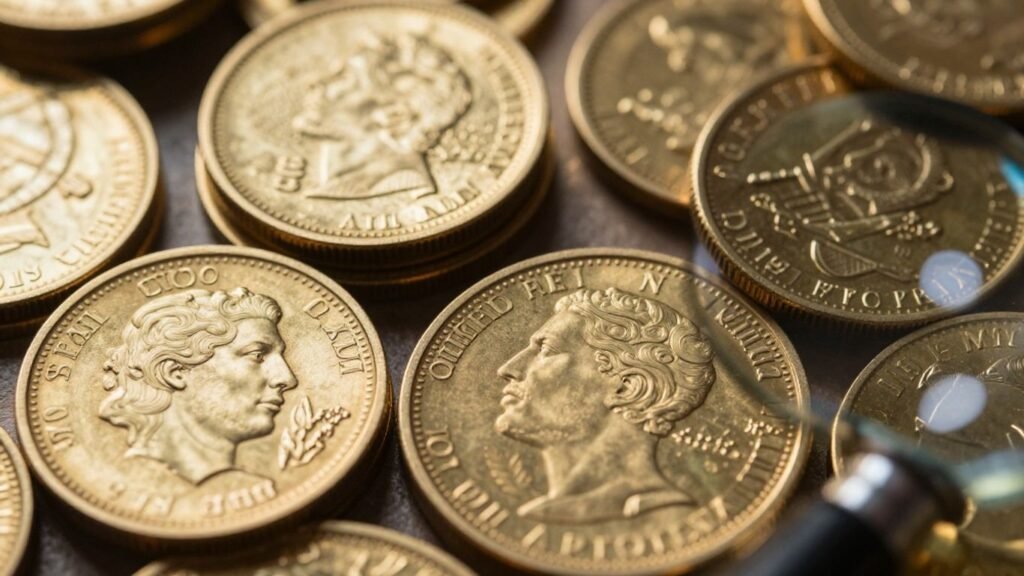
Before you even think about fancy gadgets, grab a jeweler’s loupe. Seriously, this little tool is your first line of defense. You can’t see the tiny details with the naked eye, and that’s where fakes often give themselves away. A good loupe lets you really zoom in on the coin’s surface, looking for any inconsistencies in the strike, wear patterns that don’t look right, or even microscopic imperfections that a real mint wouldn’t let slide. It’s like having super-vision for your gold coins.
Understanding Hallmarks And Their Significance
Many gold coins, especially modern ones or those from specific mints, will have hallmarks. These are official stamps that indicate the metal’s purity and origin. Think of them as a certificate of authenticity stamped right onto the coin. You’ll want to familiarize yourself with what legitimate hallmarks look like for the coins you’re interested in. Sometimes, counterfeiters will try to fake these marks, but often they’re not quite right – maybe the font is off, or the spacing is weird. Checking a hallmark chart can be super helpful here.
Recognizing Common Visual Deception Tactics
Counterfeiters get pretty creative, but there are some common tricks they use. One is plating – making a cheaper metal look like gold. Visually, this might mean the color is slightly off, or the plating might be wearing thin in spots, revealing a different metal underneath. Another tactic is using slightly different dimensions or weights than the genuine article. While this bleeds into other testing methods, a quick visual check can sometimes reveal a coin that just feels ‘off’ in your hand. A coin that looks too perfect, or conversely, looks suspiciously worn for its supposed age, should raise a red flag.
Here are some things to look out for:
- Color: Does the gold color look natural, or is it too brassy, too yellow, or too dull?
- Surface: Are there any unusual casting marks, seams, or pitting that shouldn’t be there?
- Edge: Check the reeding or smooth edge. Is it consistent and well-defined?
- Details: Examine the design elements. Are they sharp and clear, or are they soft and mushy?
Sometimes, the simplest checks are the most effective. Don’t underestimate the power of just looking closely. A genuine coin usually has a certain ‘feel’ and appearance that’s hard to replicate perfectly. If something feels off, it probably is.
Remember, visual inspection is just the first step. It’s great for catching obvious fakes, but for more sophisticated counterfeits, you’ll need to move on to other testing methods.
Magnetic Testing For Gold Coins
How Magnetism Affects Gold Coin Verification
So, you’ve got a gold coin and you want to make sure it’s the real deal. One of the first, simplest checks you can do involves a magnet. It’s pretty straightforward: genuine gold, silver, and platinum aren’t magnetic. If your coin sticks to a magnet, it’s almost certainly not pure gold. This test is great for quickly weeding out coins made with iron or nickel, which are common additions to fakes because they’re cheaper. Think of it as a first line of defense. It won’t tell you if a coin is 100% pure gold, but it can definitely tell you if it’s something else entirely.
Identifying Non-Magnetic Metals Used In Fakes
While gold itself doesn’t react to magnets, some common metals used to make fake coins do. This is where the magnet test really shines. You’re not just looking for gold’s lack of magnetism; you’re looking for the presence of magnetic metals that shouldn’t be there. Many base metals, like iron and some types of steel, are strongly magnetic. If a coin feels a bit too light for its size, or if it has a seam or plating that looks off, a magnet can quickly reveal if it’s made of a magnetic core. However, it’s important to remember that not all fake metals are magnetic. Copper, for instance, is often used in gold plating and is not magnetic. So, while a magnet can catch some fakes, it’s not foolproof.
Limitations Of Magnetic Testing In Gold Coin Authentication
Here’s the thing: a magnet is a good starting point, but it’s not the whole story. Just because a coin doesn’t stick to a magnet doesn’t automatically mean it’s pure gold. Many other metals are also non-magnetic. Think about copper, aluminum, lead, and even some alloys of nickel. These can be used to create counterfeit coins that will pass the magnet test with flying colors. Some sophisticated fakes might even have a thin layer of real gold over a non-magnetic but cheaper metal core. So, while the magnet test is useful for ruling out obvious fakes, you absolutely need to use it in conjunction with other testing methods to get a reliable confirmation of authenticity. It’s just one piece of the puzzle when you’re trying to verify precious metals.
Here’s a quick rundown of what the magnet test can and can’t do:
- Can Do: Quickly identify coins made with magnetic metals like iron or steel.
- Can Do: Rule out many common, cheaper base metals used in counterfeits.
- Cannot Do: Confirm that a coin is pure gold (many non-magnetic metals exist).
- Cannot Do: Detect fakes made with non-magnetic base metals or layered plating.
Relying solely on a magnet test is like checking if a car has an engine without looking at the wheels. It tells you something, but it misses a lot of other important details. For serious collectors or investors, combining this simple check with more advanced methods is the only way to be truly confident in your purchase.
Utilizing Acid Testing Kits
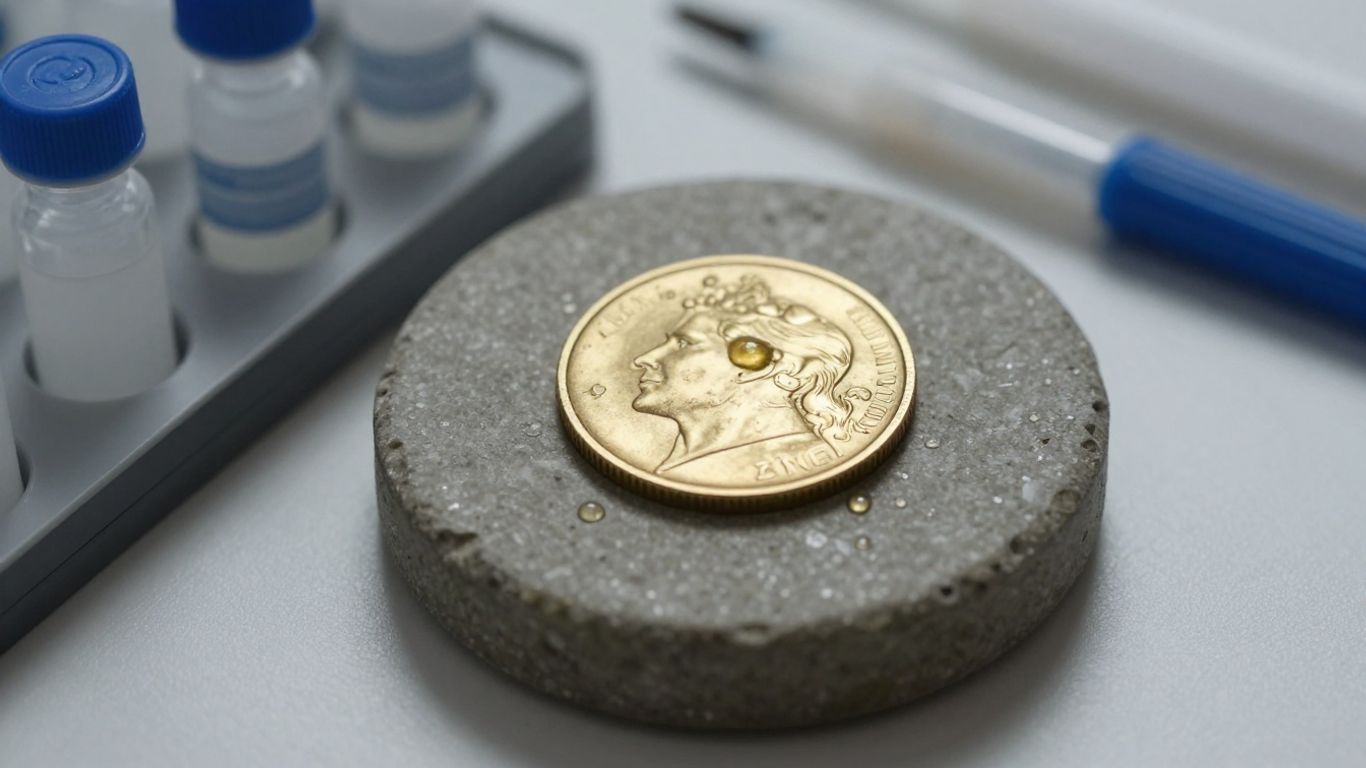
When you’re looking to get a handle on the actual gold content of a coin, acid testing kits are a pretty common tool. They’ve been around for ages and are often seen as a good middle ground between just looking at something and sending it off to a lab. Think of them as a more serious version of a home test, giving you a better idea of purity without breaking the bank.
The Process Of Acid Testing Gold Coins
Using an acid test kit involves a few steps, and it’s important to follow them carefully. First off, you’ll need to prepare a small spot on the coin. This usually means using a fine file, often included in the kit, to gently scratch away a tiny bit of the surface. You want to do this in an inconspicuous area, like the edge or the back, just to make sure you’re not testing a thin layer of plating that might be on top of a different metal. Once you’ve got that little exposed spot, you apply a drop of the correct acid from your kit.
Here’s a general rundown of what happens:
- Prepare the Surface: Gently file a small, hidden area of the coin to expose the underlying metal. This is key to getting an accurate reading.
- Apply the Acid: Place a single drop of the appropriate testing acid onto the filed spot. Different acids are used for different karat levels.
- Observe the Reaction: Watch closely for any color change or reaction. The way the acid interacts with the metal tells you about its purity.
Some kits also come with a touchstone. Instead of filing the coin directly, you rub the coin on the stone to leave a small mark. Then, you apply the acid to the mark on the stone. This method is a bit less invasive to the coin itself.
Interpreting Acid Test Results For Karat Purity
Figuring out what the acid test means is where the real interpretation comes in. Each acid in the kit is designed to react differently with specific gold purities, usually measured in karats (ct). For example, a 10K acid will react if the metal is less than 10 karats, but it won’t affect metal that is 10K or higher. A stronger acid is needed for higher karats like 18K or 22K.
Here’s a simplified look at how it works:
- Lower Karat Acids (e.g., 10K, 14K): These will show a reaction (often a color change or fizzing) if the metal is below that karat level. If there’s no reaction, the metal is at least that karat.
- Higher Karat Acids (e.g., 18K, 22K): These are used to confirm higher gold content. A lack of reaction indicates the metal is likely of that higher purity.
- No Reaction: If the acid doesn’t change color or bubble on the filed spot, it generally means the metal is pure gold of the karat the acid is designed to test for, or higher.
The color change is your primary indicator of the gold’s purity. A greenish or reddish color often suggests lower purity or base metals, while a lack of significant change points towards higher gold content.
It’s important to remember that acid testing isn’t always perfect. Plating can sometimes fool the test if not filed properly, and very thin coins might be tricky. Also, getting the exact karat can take some practice, as results are often within a few percent rather than exact.
Safety Precautions When Using Acid Testing Kits
Working with acids, even in small quantities, means you need to be careful. These aren’t your average household cleaners; they can cause burns and damage materials. Always use the kit in a well-ventilated area, away from children and pets. Wearing protective gloves is a must, and if your kit comes in glass bottles, eye protection like goggles is a really good idea to prevent splashes.
- Ventilation: Always test in a space with good airflow.
- Protection: Wear acid-resistant gloves and eye protection (especially with glass bottles).
- Disposal: Follow the kit’s instructions for safely neutralizing and disposing of used acid.
Density And Specific Gravity Measurements
Calculating Gold Coin Density Accurately
Ever picked up a gold coin and just felt its heft? That’s density at play. It’s basically how much ‘stuff’ is packed into a certain amount of space. For gold coins, this is a really useful way to check if it’s the real deal. Fakes often use cheaper metals that are lighter or heavier than gold, so getting the density right can tell you a lot.
To figure out a coin’s density, you need two things: its weight and its volume. Weighing is easy enough with a good scale. Getting the volume is a bit trickier. The standard way involves using water. You weigh the coin normally, then you weigh it again while it’s submerged in water. The difference in weight, combined with the density of water, lets you calculate the coin’s volume. It sounds complicated, but there are calculators and even special scales that make it simpler.
Comparing Measured Density To Known Standards
Once you have your density number, you compare it to what a genuine coin of that type should be. Every type of gold coin, depending on its purity (like 22-karat or 24-karat) and its exact size and shape, has a known, specific density. If your measurement is way off, it’s a big red flag.
Here’s a simplified look at how it works:
- Step 1: Weigh the coin in air (let’s call this W1).
- Step 2: Weigh the coin submerged in water (let’s call this W2).
- Step 3: Calculate the volume of water displaced. This is usually W1 – W2. (You need to account for the density of water, which is about 1 gram per cubic centimeter).
- Step 4: Density = Weight in air / Volume of displaced water.
It’s important to be precise here. Even small errors in weighing or submerging the coin can throw off the results. You’re looking for a match to the established density for that specific coin.
The Role Of Precise Measurement In Density Tests
This method is great because it’s non-destructive. You don’t have to scratch or damage the coin at all. However, it relies heavily on accuracy. If your scale isn’t calibrated, or if there are air bubbles clinging to the coin when you weigh it underwater, your results will be wrong.
Precision is key. Even a slight deviation in your measurements can lead you to believe a genuine coin is fake, or worse, accept a fake as real. It’s a bit like trying to hit a bullseye with a slightly bent arrow – you might get close, but you’re unlikely to be spot on without careful aim.
For collectors and investors, understanding and performing density tests can add a significant layer of confidence to their purchases. It’s a physical property that’s hard to fake convincingly without making the coin obviously wrong in other ways, like size or weight.
Electronic Gold Coin Testers
When you’re looking to buy gold coins, you want to be sure you’re getting the real deal, right? That’s where electronic gold coin testers come into play. These gadgets have really changed the game for checking gold purity. Forget the old scratch tests that can mess up your coins; these electronic devices offer a much cleaner way to get an answer.
How Electronic Testers Evaluate Gold Purity
Most electronic gold testers work using a technology called X-ray fluorescence, or XRF. Basically, the machine shoots a harmless X-ray beam at the coin. When the X-rays hit the metal, they cause the atoms in the coin to give off their own secondary X-rays. The energy and type of these secondary X-rays are unique to each element. The tester’s sensors pick up these signals and analyze them to figure out exactly what metals are present and in what percentages. This gives you a precise breakdown of the coin’s composition, telling you its karat value. It’s pretty neat because it can detect even small amounts of other metals mixed in, which is super important for spotting fakes or lower-purity items.
Benefits Of Using Advanced Electronic Testing Devices
There are several good reasons to like these electronic testers. For starters, they’re fast. You can get a reading in just a few seconds, which is a big time-saver when you’re looking at multiple coins. They’re also non-destructive, meaning they won’t scratch or damage your gold coin at all. This is a huge plus, especially for collectible coins where condition matters a lot. Plus, they offer a level of accuracy that’s hard to match with simpler methods. For anyone serious about buying gold, having a reliable electronic tester can give you a lot of confidence. It’s a step up from just relying on visual checks or basic acid testing kits.
Choosing The Right Electronic Tester For Your Needs
When you’re looking for an electronic tester, you’ll see a few different types. Some are handheld and portable, which are great if you move around a lot or do appraisals at different locations. Others are benchtop models, which tend to be more sensitive and are perfect for a shop or a fixed location. Think about how you’ll be using it most. For a buyer who wants to check coins on the go, a portable unit might be best. If you’re a dealer or collector who primarily tests at home, a more robust benchtop model could be the way to go. It’s worth looking into reviews to see how different models perform. For example, some testers are better at identifying specific alloys than others.
Using an electronic gold tester is a smart move for anyone buying gold. It adds a layer of certainty that simple visual checks just can’t provide. It helps you understand the true value of what you’re looking at and protects you from potential scams or misrepresentations. It’s a tool that brings modern science to an age-old market.
X-Ray Fluorescence (XRF) Analysis
The Science Behind XRF Gold Coin Testing
X-Ray Fluorescence, or XRF, is a pretty neat way to figure out what a gold coin is really made of without messing it up. Think of it like this: you shoot some X-rays at the coin, and the atoms inside get excited. When they calm down, they give off their own little X-ray signals, kind of like a fingerprint. Each element has a unique fingerprint, so the machine can tell exactly what metals are present and how much of each. It’s super precise, usually accurate to within a few parts per thousand. This means you get a really clear picture of the coin’s purity.
Non-Destructive Purity Analysis With XRF
One of the best things about XRF is that it doesn’t hurt the coin at all. Nothing touches the surface, and nothing changes. The X-rays just bounce off and get measured. This is a big deal for collectors and investors who want to keep their coins in perfect condition. Unlike acid tests that scratch the surface or other methods that might alter the coin, XRF leaves it completely untouched. It can also analyze all the metals in the coin, not just the gold, giving you a full breakdown of the alloy.
- Speed: Results are usually available in just a minute or two.
- Accuracy: Pinpoints metal composition with high precision.
- Non-invasive: No damage or alteration to the coin’s surface.
- Versatility: Can identify multiple elements within the alloy.
While portable XRF units are handy for on-the-go checks, they might not have the robust shielding needed for constant, heavy use. For serious buyers and sellers, relying on professionals with top-tier equipment is often the most sensible route to ensure consistent, reliable results.
Where To Access Professional XRF Testing Services
Finding a place that offers XRF testing is usually pretty straightforward, especially if you’re dealing with reputable sources. Many established coin dealers and precious metal assay offices have their own XRF machines. Often, they’ll perform this test for you free of charge as part of their service, especially if you’re looking to buy or sell. Since these machines are quite expensive, costing thousands of dollars, they aren’t something most individuals would own for home use. It’s best to seek out these professional services when you need a definitive answer about a coin’s composition.
Advanced Laboratory Gold Coin Testing
When you need to be absolutely certain about the gold content of a coin, especially for high-value investments, you might need to go beyond the usual home or dealer tests. This is where advanced laboratory methods come into play. These techniques are typically used by refiners, assay offices, and specialized labs because they require expensive equipment and trained personnel.
Understanding Inductively-Coupled Plasma (ICP) Analysis
ICP analysis, specifically Inductively-Coupled Plasma Mass Spectrometry (ICP-MS) or Optical Emission Spectrometry (ICP-OES), is a highly precise method for determining the elemental composition of a sample. For gold coins, a tiny piece is taken (this is a destructive test, mind you) and then vaporized using a very hot plasma. The light emitted or the ions produced are then analyzed to identify and quantify each element present. This gives you an incredibly detailed breakdown of the metal’s purity, often down to parts per million.
- Process: Sample is vaporized in a plasma.
- Analysis: Light emitted or ions produced are measured.
- Output: Precise elemental composition and purity.
While ICP offers unparalleled accuracy, it’s important to remember that it requires a physical sample of the gold. This means the coin will be altered in some way, which can be a significant drawback for collectors.
The Melt-and-Assay Method for Purity Verification
This is one of the oldest and most reliable ways to check gold purity, though it’s also destructive. The process involves taking a sample of the gold coin, weighing it precisely, and then melting it down. The gold is then refined to remove all other metals, leaving behind pure gold. This pure gold is weighed again, and the difference in weight allows for a calculation of the original gold’s purity, usually expressed in karats. It’s a straightforward concept but requires specialized furnaces and refining agents.
This method is the benchmark for determining gold purity in commercial settings.
| Step | Description |
|---|---|
| Sampling | A small, representative piece is taken from the coin. |
| Initial Weighing | The sample is weighed with high precision. |
| Melting/Refining | The sample is melted and impurities are removed to isolate pure gold. |
| Final Weighing | The resulting pure gold is weighed again. |
| Calculation | Purity is calculated based on the initial and final weights. |
Limitations and Costs of Professional Lab Testing
These advanced laboratory methods, while offering the highest accuracy, come with significant drawbacks. The primary limitation is that they are destructive tests; a portion of the coin must be sacrificed. This can drastically reduce the numismatic or collector value of a coin. Furthermore, the equipment required for tests like ICP analysis can cost tens of thousands of dollars, making it impractical for individual buyers. Even the melt-and-assay method requires specialized facilities and expertise. Consequently, professional lab testing is usually expensive, with costs per test potentially running into hundreds of dollars, depending on the lab and the complexity of the analysis. For most buyers, these methods are reserved for verifying extremely high-value items or when other testing methods have raised serious doubts.
Combining Gold Coin Testing Methods
Look, nobody wants to get stuck with a fake gold coin, right? It’s a real bummer, and honestly, it happens more often than you’d think. That’s why relying on just one way to check if your gold is the real deal just isn’t enough anymore. Modern fakes are pretty good, sometimes even fooling basic tests. Using a combination of different testing methods is your best bet to really know what you’ve got. It’s like having multiple layers of security for your investment.
Synergistic Approach To Gold Coin Verification
Think of it this way: each test has its own strengths and weaknesses. When you use them together, you cover those weak spots. For example, a visual check might look good, but a magnet test could reveal a hidden steel core. Or, an acid test might suggest a certain karat, but a density measurement could confirm it. It’s all about building a stronger case for authenticity.
Here’s a quick rundown of how different tests can work together:
- Visual Inspection & Hallmarks: Start with the basics. Look for clear mint marks, consistent color, and sharp details. Check if the hallmarks look professionally done and match known standards for that coin type.
- Magnet Test: A simple but effective way to rule out common fakes. If your coin sticks to a magnet, it’s almost certainly not pure gold (or even a good gold alloy).
- Density/Specific Gravity: This is a bit more involved, but very telling. You’ll need a precise scale and some water. By measuring the coin’s weight in air and then submerged, you can calculate its density. Comparing this to the known density of pure gold or specific gold alloys can reveal discrepancies. This method helps confirm the authenticity of gold without damaging the piece.
- Acid Testing: While it requires a bit of care and practice, acid tests can give you a good idea of the karat purity. Rubbing a small amount on a touchstone and applying the correct acid will show a reaction (or lack thereof) indicating the gold content.
Mitigating Risks By Using Multiple Tests
When you’re dealing with significant amounts of money, cutting corners on testing is a bad idea. A coin that passes a magnet test might still be a plated fake. A visual inspection might miss subtle imperfections that a more advanced test would catch. By layering your tests, you significantly reduce the chance of being fooled.
Relying on a single test, especially for higher-value coins, is like playing with fire. You might get lucky, but you might also end up with a very expensive piece of junk. A multi-test approach provides a much more reliable picture.
Ensuring Confidence In Your Gold Coin Purchases
Ultimately, the goal is to feel confident about your gold coin purchases. Combining methods like visual checks, magnetic tests, and perhaps a density measurement, gives you a solid foundation. If you’re still unsure, or if the coin is particularly valuable, don’t hesitate to seek out professional testing services. Many reputable dealers offer XRF analysis, which is a quick, non-destructive, and highly accurate way to verify gold purity. It’s about peace of mind and protecting your hard-earned money.
Professional Evaluation And Dealer Trust
The Value Of Expert Assessment In Gold Coin Testing
Look, nobody wants to get ripped off, right? Especially when you’re dropping serious cash on gold coins. While you can learn a lot by doing your own tests, sometimes you just need a pro. Think of it like getting a second opinion from a doctor – it just gives you more confidence. Reputable dealers and assayers have the fancy equipment and the know-how to spot fakes that might slip past a beginner. They’ve seen it all, from clever plating to outright counterfeits. Their assessment is often the final stamp of approval you need. It’s not just about the tools, though; it’s about their experience and reputation in the business.
Identifying Reputable Dealers For Testing Services
So, how do you find these trustworthy folks? It’s not always obvious. Start by looking for dealers who are upfront about their testing methods. Do they let you watch? Do they explain what their machines are doing? That transparency is a good sign. Check online reviews, but take them with a grain of salt. Better yet, ask other collectors or investors you trust for recommendations. A dealer who is part of industry organizations or has been around for a long time often has a solid reputation. Here are a few things to look for:
- Transparency: They show you the testing process and explain the results.
- Experience: They have a long history in the precious metals market.
- Professional Affiliations: Membership in recognized industry groups.
- Customer Feedback: Positive reviews and word-of-mouth referrals.
Sometimes, the best way to gauge a dealer’s trustworthiness is by how they handle questions. If they’re patient, informative, and don’t pressure you, that’s usually a good indicator they have nothing to hide.
Building Trust Through Transparent Testing Practices
Ultimately, trust is built on honesty and clear communication. When a dealer uses advanced tools like XRF analyzers or even basic acid tests, and they let you see the results, it makes a huge difference. You’re not just taking their word for it; you’re seeing the evidence. This kind of openness builds a relationship. It means they value your business and want you to feel secure in your purchase. It’s a win-win: you get peace of mind, and they get a loyal customer. Don’t be afraid to walk away if a dealer seems cagey or unwilling to show you how they verify authenticity. Your investment is too important to gamble on.
Wrapping It Up
So, we’ve gone over a bunch of ways to check if gold is the real deal. From simple stuff like looking at it and using a magnet, to more involved methods like acid tests and even fancy XRF machines. It’s pretty clear that no single test is perfect. Counterfeiters are getting smarter, and they can fake a lot of the easy checks. That’s why using a few different tests together is your best bet to avoid getting ripped off. If you’re buying something expensive, or just want to be absolutely sure, getting it checked by a pro is usually the way to go. They have the tools and know-how to tell for sure. Taking a little time to check things out can save you a lot of headaches and money down the road. Happy gold hunting!
Frequently Asked Questions
Why is it important to test gold coins before buying them?
Testing gold coins is super important because gold is valuable. You want to make sure you’re getting real gold and not a fake that looks like gold but is worth much less. It’s like checking if a dollar bill is real before you spend it – you don’t want to get ripped off!
Can I just use one test to know if a gold coin is real?
Nope, relying on just one test isn’t the best idea. Some fakes are really good and can fool simple tests. Using a few different methods together gives you a much better chance of spotting a fake and makes sure you’re buying the real deal.
What's the easiest way to check if a gold coin is fake?
A quick and easy first check is using a magnet. Real gold isn’t magnetic, so if a magnet sticks to the coin, it’s definitely not pure gold. However, if the magnet doesn’t stick, it doesn’t automatically mean it’s real gold, as other metals can also be non-magnetic.
What are acid testing kits, and how do they work?
Acid testing kits are small kits you can buy that use special acids to test gold. You rub a little bit of the coin onto a stone, then put a drop of acid on the mark. The way the mark reacts tells you if it’s real gold and what its purity (like 10K, 14K, or 18K) might be. Just be careful, as the acids can be strong!
Is there a way to test gold without damaging the coin?
Yes, there are! Methods like using an electronic gold tester or X-ray Fluorescence (XRF) analysis are non-destructive. They can tell you the gold’s purity by scanning it, so your coin stays in perfect condition.
What is density testing, and why is it useful?
Density testing involves measuring how much space a coin takes up and how much it weighs. Different metals have different densities. By comparing the coin’s density to the known density of pure gold, you can get a good idea if it’s real or if it’s made with cheaper metals.
How do professional testers like XRF machines work?
XRF machines are high-tech tools that use X-rays to look inside the metal. They make the metal give off a special light that tells the machine exactly what elements are in the coin and in what amounts. It’s super accurate and doesn’t hurt the coin at all.
Should I trust a dealer who uses professional testing equipment?
Absolutely! If a gold dealer uses advanced testing tools like XRF scanners, it shows they are serious about accuracy and being honest. It means they want to make sure both you and they know exactly what the gold is worth, which builds trust.