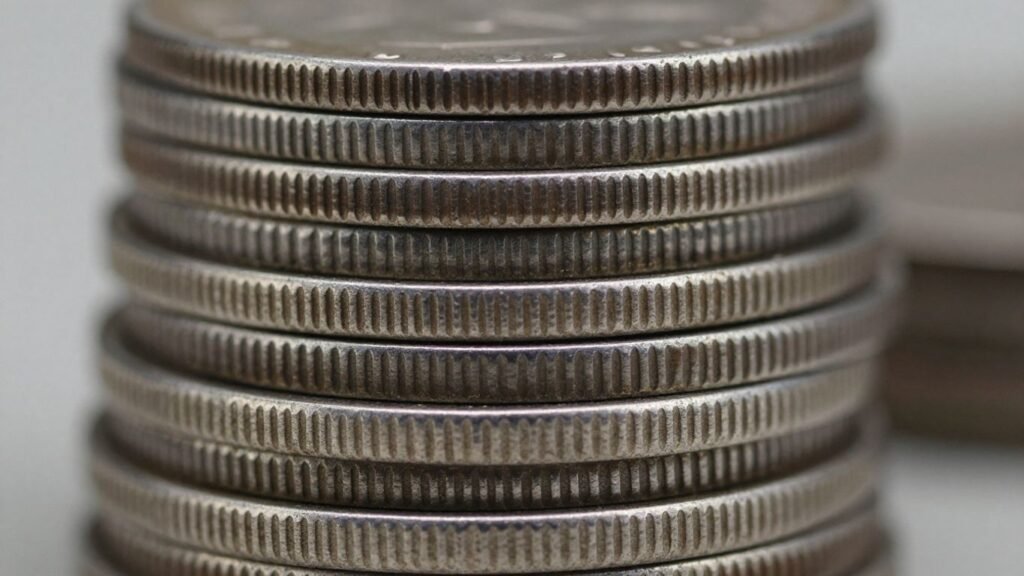
Ever wonder about those old coins lying around? Maybe you’ve inherited some or found them tucked away in a drawer. A lot of these coins, especially older U.S. dimes, quarters, and half dollars, are made with 90 percent silver content. This means they’re worth more than just their face value. Understanding 90 percent silver content explained is the first step to knowing their real worth, whether you’re looking to sell or just curious about what you’ve got.
Key Takeaways
- Coins minted in the U.S. before 1965, along with some Canadian coins from before 1967, typically contain 90% silver.
- The actual value of these coins is based on their silver weight and the current market price of silver, not their face value.
- Melt value is the baseline worth of a coin determined by its silver content if it were melted down.
- Numismatic value is an added premium for coins that are rare or have collector appeal, separate from their silver worth.
- When selling, understanding the bid (what a buyer pays you) and ask (what you pay a buyer) prices helps ensure you get a fair deal.
Understanding Purity: From Sterling to 90% Coin Silver
When you’re looking at silver items, especially coins, the first thing to figure out is how much actual silver is in them. It’s not always 100% pure silver, and that makes a big difference in value. Think of it like different grades of gold – some are purer than others.
Most modern pure silver investments, like those shiny American Silver Eagles you see, are usually 99.9% pure. That’s often called "fine silver." Then you have sterling silver, which is really common for jewelry and fancy silverware. It’s marked as .925 or "STERLING," meaning it’s 92.5% silver and the other 7.5% is usually copper to make it tougher. Without that copper, pure silver is pretty soft and bends easily.
Now, for the coins we’re talking about in this article – the ones minted before a certain year – they’re typically "90% silver." This means they’re made up of 90% silver and 10% other metals, usually copper, for durability. These are the dimes, quarters, and half dollars you might find from 1964 and earlier. Sometimes people call these "junk silver" or "constitutional silver" because their value is mostly tied to the metal content, not necessarily their collector status. There are also some coins with lower silver content, like U.S. Kennedy half dollars from 1965 to 1970, which are only 40% silver. Even that 40% is still worth something, though.
Here’s a quick rundown:
- Fine Silver: 99.9% pure (modern bullion coins).
- Sterling Silver: 92.5% pure (jewelry, flatware).
- 90% Coin Silver: 90% pure (U.S. dimes, quarters, halves pre-1965).
- 40% Silver: 40% pure (U.S. Kennedy halves 1965-1970).
Knowing the exact silver percentage is the first step to figuring out what your silver is actually worth. It’s the foundation for all the calculations that follow, so getting this right is pretty important.
So, when someone talks about 90% silver coins, they’re referring to this specific mix. It’s a common standard for older circulating coins, and understanding this purity level is key to understanding their melt value.
Melt Value Explained
So, what exactly is melt value? Think of it as the absolute floor price for your silver. It’s the price you’d get if you took your silver coins, melted them all down, and sold the raw metal. For most of the 90% silver coins we’re talking about – like old dimes, quarters, and half dollars – this is their primary value. They might be worn down from years of use, but the silver inside is what counts.
The melt value is your safety net; a coin is always worth at least the value of the silver it contains. It’s a straightforward calculation: take the weight of the silver, multiply it by its purity (in our case, 90%), and then multiply that by the current price of silver per ounce. That gives you the base metal worth.
Here’s a quick breakdown of how it works:
- Identify the Silver Content: For 90% silver coins, you know that 90% of their weight is pure silver.
- Weigh Your Coins: You’ll need to know the total weight of the silver you have. Remember, precious metals are usually measured in troy ounces, not regular ounces.
- Check the Silver Spot Price: This is the current market price for one troy ounce of pure silver. It changes daily, sometimes even by the minute.
Let’s say you have a bunch of old quarters. You’d weigh them all, figure out how much pure silver that weight represents (remembering it’s 90% pure), and then multiply by today’s silver price. That’s your melt value.
This metal value is the foundation. Even if a coin is damaged or looks rough, its melt value remains the same because it’s all about the silver content itself. It’s the baseline from which all other values are considered.
Step 1: Identify Common Silver Coins
Alright, so you’ve got some old coins lying around, maybe in a jar or a dusty box. The first thing you need to figure out is which ones actually have silver in them. It’s not as complicated as it sounds, but you do need to know what to look for. For a lot of U.S. coins, the year is your biggest clue.
Here’s a quick rundown of what to keep an eye out for:
- U.S. 90% Silver Coins: These are your dimes, quarters, and half dollars minted in 1964 or earlier. Also, keep an eye out for those older Morgan and Peace dollars from 1878 to 1935. These are pretty common.
- U.S. 40% Silver Coins: If you have Kennedy half dollars from 1965 through 1970, those have a 40% silver content.
- U.S. 35% Silver (Wartime) Nickels: These are a bit less common. You’ll find them from 1942 to 1945. The easiest way to spot them is a large mint mark (like a P, D, or S) right above Monticello on the back.
- Canadian Silver Coins: For Canadian coins, dimes, quarters, half dollars, and dollars made before 1967 are usually 80% silver. Some coins from 1967 and a few dimes and quarters from 1968 are 50% silver.
Seriously, check those dates carefully. Sometimes, just one year makes a huge difference in whether a coin is silver or just regular clad metal. A 1964 quarter is worth way more for its silver content than a 1965 quarter, which is basically just worth its face value.
It’s easy to get confused with all the different silver percentages and dates. Don’t just assume an old coin is silver. Take a moment to check the mint year and compare it to lists like this one. Getting this part right is the foundation for figuring out how much your coins are actually worth.
Step 2: Weigh Your Silver
Alright, so you’ve figured out which coins actually have silver in them. That’s a big step! Now comes the part where we get down to the nitty-gritty: weighing them. This is where things get real, and you’ll need a decent digital scale. Don’t try to eyeball this; precision is key here.
First off, make sure your scale can handle both grams and troy ounces. Precious metals are usually measured in troy ounces, which are a bit heavier than the ounces you use for cooking. One troy ounce is about 31.1 grams. If you’re using the wrong unit, your whole calculation will be off. It’s like trying to bake a cake with a ruler – just doesn’t work.
Here’s the best way to go about it:
- Group your coins by purity. If you have a mix of 90% silver coins and maybe some 40% silver ones, weigh them separately. This makes the math way easier later on.
- Weigh each group. Get the total weight for all your 90% coins, then do the same for any other purity levels you have.
- Record everything. Jot down the weight for each group. Don’t forget to note whether you weighed them in grams or troy ounces, and be consistent!
| Coin Purity | Total Weight (grams) | Total Weight (troy ounces) |
|---|---|---|
| 90% Silver | ||
| 40% Silver | ||
| Other |
Keep in mind that coins that have been around for a while, especially those in circulation, might weigh a tiny bit less than they did when they were minted. All that handling and passing around can wear down the metal just a smidge. For a big pile of coins, this small difference can add up, so using an accurate scale is really important. If you’re dealing with a lot of coins, you might even see a pattern emerge in their weights, similar to how Guilder coins tend to have a consistent weight [7fd7].
This step is all about getting accurate numbers. The weight you record here is the foundation for figuring out how much your silver is actually worth in terms of its metal content. Don’t rush it; a little extra care now saves headaches later.
Step 3: Calculate The Current Scrap Silver Coin Prices
Alright, you’ve gone through your stash, figured out which coins are actually silver, and you’ve weighed them up. Now comes the part where we put a dollar amount on all that metal. It’s not rocket science, but you do need a couple of things handy.
First off, you need the current price of silver, often called the "spot price." This changes daily, sometimes even by the minute, depending on what’s happening in the world markets. You can find this price easily online by searching for "silver spot price." It’s usually quoted per troy ounce. Remember, a troy ounce is a bit heavier than a regular ounce – about 31.1 grams.
Next, you need to know the exact weight of your silver. You should have this from Step 2. Make sure you’re using the weight in grams if the spot price is quoted per gram, or convert it if needed. Many online calculators or dealers will give you a price per gram, which simplifies things.
Finally, you need to account for the purity of your coins. Since we’re talking about 90% silver coins, you’ll use 0.90 in your calculation. This tells the calculator that only 90% of the coin’s weight is actually silver.
So, the basic formula looks like this:
Total Melt Value = (Total Weight in Grams) x (Purity as a Decimal) x (Silver Price per Gram)
Let’s say you have 500 grams of 90% silver coins, and the spot price of silver is $25 per troy ounce. First, we find the price per gram: $25 / 31.1 grams/troy ounce ≈ $0.80 per gram. Then, plug it into the formula: 500 grams x 0.90 x $0.80/gram = $360. That’s your estimated melt value.
Here’s a quick look at how different common coins stack up, based on a hypothetical $25/oz silver price:
| Coin Type (Pre-1965) | Silver Content | Approx. Silver Value per Coin |
|---|---|---|
| Dime | 90% | ~$2.25 |
| Quarter | 90% | ~$5.65 |
| Half Dollar | 90% | ~$11.30 |
| Silver Dollar | 90% | ~$22.50 |
Keep in mind these are just rough estimates. The actual price you get will depend on the buyer and the exact spot price at the moment of sale.
It’s important to remember that this calculation gives you the "melt value." This is the price if the coin is treated purely as raw silver. Sometimes, a coin might be worth more if it’s a rare date or in exceptionally good condition, but for most common circulated coins, the melt value is the primary driver of its worth as scrap.
The Role of the Silver Spot Price
Think of the silver spot price as the real-time, going rate for an ounce of pure silver. It’s not set by any one person or company; instead, it’s determined by global markets that trade silver 24/7. This means the value of your silver coins can actually shift throughout the day, kind of like how stock prices change.
Several things can nudge this price up or down. For instance, if a lot of industries suddenly need more silver for electronics or solar panels, demand goes up, and so can the price. Big global events or changes in currency values can also play a part. This fluctuating spot price is the main ingredient when figuring out the melt value of your silver coins.
Here’s a quick look at how different silver purities relate to the spot price:
- Fine Silver (99.9% pure): This is the standard for modern silver bars and coins like the American Silver Eagle. It’s almost pure silver.
- Sterling Silver (92.5% pure): You’ll often see this in jewelry and fancy tableware. It’s marked as "STERLING" or ".925". The other 7.5% is usually copper, making it tougher.
- 90% Coin Silver: This is what you’ll find in older U.S. dimes, quarters, and half dollars (minted before 1965). People often call these "junk silver" or "constitutional silver."
- 40% Silver: Some U.S. Kennedy half dollars made between 1965 and 1970 have this lower silver content.
The spot price is your baseline. Without knowing it, you’re essentially guessing what your silver is worth based on its metal content. It’s the foundation upon which all other calculations for melt value are built.
Weight Matters: Troy Ounces and Grams
When you’re dealing with silver, especially coins, you’ll notice that weights are usually talked about in troy ounces. This isn’t the same as the ounce you use in the kitchen for baking. A troy ounce is actually a bit heavier. One troy ounce equals 31.1035 grams, while a standard ounce is only 28.35 grams. That difference might seem small, but it adds up quickly when you’re talking about a lot of silver.
Why the different system? Well, the troy ounce has been the standard for precious metals for ages. It helps keep things consistent across the globe when people are trading gold, silver, platinum, and other valuable stuff. So, if you’re looking at prices or weighing your coins, make sure you’re using the right measurement.
Here’s a quick breakdown:
- Troy Ounce: The standard for precious metals. Approximately 31.1 grams.
- Avoirdupois Ounce (Standard Ounce): Used for everyday items. Approximately 28.35 grams.
- Gram: Useful for precision, especially with smaller amounts or when calculating melt value per gram.
Most digital scales these days can switch between troy ounces and grams, which is super handy. You’ll want to use grams for more precise calculations, especially when figuring out the melt value of your coins. If you’re buying or selling, knowing the difference between these weights is key to making sure you’re getting a fair deal. For more on this, you can check out the background on the Troy ounce.
When you’re calculating the melt value of your silver, precision is really important. Even small errors in weighing or using the wrong unit can lead to significant differences in the final amount. Always double-check your scale and your calculations.
For example, if you have a pile of silver coins, it’s best to weigh them in grams. Then, you can use that gram weight along with the current silver price per gram to figure out the total melt value. It’s a straightforward process once you get the hang of it.
Numismatic Value Explained
Okay, so we’ve talked about melt value, which is basically what your silver is worth if you just melted it all down. But sometimes, coins are worth way more than just their silver content. That’s where numismatic value comes in.
Numismatics is the fancy word for collecting and studying coins, paper money, and medals. People who collect coins, or numismatists, look for things beyond just the metal. They care about how rare a coin is, its condition (is it super shiny or all beat up?), where it was made (mint marks matter!), and its historical significance. Think of it like collecting vintage cars – a rusty old Ford might be worth a little for scrap metal, but a perfectly preserved Model T? That’s a whole different ballgame.
This added collector appeal is what creates numismatic value.
So, a coin that might be worth, say, $10 for its silver content could easily fetch $100 or even $1,000 if it’s a rare date, in amazing condition, and highly sought after by collectors. It’s not about the silver inside anymore; it’s about the coin itself as an object of historical or aesthetic interest.
Here’s a quick rundown of what drives that extra value:
- Rarity: How many of these coins were actually made, and how many still exist today?
- Condition (Grade): This is huge. Coins are graded on a scale, and a coin in perfect, uncirculated condition (often called MS-70) will be worth exponentially more than the same coin that’s been handled a lot and shows wear.
- Mint Mark: Where the coin was produced can sometimes make a big difference in its rarity and desirability.
- Historical Significance: Was the coin part of a special event or era? That can add appeal.
It’s important to remember that most of the 90% silver coins you find, like old dimes, quarters, and half dollars, are usually valued for their melt value. They’ve been through a lot of hands over the years. But, if you happen to stumble upon something truly special, its numismatic value could far outweigh its silver worth. It’s always worth checking out coin collecting resources to see if you’ve got a hidden gem.
Key Factors Influencing Scrap Silver Coin Prices
So, what actually makes the price of your old silver coins go up or down? It’s not just one thing, but a mix of stuff happening in the world and in the market.
First off, the big one is the global silver spot price. This is basically the going rate for pure silver right now, and it changes by the minute. Think of it like the stock market, but for silver. News about mining production, demand from industries like electronics and jewelry, or even big economic shifts can make this price jump or fall.
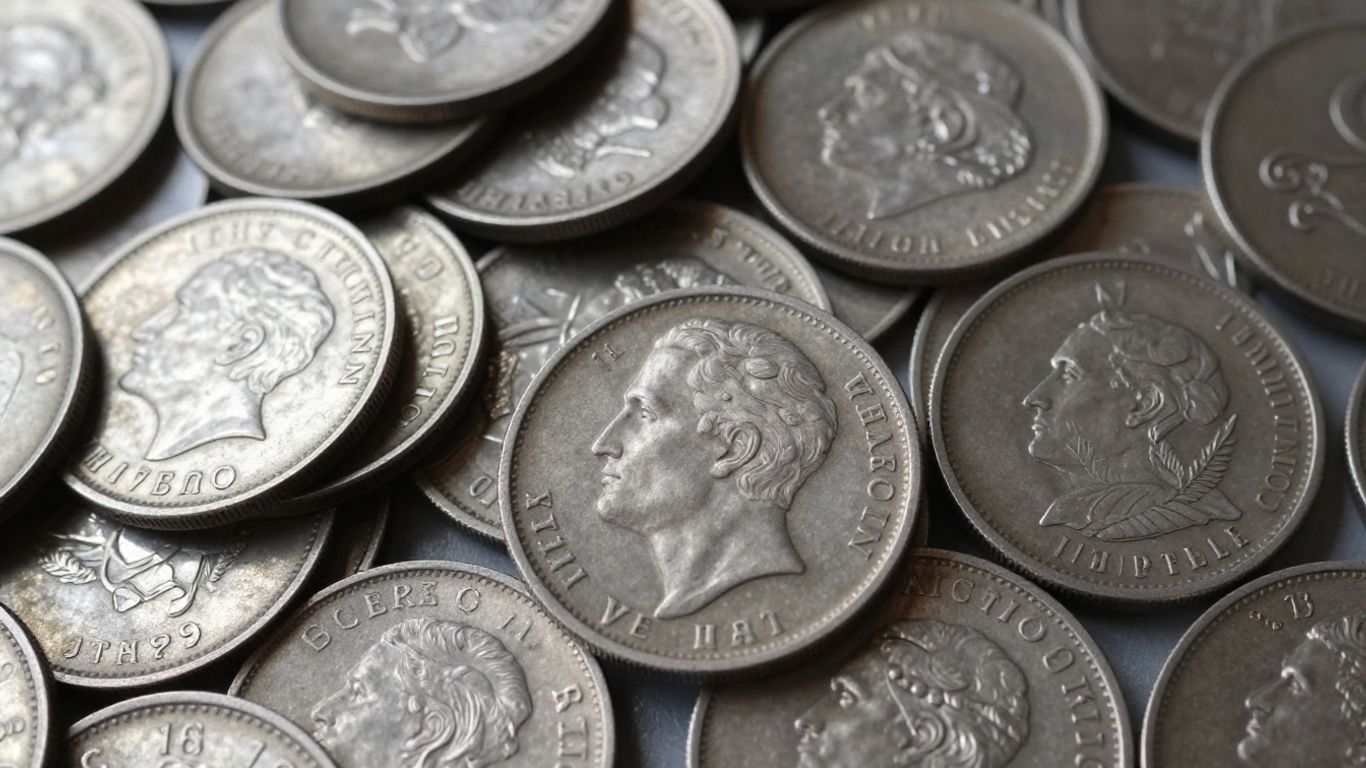
Then there’s the actual silver content in your coins. Most of the older U.S. coins, like dimes, quarters, and half-dollars made before 1965, are 90% silver. This percentage is super important because it tells you how much actual silver you have to work with. The less pure the coin, the less it’s worth based on its silver weight.
Here’s a quick look at how purity plays a role:
- 90% Silver: Common in U.S. coins from 1964 and earlier.
- 40% Silver: Found in some U.S. half-dollars from 1965-1970.
- Sterling Silver (92.5%): Usually found in silverware and jewelry, not typically coins.
Don’t forget about the weight, either. A whole bag of dimes will be worth more than just a few, even if they’re all 90% silver. Buyers usually measure this in troy ounces, which is a bit different from the regular ounces we use for everyday things. More weight means more silver, plain and simple.
Sometimes, even if a coin is mostly silver, its condition can matter. If a coin is really worn down from being passed around for decades, it might have lost a tiny bit of its silver weight. For most people selling scrap, this difference is pretty small, but it’s something buyers consider.
Finally, there’s the whole supply and demand thing. If a lot of people are trying to sell their silver at once, or if there’s a sudden rush to buy, prices can get a bit wild. It’s a constant dance between what’s available and what people want.
Maximizing Your Return: Selling and Investing in Silver
So, you’ve figured out your silver’s worth based on its melt value. Now what? You’ve got two main paths: sell it and pocket the cash, or reinvest it to grow your holdings. Both have their upsides, and how you approach them can really make a difference in your overall financial picture.
When you’re ready to sell, especially if you have a good amount of silver, picking the right buyer is key. You’ll see prices quoted as ‘bid’ and ‘ask’. The bid is what the buyer will pay you for your silver, and the ask is what they’ll sell it for. The difference is how they make their money. Look for buyers who are upfront about their pricing and don’t hide fees. Selling directly to a reputable dealer, especially one with a good online presence, often gets you a better deal than a local pawn shop. They usually have lower overhead and can offer more competitive rates because they deal in higher volumes.
Here’s a quick look at why selling directly to a specialist often pays off:
- Clear Pricing: They’ll explain exactly how they arrived at their offer.
- Better Rates: Higher volume means they can often pay more.
- No Surprise Fees: What they quote is usually what you get.
- Secure Transactions: Reputable dealers have processes to keep things safe.
But what if you’re not looking to just cash out? Reinvesting that silver can be a smart move. Instead of just holding onto bars, consider government-minted silver coins. They often have a few advantages:
- Government Backing: The purity and weight are guaranteed by the mint.
- Easier to Trade: Coins are usually in smaller, more manageable units than large bars.
- Collector Potential: Some coins can gain value beyond their silver content over time.
Selling your silver is just one part of the equation. Thinking about what you do with the money afterward is just as important. Turning that one-time payout into a plan for future growth can make a big difference down the road. It’s about making your silver work for you, not just once, but over the long haul.
If you’re thinking long-term, consider spreading out your purchases over time. This is often called dollar-cost averaging. Instead of trying to time the market perfectly (which is nearly impossible), you invest a set amount regularly. This way, you buy more coins when prices are low and fewer when they’re high, potentially lowering your average cost per ounce over time. It’s a steady way to build up your silver holdings without the stress of trying to guess market tops and bottoms.
Understanding Bid vs. Ask Prices
When you’re looking to buy or sell silver, especially scrap silver coins, you’ll run into two main prices: the bid and the ask. Think of it like this: the bid is the price a dealer is willing to pay you for your silver. The ask is the price you have to pay the dealer to buy silver from them.
The difference between these two prices is called the spread. This spread is how dealers make their money. They buy low (at the bid) and sell high (at the ask), and that gap covers their operating costs, like paying for their shop, staff, and the effort it takes to sort and process the metal.
Here’s a simple breakdown:
- Bid Price: What a buyer (like a dealer) will pay you for your silver.
- Ask Price: What a buyer (like a dealer) will sell silver to you for.
- Spread: The difference between the bid and ask price.
For example, a dealer might offer to buy silver quarters at $18 per troy ounce (that’s the bid) but sell you silver Eagles for $20 per troy ounce (that’s the ask). The $2 spread is their profit margin.
Generally, you’ll see tighter spreads on more common, easily tradable items like standard bullion coins or bars. Less common items, or those that require more effort to verify or sell, might have wider spreads. This means you’ll get a bit less when you sell and pay a bit more when you buy compared to highly liquid products.
When you’re selling your 90% silver coins, you want the highest bid price you can find. When you’re buying, you want the lowest ask price. It’s always a good idea to shop around and compare the bid and ask prices from a few different dealers to make sure you’re getting a fair deal.
Best Methods for Selling Scrap Silver
So, you’ve figured out your silver coins are worth more than just their face value. That’s great! Now, how do you actually turn that metal into cash? You’ve got a few paths you can take, and some are definitely better than others.
First off, you could try a local coin shop or a pawn shop. These places are convenient, sure, but they often don’t offer the best prices. They’ve got overhead, and they need to make a profit, so they’ll likely give you a lower offer. It’s like selling your old car to a dealership – they’re not going to give you what you could get selling it privately.
Then there are online precious metals dealers. These guys are usually your best bet for getting the most money for your silver. Why? Well, they deal in volume. They buy and sell a lot of silver, so they can afford to pay you a higher percentage of the actual melt value. Plus, reputable online dealers are usually pretty upfront about their pricing. They’ll tell you exactly how they figure out what your silver is worth.
Here’s a quick rundown of why selling to a good online dealer often makes more sense:
- Clear Pricing: They’ll explain their calculations, so you know what you’re getting.
- Better Rates: Because they buy and sell so much, they can offer more competitive prices.
- No Surprises: The price they quote is usually the price you get, without hidden fees.
- Convenience: You can often mail your silver in securely and get paid quickly.
When you’re looking at online dealers, pay attention to their "bid" price – that’s what they’re willing to pay you. Also, check out their reviews and see how long they’ve been in business. You want someone trustworthy.
Selling scrap silver is all about the metal content. Don’t let anyone tell you a tarnished or slightly worn coin is worth less than its silver weight. Reputable buyers know it’s all going to be melted down anyway, so they focus on the pure silver content, not whether it looks pretty.
Why Coins Can Be a Smarter Investment Than Bars
When you’re looking at silver as an investment, you’ll notice there are two main ways to go: bars or coins. While bars might seem straightforward, coins, especially government-minted ones, often have a few extra perks that can make them a better choice for many people. It’s not just about the silver content; it’s about what else comes with it.
Think about it this way: bars are pretty much just silver. They’re valued almost entirely on their weight and purity. Coins, on the other hand, can sometimes be worth more than just their melt value. This is because they have a government guarantee behind them, meaning the purity and weight are officially recognized. Plus, some coins can become collectible over time, adding a whole other layer to their worth.
Here’s a quick rundown of why coins often get the nod over bars:
- Government Guarantee: Coins from official mints come with a promise from the government about their silver content and weight. Bars are usually just backed by the refiner, which is fine, but it’s not quite the same official backing.
- Divisibility: Coins are usually made in smaller, more manageable sizes. This makes them easier to sell off piece by piece if you need to, unlike a big silver bar that’s harder to break down.
- Numismatic Potential: Some coins, depending on their rarity, condition, and historical significance, can gain value beyond their silver content. This collector value is something bars just don’t have.
While bars are great for pure bulk silver, coins offer a bit more flexibility and potential upside. They’re easier to trade in smaller amounts, and the government backing adds a layer of trust that’s hard to beat. For the average investor, this combination can be pretty appealing.
It’s also worth noting that coins can be harder to fake than simple bars. The intricate designs and the fact that they’re legal tender make them a bit more secure. So, if you’re thinking about adding silver to your portfolio, don’t overlook the advantages that coins can bring to the table.
Government Guarantee
When you’re dealing with silver coins, especially those made of 90% silver, it’s good to know that many of them come with a bit of backing. Think about U.S. silver dollars, half dollars, and quarters minted before 1965. These coins were made legal tender by the U.S. government. This means the government declared them as official money, and their silver content was a key part of their value back then.
This government backing is different from, say, a private mint producing silver bars. While those bars have a stated purity, they don’t carry the same historical weight of being official currency. For 90% silver coins, this guarantee means they were once part of the circulating monetary system, which adds a layer of legitimacy.
Here’s a quick look at what that means:
- Official Currency: These coins were intended for everyday transactions.
- Stated Silver Content: The government specified the silver purity (90% for these coins).
- Historical Significance: They represent a period when silver was a more common component of money.
While the face value of these coins is now negligible compared to their silver content, the fact that they were government-issued currency is an important part of their story and why people still collect and melt them today. It’s a tangible link to a past era of coinage.
Divisibility
When you’re dealing with silver, especially for selling or trading, how easy it is to break down into smaller pieces really matters. Think about it like this: if you have a big, solid block of something, it’s harder to trade small amounts than if you have a bunch of smaller, identical blocks. This is where 90% silver coins really shine.
Most of the common 90% silver coins, like U.S. dimes, quarters, and half-dollars minted before 1965, are already pretty small. They were made to be used as money, after all. This makes them super easy to divide up. You can sell a single dime, a roll of quarters, or a bag of half-dollars without any fuss. It’s not like you have to melt down a big bar to get a small amount of silver out.
This divisibility is a big deal for a few reasons:
- Easier Transactions: You can trade or sell just the amount of silver you want, whether it’s a little or a lot.
- Flexibility for Buyers: People who want to buy silver in smaller quantities can easily do so with coins.
- Practicality: It’s just more practical for everyday trading or if you need to liquidate a portion of your holdings quickly.
Compare this to larger silver bars. While they might be more cost-effective per ounce when you buy them in bulk, selling a fraction of a large bar can be a hassle. You might not find a buyer for just a sliver, or you might have to accept a lower price. With 90% silver coins, you’re essentially getting a pre-divided package of silver that’s ready for trade. This inherent flexibility is a key reason why many people prefer coins over bars when building their silver stash.
The ability to easily break down your silver holdings into smaller, manageable units is a practical advantage that shouldn’t be overlooked. It makes your silver more liquid and accessible for various trading scenarios, from small personal exchanges to larger dealer transactions.
Numismatic Potential
So, we’ve talked a lot about melt value, which is basically what your silver is worth if you just melted it all down. It’s a solid baseline, for sure. But sometimes, coins can be worth more than just their silver content. This is where numismatic value comes in.
Numismatics is just a fancy word for the study or collection of coins, paper money, and medals. When a coin has numismatic potential, it means collectors might pay extra for it. Why? Well, it could be super rare, in amazing condition, have a cool mint mark, or just be historically interesting. Think of it like this: a beat-up old car might only be worth its scrap metal price, but a classic car in mint condition? That’s a whole different ballgame.
Most of the 90% silver coins you’ll find, like old dimes, quarters, and half dollars, are usually valued for their silver. They’ve been around, seen some action, and are often a bit worn. That’s perfectly fine, and their melt value is still significant. But every now and then, you might stumble upon something special.
Here’s what can make a coin more than just silver:
- Rarity: How many of these coins were actually made, and how many still exist today?
- Condition (Grade): Is it shiny and perfect, or does it look like it went through a washing machine? Professional grading services assign a number to a coin’s condition, and higher numbers mean more value.
- Mint Mark: Where the coin was made can sometimes add to its desirability.
- Historical Significance: Was this coin part of a major event or era?
While most circulated 90% silver coins are primarily valued for their metal content, keeping an eye out for coins in exceptional condition or those from specific, low-mintage years can sometimes lead to a pleasant surprise. It’s always worth a quick check before you decide to sell everything as scrap.
For the average investor looking at 90% silver coins, the melt value is your main focus. But understanding numismatic potential means you won’t accidentally sell a coin that a collector would pay a hefty premium for. It’s about knowing the difference between a silver dollar and a collector’s dollar.
Grow Your Holdings with Dollar-Cost Averaging
Okay, so you’ve got some silver, maybe from those old coins you found, and you’re thinking about adding more. That’s smart. But instead of dumping a bunch of cash in all at once, which can feel a bit risky, there’s a method called dollar-cost averaging. It’s pretty straightforward, really.
Basically, you decide on a fixed amount of money you want to invest in silver regularly, say, every month. Then, you just buy silver with that amount, no matter if the price is up or down. When the price is high, your fixed amount buys fewer ounces. When the price dips, that same amount buys more ounces. Over time, this can help smooth out the average price you pay for your silver.
Here’s how it generally works:
- Decide on your investment amount: How much can you comfortably set aside each month or quarter?
- Choose your silver asset: This could be physical silver coins (like the 90% ones we’ve been talking about), silver bars, or even silver-backed ETFs.
- Invest consistently: Stick to your schedule, whether it’s weekly, monthly, or quarterly. Don’t overthink it.
- Reinvest any dividends or gains: If your silver investment generates any income, put it back into buying more silver.
It’s a way to build your silver holdings steadily without trying to time the market, which, let’s be honest, is incredibly difficult. This approach helps reduce the risk of buying at a market peak.
Think of it like this: you’re not trying to catch a falling knife. Instead, you’re consistently adding to your position, benefiting from both the ups and the downs. It takes the emotion out of investing and turns it into a more disciplined, long-term strategy. It’s about building wealth gradually, not trying to get rich quick.
It’s a solid strategy for anyone looking to build a diversified portfolio over the long haul, especially when dealing with assets that can have price swings like silver.
Frequently Asked Questions about Scrap Silver Coin Prices
People often have questions when they start looking into the value of old silver coins, and that’s totally normal. Let’s clear up some of the common ones.
Does the face value of a silver coin actually matter for its scrap price? Nope, not at all. That "25 cents" or "50 cents" stamped on a coin is just a historical marker. What really counts is how much silver is actually in it and what silver is going for on the market right now. A worn-out 1964 quarter has the same amount of silver as a shiny new one from that year – the face value doesn’t change the metal’s worth.
How does wear and tear affect my coins' value?
- Weight Loss: Over many years of being passed around, coins can lose a tiny bit of metal. This means they weigh a little less, and therefore have slightly less silver content.
- Minor Impact: For a single coin, this difference is usually just a few cents. It’s not usually enough to worry about if you only have a handful.
- Cumulative Effect: If you have a really large collection, say hundreds or thousands of coins, that small weight loss per coin can add up to a noticeable amount.
Can I sell heavily damaged or melted silver coins?
Yes, you generally can. While extreme damage or melting might make a coin less appealing to collectors, its silver content is still there. Reputable dealers who focus on melt value will still buy these coins. They’ll assess the amount of silver remaining and offer a price based on that. It might not fetch a premium like a rare collectible, but you’ll still get paid for the metal.
When you’re figuring out what your silver coins are worth, always remember that the price is tied to the silver market, not the number printed on the coin. Think of it like this: a vintage soda bottle might have a "10 cent deposit" on it, but if the glass itself is rare and valuable, its worth is based on the material, not the old deposit amount.
Does The Face Value Of A Silver Coin Affect Its Scrap Value?
It’s a common question, and the short answer is no, the face value of a silver coin has absolutely no bearing on its scrap value. Think about it: that quarter in your hand might say "25 cents," but if it’s from before 1965, it’s packed with about 90% silver. The actual worth comes from the metal content, not what the government stamped on it decades ago.
So, when you’re looking at coins for their melt value, you’re really just interested in two things: how much the coin weighs and how pure the silver is. The "25 cents" or "50 cents" is just a historical marker at this point. A worn-out 1964 quarter has the same amount of silver as a shiny, uncirculated one from the same year. The face value is basically irrelevant when you’re talking about melting it down.
Here’s a quick breakdown of what actually matters:
- Weight: The heavier the coin, the more silver it contains.
- Purity: This tells you the percentage of silver in the coin (like 90% for most older US coins).
- Spot Price: This is the current market price for one ounce of pure silver.
The face value is a relic of when these coins were actually used as currency. Today, for coins made before 1965 (in the US) or before 1967 (in Canada), their value is almost entirely tied to the silver they contain, not the denomination printed on them.
Trying to figure out the value based on the face value would be like trying to price a gold bar based on the serial number. It just doesn’t connect to the actual worth of the material. So, don’t get hung up on the numbers like "quarter" or "dime"; focus on the silver content and the weight.
How Does Wear And Tear Affect My Coins' Value?
So, you’ve got a pile of old silver coins, maybe from your grandpa’s collection or just found tucked away. You’re wondering about their value, and one thing that might cross your mind is how much those nicks and scratches, you know, the "wear and tear," actually matter.
For the most part, when we’re talking about melt value, wear and tear has a pretty small impact on individual coins. Think about it: coins are made to be handled, right? Over time, especially if they’ve been passed around in commerce, the edges can get a little softer, and the surfaces might lose some of their original detail. This process does, technically, reduce the coin’s weight slightly. Since melt value is all about the weight of the silver content, a lighter coin means a tiny bit less silver.
However, for a single coin, this weight loss is usually measured in fractions of a gram. If you’re looking at a handful of coins, the difference is probably just a few cents. It’s not like a coin with a few scratches is suddenly worth half its silver content. Reputable buyers who deal with scrap silver know that circulated coins will have some wear, and they factor that into their pricing. They’re not expecting pristine, uncirculated pieces when you’re selling based on silver weight.
Where wear and tear can become more noticeable is when you have a really large quantity of coins. Imagine a massive bag filled with hundreds or even thousands of silver quarters. If each coin is just a tiny bit lighter due to wear, when you add all those tiny amounts up, it can start to make a difference in the total weight. So, while it’s not a big deal for one or two coins, it’s something to be aware of if you’re selling a significant hoard.
It’s important to remember that for scrap silver, the primary driver of value is the silver content itself. Minor cosmetic imperfections from circulation are generally expected and accounted for. The focus remains on the ounces of silver you possess, not the coin’s original mint-fresh appearance.
Here’s a quick rundown:
- Individual Coin Impact: Minimal. The weight loss is usually too small to significantly affect the melt value of a single coin.
- Large Quantities: Can add up. The cumulative effect of wear on many coins might slightly reduce the total silver weight.
- Buyer Expectation: Dealers expect circulated coins to show signs of wear and price accordingly.
So, don’t stress too much about a few dings on your silver coins if you’re focused on their melt value. The silver inside is still the main event.
Can I Sell Heavily Damaged Or Melted Silver Coins?
So, you’ve got some silver coins that look like they’ve been through the wringer? Maybe they’re bent, scratched up, or even look like they’ve been partially melted down. Don’t toss them just yet! The good news is that the value of scrap silver is primarily tied to the metal itself, not its pristine condition.
When you’re selling silver for its melt value, the buyer is mostly interested in the silver content. That means even coins that are heavily damaged, tarnished, or have seen better days can still be sold. Reputable dealers who buy silver for melting and refining will take these items because, in the end, the metal gets processed back into a pure form.
Here’s a quick rundown of what typically happens:
- Bent or Warped Coins: These are usually fine. The silver is still there, just in a different shape.
- Scratched or Scuffed Coins: Minor surface damage doesn’t significantly impact the silver content.
- Tarnished Coins: Tarnish is just a surface reaction and doesn’t reduce the amount of silver.
- Partially Melted Coins: As long as there’s still a significant amount of silver present, these can be sold based on their remaining metal weight.
The key takeaway is that if the silver is still there, it still has value. Buyers who specialize in scrap silver understand that the material will be melted down anyway, so the aesthetic condition of individual coins becomes less important than the total amount of silver they contain. They’ll factor in the weight and purity, and that’s what determines the offer you’ll receive.
So, before you decide something is worthless, get it appraised. You might be surprised at what those battered coins are worth.
Conclusion: Turn Your Scrap Into A Smart Investment
So, you’ve gone through the steps, figured out what your old silver coins are actually worth based on their metal content, and now you’re holding that knowledge. That jar of forgotten change or inherited collection isn’t just clutter anymore; it’s a tangible asset. Understanding the melt value is your key to getting a fair shake when selling. Don’t let anyone tell you otherwise.
Selling is one option, and knowing the melt value helps you avoid getting lowballed. But what if you want that silver to do more for you? Instead of just cashing out, think about turning that scrap into a stepping stone for a more structured precious metals portfolio. It’s like taking a windfall and making it work for you over the long haul.
Consider strategies like dollar-cost averaging. This means making regular, smaller purchases over time, which can help smooth out the ups and downs of the market. It’s a bit like how people contribute to a 401k – consistent effort builds wealth. You can set up automatic purchases to build your holdings steadily.
Here’s a quick look at why coins can sometimes be a better bet than bars for building a portfolio:
- Government Guarantee: Coins often come with a stamp of approval from a government mint, backing their purity and weight. Bars rely on the refiner’s word.
- Divisibility: Coins are easier to break down and sell in smaller chunks if you need to access some of your investment without selling the whole lot.
- Numismatic Potential: While we’re focused on melt value, some coins can gain extra worth over time just because collectors want them. Bars? Not so much.
Ultimately, whether you decide to sell your silver for immediate cash or use it to start building a more robust investment strategy, you’re now equipped with the information to make smart choices. It’s about turning what might have seemed like old junk into a solid part of your financial plan.
Silver To Gold Ratio Trade: How & When?
So, you’re thinking about trading silver for gold, huh? It’s a move a lot of folks consider, especially when the markets are doing their usual dance. The idea is pretty simple: you sell some of your silver when it’s performing well relative to gold, and then you buy gold. The goal is to end up with more gold than you would have if you’d just held onto the silver.
The gold-to-silver ratio is your main guide here. This ratio tells you how many ounces of silver it takes to buy one ounce of gold. When the ratio is high, it means silver is cheap compared to gold, and it might be a good time to sell silver and buy gold. Conversely, a low ratio suggests gold is relatively cheaper, and you might want to do the opposite.
What’s a good ratio to aim for? Well, that’s the million-dollar question, isn’t it? Historically, this ratio has bounced around a lot. Some traders look at levels like 50:1 or even 40:1 as potential points to make the switch. Others might wait for it to drop even lower. It really depends on your entry point – what you paid for your silver in the first place – and your own comfort level.
Here’s a quick look at how it generally works:
- High Ratio (e.g., 70:1 or higher): Silver is cheap relative to gold. Consider selling silver to buy gold.
- Medium Ratio (e.g., 50:1 – 60:1): A common point for rebalancing or making a trade.
- Low Ratio (e.g., 30:1 or lower): Gold is cheap relative to silver. Consider selling gold to buy silver.
It’s not just about the ratio, though. You also need to think about the overall market conditions and your own financial goals. Don’t go all-in on a trade; it’s usually smart to keep some silver on hand. You never know when things might shift dramatically, like during the Hunt Brothers’ silver market activities back in the day. Having ounces to trade at different levels gives you flexibility.
Making a silver-to-gold trade isn’t just about picking a number on a chart. It involves understanding market history, current economic pressures, and your personal investment strategy. It’s about timing and having a plan that allows for adjustments, rather than a rigid, all-or-nothing approach. Think of it as a way to optimize your holdings over time, not a one-time event.
Remember, this isn’t financial advice, and everyone’s situation is different. If you’re serious about ratio trading, talking to an advisor who can look at your specific holdings and goals is probably a good idea. They can help you figure out the best entry and exit points for you.
Silver Is Designated “Strategic”
You know, it’s interesting how certain materials get labeled as ‘strategic.’ It basically means governments see them as really important for national security and the economy. Silver fits this bill. It’s not just for jewelry or shiny coins; it’s used in a ton of high-tech stuff we rely on every day.
Think about electronics. Silver is a fantastic conductor, way better than copper or gold in many applications. It’s used in circuit boards, semiconductors, and even solar panels. With the push for renewable energy and advanced technology, the demand for silver in these areas is only going to grow. Plus, it’s used in medical equipment and certain types of batteries. This strategic designation means governments might prioritize its supply, especially during times of global uncertainty.
Here’s a quick look at why silver is so important:
- Electronics: Essential for conductivity in everything from smartphones to computers.
- Renewable Energy: A key component in solar panels, helping to convert sunlight into electricity.
- Healthcare: Used in medical devices and some treatments due to its antimicrobial properties.
- Automotive: Increasingly used in hybrid and electric vehicles for various components.
When a metal like silver is deemed strategic, it can influence how it’s traded, stored, and even mined. It suggests a level of importance that goes beyond simple market supply and demand, touching on national interests and future technological development.
Will Premiums Return To Pre-1933 Graded Coins?
You know, it’s interesting to think about what makes a coin valuable beyond just the silver it’s made of. For a long time, coins minted before 1933, especially those that are graded, have commanded a certain premium. This premium isn’t just about the metal; it’s about rarity, historical significance, condition, and collector demand. So, will that premium ever come back in a big way for these specific coins?
It’s a bit of a crystal ball question, honestly. The market for collectibles can be pretty fickle. Things like economic conditions, shifts in collector interest, and even how many of these coins are available on the market all play a role. Right now, the focus for many is on the melt value of silver, especially with 90% silver coins. But for those older, graded pieces, there’s always a segment of the market that values them for their numismatic (collector) appeal.
Here’s a breakdown of what influences that premium:
- Rarity: How many of these specific coins were originally minted, and how many still exist today in good condition?
- Condition (Grade): A coin graded by a reputable service (like PCGS or NGC) in a high grade will always be worth more than a lower-grade or un-graded coin.
- Historical Significance: Coins tied to important historical events or figures often see higher demand.
- Collector Base: A strong, active community of collectors interested in a particular series or type of coin helps maintain and potentially increase premiums.
The market for pre-1933 graded coins is different from the scrap silver market. While melt value is a floor, the true value is often driven by what a collector is willing to pay for its rarity and condition. It’s a more specialized area.
It’s hard to say if the premiums will reach the heights they once did, or even surpass them. The landscape of collecting changes. What was popular a decade ago might not be today. However, for truly rare and well-preserved coins from that era, there will likely always be a market that values them beyond their silver content. It’s just a matter of finding the right buyers and understanding what drives their specific interest.
Wrapping It Up
So, there you have it. Figuring out what your old silver coins are actually worth isn’t some big mystery. It really just comes down to knowing which coins have silver, how much they weigh, and what the going rate for silver is right now. That old jar of change might be worth more than you thought, and now you’ve got the tools to check. Don’t let anyone tell you different or try to lowball you. Knowing the melt value is your solid baseline. And hey, if you’re thinking about what to do with that silver, maybe it’s time to think about turning it into a regular investment, kind of like putting money into a 401k. It’s all about making smart moves with what you’ve got.
Frequently Asked Questions
What's the difference between the face value of a coin and its silver value?
The face value, like “25 cents” on a quarter, is just a historical number. It doesn’t tell you how much silver is actually in the coin. What matters for selling is the amount of silver the coin contains and the current market price of silver. A 1964 quarter, for example, is worth much more than 25 cents because of its silver content.
Does it matter if my silver coins are worn out?
A little bit of wear and tear is normal and doesn’t hurt the value much. Coins that have been used a lot might have lost a tiny bit of metal, meaning slightly less silver. For most people selling common silver coins, this small difference usually isn’t a big deal, but it can add up if you have a huge amount.
Can I still sell coins that are bent or damaged?
Yes, absolutely! If a coin is bent, scratched, or even looks like it’s been partially melted, you can still sell it. The value of these coins is based on the silver metal they contain. Dealers who buy silver for melting will take them because they can still refine the silver out.
How do I know if my coins are actually 90% silver?
For U.S. coins, the easiest way is to check the date. Dimes, quarters, and half dollars made in 1964 and earlier are typically 90% silver. Coins made after 1964 usually have much less or no silver. For other countries or specific coins, you might need to look up their specifications online.
What's the 'spot price' of silver?
The spot price is the current market price for one ounce of pure silver right now. Think of it like the stock price for silver. This price changes constantly throughout the day because silver is traded all over the world, 24/7.
Why are silver coins sometimes worth more than silver bars?
Silver coins, especially older ones or those from government mints, can sometimes be worth more than just their silver weight. This is because they might have extra value to collectors (numismatic value) or are guaranteed by a government for their purity and weight. Bars usually only have value based on their silver content.
What's the difference between 'melt value' and 'numismatic value'?
Melt value is simply what the silver in the coin is worth if you melted it down. Numismatic value is extra worth that collectors might pay because of a coin’s rarity, condition, or historical importance. Most common silver coins are valued mostly for their melt value.
What's the best way to sell my old silver coins?
Selling to a trusted online dealer or a reputable local coin shop that specializes in precious metals is often best. They understand the value of silver coins and can give you a fair price based on the current silver market. Be wary of places that offer prices much lower than the silver melt value.