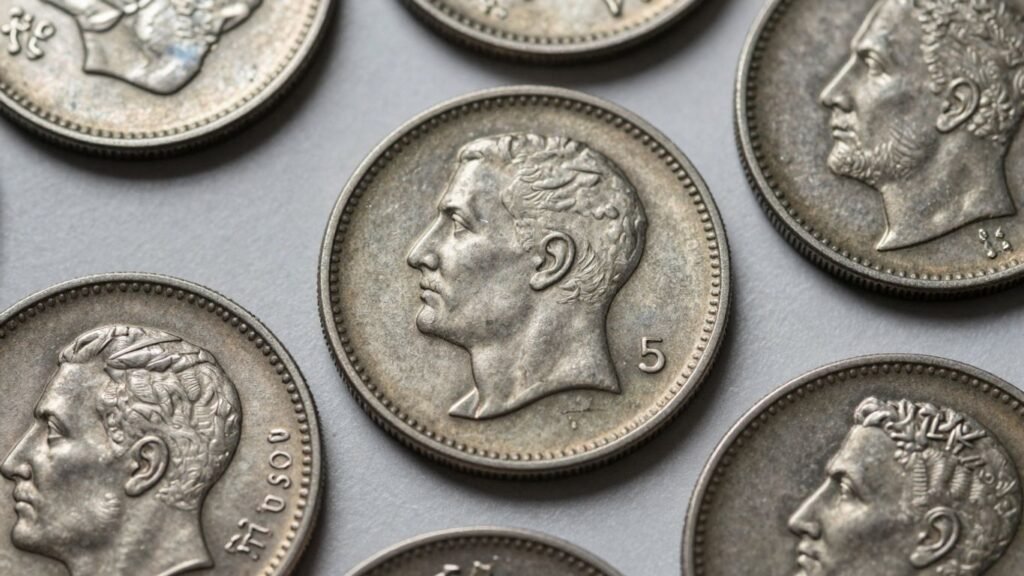
Ever looked at a coin and thought, ‘Hey, that looks a little… off?’ Well, you might be onto something! Coins can have all sorts of little quirks from the minting process, and these aren’t always mistakes. Sometimes, they’re actually pretty cool. We call these ‘types of coin errors,’ and they can turn a regular old coin into something special. Let’s dive into how these happen and what makes them interesting to collectors.
Key Takeaways
- Coin errors happen during the minting process and fall into three main groups: strike errors, die errors, and planchet errors.
- Common errors include doubled dies, where you see a distinct double image, and off-center strikes, where the coin isn’t punched perfectly in the middle.
- Planchet errors involve issues with the blank metal piece before it’s struck, leading to things like clipped planchets or lamination flaws.
- Die errors are flaws on the actual die used to stamp the coin, which can result in things like die cracks or overdates.
- Collecting error coins is a popular hobby, driven by their historical significance, the excitement of finding rare ones, and their potential value.
Understanding The Three Main Categories Of Coin Errors
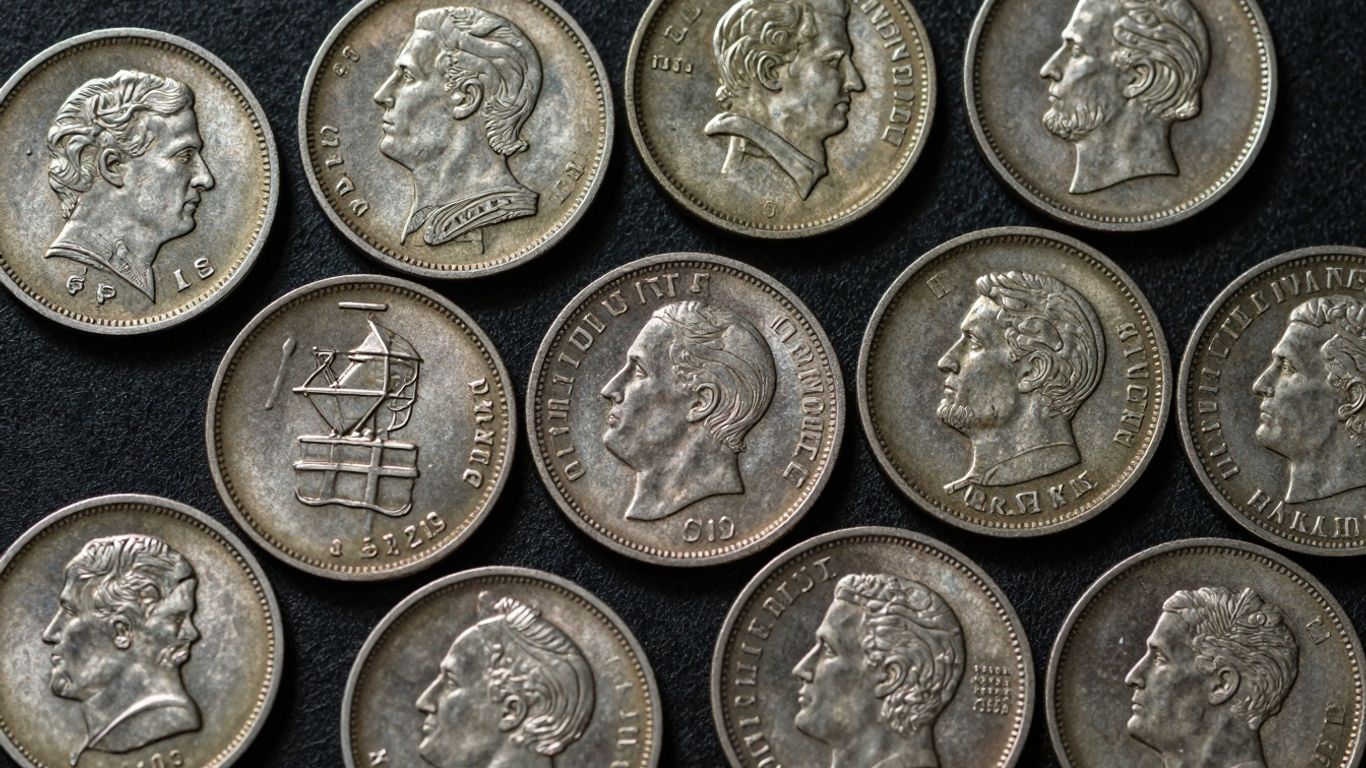
When you start looking at coins that aren’t quite right, you’ll notice they usually fall into one of three main buckets. These categories help us sort out how the mistake happened at the mint. It’s not just random; there’s a process, and errors happen at different stages. Knowing these categories is your first step to spotting and appreciating these unique pieces.
Strike Errors: Miscues In The Minting Process
These errors happen when the coin is actually being struck, that moment when the metal gets hit with incredible force to create the design. Think of it like a hiccup during the actual stamping. If the planchet (that’s the blank metal disc) isn’t perfectly positioned, or if the dies (the metal stamps) aren’t quite right, you get a strike error. It’s all about what happens, or doesn’t happen, during that final, forceful impression.
- Off-Center Strikes: The coin blank wasn’t quite centered between the dies, so only part of the design gets struck, or it’s really lopsided.
- Broadstrikes: The collar that normally keeps the coin’s shape during striking fails or is missing, letting the metal spread out too much.
- Strike-Throughs: Something foreign, like a piece of metal or debris, gets between the die and the planchet during striking, leaving an impression of that object.
Sometimes, the simplest explanation is that the coin just wasn’t hit correctly. It’s like trying to hammer a nail and missing, but on a much grander, industrial scale.
Die Errors: Flaws On The Coin's Surface
Die errors are a bit different. These aren’t about the striking process itself, but about the tools used – the dies. If a die gets damaged, cracked, or has something stuck to it, that flaw gets transferred onto every coin struck by that die. So, you’re looking at mistakes that were already on the stamp before the coin was even made.
- Doubled Dies: This is a really popular one. It happens when the die itself gets struck twice, or the hubbing process isn’t quite right, leading to a noticeable doubling of the design elements.
- Die Cracks: The metal die can develop cracks from repeated use. These cracks can create raised lines or breaks in the design on the coins.
- Die Clashes: When two dies accidentally strike each other without a planchet in between, they can leave impressions of each other on their surfaces. Later coins struck with these clashed dies might show faint ghost-like images.
Planchet Errors: Mistakes During Blank Preparation
Planchet errors happen even before the coin gets struck. The planchet is the blank metal disc that the mint uses. If there are problems when these blanks are made or prepared, you get a planchet error. These are mistakes that happen early in the game, affecting the metal disc itself before it even meets the dies.
- Clipped Planchets: These occur when the strip of metal the blanks are punched from isn’t advanced properly, and the punch cuts into an already-punched blank, creating a curved edge.
- Lamination Flaws: The metal used might have impurities or not be properly bonded. This can cause layers of the metal to separate or peel away after striking.
- Split Planchets: Similar to lamination, this is when the blank itself splits into two layers, often along the edge, because of internal metal flaws.
These three categories – strike, die, and planchet errors – cover most of the mistakes you’ll find. Understanding them gives you a solid foundation for exploring the wild world of error coins.
Exploring Common Types Of Coin Errors
So, you’ve got a coin, and you’re wondering if it’s just a regular old coin or something a bit more special. Turns out, the minting process isn’t always perfect, and sometimes, mistakes happen. These aren’t just random blips; they’re actual categories of errors that collectors get really excited about. Let’s look at a few common ones you might actually find.
Doubled Die Errors: A Distinctive Double Image
This is one of those errors that really catches your eye. A doubled die happens when the die that strikes the coin gets hit twice, or the hubbing process isn’t quite right. The result is a noticeable doubling of the design elements, like letters, numbers, or even parts of the image. It’s not just a fuzzy impression; it’s a clear, distinct second image slightly offset from the first. Think of it like looking at something through slightly misaligned glasses – you see two versions of the same thing.
Off-Center Strikes: Misaligned Punching
Imagine the coin blank sitting just a little bit crooked when the giant press slams down. That’s basically an off-center strike. Instead of the design being perfectly centered, you get a coin where a good chunk of the image is missing, and you might see the edge of the die impression where it shouldn’t be. Some of these are pretty dramatic, looking almost like a crescent moon. The ones that are most interesting to collectors often include a good portion of the date or important design elements, making them more than just a "mishap" but a unique piece of minting history.
Clipped Planchets: Irregularly Shaped Coins
Before a coin gets struck, it starts as a blank metal disc called a planchet. Sometimes, when these blanks are punched out from a sheet of metal, the machine doesn’t advance the sheet quite right. This can lead to a "clip" on the edge of the planchet, kind of like taking a bite out of a cookie. You’ll see a curved or straight indentation on the coin’s rim where the metal was cut away. These are pretty easy to spot because the edge just looks wrong, not smooth and round like it should be.
Here’s a quick rundown of what to look for:
- Doubled Dies: Look for clear, doubled lettering or design elements.
- Off-Center Strikes: Check for a design that’s not centered and parts of the coin that look "cut off" by the strike.
- Clipped Planchets: Examine the edges for missing sections or unusual curves.
It’s pretty wild to think that these little mistakes, born from mechanical hiccups at the mint, can turn an ordinary coin into something quite sought after by collectors. It really makes you look at your pocket change a little differently, doesn’t it?
Delving Deeper Into Striking Errors
Broadstrike Errors: Metal Flow Beyond The Die
Sometimes, the coin-making process goes a little haywire, and you end up with a broadstrike. This happens when the collar, that ring that’s supposed to keep the coin’s shape, isn’t in place or doesn’t do its job right. Without that boundary, the metal has nowhere to go but outwards when the dies strike it. The result is a coin that’s larger than it should be, often with a smooth, unreeded edge because the reeding is part of the collar’s design. It’s like trying to bake a cake without a pan – it just spreads out.
Strike-Through Errors: Foreign Objects During Striking
Imagine a tiny piece of metal, a bit of wire, or even some debris getting caught between the die and the blank (that’s the un-struck coin piece). When the immense pressure of the minting press comes down, that foreign object gets impressed onto the coin’s surface. This creates a gouge, a line, or a smudge that wasn’t supposed to be there. The appearance can vary wildly depending on what the object was and how it was positioned. Sometimes these are faint, other times they’re quite dramatic.
Brockage Errors: A Second Strike On A Struck Coin
Brockage errors are pretty interesting. They happen when a newly struck coin doesn’t get ejected properly and gets stuck to the die. Then, when the next blank comes along, it gets struck on top of that stuck coin. This can happen in a couple of ways:
- Die Brockage: The stuck coin leaves an impression on the next blank, but it’s a negative image of the coin’s design.
- Clipped Planchet Brockage: If the stuck coin is a clipped planchet, the impression on the next blank will show that clip.
It’s essentially a coin getting stamped twice, but the second stamp is a mirror image of the first coin’s design. These are usually quite noticeable and can make a coin stand out.
These striking errors, while mistakes from the mint’s perspective, are what collectors often seek out. They represent a moment where the machinery didn’t quite perform as intended, leading to a unique artifact. Finding one of these can be a real thrill for any numismatist.
If you’re interested in learning more about these kinds of minting mistakes, you can check out common coin mint errors. It’s a great resource for understanding the different ways coins can go wrong during production.
Investigating Planchet Errors
Lamination Flaws: Metal Impurities And Stress
Planchet errors happen way back at the start, when the blank metal discs, called planchets, are being made. Think of it like getting a bad batch of dough before you even bake the cookie. Sometimes, the metal itself isn’t perfect. It might have tiny bits of other stuff mixed in, or there could be stress inside the metal from how it was made. When the mint strikes these flawed planchets, you can end up with what collectors call a lamination flaw. It looks like the coin is peeling or splitting apart in layers. It’s not super common, but when you see it, it’s pretty obvious. The metal just didn’t bond right.
Split Planchets: Delamination Of The Blank
This is pretty much what it sounds like. A split planchet is when the blank disc actually splits into two layers. This usually happens because of those internal stresses we just talked about. The metal is weak in spots, and when the immense pressure of the coin press hits it, it just gives way. You’ll see a distinct separation, almost like a crack, running through the coin. It’s a pretty dramatic error, and it makes the coin look quite damaged, but to a collector, it’s a sign of a mistake made during the blank preparation.
Wrong Metal Or Wrong Planchet Errors
This is where things get really interesting. Sometimes, the wrong kind of metal gets mixed into the process, or a blank intended for a completely different coin ends up in the press. Imagine a dime planchet accidentally getting struck with the dies for a quarter. You’d get a coin that’s the size of a quarter but has the design of a dime, or maybe a coin made of the wrong alloy altogether. These are often quite rare and can be very valuable because they’re so unusual. It’s a mix-up at the most basic level of coin production.
Here’s a quick rundown of what can go wrong with planchets:
- Lamination Flaws: Peeling or splitting due to metal impurities or stress.
- Split Planchets: The blank separates into two distinct layers.
- Wrong Metal/Planchet: Using the incorrect metal alloy or a blank meant for a different coin.
These errors, occurring before the coin is even struck with its design, show that mistakes can happen at any stage of the minting process. They’re a testament to the complex machinery and human oversight involved in creating every single coin.
Examining Die-Related Errors
Die errors are all about what happens on the coin’s surface, specifically with the actual dies that strike the metal. Think of the dies as the stamps that create the coin’s design. If those stamps have issues, the coins they make will show it. It’s pretty fascinating how a tiny crack or a bit of leftover metal on a die can create a collectible error.
Die Clashes: Impressions From Misaligned Dies
This happens when two dies collide without a coin blank in between. It’s like slamming two stamps together without paper. The impact can leave a faint, ghost-like impression of one die onto the other. When a coin is struck afterward, you might see these mashed-up designs showing through, especially in the blank areas. It’s not super common, but when you see it, it’s a clear sign of a die clash.
Overdates: Multiple Dates Struck On One Coin
Sometimes, a mint needs to update the date on a die. Instead of making a whole new die, they might try to punch the new date over the old one. If this isn’t done perfectly, or if the old date is still visible, you get an "overdate." It looks like the date is doubled or smudged, with parts of both numbers showing. Some overdates are really obvious, while others are super subtle and require a magnifying glass to spot.
Die Cracks: Fractures In The Die Surface
Dies are made of hardened steel, but they’re not indestructible. Over time, with millions of strikes, they can develop cracks. When a coin is struck with a cracked die, the metal flows into that crack, creating a raised line on the coin’s surface. These can range from tiny, hairline cracks to large, dramatic ones that might even break off a piece of the die. A coin with a significant die crack is often quite noticeable.
These die-related errors are a direct result of the tools used in minting. Unlike errors that happen with the metal blank itself, die errors show us the wear and tear on the machinery. It’s a peek into the life of the dies that create our currency.
Unusual And Rare Types Of Coin Errors
Mule Errors: Mismatched Die Combinations
Mule errors are pretty wild. They happen when the mint accidentally uses the wrong dies for striking a coin. Imagine a penny die striking a nickel planchet, or even worse, a coin struck with two obverse (heads) dies or two reverse (tails) dies. These are super rare because the mint usually catches these mix-ups pretty quickly. The 2000 Sacagawea dollar mule, which was struck with a Washington quarter obverse die and a Sacagawea dollar reverse die, is a famous example. Only a handful of these are known to exist, making them incredibly sought after by collectors.
Die Cap Errors: Struck Coin Adhering To The Die
A die cap error occurs when a freshly struck coin sticks to the face of the hammer die. As more planchets are struck, this adhered coin gets hammered onto them, forming a hollow, cap-like shape. This "cap" is essentially a coin that has been stretched and thinned out. The original design of the struck coin is often visible inside the cap, and the subsequent coins struck under it will show a weak, raised impression of the die cap. These are quite striking to look at and are definitely not something you see every day.
Blank Planchets: Unstruck Coin Blanks
Sometimes, the minting process goes wrong even before the striking happens. A blank planchet error is essentially a coin that never made it to the striking press. These are just the blank metal discs, the "planchets," that are supposed to be struck to become coins. They might be found mixed in with regular change, but they haven’t gone through the minting process at all. While they might seem like just a piece of metal, their absence of a strike makes them a distinct error. It’s like finding a piece of paper before it’s been printed on – interesting, but not the final product.
Identifying Key Features Of Error Coins
So, you’ve got a coin that looks a little… off. Maybe the date is blurry, or there’s a weird smudge on the president’s nose. Before you dismiss it as just a damaged coin, let’s talk about how to actually spot the good stuff – the mint errors that collectors go wild for. It’s not just about luck; it’s about knowing what to look for.
Detailed Inspection Of Lettering And Mint Marks
First things first, grab a magnifying glass. Seriously, don’t skip this. You need to get up close and personal with your coins. Pay attention to the fine details like the lettering and numbers. Are the letters sharp and clear, or do they look fuzzy, doubled, or even missing entirely? The same goes for the mint mark – that little letter indicating where the coin was made. Sometimes, these can be repunched or doubled, which is a big deal for error collectors. A sharp, clear strike is usually a sign of a normal coin, but any anomaly in the lettering or mint mark warrants a closer look.
Examining The Coin's Edges And Rotation
Don’t forget the edges! Most coins have reeding, those little lines around the side. Are they consistent, or are there gaps, bumps, or weird textures? Sometimes, errors happen during the striking process, and the metal doesn’t flow quite right, affecting the edge. Also, think about rotation. Hold the coin by its edge and flip it over. Does the design on the reverse line up perfectly with the obverse (the front), or is it tilted? This is called coin rotation, and while most coins are perfectly aligned, some errors can cause them to be off-kilter. It’s a subtle thing, but it can be a sign of a minting mistake.
Looking For Double Images And Overdates
This is where things get really interesting. Double die errors are probably the most famous. You’ll see a distinct ghosting or doubling effect on letters, numbers, or even parts of the design. It looks like the coin was struck twice, slightly misaligned. Another thing to watch for is an overdate. This happens when a die that was supposed to have one date punched into it gets a new date punched over the old one. You might see parts of both numbers visible. These kinds of errors are often quite striking and can significantly increase a coin’s rarity and value. Finding one of these can be a real thrill, and some of these rare finds can be quite valuable.
Spotting these features requires patience and a keen eye. It’s easy to overlook small details, but those are often the very things that make an error coin special. Think of it like a treasure hunt right in your pocket. You’re looking for the imperfections that tell a story about how the coin was made, not just how it looks today.
The Allure Of Collecting Error Coins
Collecting coins that have mistakes from the minting process might seem a bit odd at first. Why would anyone want a coin that’s not perfect? Well, it turns out these "flaws" are exactly what make them so interesting to a lot of people.
Historical Significance Of Minting Mistakes
Think of each error coin as a little piece of history. It’s a snapshot of a moment when the machines at the mint didn’t quite get it right. Maybe the metal was a bit off, or the dies weren’t lined up perfectly. These aren’t just random mistakes; they’re tiny stories about how currency is made, and how sometimes, things go a little sideways. It’s like finding a typo in a history book – it makes you pause and think about the process.
The Thrill Of The Hunt For Rare Finds
Part of the fun is the search. You’re not just buying a coin; you’re on a treasure hunt. You might find something amazing in your pocket change, or maybe at a coin show. It’s that feeling of discovery, of uncovering something unusual that most people overlook. It really gets your pulse going when you think you’ve spotted a rare one.
Here’s a quick look at what makes the hunt exciting:
- Uniqueness: No two error coins are exactly alike, even if they have the same type of error.
- Discovery: The possibility of finding a valuable error coin in everyday circulation.
- Knowledge: Learning about the minting process and how these errors occur.
Potential Financial Rewards Of Error Coins
Let’s be honest, sometimes these mistakes can be worth a good bit of money. While not every off-center penny will make you rich, some really unusual errors, like a doubled die or a mule error (where two different dies are accidentally paired), can fetch a pretty penny. It’s not just about the history or the thrill; it’s also about the potential for a nice return on your collecting efforts. Some of the most famous error coins have sold for thousands, even tens of thousands of dollars.
It’s fascinating how something considered a mistake by the mint can become a sought-after item by collectors. The imperfections are what give these coins their character and, often, their significant value. They represent a deviation from the norm, making them stand out in a sea of perfectly struck coins.
Valuing And Grading Your Error Coins
So, you’ve found a coin that looks a little… off. Maybe the date is doubled, or there’s a weird blob on the edge. That’s exciting! But now comes the tricky part: figuring out what it’s actually worth and how to describe its condition. It’s not always straightforward, and honestly, it can feel a bit overwhelming at first.
Factors Influencing Error Coin Value
When it comes to error coins, a few things really make a difference in their price tag. The first is how rare the error is. If only a handful of coins like yours were ever made, that’s a big deal. Then there’s the condition of the coin itself. Even with a cool error, if the coin is super worn out, it won’t fetch as much as a crisp, almost-new one. Demand plays a huge role too; if a lot of collectors are looking for that specific type of error, the price goes up. Think of it like this:
| Factor | Impact on Value | Notes |
|---|---|---|
| Rarity | High | Fewer errors mean higher prices. |
| Condition | Significant | Mint state is generally preferred. |
| Demand | Variable | Popular errors command higher prices. |
| Error Type | Varies | Some errors are more sought after. |
Understanding Coin Grading Standards
Grading is basically a way to describe how worn a coin is. It’s a whole system, and people have been refining it for ages. The most common scale goes from 1 (poor condition) all the way up to 70 (perfect mint state). For error coins, the grade is super important because it tells you how much of the original detail is still visible. A coin with a dramatic error but in poor condition might be worth less than a coin with a minor error but in fantastic shape. You’ll hear terms like "Mint State" (MS) for coins that never circulated, and numbers like MS-65, which means it’s a very nice uncirculated coin. Understanding the Sheldon coin grading scale helps a lot here.
Consulting Professional Graders
Look, trying to grade a coin yourself can be tough, especially when you’re just starting out. There are so many tiny details to consider. For valuable error coins, it’s often best to get a professional opinion. These folks have seen thousands of coins and know exactly what to look for. They’ll check the coin’s details, the error itself, and give it a grade. It might cost a bit upfront, but it can save you from making a mistake when buying or selling. It’s like taking your car to a mechanic you trust – you want someone who really knows their stuff. They can also help authenticate the error, which is important because, sadly, some errors can be faked.
Where To Find And Trade Error Coins
So, you’ve found a coin that looks a little… off. Maybe the date is doubled, or it’s got a weird shape. Now what? You’re probably wondering where you can actually find more of these quirky minting mistakes, or even trade the ones you’ve got. It’s not like you can just walk into any old bank and ask for a ‘misprinted quarter’.
Specialized Coin Shops And Dealers
Your first stop should probably be a local coin shop. These places are usually run by people who really know their stuff when it comes to coins, including the weird ones. They often have a good selection of error coins already, and they’re usually happy to buy or trade for interesting pieces you might have found. Plus, talking to the dealer can teach you a lot about what makes an error coin special.
Coin Shows And Collector Clubs
Going to coin shows is like a treasure hunt for collectors. You’ll find dealers from all over, and there’s usually a huge variety of coins, including plenty of errors. It’s a great place to see a lot of different types of errors all in one spot. Joining a local coin club is also a good idea. You get to meet other collectors, share stories, and sometimes even trade coins directly with them. It’s a more personal way to get involved.
Online Auction Platforms
If you can’t make it to a show or find a good local shop, the internet is your friend. Websites like eBay are full of error coins, but you’ve got to be careful. Do your homework and make sure you’re buying from reputable sellers. There are also more specialized auction sites that focus just on coins, which can be a good place to find rarer items. Just remember to check seller reviews and descriptions closely.
Finding the right place to buy or sell error coins is key. It’s not just about the price, but also about getting a fair deal and learning more about your coins along the way. Think of it as part of the adventure of collecting these unique pieces of history.
Here’s a quick look at where you might find them:
- Local Coin Shops: Good for in-person browsing and expert advice.
- Coin Shows: Great for variety and meeting many dealers at once.
- Collector Clubs: Excellent for networking and direct trades with fellow enthusiasts.
- Online Marketplaces: Offers wide selection but requires careful vetting of sellers.
- Specialized Numismatic Auctions: Often features rarer and higher-value error coins.
The Enduring Appeal of Imperfect Coins
So, we’ve looked at a bunch of ways coins can come out a little wonky from the mint. It turns out these aren’t just mistakes; they’re actually pretty cool pieces of history. Whether it’s a double image, a weird edge, or something missing, these errors turn ordinary coins into something special. It’s kind of neat to think that a little slip-up at the factory can make a coin way more interesting, and sometimes, way more valuable. It really makes you want to look closer at the change in your pocket, doesn’t it? Who knows what hidden treasures you might find.
Frequently Asked Questions
What exactly is a coin error?
A coin error is basically a mistake made when a coin is being made at the mint. Think of it like a little oopsie during the manufacturing process. These errors can happen in a few different ways, like during the striking, the die preparation, or even when the blank metal disc is being made.
Are all coin errors valuable?
Not all coin errors are super valuable, but many can be worth more than a regular coin. The value usually depends on how rare the error is, how noticeable it is, and if people actually want to collect that specific type of mistake. Some really rare errors can be worth a lot of money!
What is a 'double die' error?
A ‘double die’ error happens when the stamp (called a die) that makes the image on the coin hits it more than once, but not perfectly lined up. This makes the design look like it’s doubled, giving it a really cool, distinct look. It’s one of the more popular errors collectors look for.
What's the difference between a strike error and a planchet error?
A strike error happens when the coin is being pressed. Imagine the hammer hitting the coin wrong, or the coin not being perfectly centered. A planchet error happens *before* the coin is struck, during the preparation of the blank metal disc. This could mean the disc is the wrong shape, has a hole, or is made of the wrong metal.
How can I tell if my coin has an error?
You’ll need to look closely! Check for anything unusual like doubled images, parts of the design missing, odd shapes, or strange marks. Sometimes using a magnifying glass helps. Comparing your coin to a regular, non-error version of the same coin can also show you the differences.
Where do people find error coins?
You might get lucky and find one in your pocket change! Many collectors also find them by looking through coin rolls, visiting coin shops, attending coin shows, or buying from specialized dealers and online auction sites. It’s like a treasure hunt!
What is a 'mule' error?
A ‘mule’ error is pretty unusual. It happens when two dies that weren’t supposed to go together are accidentally used to make a coin. For example, it might have the front side (obverse) of one type of coin and the back side (reverse) of a completely different coin.
Should I try to clean an error coin I find?
It’s generally best not to clean error coins, or any collectible coins for that matter. Cleaning can actually damage the coin’s surface and lower its value. It’s better to leave it as is and let a professional grader or collector decide if any cleaning is needed.