So, you’ve got some coins and you’re wondering about those little marks on them. They’re called bag marks, and they happen when coins bump into each other. It’s pretty common, especially with older coins or ones that have been handled a lot. Learning how to spot these marks is a big part of figuring out just how nice your coin really is, and that affects what it’s worth. We’re going to break down how to get good at identifying bag marks coins, so you know what you’re looking at.
Key Takeaways
- Bag marks are small scratches or dings from coins touching each other, usually during storage or transport.
- The number and appearance of bag marks can lower a coin’s grade and market value, especially for coins in high grades.
- Good lighting and magnification are your best friends when identifying bag marks coins accurately.
- Factors like where the marks are, how big they are, and the coin’s origin can affect how severe they seem.
- While professional grading services can help, understanding bag marks yourself gives you confidence when buying or selling coins.
Understanding Bag Marks On Coins
What Constitutes A Bag Mark
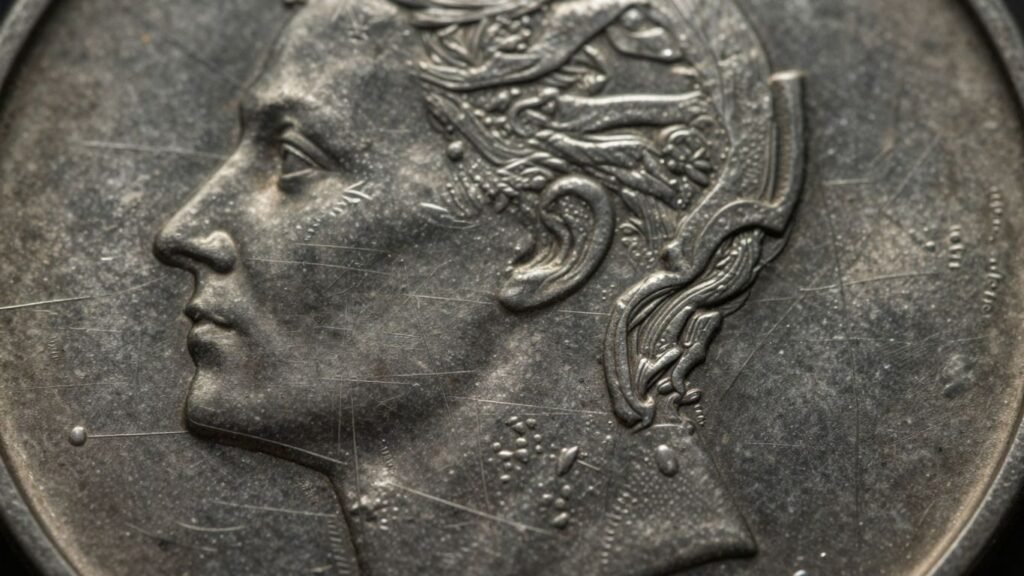
So, what exactly is a bag mark? Basically, it’s any little scratch, ding, or surface imperfection that happens when coins bump into each other. Think about it: when coins are fresh from the mint, they’re often tossed into big bags or tubes. During transport and handling, they rub and knock against one another. These incidental contacts create the marks we call bag marks. They’re not usually deep gouges, but more like tiny abrasions or shallow indentations on the coin’s surface. They can appear on the flat fields (the open areas) or even on the raised design elements, though they’re usually more noticeable on the fields. It’s a common occurrence, especially with coins that aren’t individually protected right after striking.
How Bag Marks Impact Coin Value
Bag marks can really affect how much a coin is worth, especially for coins that are supposed to be in top shape. For lower-grade coins, a few marks might not make a huge difference. But when you get into the higher grades, like Mint State, even a small number of noticeable bag marks can knock the grade down a notch or two. This drop in grade means a drop in value, sometimes a pretty significant one. Collectors looking for pristine coins want surfaces that are as clean as possible. The fewer and less obvious the bag marks, the better the coin generally looks and the more it can command in the market. It’s all about that visual appeal and how close it looks to its original, untouched state.
The Role Of Bag Marks In Coin Grading
When a coin is being graded, bag marks are a big consideration. Grading is essentially a way to describe a coin’s condition, and bag marks are a key factor in that description. Professional grading services look at several things about these marks:
- Number: How many bag marks are there?
- Severity: Are they light hairlines or deeper dents?
- Location: Are they on prominent design features or in less visible areas?
- Distribution: Are they clustered in one spot or spread out?
For example, a coin might have a beautiful strike and great luster, but if it’s covered in numerous, heavy bag marks, it won’t get a top grade. A coin with fewer, lighter marks, especially if they are well-placed, will fare much better. It’s a balancing act, and graders try to assess the overall impact on the coin’s appearance and desirability. Understanding how these marks play into the grading scale is key to accurately assessing any coin’s condition and potential value. For more on grading factors, you might find resources on coin grading helpful.
Identifying Bag Marks Coins Effectively
Alright, so you’ve got a coin, and you’re trying to figure out if it’s got those pesky bag marks. It’s not always as straightforward as it sounds, but with a few tricks up your sleeve, you can get pretty good at spotting them. Think of it like looking for a specific type of scratch on your car – you need the right angle, the right light, and maybe even a magnifying glass.
Essential Tools For Inspection
First off, you don’t need a whole lab setup. A good magnifying glass or a loupe is your best friend here. I usually go for something around 5x or 10x magnification. It really helps you see those tiny imperfections that are easy to miss with the naked eye. Also, having a clean, neutral background to place your coin on is a good idea. Sometimes, the surface you’re looking at can play tricks on your eyes. A simple white or black felt pad works wonders. And don’t forget a soft cloth – not to rub the coin, but just to handle it without adding more marks!
The Importance Of Lighting Conditions
This is a big one, seriously. The way light hits your coin can make or break your inspection. What looks like a clean surface under harsh, direct light might reveal a whole host of bag marks when you tilt it just right under a softer, more diffused light. I’ve found that natural daylight, maybe near a window but not in direct sun, is often the best. You can also get adjustable lamps that let you control the intensity and angle of the light. Experimenting with different lighting angles is key to uncovering hidden imperfections.
Magnification For Detailed Examination
Once you’ve got your tools and your lighting sorted, it’s time to zoom in. When you’re using that loupe, don’t just glance. Move the coin around, change the angle, and really scrutinize the surfaces. Look for those small, often shallow, lines or tiny pits. They’re usually not deep gouges, but more like little abrasions. Remember, bag marks are from coins bumping into each other, so they tend to be somewhat random in direction and depth. If you’re trying to get a handle on coin details and grading factors, resources like coin identification tools can be quite helpful.
Bag marks are a common sight, especially on coins that have been handled a lot. They’re essentially surface abrasions from coin-on-coin contact. While they might seem minor, they can really affect how a coin is graded, particularly in the higher uncirculated grades where pristine surfaces are highly desired. It’s all about context and how noticeable they are.
Factors Influencing Bag Mark Severity
Location and Prominence of Marks
Where a bag mark shows up on a coin can make a big difference. Marks on the high points of a design, like a president’s cheek or the eagle’s head, are way more noticeable than those tucked away in the fields (the flat areas). Think about it – a tiny ding on a raised detail can really mess up the look. The more prominent the mark and the more it interferes with key design elements, the worse it is. It’s not just about how many marks there are, but where they land and how deep they are. A coin might have a few marks, but if they’re small and in the background, it’s not as bad as one with a single deep scratch across the portrait.
Coin Origin and Minting Processes
Did you know that where a coin was made and how it was handled right after minting can affect its bag marks? It’s true. Some mints might have had rougher processes or used different types of bags that caused more friction. For instance, coins from certain branch mints, like Carson City back in the day, sometimes show more dings than those from Philadelphia. It’s like they had a different way of tossing them into the bags. This isn’t a hard and fast rule, but it’s something to keep in mind when you’re looking at coins from different places. It adds another layer to understanding why one coin might look more beat up than another, even if they’re the same date and type.
The Effect of Coin Age on Marks
Older coins often have a different story when it comes to bag marks. While newer coins might get their marks from being tossed around in mint bags or during initial distribution, older coins can accumulate marks over a much longer period. Think about coins that have been passed down through generations or sat in collections for decades. They might have picked up marks from being stored in less-than-ideal containers or simply from being handled by many people over the years. Sometimes, older coins develop a sort of patina or toning that can actually help disguise minor marks, making them less obvious than they would be on a bright, shiny new coin. It’s a bit of a trade-off; older coins might have more marks overall, but they can sometimes be less visually jarring due to their age and surface characteristics. Learning about the history of a coin can sometimes explain the marks you see. For example, understanding the edge lettering on a coin like the Sacagawea dollar can be important, especially when looking at different positions.
Bag marks aren’t just random damage; their severity is a mix of how and where they happened, the coin’s background, and how long it’s been around. It’s a complex puzzle that collectors try to figure out when they’re looking at a coin’s condition.
Assessing Bag Marks On Higher Grade Coins
The Premium On Flawless Surfaces
When you’re looking at coins that are supposed to be in top condition, like those in Mint State (MS) grades, even the smallest imperfections really start to stand out. Collectors and dealers pay a lot for coins that look like they just came out of the minting press, with surfaces that are clean and bright. These coins are all about that pristine look, and bag marks, even tiny ones, can really mess with that. Think of it like buying a brand new car – you expect it to be perfect, right? A little scratch on the paint job is a big deal. The same idea applies here. The higher the grade, the more picky people get about surface issues.
Distinguishing Bag Marks From Other Imperfections
It’s not always easy to tell a bag mark from something else. Sometimes, what looks like a bag mark could actually be a hairline scratch from cleaning, or maybe a small pit from the minting process itself. Bag marks are usually shallow and often appear in clusters, especially on the fields (the flat, open areas) of the coin. They tend to have a slightly different look than a sharp scratch. A scratch usually looks like a distinct line, while a bag mark might be more of a tiny ding or a shallow groove. It takes practice to tell them apart, and sometimes, you need good lighting and magnification to be sure.
Impact On Mint State Coin Aesthetics
For coins graded MS-65 and above, bag marks can be a real problem for how the coin looks. A coin might have all its original mint luster, sharp details, and a great strike, but if it’s covered in little marks, it just doesn’t have that wow factor. This can push a coin down in grade, maybe from an MS-66 to an MS-64, and that difference in grade can mean a big drop in price. Collectors want coins that look as good as possible for their grade, and too many bag marks just ruins the visual appeal. It’s the difference between a coin that catches your eye and one that just sits there.
The pursuit of perfection in coin collecting means that even minor surface disturbances, like those caused by coins bumping against each other in a bag, become significant factors. For higher-grade coins, the absence of such marks is often what commands the highest premiums, as it signifies a coin that has somehow escaped the typical wear and tear of post-mint handling.
Bag Marks And Their Effect On Coin Aesthetics
Visual Appeal and Collector Desirability
Okay, so you’ve got a coin, and it looks pretty good at first glance. But then, under the light, you start seeing them – those little lines, sometimes like tiny scratches, sometimes just dull spots. These are bag marks, and they happen when coins bump into each other, usually when they’re being bagged up at the mint or handled later on. They’re a big deal because they mess with how nice the coin looks. Collectors, especially those looking for top-notch coins, want surfaces that are as clean and smooth as possible. Think of it like a brand new car – you want that perfect paint job, right? Bag marks are like little dings in that paint. Even a few of them can make a coin seem less special, less desirable, and honestly, less valuable.
How Marks Detract From Luster
Luster is that original shine, that glow that a coin has when it first comes from the mint. It’s like the coin’s natural radiance. Bag marks, even small ones, can disrupt this luster. They create tiny interruptions on the surface where the light doesn’t reflect as smoothly. Instead of a consistent, vibrant sheen, you might see duller patches or lines where these marks are. It’s not always a dramatic change, but to a trained eye, it’s noticeable. It’s like looking at a polished apple versus one that’s been rolling around in a basket – the latter just doesn’t have that same bright, uniform gleam. This loss of original mint luster is a significant factor in how appealing a coin is to collectors.
The Subjectivity of Eye Appeal
Now, here’s where things get a bit tricky. While there are general rules, what one person considers a minor flaw, another might see as a deal-breaker. This is what we call "eye appeal." Some collectors are super strict and will pass on a coin with even the slightest bag mark, especially if they’re aiming for a perfect specimen. Others might be more forgiving, particularly if the coin has other great qualities, like fantastic toning or a really strong strike. The location and density of the marks also play a role. A few marks clustered on the edge might be less offensive than one prominent mark right in the center of a portrait. It really comes down to what the individual collector values most and what they’re willing to overlook. It’s a bit of a personal judgment call, even with grading standards in place.
Here’s a quick way to think about it:
- High Eye Appeal: Minimal to no visible bag marks, vibrant luster, clean surfaces.
- Average Eye Appeal: A few scattered, minor bag marks that don’t significantly disrupt luster or design.
- Low Eye Appeal: Numerous, deep, or prominent bag marks that detract noticeably from the coin’s overall look and shine.
Ultimately, while grading services assign numerical grades, the subjective element of eye appeal can still influence a coin’s desirability and price in the market. A coin that looks better than its grade might fetch a premium, while one that looks worse might struggle to sell, even if it technically meets the grade’s criteria.
Bag Marks In Relation To Coin Rarity
Overlooking Minor Flaws On Rare Dates
So, you’ve got a coin, maybe it’s got a few little dings on it from being tossed around in a bag. Annoying, right? Especially if it’s a coin you’re hoping is in super-duper condition. But here’s the thing: when you’re looking at really rare coins, sometimes those little marks just don’t matter as much. Think about it – if there are only a handful of a certain coin ever made, and yours has a couple of tiny scratches, collectors might still be lining up. The sheer scarcity of the coin often outweighs minor surface imperfections. It’s like finding a rare book with a slightly bent cover; the story inside is still what matters most to many.
Contextualizing Bag Marks By Demand
Demand plays a huge role, doesn’t it? If a coin is super popular and everyone wants one, even a coin with some bag marks might still command a good price. It’s all about supply and demand, really. If there aren’t many coins available and lots of people are trying to buy them, those little dings might get overlooked. But if it’s a common coin and it’s covered in marks, well, that’s a different story. Collectors are pickier when there are plenty of other options out there.
The Influence Of Rarity On Value
When we talk about rarity, it really changes how we look at bag marks. For common coins, even a few marks can knock the value down quite a bit. But for those super rare dates, the ones that are hard to find? Collectors might be willing to accept a coin with some bag marks because finding one in any condition is a challenge. It’s not that the marks disappear, it’s just that the coin’s rarity makes them less of a deal-breaker. You might see a coin with noticeable bag marks selling for a lot more than a common coin with similar marks, simply because it’s so much harder to find.
Here’s a general idea of how rarity can affect the impact of bag marks:
- Common Dates: Bag marks can significantly lower the grade and value. Even a few marks can be a big issue.
- Semi-Key Dates: Marks are still a concern, but collectors might be more forgiving if the coin is otherwise attractive and hard to find.
- Rare Dates/Key Dates: Bag marks are often secondary to the coin’s availability. Collectors may overlook them if the coin is in the best available condition or if it’s the only one they can find.
Sometimes, the story behind a coin’s rarity is so compelling that collectors focus on acquiring it, even if it isn’t perfectly pristine. The thrill of owning something scarce can overshadow minor surface issues.
Let’s look at a hypothetical scenario:
| Coin Type | Bag Mark Severity | Estimated Value Impact | Rarity Factor |
|---|---|---|---|
| Common Date (MS-65) | Moderate | -30% to -50% | Low |
| Key Date (MS-65) | Moderate | -10% to -25% | High |
| Common Date (VF-35) | Heavy | -20% to -40% | Low |
| Key Date (VF-35) | Heavy | -5% to -15% | High |
Practical Tips For Bag Mark Assessment
Comparing To Known Authentic Examples
When you’re trying to figure out if a coin has bag marks, or how bad they are, it really helps to have some reference points. Think of it like learning to spot a fake signature – you need to see a bunch of real ones first. Looking at coins that have already been graded by the big services (like PCGS or NGC) can be super useful. They often show pictures of coins at different grade levels, and you can see how bag marks affect them. You can find these on their websites or in grading guides. It’s also a good idea to check out coin shows or reputable dealer inventories. Seeing a lot of coins in person, especially ones you’re interested in, gives you a feel for what’s normal and what’s not.
The Role Of Dealer Transparency
This is a big one. A good dealer will be upfront about any imperfections on a coin, including bag marks. If someone is trying to sell you a coin, especially a higher-grade one, and they’re hesitant to let you inspect it closely under good lighting, that’s a red flag. They might be trying to hide something. Always ask to see the coin under a bright light, preferably natural light if possible, before you buy. A trustworthy seller will have nothing to hide and will want you to be happy with your purchase. They might even point out the bag marks themselves, explaining how they might affect the grade. This kind of honesty builds trust and helps you make a better decision.
Learning From Personal Collecting Experiences
Honestly, you learn a ton just by collecting coins yourself over time. You’ll start to notice patterns. Maybe you’ll realize that coins from a certain mint tend to have more marks, or that older coins seem to handle them better. Keep a little notebook, or even just mental notes, about the coins you acquire. What did you think was a great coin when you bought it, and how did your opinion change after you looked at it more closely at home? Did you ever buy a coin that looked amazing in the shop but revealed its flaws under your own desk lamp? These personal experiences are invaluable. They teach you what to look for and what you personally find acceptable in your own collection. It’s a journey, and every coin you examine adds to your knowledge base.
Beyond Bag Marks: Other Coin Imperfections
Identifying Scratches and Nicks
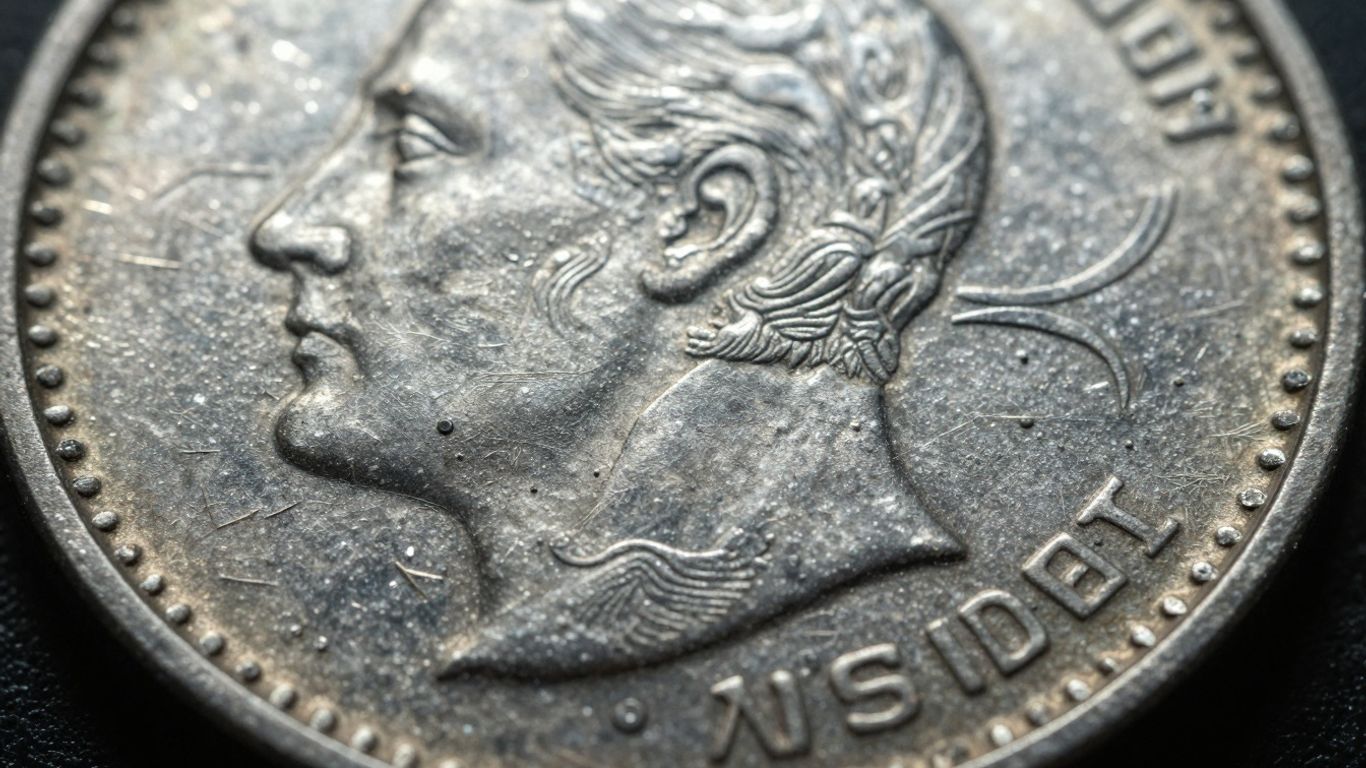
So, you’ve gotten pretty good at spotting those little dings and scratches that come from coins bumping around in bags. That’s a big step! But coins can pick up other kinds of damage too, and it’s good to know the difference. Scratches are usually longer and more linear than bag marks. Think of a drag mark, like something scraped across the surface. Nicks are more like small dents or gouges, often with a bit of metal pushed up around the edge of the mark. These are generally considered more serious flaws than typical bag marks because they’re more obvious and can really mess with the coin’s surface.
Recognizing Surface Blemishes
Beyond just dings and scratches, coins can have all sorts of other surface issues. Sometimes you’ll see what collectors call "hairlines." These are super fine, almost invisible scratches that can happen during the minting process or even from careless handling. They’re really hard to see without magnification and good light. Then there are things like "rim nicks," which are damage specifically to the edge of the coin, or "planchet flaws." A planchet is the blank metal disc before it gets struck into a coin. Sometimes, these blanks have issues like "folding" or "cracks" that show up on the finished coin. These aren’t damage from handling, but rather problems from the very beginning of the coin’s life.
Understanding Strike Quality Variations
This one’s a bit different from damage. Strike quality refers to how well the coin’s design was impressed onto the metal during the minting process. A coin with a "strong strike" will have sharp, clear details everywhere, right down to the smallest lines. A "weak strike," on the other hand, means some parts of the design might look soft, mushy, or even missing. This is especially noticeable on high points of the coin, like a president’s hair or the lettering. It’s not damage, but it definitely affects how the coin looks and how collectors perceive its quality. Sometimes, a weak strike can make a coin look like it has bag marks or other issues when it’s really just a lack of detail from the mint.
It’s easy to get caught up in looking for just one type of imperfection, like bag marks. But a truly sharp coin collector knows to look at the whole picture. That means checking for scratches, nicks, and even how well the design came out in the first place. Each of these things tells a story about the coin’s journey from the mint to your collection.
Here’s a quick rundown of what to look for:
- Scratches: Longer, linear marks. Can be light hairlines or deeper gouges.
- Nicks: Small dents or gouges, often with displaced metal.
- Rim Damage: Dings or abrasions specifically on the coin’s edge.
- Planchet Flaws: Issues present on the blank metal disc before striking, like folds or cracks.
- Strike Weakness: Areas where the coin’s design details are not fully impressed.
The Role Of Professional Grading Services
How Grading Companies Evaluate Bag Marks
When you send a coin off to a professional grading service, they’ve got a whole process for figuring out its condition. Bag marks are definitely on their radar. They look at how many marks there are, where they’re located, and how deep they seem. A coin with just a few light marks might still get a high grade, but a coin that looks like it went a few rounds in a tumble dryer? Not so much. They use a standardized system, like the Sheldon Coin Grading Scale, to assign a numerical grade, and bag marks play a big part in that score. It’s not just about wear; it’s about the overall surface quality.
Seeking Expert Authentication
Sometimes, you just can’t tell for sure if a coin is the real deal or if those marks are natural or something else. That’s where the pros come in. They’ve seen thousands, maybe millions, of coins, and they can spot fakes or altered coins pretty quickly. Plus, they can tell you if a coin is a rare variety that might be worth more than you thought. It’s like having a seasoned detective for your coins.
The Value Of Certified Coins
Getting a coin certified by a reputable service does a few things. First, it gives you a pretty solid idea of its grade and condition, which helps when you’re buying or selling. It also adds a layer of security because the coin is usually sealed in a tamper-evident holder. This can make it easier to sell later on, as buyers often trust certified coins more. It’s a way to get a more objective opinion on your coin’s condition.
Here’s a quick look at what grading services consider:
- Number of Marks: How many bag marks are visible?
- Severity of Marks: Are they light hairlines or deep gashes?
- Location of Marks: Are they on a prominent area like a portrait or in a less noticeable spot?
- Overall Surface: Does the coin still have its original mint luster?
Professional grading aims to bring consistency to the coin market. While personal opinions can vary, these services provide a widely accepted standard for coin condition, which helps build confidence for both collectors and investors. It’s a way to take some of the guesswork out of coin collecting.
Preventing Bag Marks On Your Collection
So, you’ve spent time learning about bag marks and how they can affect your coins. Now, the big question is, how do you stop them from happening in the first place? It’s all about being careful with how you store and handle your collection. Think of it like protecting a delicate piece of art; you wouldn’t just toss it in a box, right?
Proper Coin Storage Solutions
This is probably the most important part. Leaving coins loose in a drawer or even a simple plastic bag is a recipe for disaster. They’ll just bump around, creating those dreaded bag marks and other little scratches. You need to give each coin its own safe space.
- Individual Holders: The most common and effective method is using individual coin holders. These come in various materials, like Mylar or hard plastic slabs. They keep coins separated and protected. I personally like the 2×2 cardboard holders with Mylar windows for most of my collection; they’re affordable and do a great job.
- Coin Albums: For sets or series you’re collecting, dedicated coin albums are fantastic. They have custom slots for each coin, keeping them snug and preventing them from rubbing against each other. Just make sure the album pages are made from archival-quality materials, not cheap plastic that can degrade.
- Storage Boxes: If you have a lot of coins in individual holders, you’ll need sturdy storage boxes to keep them organized and safe from environmental factors like humidity. Look for boxes designed specifically for coin supplies.
Handling Coins With Care
Even the best storage won’t help if you’re not careful when you actually pick up your coins. Your hands, believe it or not, are one of the biggest threats to a coin’s surface.
- Use Gloves: Always, always wear cotton or nitrile gloves when handling your coins. The oils and acids on your skin can cause permanent damage, leading to spots or a dulling of the surface over time. It might feel a bit formal at first, but it’s a habit worth developing.
- Hold by the Edge: When you absolutely must handle a coin without gloves (though try to avoid this!), always grasp it by its reeded or smooth edge. Never touch the obverse (front) or reverse (back) surfaces. This minimizes the risk of accidental scratches or fingerprints.
- Gentle Movements: When placing a coin into a holder or album, do so gently. Don’t drop it in. Let it slide or carefully place it to avoid any sudden impact that could cause a new mark.
The Benefits Of Individual Coin Holders
Using individual holders is more than just preventing bag marks; it’s about preserving the coin’s overall condition and, by extension, its value. When coins are properly housed, they are shielded from:
- Environmental contaminants
- Accidental drops or impacts
- Contact with other coins or surfaces
Keeping your coins in separate, protective holders is the single best way to prevent new bag marks from forming. It also makes them easier to catalog and admire without constant worry. Think of it as giving each coin its own little protective bubble.
For more on coin care, you might find resources on proper coin storage helpful. Taking these simple steps can make a world of difference in keeping your collection looking its best for years to come. It’s really not that complicated once you get into the habit.
Wrapping It Up
So, we’ve talked a lot about bag marks – what they are, how they happen, and why they matter for your coins. It’s pretty clear that these little nicks and scratches aren’t just random damage; they can really change how a coin looks and, more importantly, how much it’s worth. Paying attention to them, especially on coins you plan to sell or grade, is a smart move. Keep practicing your inspection skills, use good light, and maybe a magnifier, and you’ll get better at spotting them. It’s all part of learning more about coins and becoming a sharper collector.
Frequently Asked Questions
What exactly are bag marks on coins?
Bag marks are tiny scratches or little dents that happen when coins bump into each other. Think about it like this: when coins are tossed into a bag or box together, especially at the mint, they rub and knock against one another. These little marks are the result of that constant contact. They’re super common, especially on newer coins that haven’t been handled carefully.
How do bag marks affect a coin's value?
Bag marks can really lower a coin’s worth, especially if the coin is supposed to be in really good shape. Imagine a coin that looks almost perfect – if it has a bunch of noticeable bag marks, it’s not as special anymore. Collectors want coins that look clean and untouched. So, even a few small marks can make a coin worth much less than one without any.
Are bag marks the same as scratches?
While both are surface imperfections, bag marks are typically smaller, shallower, and more numerous than intentional scratches. Scratches are usually longer, deeper, and more obvious, often looking like they were made by a sharp object. Bag marks are more like tiny dings and rubs from coins hitting each other.
Do bag marks matter on older or rare coins?
They can still matter, but sometimes collectors are more forgiving with older or really rare coins. If a coin is super hard to find, people might overlook a few bag marks because the coin’s rarity is the main attraction. However, if a rare coin is in amazing, almost perfect condition, bag marks will still bring its value down.
What's the best way to spot bag marks?
You’ll need good lighting and a magnifying glass, like a jeweler’s loupe. Look at the coin from different angles under a strong light. The marks often show up as tiny, dull spots or faint lines that catch the light differently than the rest of the coin’s surface. It helps to compare it to a coin you know is flawless.
Can bag marks be removed from a coin?
It’s strongly advised not to try and remove bag marks yourself. Any attempt to clean or polish them off will likely cause more damage, like altering the coin’s surface or luster. This kind of cleaning almost always lowers a coin’s value much more than the original bag marks did.
Do all coins get bag marks?
Most coins that are handled in bulk, especially those fresh from the mint, will have some degree of bag marks. Coins that are individually protected right away, or those that are handled very carefully, are less likely to have them. Some minting processes or mints might also result in more or fewer bag marks on their coins.
How do professional grading services handle bag marks?
Professional grading companies look very closely at bag marks. They note their number, size, location, and how much they affect the coin’s overall look. Coins with fewer and less noticeable bag marks will receive a higher grade. In fact, the difference between a top-grade coin and one just below it can often be due to the presence or absence of these marks.