So, you’re looking to get serious about coin collecting, huh? It’s a pretty cool hobby, but there’s definitely a learning curve. One of the trickier parts, especially when you’re starting out, is figuring out how well a coin was made – basically, its ‘strike quality.’ It sounds simple, but there’s a lot to it. This guide is going to break down how to look at a coin and tell if it got a good hit from the minting press. We’ll cover what to look for, the tools you might need, and why it all matters for your collection.
Key Takeaways
- Understanding coin strike quality means looking at how well the design details were impressed onto the metal blank. A strong strike shows clear, sharp features, while a weak one might look mushy or incomplete.
- You’ll need a few basic tools to really see what’s going on. A good magnifying loupe (around 10x is usually fine) and proper lighting are super important for spotting fine details and any issues.
- Pay attention to the high points of the design – like on a person’s hair or the lettering. If these areas are soft or missing detail, it’s a sign of a weak strike.
- A coin’s surface and how it reflects light (its luster) are connected to the strike. A good strike often helps preserve that original mint luster, making the coin more appealing.
- Learning to assess strike quality takes practice. Compare coins, use reference guides, and handle different examples to train your eye for evaluating coin strike quality.
Understanding The Fundamentals Of Evaluating Coin Strike Quality
When you first get into collecting coins, it can feel a bit overwhelming. There’s so much to learn, and one of those things is how well a coin was made, or its ‘strike quality.’ This isn’t just about whether the coin looks pretty; it actually tells you a lot about its history and how it was produced. A strong strike means the coin was made with good dies and enough pressure, so all the details are sharp and clear. Think of it like a photograph – a blurry photo isn’t as good as a sharp one, right? It’s the same with coins.
Defining Coin Strike Quality
So, what exactly is coin strike quality? Basically, it’s how well the design details of a coin were transferred from the die onto the metal blank, called a planchet. When a coin is struck, immense pressure is applied, forcing the metal to fill every nook and cranny of the die’s engraved design. A good strike means that pressure was consistent and the dies were in good shape, resulting in a coin where all the fine lines, dots, and features are fully formed and crisp. A weak strike, on the other hand, means some of these details might be soft, mushy, or even missing entirely, especially on the high points of the design.
The Importance Of Strike In Numismatics
Why should you care about strike quality? Well, in the world of coin collecting, it’s a pretty big deal. Coins with excellent strikes are generally more desirable and can be worth more money. Collectors often look for coins that show the full intended detail of the design. It shows that the coin was made under ideal conditions, and often, coins with strong strikes also have better overall eye appeal. It’s one of the first things experienced collectors look at when evaluating a coin’s condition and potential value.
How Strike Impacts Overall Coin Appeal
Strike quality really affects how a coin looks and feels. A coin with a weak strike might look flat, even if it’s otherwise in great shape. You might see areas where the design just doesn’t seem to be there, like the hair on a portrait or the feathers on an eagle. This lack of detail can make the coin look less impressive. Conversely, a coin with a bold, sharp strike really pops. The design elements stand out, creating a sense of depth and clarity that makes the coin much more attractive to look at. It’s the difference between a coin that just sits there and one that really catches your eye.
Here’s a simple way to think about it:
- Strong Strike: All design elements are fully formed, sharp, and clear. High points are well-defined.
- Average Strike: Most design elements are visible, but some may be slightly soft or lack full definition.
- Weak Strike: Significant design elements are missing, soft, or mushy, especially on the high points.
Evaluating strike isn’t just about looking for perfection; it’s about understanding the coin’s manufacturing process and how that affects its appearance. It’s a key part of appreciating the artistry and technical skill that went into making each coin.
Essential Tools For Assessing Coin Strike
Alright, so you want to get serious about checking out coin strike quality? You can’t just eyeball it and expect to get it right every time. You need the right gear. Think of it like a detective needing their magnifying glass – you need tools to see what’s really going on.
Selecting The Right Magnification Loupe
First up, the loupe. This is your best friend for seeing those tiny details. Most folks recommend a 10x magnification. Why 10x? It’s a good balance. Too little, and you miss stuff. Too much, and the field of view gets tiny, and it can be hard to get a good look. You’ll want something called an achromatic or triplet loupe if you can swing it. These are built better, meaning the image you see is sharper and doesn’t have those weird color fringes or distortions around the edges. This clarity is key for spotting if a coin got a full strike or if some details are just… missing.
The Role Of Proper Lighting In Inspection
Now, a good loupe is useless in the dark. Lighting is a big deal. You need a strong light source, preferably one you can angle. Why angle it? Because light hitting the coin straight on can hide surface imperfections or make weak strikes look stronger than they are. By moving the light around, you can make those high points and low points pop, revealing the true sharpness of the design. A clean, white background also helps a lot, making the coin stand out and preventing any distracting colors from messing with your perception.
Utilizing Precision Handling Tools
This one might seem obvious, but it’s super important: how you hold the coin matters. You absolutely do not want to touch the coin’s surface. Ever. Your fingers have oils and dirt, and even if you can’t see it, you’re leaving marks. These aren’t just smudges; they can actually damage the coin over time, especially if it’s a high-grade piece. So, what do you use? Precision handling tools, like soft cotton gloves or specialized coin tongs that have padded tips. These let you pick up and rotate the coin without leaving a fingerprint or causing any scratches. It’s all about protecting that surface while you’re examining the strike.
Here’s a quick rundown of what you’ll want:
- Magnification: A 10x achromatic or triplet loupe is your go-to.
- Lighting: A strong, adjustable light source is a must.
- Handling: Cotton gloves or padded coin tongs to avoid surface contact.
Getting these tools together might seem like a small step, but it makes a huge difference. It’s the difference between guessing and actually knowing what you’re looking at. You’ll start seeing details you never noticed before, and that’s how you really learn to judge strike quality.
Analyzing Design Detail And Sharpness
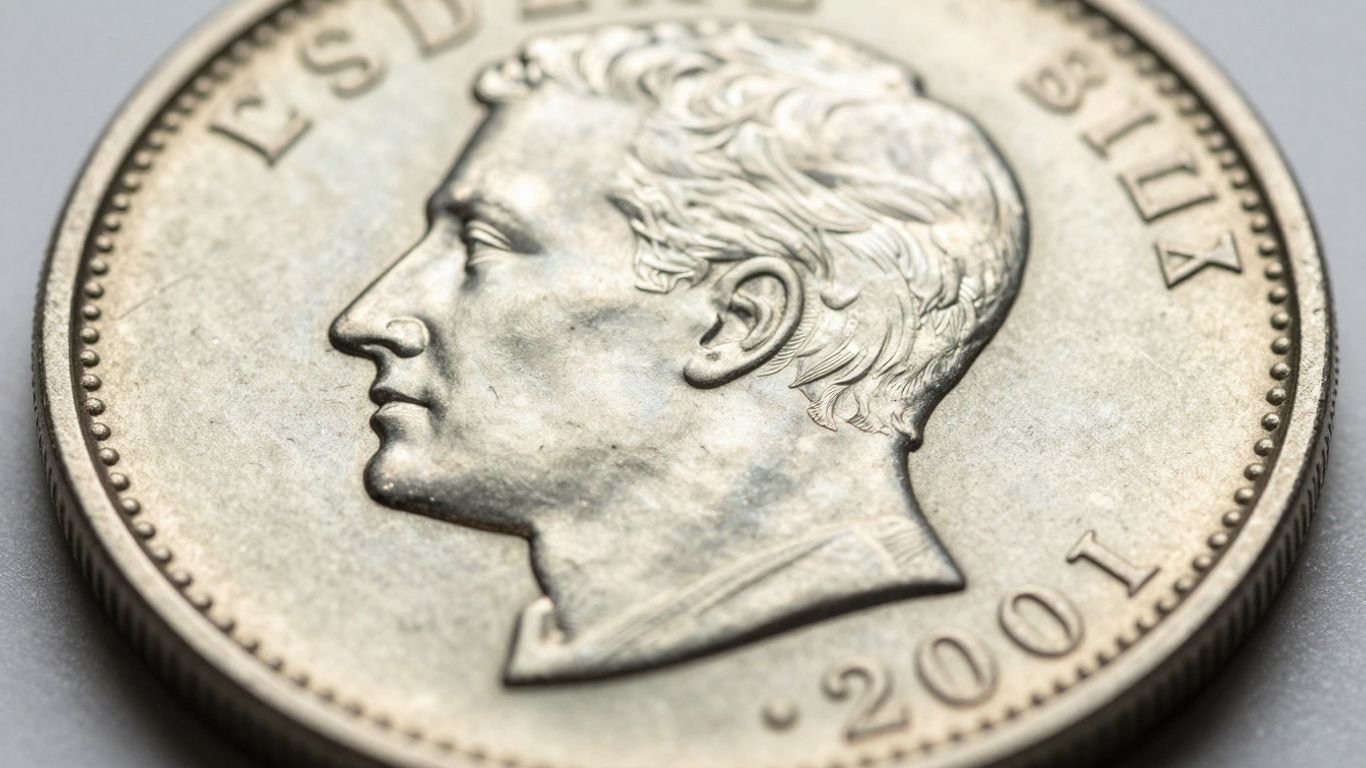
When you’re looking at a coin, the first thing that really grabs you is how well the design comes through. It’s all about the sharpness and clarity of those intricate details that the mint engravers worked so hard on. A coin with a strong strike will show these elements with crispness, almost like they’re popping off the surface. Think about the fine lines in hair, the tiny lettering around the rim, or the delicate patterns on a shield. A coin that displays these features with full definition is a joy to behold and usually commands more attention from collectors.
Examining High-Point Detail Clarity
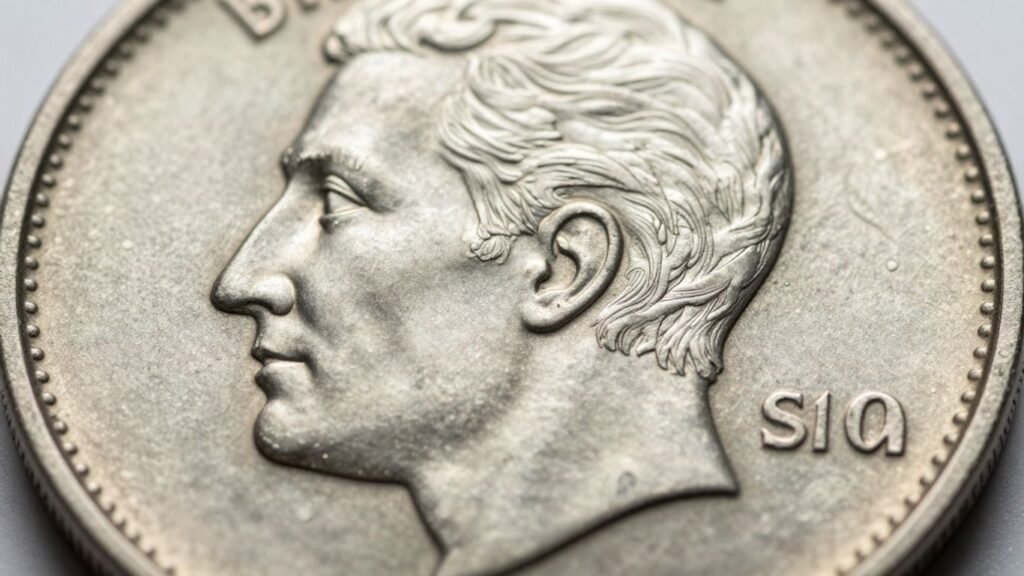
This is where you really need to put on your detective hat. High points are the areas on a coin that stick out the most – think the top of a president’s hair, the tips of letters, or the highest parts of an eagle’s wings. On a well-struck coin, these high points will be sharp and clear. If the strike was weak, these areas might look a bit soft, rounded, or even worn down, even if the coin hasn’t seen much circulation. It’s like looking at a photograph where some parts are in focus and others are blurry.
Identifying Weak Strike Areas
Sometimes, a coin might look pretty good overall, but then you notice certain spots where the detail just isn’t there. This is a weak strike. It can happen for a few reasons, like the dies not being pressed hard enough or the planchet (the blank metal disc) not being perfectly centered. You’ll often see this in the center of the coin or on the edges, where the metal might not have flowed perfectly into every nook and cranny of the die. It’s not damage, but a characteristic of how the coin was made.
Recognizing Full Strike Potential
This is the gold standard, so to speak. A coin with full strike potential shows every single detail as the mint intended. The lettering is sharp and complete, the fine lines in the design are distinct, and there’s a pleasing depth to the overall image. It means the coin was struck with enough force and precision to capture all the nuances of the die. It’s the difference between a clear, high-definition image and a slightly fuzzy one. You’ll want to compare coins you’re evaluating against known examples that exhibit this full strike quality to really train your eye.
Assessing the sharpness of design details is a key step in understanding a coin’s strike quality. It tells you how well the mint’s machinery and process captured the artist’s original work. Don’t just glance; really look at those fine lines and edges.
Evaluating Surface Preservation And Luster
The Connection Between Strike And Luster
When a coin is struck at the mint, the metal is forced into every nook and cranny of the die. This process is what gives a coin its original shine, often called luster. A strong strike means the metal filled the die completely, resulting in a bright, vibrant surface. If the strike was weak, some of these details might not have fully formed, and the surface might look a bit duller or less reflective, even if it’s never been handled. Think of luster as the coin’s original "new car smell" – it tells you about its condition right from the factory. It’s that original mint brilliance that collectors really look for.
Assessing Original Mint Surface Reflection
Looking at a coin’s surface is like reading its diary. You want to see that original mint reflection, not something that’s been messed with. This means checking for that soft, almost liquid-like shine that seems to move across the coin when you tilt it – sometimes called a "cartwheel" effect. It shows the coin hasn’t been cleaned or heavily handled. You’ll want to use good lighting, maybe from the side, to really see how the light plays on the surface. It’s different from a shiny surface that looks almost artificial, like it’s been polished.
Here’s a quick way to think about it:
- Strong Strike: Usually means full, bright luster. The light bounces off evenly.
- Weak Strike: Can lead to less reflective areas, especially in the design’s lower points.
- Handling: Even a strong strike can lose its luster if the coin is rubbed or dropped.
Differentiating Mint Luster From Artificial Shine
This is where it gets tricky, and you really need to train your eye. Mint luster is natural. It’s the result of the striking process and how the metal was prepared. It has a certain depth and quality to it. Artificial shine, on the other hand, usually comes from cleaning the coin. This can be done with polishing compounds, harsh chemicals, or even just rubbing it too hard. The surface might look bright, but it often lacks that soft, flowing quality of true mint luster. Sometimes, it can look almost glassy or feel a bit greasy under magnification. It’s a subtle difference, but it’s a big deal for a coin’s value and grade.
You’ll want to get familiar with how different metals react. For example, silver coins often develop a beautiful, soft toning over time, which is different from luster but also part of their original surface. Copper coins can look very different depending on their preservation, sometimes showing a reddish-brown color or a darker patina. Understanding these natural changes helps you spot when something isn’t original.
Recognizing Common Strike Imperfections
Even the best-struck coins can have issues that pop up during the minting process. These aren’t necessarily damage, but rather quirks that happened before the coin even left the mint. Understanding these can save you from misidentifying a mint-made flaw as something that happened later.
Understanding Planchet Issues
Planchets are the blank discs that coins are struck on. If the planchet itself isn’t perfect, the resulting coin will show it. Think of it like trying to paint on a bumpy canvas – the final picture won’t be as smooth.
- Lamination: This is a common one. Sometimes, the metal used for the planchet wasn’t perfectly uniform, leading to layers that separate. You’ll often see these as flaky or peeling areas, usually on the surface. They can look a bit like corrosion, but they’re actually a flaw in the metal itself.
- Rim Folds: During striking, metal can get pushed outwards. If the planchet is slightly off-center or the dies are misaligned, you might get a fold of metal along the edge, or rim. These can look like damage, but they’re a result of the striking process.
- Inclusions: Tiny bits of foreign material can sometimes get mixed into the metal alloy used for the planchets. These can show up as small dark spots or pits on the coin’s surface after it’s struck.
Identifying Die Wear Effects
Dies are the metal tools that actually stamp the design onto the coin. They don’t last forever. As they’re used, they wear down, and this wear shows up on the coins they produce.
- Softening of Details: This is the most obvious sign of die wear. The sharp, crisp lines of the design start to look a bit fuzzy or rounded. High points, like the hair on a portrait or the tips of letters, become less defined. This gradual softening is a hallmark of a worn die.
- Die Breaks: When a die gets stressed, it can crack. At first, these cracks might be very fine, and the metal flowing into them during striking can create raised lines on the coin. As the crack gets bigger, you might see chunks of metal missing from the die, which results in raised lumps or blobs on the coin’s surface.
- Die Polish Lines: Sometimes, mint workers would polish the dies to make them smoother. These polishing lines can sometimes remain visible on the coin, especially on larger, flatter areas. They usually run in a consistent direction.
Spotting Strike-Related Surface Marks
These are marks that happen during the striking process itself, often due to how the coin interacts with the minting machinery or other coins.
- Die Cuds: This is a more severe form of die break. If a large piece of the die face breaks away, the metal from the planchet flows into that void, creating a large, irregular raised lump on the coin. These are quite noticeable and are definitely a mint-made error.
- Strike Doubling: This is different from die doubling. Strike doubling happens when the coin shifts slightly between the first and second blow of the hammer die, or if the planchet isn’t held firmly. You’ll see a faint, raised impression next to the main design element, often looking like a shallow shelf. It’s usually weaker than the primary design. Understanding grades like MS62 can help you recognize subtle differences in coin preservation, including strike quality.
- Rim Dents: Sometimes, the coin can get bumped or dented around the rim as it’s being ejected from the striking chamber or during transport. These are usually localized and look like a small ding or depression on the edge.
It’s important to remember that many of these imperfections are considered mint errors. While they might detract from a coin’s visual perfection, they can actually increase its desirability and value for collectors who specialize in error coins. The key is to distinguish these mint-made flaws from post-mint damage, which is generally viewed negatively.
The Impact Of Strike On Coin Grading
How Strike Influences The Sheldon Scale
The Sheldon Scale, that trusty 1-to-70 system we all know, isn’t just about how worn a coin looks. Strike quality plays a pretty big part in where a coin lands on that scale, especially when you get into the higher grades. A coin with a weak strike might look okay at first glance, but if the details aren’t fully formed, it’s going to get docked points. Think about it – if the designer intended for a coin to have sharp, clear lines on the eagle’s feathers or the president’s portrait, and you can barely see them because the dies didn’t hit hard enough, that’s a problem. This is especially true for coins aiming for that "Mint State" status. A coin that’s technically "uncirculated" but looks mushy due to a poor strike won’t get the same high grade as one that’s sharp and well-defined. It’s like judging a painting – if the artist’s brushstrokes are blurred and indistinct, it’s not going to be as highly regarded as one with crisp, clear lines.
Strike Quality In Mint State Coinage
When we talk about Mint State (MS) coins, we’re usually talking about coins that look like they just came off the press, with no wear from circulation. But even in this pristine category, strike quality makes a huge difference. A coin graded MS-65, for example, needs to have not only a lack of wear but also good eye appeal. A weak strike can really hurt that eye appeal. You might see a coin that’s technically uncirculated, with no scratches or bag marks, but if the central design elements are soft or incomplete, it’s going to look less impressive. Grading services often look for "full" strikes on certain series, meaning all the intended design details are present and sharp. A coin that achieves this "full strike" designation, especially in Mint State, is generally more desirable and can command a higher price than a comparable coin with a weaker strike. It’s the difference between a coin that just looks uncirculated and one that looks beautifully struck and uncirculated.
The Nuances Of Strike In Lower Grades
Even in the lower grades, like Good (G) or Very Good (VG), strike quality still matters, though perhaps in a different way. In these grades, wear is expected, and the primary focus is on whether you can identify the coin’s basic features. A coin with a weak strike in these lower categories can be particularly frustrating because it might be hard to tell what’s wear and what was never properly struck in the first place. For instance, if a coin is supposed to be graded Good, you should be able to make out the main design elements, even if they’re worn. But if the original strike was so weak that those elements were barely visible to begin with, it can make the coin look even worse than its grade suggests. It adds a layer of complexity when you’re trying to determine if a coin’s lack of detail is due to circulation or a less-than-ideal minting process. It’s a subtle point, but it can affect how a collector perceives the overall condition and appeal of a coin, even when it’s seen significant use.
Here’s a quick look at how strike can affect grading:
- High Grades (MS-60 and above): A strong, full strike is often expected and contributes significantly to eye appeal and grade. Weak strikes can prevent a coin from reaching top-tier grades.
- Mid-Grades (XF, AU): While wear is present, a coin that was well-struck initially will still show more definition than one that was weakly struck, impacting its overall appearance.
- Lower Grades (G, VG, F): Even here, a coin that was originally well-struck will be more identifiable than one with a weak strike, making it easier to assign a grade based on the remaining details.
When evaluating a coin, especially for higher grades, don’t just look for the absence of wear. Pay close attention to how well the design details have been impressed into the metal. A coin that was struck with vigor will almost always have a more pleasing appearance and a higher potential grade than one that looks soft or incomplete, regardless of its wear level.
Comparing Strike Across Different Coin Series
Variations In Strike By Mint And Era
Not all coins are created equal when they come off the minting press. The quality of the strike, meaning how well the design details were impressed onto the coin’s surface, can change a lot depending on when and where it was made. Older coins, for instance, often had less precise machinery, leading to softer strikes compared to modern minting techniques. Even within the same era, different mints might have had their own quirks or equipment variations that affected strike quality. For example, some mints might have been known for producing coins with sharper details, while others consistently produced softer strikes. This historical context is pretty important when you’re looking at a coin.
Understanding Series-Specific Strike Characteristics
Certain coin series are just known for having particular strike characteristics. Some series, like early U.S. large cents, often show a wide range of strike quality, from very weak to surprisingly sharp. Others, like many modern commemorative coins, are specifically designed to be struck multiple times at lower speeds to bring out every detail, resulting in what are called proof coins. These proof coins have a very different look and feel because of how they’re made. Knowing what to expect from a specific series helps you spot a well-struck example versus one that’s just typical for its type.
Here’s a quick look at some general tendencies:
- Early American Coppers: Often exhibit variable strike quality, with some areas showing weakness.
- Classic U.S. Commemoratives: Generally well-struck, but some can have die lapping or polishing that affects surface appearance.
- Modern Bullion Coins: Typically struck with high precision, showing excellent detail.
- World Coins (Pre-1950): Strike quality can vary wildly by country and mint.
Identifying Coins Known For Strong Strikes
Some coin series are famous for consistently good strikes. Collectors often seek out these series because a well-struck example just looks better and is more desirable. For instance, certain issues of Morgan dollars or Peace dollars are highly prized when they exhibit full, sharp details across the entire design, especially on the eagle’s wings or Liberty’s hair. These are often referred to as having "full bell lines" on the Liberty Bell for the 1916-1921 issue, or "strong strikes" on the eagle’s feathers for the Peace Dollar. Finding these top-tier strike examples can be a rewarding part of the collecting journey. It’s about recognizing those coins that truly represent the mint’s best effort.
When you’re evaluating a coin, remember that strike quality isn’t just about sharpness. It’s about how complete the design is, how well the relief stands out, and the overall visual impact. A coin that’s technically sharp but looks flat might not have as good a strike as one that has a bit less sharpness but a more pleasing, three-dimensional appearance.
Developing Your Eye For Evaluating Coin Strike Quality
So, you’ve been looking at coins for a while, maybe even picked up a few. But how do you really start to see the strike quality? It’s not just about looking; it’s about developing a trained eye. Think of it like learning to spot a fake designer bag versus the real deal – it takes practice and knowing what to look for. This section is all about building that skill, so you can move beyond just admiring coins to truly understanding them.
Systematic Observation Techniques
This is where the real work begins. You can’t just glance at a coin and know its strike quality. You need a method. Start by getting yourself some decent tools. A good magnifying loupe, maybe 10x, is a must. And don’t underestimate good lighting; angled light can show you things flat light just hides. When you look at a coin, don’t just stare at the center. Move around it. Look at the high points – the hair on a portrait, the tips of letters, the feathers on an eagle. Are they sharp and clear, or do they look a bit mushy, like they were worn down before they even left the mint? Then, check the fields, the flat areas. Are they smooth, or do they have a grainy texture that suggests a weak strike? Paying attention to these details consistently is key to improving your assessment.
Here’s a simple routine to get you started:
- Magnify: Use your loupe to examine key design elements and high points.
- Light: Rotate the coin slowly under angled light to reveal surface texture and detail.
- Compare: If possible, look at another example of the same coin. Seeing them side-by-side makes differences in strike much more obvious.
- Document: Jot down notes about what you see. This helps you remember and track your observations.
Using Reference Materials For Comparison
Looking at coins is one thing, but comparing them to known standards is another. You can’t get better if you don’t know what ‘good’ looks like. This is where reference materials come in handy. Think of coin collecting guides, like those from Whitman Publishing, or even the websites of professional grading services. They often have photos and descriptions of coins at different grades, showing how strike quality varies. Seeing a coin described as having a ‘full strike’ next to one with a ‘weak strike’ can be incredibly illuminating. It gives you a benchmark. You can also look at images of professionally graded coins online. Seeing an MS-65 example of a coin you own can show you what a truly sharp strike looks like on that particular series. It’s like having a teacher right there with you. Understanding grading terminology, such as AU and MS, is part of this process, helping you assess coin quality.
Hands-On Practice With Diverse Examples
Reading about coins is fine, but you really learn by doing. The best way to develop your eye is to handle as many different coins as you can. Go to coin shows, visit reputable dealers, or even just look through your own collection with fresh eyes. Try to find examples of the same coin type struck in different years or from different mints, as strike can vary a lot. Compare a coin you think has a great strike to one you suspect is weaker. What are the specific differences you notice? Don’t be afraid to spend time with each coin. The more coins you examine, the more patterns you’ll start to recognize. It’s a bit like learning to identify birds by their songs; at first, they all sound the same, but eventually, you start to pick out the individual melodies. This hands-on experience is what truly builds your confidence and numismatic knowledge.
Developing a sharp eye for strike quality isn’t an overnight process. It requires patience, consistent effort, and a willingness to learn from every coin you examine. Don’t get discouraged if you don’t see the differences immediately. Keep practicing, keep comparing, and your ability to assess strike will naturally improve over time.
Avoiding Pitfalls In Strike Assessment
The Danger Of Subjective Evaluation
It’s easy to get caught up in how much you like a coin. Maybe it’s a coin from your birth year, or one that reminds you of a special event. This personal connection can cloud your judgment when you’re trying to objectively look at the strike quality. You might start seeing details that aren’t really there, or downplaying areas where the strike is weak because you just really want the coin to be great. This kind of bias is a common trap that can lead to overpaying or misjudging a coin’s true condition. It’s like looking at a friend’s messy room and saying, “Oh, it’s not that bad!” when, in reality, you can barely see the floor.
Overlooking Subtle Strike Weaknesses
Sometimes, the issues with a coin’s strike aren’t obvious. You might be looking for big, glaring problems, but miss the small things. A coin might look pretty good at first glance, but when you really examine it closely, you notice that some of the finer details, like the hair on a portrait or the serifs on the lettering, are a bit soft or mushy. This often happens on coins that were struck with less force or when the dies were starting to wear down. These subtle weaknesses can significantly impact a coin’s grade and overall appeal, even if the coin looks decent without intense scrutiny.
Here’s a quick checklist to help spot these softer areas:
- Examine the very highest points of the design – are they fully formed?
- Look at the fine lines in hair, feathers, or drapery – are they distinct or blended?
- Check the centers of letters and numbers – are they sharp or rounded?
- Compare the detail on both sides of the coin; is it consistent?
Spotting Strike-Related Surface Marks
It’s also important not to confuse actual damage with issues related to the strike. A scratch is a scratch, but sometimes surface marks can look like they’re part of the coin’s original surface or strike. For instance, a die chip, which is a small piece of the die breaking off, can create a raised lump on the coin. This is a mint-made feature, but it’s not directly related to the quality of the strike itself, though it does affect the surface. Another thing to watch out for are die breaks, which are cracks in the die that can leave raised lines on the coin. These are definitely mint-made, but they’re a sign of a die that’s seen better days, and often coins with these issues also have weaker strikes overall. It takes practice to tell the difference between a true strike flaw and something that’s just a surface anomaly or damage that happened later.
When you’re evaluating a coin, try to think about its journey. Was this mark there when it left the mint, or did it happen later? Was the detail soft because the strike wasn’t strong, or because the coin got banged up in circulation? Asking these questions helps you separate the coin’s original condition from any problems it picked up along the way.
Cross-Referencing Strike Quality With Grading Standards
Understanding Professional Grading Service Criteria
So, you’ve been looking at coins, trying to figure out how sharp that strike really is. It’s easy to get lost in your own head, right? That’s where the big grading services come in. Companies like PCGS and NGC have their own ways of looking at coins, and they’ve written down what they look for. It’s not just about wear; they pay close attention to how well the coin was made in the first place – that’s strike quality. They have specific points they check, like how clear the details are on the high spots, and if there are any mushy areas where the design didn’t quite make it. Knowing their standards helps you see if your assessment lines up with what professionals consider top-notch. It’s like having a cheat sheet, but for coin quality.
Comparing Strike Assessments Across Organizations
It’s pretty interesting how different grading services might look at the same coin and come up with slightly different opinions, especially when it comes to strike. While they all aim for consistency, there can be minor variations in how strictly they apply certain criteria. For instance, one service might be a bit more forgiving on a slightly soft spot on a less common coin, while another might mark it down more severely. This is why experienced collectors often suggest getting a second opinion, or at least comparing your observations with the published standards of a few different major services. It gives you a broader picture.
Here’s a quick look at what some services focus on:
- Detail Sharpness: How well do the fine lines and features stand out?
- Completeness of Strike: Are all parts of the design fully formed, or are some areas flat?
- Surface Preservation: While not directly strike, a strong strike often means better preservation of original luster.
- Luster: How does the mint’s original shine interact with the design’s relief?
Validating Your Strike Evaluations
Ultimately, you want to be confident in what you’re seeing. Comparing your own evaluations of strike quality against what the professional grading services say is a smart move. It’s not about blindly accepting their grades, but about learning from them. You can look at images of coins they’ve graded and see how their descriptions of strike quality match up with the visual evidence. This practice helps you refine your own eye, making you a more informed collector. It’s a bit like practicing scales on a musical instrument; the more you do it, the better you get.
When you’re evaluating a coin’s strike, remember that it’s a key factor that influences its overall grade. A coin that was struck with strong, crisp dies will almost always look better and be more desirable than one that was weakly struck, even if they have the same amount of wear. This difference in strike can significantly impact a coin’s market value, so paying attention to it is really important for anyone serious about collecting.
Wrapping It Up
So, we’ve gone over a lot about how to look at coins, right? It’s not just about seeing if it’s shiny or not. Really paying attention to how well the coin was made, how sharp the details are, and if it’s got any weird marks or wear is super important. It takes practice, for sure. You’re not going to become an expert overnight. But by using the right tools, looking closely, and comparing what you see to what the pros say, you’ll get better. This skill helps you figure out what a coin is really worth and makes collecting way more interesting. Keep looking, keep learning, and you’ll start seeing coins in a whole new light.
Frequently Asked Questions
What exactly is 'strike quality' in coin collecting?
Strike quality is all about how well the coin’s design was pressed onto the metal blank by the minting machines. Think of it like a stamp. A good strike means all the fine details of the design are clear and sharp, like the hair on a portrait or the lines in a building. A weak strike means some parts might look blurry or not fully formed.
Why is a coin's strike important for collectors?
A strong strike makes a coin look much better and more appealing. When the details are sharp and clear, it shows off the coin’s design beautifully. Coins with excellent strikes are often more desired by collectors, which can sometimes mean they are worth more money.
What tools do I need to check a coin's strike?
You don’t need a lot of fancy gear! A magnifying glass, often called a loupe (around 10x power is good), is super helpful. Good lighting is also key – try using a lamp that you can angle. Holding the coin carefully by its edges with soft gloves or tweezers is also smart to avoid adding damage.
How can I tell if a coin has a weak strike?
Look closely at the coin’s highest points, like the tops of letters, numbers, or design features. If these areas look soft, mushy, or like they are missing details, it’s probably a weak strike. Sometimes, entire parts of the design might just seem faded or not fully there.
Does the minting year or country affect strike quality?
Yes, definitely! Different mints and different time periods had different machines and techniques. Some older coins might naturally have weaker strikes because the technology wasn’t as advanced. Also, certain coin designs are known to be harder to strike well, so you’ll see variations across different types of coins.
Can a bad strike make a coin less valuable?
Absolutely. While a coin’s overall condition (its grade) is super important, a weak strike means the design isn’t fully shown. This lack of detail makes the coin less attractive to collectors, and usually, less attractive means less valuable, especially for rare coins.
What's the difference between a weak strike and just wear and tear?
Wear and tear happens when a coin has been used a lot in everyday life. This causes the high points to become smooth and rounded. A weak strike happens at the mint when the coin is made; it’s about the design not being fully imprinted from the start. You can sometimes have both on the same coin!
How can I practice getting better at spotting strike quality?
The best way is to look at lots of coins! Compare coins of the same type and year if you can. Look at pictures online from reputable coin sites or grading services. The more you observe, the better your eye will become at noticing the sharp details of a good strike versus the blurry areas of a weak one.