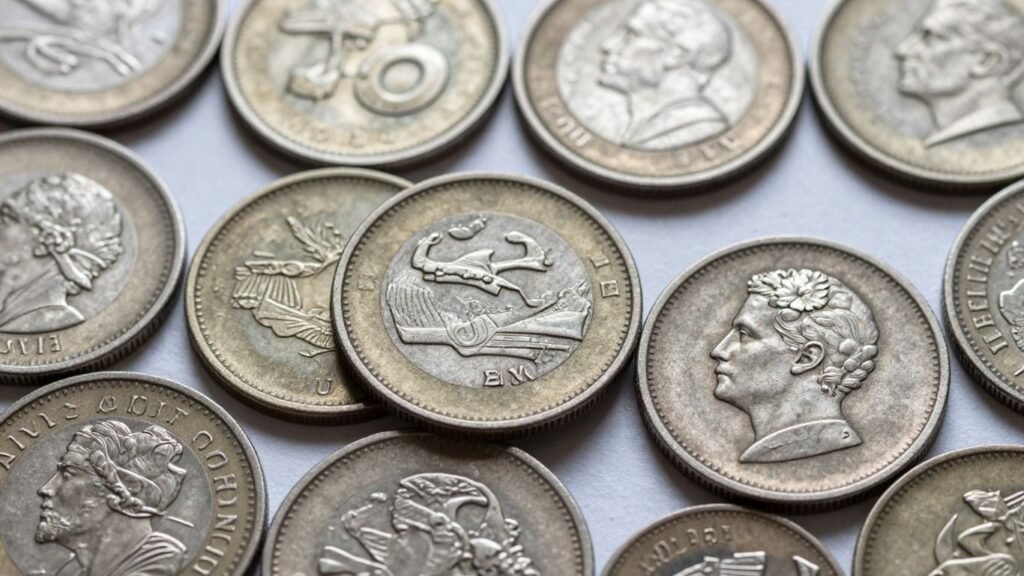
I’ve been collecting coins for a while now, and let me tell you, figuring out what makes one coin more special than another can be a real puzzle. It’s not just about how old it is, or if it’s made of gold. A big part of it is looking closely at the coin itself, seeing how it’s worn down over time, and what that wear tells you. It’s like reading a tiny history book right there in your hand. This guide is all about helping you get better at coin wear patterns identification, so you can appreciate your collection even more.
Key Takeaways
- Looking closely at a coin’s surface and how it’s worn is key to understanding its history and condition.
- The right tools, like a good magnifying glass and proper lighting, make a big difference in spotting details.
- Original shine, or luster, tells you a lot about how a coin was treated after it was made.
- Details like designer’s marks, edge features, and mint marks are important clues for identification.
- Practice and using good reference materials are the best ways to get good at identifying coin wear patterns.
Understanding Coin Wear Patterns Identification
When you first look at a coin, especially an older one, it’s easy to just see a metal disc. But if you look closer, you’ll start to notice things. These aren’t just random marks; they’re clues. They tell you about the coin’s life, how it was made, and what it’s been through. Figuring out these wear patterns is like reading a coin’s diary. It helps you understand its condition and, honestly, its story.
The Importance of Surface Preservation
Think about a favorite book you’ve had for years. It might have a bent cover or a few smudges, but the story inside is still clear. Coins are a bit like that. How well the surface has been kept matters a lot. Even a coin that hasn’t been used for buying things (that’s what "circulation" means) can get damaged. Things like scratches, nicks, or even just how it was stored can affect its look. A coin that’s been kept safe, with its original shine mostly intact, is usually worth more and is more interesting to collectors. It’s not just about the design being visible; it’s about how much of that original, fresh-from-the-mint look is still there.
Here’s what to keep an eye on regarding surface preservation:
- Original Luster: This is the shine a coin has when it’s brand new. Heavy wear or cleaning can take this away.
- Scratches and Marks: Little lines or dings on the surface. Some are normal from being handled, but deep or obvious ones are not good.
- Toning: This is natural color change that happens over time. Sometimes it looks cool, like a rainbow, and sometimes it’s just dark. It’s usually okay if it’s natural.
- Cleaning: If someone tried to clean a coin, it often looks dull or has faint lines. This is usually bad for a coin’s value.
Preserving a coin’s surface means protecting its original state from damage, whether that’s from being passed around or from improper handling. The less the surface has been disturbed or harmed, the better.
Progressive Stages of Wear
Coins don’t just go from perfect to worn out overnight. It happens in steps. When a coin is first used, the highest points of the design start to get a little bit smooth. You can still see most of the details, but they aren’t as sharp as they were. As it gets used more, more details start to fade. The hair on a portrait might lose definition, or the letters around the edge might start to look rounded instead of crisp. If a coin is really worn, you might only be able to make out the basic shape of the design, with most of the fine lines gone completely.
Here’s a simple way to think about it:
- Light Wear: Details are mostly clear, but high points are slightly softened. Original shine is still quite visible.
- Moderate Wear: More details are smoothed, especially on prominent areas. Some luster is gone, and the coin might feel a bit flat.
- Heavy Wear: Major design elements are flattened. Fine details are lost. The coin looks worn smooth in many places.
- Extreme Wear: Barely any design details are recognizable. The coin is almost smooth.
Key Areas for Surface Assessment
When you’re looking at a coin, certain spots tend to show wear first because they stick out the most. You need to check these areas carefully. It’s like checking the knees and elbows on a pair of pants to see how much they’ve been worn.
- High Points of the Design: On a person’s portrait, this would be the hair, nose, or cheek. On other designs, it could be the tips of wings, the points of stars, or raised lettering.
- Lettering and Numbers: The letters forming the date or motto, and the numbers indicating the denomination. These can become rounded and indistinct.
- Rim: The raised border around the edge of the coin. Wear can make this look flattened or less defined.
- Fields: The flat areas between design elements. While not usually "high points," these areas can show scratches or wear from rubbing against other coins.
Essential Tools for Detailed Examination
Alright, so you’ve got your coins, and you’re ready to really look at them. But let’s be honest, your eyes alone aren’t going to cut it for spotting all the little details that matter. That’s where having the right gear comes in. Think of it like a detective needing their magnifying glass – you need tools to see what’s really going on.
Selecting the Right Magnification Loupe
First up, you absolutely need a good loupe. Most folks recommend a 10x magnification. Why 10x? It’s a sweet spot – strong enough to see those tiny marks and wear spots, but not so powerful that it distorts the image or makes it hard to focus. Look for something called an "achromatic" or "triplet" loupe if you can. These are built better, giving you a clearer, sharper view without weird color fringes. This kind of clarity is key to spotting subtle wear patterns, how well the coin was struck, and if anyone’s tried to mess with its surface.
Utilizing Angled Lighting Techniques
Just having a loupe isn’t enough. You need to light your coin properly. Forget that harsh overhead light. What you want is angled lighting. Try using a desk lamp with an adjustable arm. By moving the light source around, you can make those tiny imperfections, scratches, and wear marks pop out. It’s like shining a flashlight across a bumpy road – you see every little dip and rise. Rotate the coin slowly under this angled light; you’ll be surprised what you can see.
Precision Instruments for Measurement
Beyond magnification and light, sometimes you need a bit more. While not always needed for casual viewing, serious collectors might use things like precision calipers. These are great for measuring a coin’s diameter or thickness if you’re trying to identify a specific issue or verify its authenticity against known specs. You might also want a good set of soft-tipped tweezers for handling coins without leaving fingerprints or causing damage. Remember, always handle coins by their edges!
The goal with these tools isn’t just to look closer; it’s to see more accurately. You’re training your eye to pick up on the nuances that separate a common coin from something special. It takes practice, but having the right equipment makes that practice much more effective.
Analyzing Luster and Eye Appeal
Luster is that special something that makes a coin jump out at you. It’s the original shine from the mint, and how well a coin kept that shine tells a big part of its story. Think of it like the difference between a brand-new car and one that’s been driven for years – you can usually tell.
The Significance of Original Mint Luster
Original mint luster is basically the coin’s first impression. It shows that the coin hasn’t been handled much, if at all. When you look at a coin with great luster, you’re seeing how it looked the day it was made. This is super important because it tells you if the coin has spent time in circulation or if it’s been kept safe. A coin’s luster is a direct indicator of its preservation history. It’s what separates a worn coin from one that’s practically untouched.
Luster Grading Categories
Collectors and graders often talk about different levels of luster. It’s not just a simple ‘shiny’ or ‘not shiny’ thing. There’s a whole spectrum:
- Brilliant Uncirculated (BU): This is the top tier. The coin has its full, vibrant original mint shine. It really pops.
- Choice Uncirculated (CU): Still great, but maybe the shine isn’t quite as intense as BU. There might be very minor signs of handling that slightly dull the surface.
- About Uncirculated (AU): Here, you’ll start to see a little wear, mostly on the highest points of the design. The original luster is mostly gone, or significantly diminished.
- Circulated: If a coin has seen a lot of action, it probably won’t have much, if any, original luster left. The surface will look dull or worn.
Examining Luster Under Proper Lighting
Looking at luster isn’t something you can do just anywhere. You need the right setup. Soft, angled lighting is your best friend here. You want to rotate the coin slowly and watch how the light plays across its surface. A coin with original luster will often have a ‘cartwheel’ effect – a radiant glow that seems to move as you turn it. This is very different from the artificial shine you might see on a coin that’s been cleaned. Cleaning can strip away that natural mint glow, which really hurts a coin’s appeal and value. It’s all about seeing that original surface quality, and good lighting makes all the difference.
Decoding Design Elements and Details
Beyond just the overall wear, the intricate details etched onto a coin can tell you a lot. It’s like reading a tiny history book. You’ve got to look closely at what the designer put there and how it’s held up over time.
Identifying Designer's Initials
Many coins carry the initials of the artist who designed them. These are usually small and tucked away, often near the rim or a specific design element. Finding them can be a neat little discovery and sometimes helps in identifying a specific die or even a particular minting period. For example, spotting Hermon MacNeil’s initials on a rare 1916 Standing Liberty quarter adds a layer of historical connection. It’s a detail that might not change the price dramatically, but it certainly adds to the coin’s story.
Recognizing Stylistic Evolution in Designs
Designs aren’t static; they change. Think about how artistic styles shift over decades or centuries. On coins, this can be seen in the way portraits are rendered or how symbols are depicted. Roman imperial portraits, for instance, evolved significantly, reflecting changes in art and the messages the emperors wanted to send. Even subtle shifts in the drapery of a figure or the sharpness of a line can indicate a different period of minting or a variation in the die used. It’s a bit like looking at different paintings from the same era – you see common threads but also individual artistic choices and changes over time. This is where comparing coins to known examples in numismatic catalogues becomes really helpful.
Interpreting Ruler Portraiture
For coins featuring rulers, the portrait is a key element. The style of the portrait, the details of the crown or helmet, and even the expression can offer clues. Was the ruler depicted in a heroic, idealized way, or more realistically? These choices were often deliberate, part of the ruler’s propaganda. You can learn about the historical context just by looking at how the ruler was presented. Sometimes, a slightly different portrait die might indicate a specific mint or a later issue of a coin series. It’s a fascinating way to connect with the past and understand the messaging of the time. For a deeper dive into coin valuation, consider resources that help you get an accurate valuation.
Examining the finer points of a coin’s design, like the artist’s initials or the subtle changes in a portrait, requires patience. These details are often the last to show wear, making them important indicators of a coin’s original state and potential grade. Don’t overlook these tiny clues; they are part of the coin’s unique identity.
Here’s a quick look at what to keep an eye out for:
- Designer’s Initials: Look for small letters, often near the edge or within the design itself.
- Portrait Details: Note the style of the ruler’s depiction, including any regalia or facial features.
- Symbolic Elements: Observe how symbols or figures are rendered, as this can change over time or by mint.
- Overall Artistic Style: Consider the general aesthetic – is it bold, delicate, realistic, or stylized?
The Edge: An Overlooked Detail
You know, it’s easy to get caught up looking at the shiny faces of a coin, the portraits, the dates, the big designs. But there’s a whole other part of the coin that often gets ignored – the edge. Seriously, it’s like the coin’s side hustle, and it can tell you a lot if you just take a moment to look.
Examining Reeding and Plain Edges
Most coins you see have little grooves running around the edge. That’s called reeding. Back in the day, this was a pretty smart way to stop people from shaving off bits of precious metal from the edges of coins. If someone shaved it, the edge wouldn’t look right, and you’d know something was up. Nowadays, though, reeding is mostly just for looks, a kind of tradition. But then you have coins with plain edges. These are usually older coins, or sometimes they’re minting errors. Finding a coin with an unexpected plain edge can be a real surprise, sometimes a valuable one.
Understanding Lettered Edges
Some coins, especially modern ones like certain dollar coins, have words or phrases stamped right onto the edge. Think "In God We Trust" or other inscriptions. You can’t just glance at these; you usually have to tilt the coin under a light to read them properly. It’s another layer of detail that adds to the coin’s story and can be a sign of its origin or purpose.
Identifying Security Features on Edges
This is where things get interesting, especially with modern collector or bullion coins. Some coins have really unique patterns or designs on their edges, almost like a secret code. These aren’t just for show; they’re built-in security features to make it harder for counterfeiters to make fakes. If you’re looking at a coin that seems a bit too good to be true, checking the edge for these specific security marks can be a good way to tell if it’s the real deal.
The edge of a coin, often dismissed as a mere boundary, actually serves as a critical identifier. Its texture, markings, or lack thereof can confirm authenticity, reveal minting practices, and even point to historical security measures against tampering. Paying attention to this often-overlooked aspect can significantly deepen your appreciation and assessment of a coin’s condition and history.
Here’s a quick rundown of what to look for:
- Reeded Edges: Look for consistent, evenly spaced grooves. Any damage or wear here can affect the coin’s overall grade.
- Plain Edges: Check for a smooth, uninterrupted surface. Note if this is standard for the coin type or an anomaly.
- Lettered Edges: Ensure the inscription is clear and complete. Partial or weak lettering might indicate wear or a weak strike.
- Security Features: Observe any unusual patterns, micro-engraving, or specific textures designed to deter counterfeits. These are often subtle but distinctive.
Mint Marks and Strike Quality
Okay, so we’ve talked about surfaces and luster, but there are a couple more things that really tell a coin’s story: the mint mark and how well it was struck. These might seem small, but they can make a big difference in what a coin is worth and how rare it is.
The Significance of Mint Mark Location
Think of a mint mark as a coin’s birthplace. It’s usually a tiny letter or symbol that tells you which mint facility actually made the coin. For example, you might see an ‘S’ for San Francisco, a ‘D’ for Denver, or a ‘CC’ for Carson City. The location of this mark is pretty important. On some older coins, like the two-cent piece, you’ll find the mint mark on the reverse, often below the design elements. Knowing where to look and what to expect for a specific coin is key. Sometimes, a coin made at a less busy mint, or one that produced fewer coins, can be much rarer. The mint mark on a coin can significantly impact its value, so paying attention to where it is and what it looks like is a smart move.
Assessing Strike Strength and Weaknesses
When a coin is made, molten metal is pressed between two dies. The quality of this process, called the strike, really shows up on the finished coin. A strong strike means all the little details are sharp and clear. You can see every hair on a portrait, every feather on an eagle, or every line in a building. On the flip side, a weak strike means some of these details might be mushy, faded, or just plain missing. This often happens when the dies get old and worn out. It’s easy to spot on coins with intricate designs; you’ll see areas that just don’t look as crisp as they should.
Here’s a quick rundown of what to look for:
- Strong Strike: Crisp, well-defined details across the entire coin. High points are sharp.
- Moderate Strike: Most details are clear, but some finer elements might be slightly softened.
- Weak Strike: Significant loss of detail, especially on high points and intricate areas. Looks ‘soft’ or ‘muddy’.
Detecting Contact Marks and Bag Marks
Even coins that never went into circulation can get banged up. Back in the day, coins were often shipped in canvas bags, and all that jostling created little nicks and scratches. These are called ‘bag marks’. You’ll also see ‘contact marks’, which are just dings from coins bumping into each other at any point. These aren’t usually the result of wear from use, but they do affect how a coin looks and, therefore, its grade. You need a good light source and a magnifying loupe to really spot these. They can be tiny, but they’re there, especially on shiny, uncirculated coins where they stand out more.
The quality of the strike and the presence of mint marks are not just technical details; they are part of the coin’s history and manufacturing story. A coin that was struck well and clearly shows its origin often tells a more complete tale than one that is poorly struck or has a missing or unclear mint mark.
So, when you’re looking at a coin, don’t just glance at the main design. Check out that mint mark, see how sharp the details are, and look for those little marks that tell you about its journey from the mint to your hand.
Identifying Common Grading Pitfalls
Recognizing Evidence of Cleaning
So, you’ve got a coin that looks pretty sharp, maybe even a bit too shiny? That could be a red flag. Sometimes, people clean coins to make them look better, but this actually hurts their value. Cleaning can remove the original surface, sometimes called "patina," and leave behind tiny scratches that are only visible under magnification. It’s like polishing an old piece of furniture so much that you wear away the original finish – it just doesn’t look right anymore. A coin that has been cleaned will often lack original luster and may appear unnaturally bright or have a "scratched" look under magnification. It’s a tough one to spot at first, but once you know what to look for, you’ll start seeing it more often.
Understanding Tooling and Engraving Additions
This is a bit more advanced, but sometimes people try to "improve" a coin by adding details or fixing wear with tools. This could be anything from re-engraving a worn-out design element to adding artificial toning to make a coin look older. It’s basically altering the coin’s natural state. Think of it like someone trying to fix a scratch on a car by just filling it in with paint – it might look okay from a distance, but up close, you can tell it’s not original. These alterations can significantly decrease a coin’s authenticity and value.
Differentiating Dipping from Natural Toning
Coins can develop beautiful colors over time, called "toning." This happens naturally as the metal reacts with the environment. However, some people try to replicate this by "dipping" coins in chemicals. Dipping often results in a very uniform, artificial-looking color, whereas natural toning is usually more varied and complex, often darker in the recesses and lighter on the high points. It’s a subtle difference, but important. Natural toning is generally desirable, while dipped coins are often considered damaged. Learning to tell the difference is key to accurately grading coins.
Here are some common issues to watch out for:
- Artificial Luster: A coin that looks too shiny or has a "whizzed" appearance, as if it’s been spun at high speed.
- Scratches: Look for fine, parallel lines that often indicate cleaning.
- Rim Dings: Damage to the edge of the coin, which can happen during handling or storage.
- Rim Tick Marks: Small indentations on the rim, often from minting machinery.
- Surface "Pits": Small, irregular depressions on the coin’s surface, which can be a sign of corrosion or improper cleaning.
When you’re looking at a coin, try to imagine its journey. Was it handled roughly? Was it stored improperly? These things leave marks. The goal is to distinguish between the honest wear and tear of circulation and deliberate alterations that try to hide a coin’s true condition.
Wear and Patination: Telling Stories Through Time
Coins aren’t just metal discs; they’re tiny time capsules. The way a coin has worn down and the colors it’s developed over the years can tell you a lot about its journey. Think of it like reading the lines on an old map – each mark shows where it’s been.
Interpreting Wear as Circulation History
When a coin gets passed around, certain parts naturally wear down faster than others. These high points, like the tips of a ruler’s nose or the highest parts of a design, get smoothed out first. The amount of detail that remains visible is the biggest clue to a coin’s condition. If those high points are almost gone, you know the coin has seen a lot of action. It’s a direct indicator of how long it was likely used in everyday trade. A coin that looks almost brand new probably didn’t spend much time in pockets or cash registers.
Here’s a quick look at what wear tells us:
- High Points: Details like hair, feathers, or raised lettering that are worn smooth suggest significant circulation.
- Luster: Original mint shine gets dulled or removed by wear. Its presence or absence is a key indicator.
- Rim: A sharp, defined rim means less wear compared to a rounded, softened one.
Understanding Patination and Surface Discoloration
Patina isn’t just dirt; it’s the natural discoloration that happens over time due to the coin’s environment. On copper or bronze coins, you might see a greenish hue, sometimes called verdigris. Silver coins might darken to a deep brown or black. This surface change can hint at how the coin was stored – was it buried in soil, kept in a damp place, or perhaps in a dry collection box? Understanding these color changes is like deciphering a secret code left by time. Sometimes, attractive toning can even add to a coin’s appeal and value, showing it hasn’t been messed with. You can find resources that help distinguish between transferred patina and genuine age-earned wear on items [9bd4].
Distinguishing Genuine Wear from Alterations
It’s super important to tell the difference between wear that happened naturally and damage that someone might have caused. Cleaning a coin, for instance, can remove that natural patina and leave behind a dull, scoured look or faint lines. Sometimes people try to alter coins, maybe to make them look older or more valuable, but these changes often look artificial under magnification. Genuine wear happens gradually and consistently across the coin’s surfaces, whereas artificial alterations can look harsh or localized. It’s all about looking closely at the texture and consistency of the surface.
The story a coin tells through its wear and patina is a narrative of its past. These marks of time are not flaws but rather historical records, offering insights into its journey from mint to present day. Recognizing these natural processes is key to appreciating a coin’s true condition and history.
Navigating Resources for Identification
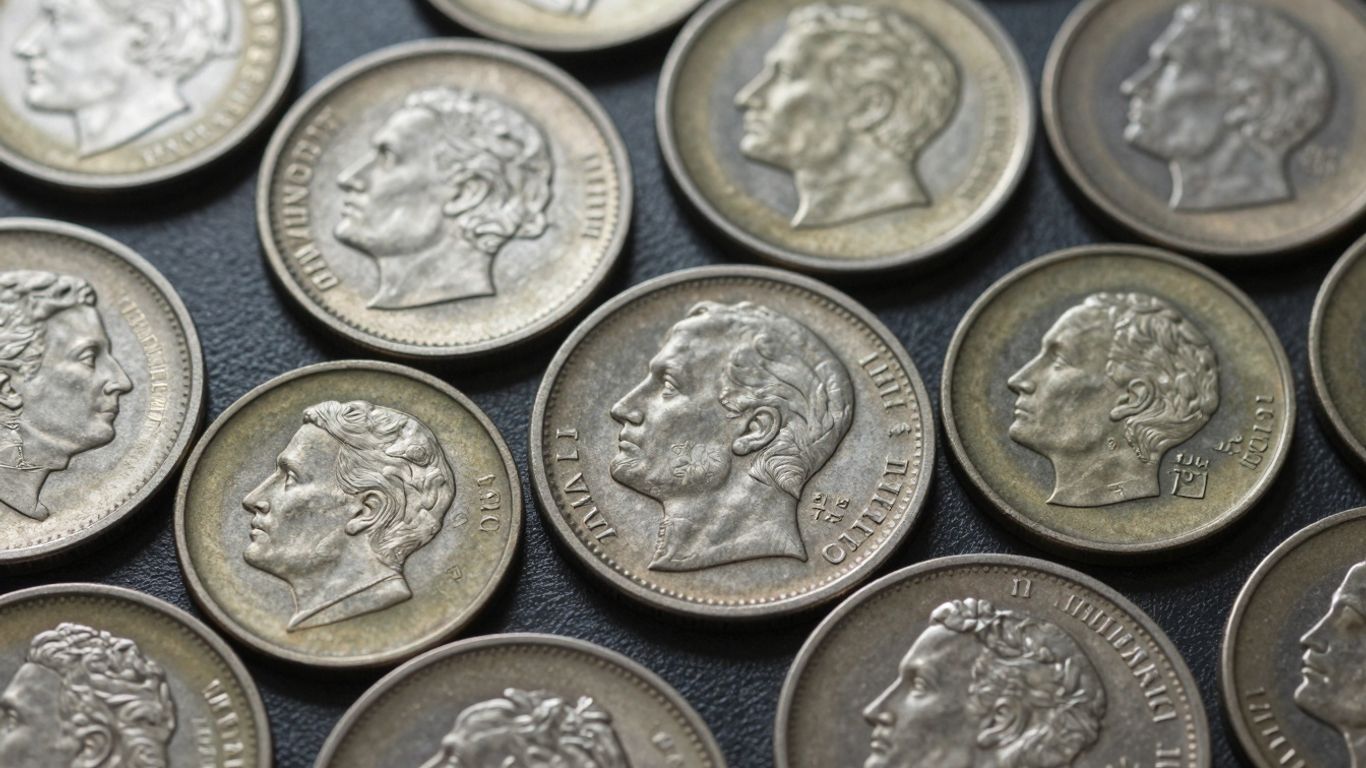
Okay, so you’ve got a coin and you’re trying to figure out what it is. It can feel a bit like being a detective sometimes, right? Luckily, there are some really helpful tools and places to look that can make the whole process way easier. It’s not just about guessing; it’s about using the right information.
Essential Numismatic Catalogues
Think of catalogues as the big reference books for coins. They list tons of coins, often with pictures and details about when and where they were made. Some are super general, covering lots of different coins, while others get really specific, focusing on just one type of coin, like Roman emperors or Greek city-states. Learning to use these is a big step.
- Roman Imperial Coinage (RIC): This is a go-to for coins from the Roman Empire. It’s organized by emperor, which is super handy.
- Greek Coins and Their Values (GCV): If you’re into Greek coins, this one is a classic. It helps you sort them out by region and city.
- Sear’s Roman Coins and Their Values: Another solid choice for Roman coins, this one often includes market values, which can be interesting.
These catalogues can look a bit dense at first, with all their abbreviations and numbering systems. But stick with it! They’re organized in ways that make sense once you get the hang of it, usually by ruler, area, or mint. This means you can zero in on the section you need pretty quickly.
Sometimes, you’ll find a coin that doesn’t quite fit neatly into any category. That’s normal! Even experienced collectors run into these. The trick is to compare your coin to similar examples in different books or ask around. It’s like piecing together a puzzle, and sometimes you need more than one picture to see the whole thing.
Leveraging Digital Platforms and Databases
Beyond the printed books, the internet has opened up a whole new world for coin identification. Many museums and organizations have put their collections online, and there are dedicated websites for numismatics. These can be incredibly useful, especially for getting a quick look at different coins or finding information that might be harder to track down in print.
- Museum Websites: Places like the British Museum have amazing online collections where you can see high-resolution images and read detailed descriptions of their coins. It’s a fantastic way to see what genuine examples look like.
- Numismatic Databases: There are websites specifically designed to help identify coins. They often have search functions that let you filter by metal, size, ruler, or even specific symbols you see on the coin.
- Online Forums and Communities: Connecting with other collectors online can be a lifesaver. You can post pictures of your coin and ask for opinions. Just remember that advice from online forums is usually a starting point, not the final word.
Using these digital tools means you can often find information much faster than flipping through pages of a book. Plus, seeing lots of different coins online helps you develop your eye for what looks right.
Consulting Expert Advice and Auction Specialists
Sometimes, you just need to ask someone who really knows their stuff. Numismatists, curators at museums, and specialists who work at coin auction houses have spent years, sometimes decades, looking at coins. They can spot details that might escape a beginner (or even an intermediate collector!).
- Auction Houses: Reputable auction houses often have experts who can help identify coins, especially if you’re thinking about selling or buying. They deal with a lot of material and have a good sense of what’s real and what’s not.
- Museum Curators: If you have a particularly interesting or unusual coin, reaching out to a museum curator who specializes in that area might be an option. They are often passionate about coins and may be willing to offer guidance.
- Local Coin Clubs: Joining a local coin club is a great way to meet experienced collectors in your area. They can offer hands-on advice and share their knowledge.
Don’t be afraid to ask for help; it’s how everyone learns. These experts can help you avoid common mistakes, like misidentifying a coin or falling for a fake. They can also provide context about a coin’s history and significance that you might not find in a catalogue.
Putting It All Together: A Holistic Approach
Combining Observation with Historical Knowledge
So, you’ve spent time looking at coins, right? You’ve got your loupe, you’ve angled the light just so, and you’ve tried to figure out if that little mark is a bag mark or something worse. That’s all good stuff, really important. But here’s the thing: just looking isn’t the whole story. You gotta mix what you see with what you know about coins in general. Think about it like this: seeing a worn spot on a coin is one thing. Knowing that a certain date and mint mark is known for being weakly struck, or that a particular design element tends to wear down faster, that’s what really makes you a sharp observer. It’s about connecting the dots between the physical evidence on the coin and its life story before it got to you.
The Role of Practice in Skill Development
Honestly, nobody becomes a coin expert overnight. It takes time, and yeah, you’ll probably make some mistakes along the way. I know I have. The more coins you look at, the more you handle them (carefully, of course!), the better your eye gets. You start to notice things you didn’t before. It’s like learning to ride a bike; at first, it’s wobbly, but eventually, you just get a feel for it. Keep a notebook, maybe? Jot down what you see on different coins, compare them. It really helps cement what you’re learning.
Here’s a simple way to get better:
- Look at coins you know are in good shape (high grade).
- Look at coins that are clearly worn.
- Try to find coins in between and guess where they fit.
- Compare your guesses to what experts say or to professionally graded examples.
Appreciating the Nuances of Coin Condition
Coin grading isn’t always black and white. There are shades of gray, little details that can make a big difference in how a coin is viewed. Sometimes, two coins might look pretty similar at first glance, but one might have a bit more original shine, or maybe the wear is just slightly more even. These small differences are what separate one grade from another, and they’re what experienced collectors and dealers pay close attention to. It’s not just about counting the scratches; it’s about appreciating the overall presentation and preservation of the coin. It’s a bit of an art, really, built on a lot of science and practice.
Understanding the subtle differences in wear, luster, and surface preservation is what separates a casual observer from someone who truly appreciates a coin’s condition. It’s about seeing the whole picture, not just isolated details.
Wrapping It Up
So, we’ve gone over a lot of ground here, looking at how coins get worn down and what that tells us. It’s not just about spotting a scratch or a ding; it’s about seeing the whole picture. From the way the metal smooths out on high points to how the original shine fades, every bit of wear is a clue. Getting good at this takes time and practice, sure, but it really makes collecting coins way more interesting. You start to see the history right there in your hand. Keep looking, keep learning, and you’ll get better at reading those coin stories.
Frequently Asked Questions
What exactly is coin wear, and why is it important?
Coin wear refers to the way a coin’s surface gets smoothed down over time, especially from being used a lot in everyday buying and selling. It’s super important because it tells us how much a coin has been handled and can affect how much it’s worth. Think of it like the tread on a tire – the more it’s used, the less tread it has.
What are the best tools for looking closely at a coin?
To really see what’s going on with a coin, you’ll want a magnifying glass, usually called a loupe, that makes things about 10 times bigger. It’s also helpful to use a light that you can angle, so you can see bumps and dips on the coin’s surface. Sometimes, special tools that measure things precisely are useful too.
What is 'mint luster,' and why does it matter?
Mint luster is like the original shine a coin had when it was first made at the mint. It’s a special kind of shininess that shows the coin hasn’t been used much. If a coin still has its original luster, it usually means it’s in great shape and worth more.
How can I tell if a coin has been cleaned?
Coins that have been cleaned often look too shiny or have a dull, uniform look that doesn’t seem natural. Sometimes, cleaning can remove tiny lines or details that should be there. It’s like washing a dusty old painting – you might get rid of the dirt, but you could also damage the paint underneath.
What's the deal with the edge of a coin?
The edge is the side part of the coin. Some coins have little lines on the edge called ‘reeding,’ which used to stop people from shaving off metal. Others have writing on the edge, or they might be completely smooth. Checking the edge can tell you a lot about how the coin was made and if it’s been messed with.
What is a 'mint mark,' and why is it significant?
A mint mark is a tiny letter or symbol on a coin that shows which factory made it. For example, ‘S’ usually means it was made in San Francisco. These marks are important because some mints made fewer coins, making those coins rarer and potentially more valuable.
How do I know if a coin was made well (good strike)?
A ‘strong strike’ means the coin’s design details are clear and sharp, like the lines in someone’s hair or the letters around the edge. If the strike is weak, some parts of the design might look blurry or faded. You can often see this best by looking at the high points of the design.
Where can I find reliable information to help me identify coins?
You can find tons of helpful information in coin collecting books, like price guides or catalogs that list different coins. There are also many websites and online databases where you can look up coins. Talking to experienced collectors or experts at coin shops or shows is also a great way to learn.