Ever look at a shiny piece of metal and wonder if it’s the real deal? It can be tricky to tell, especially with all the fakes out there. This guide is all about helping you figure out if that gold or silver is actually precious. We’ll cover some simple tricks and a few more involved methods, like the ping test precious metals method, so you can get a better idea of what you’re holding. It’s not about becoming a professional jeweler overnight, but more about getting a feel for authenticity and protecting yourself from getting ripped off.
Key Takeaways
- The ping test precious metals method relies on the unique sound genuine metals make when struck. Authentic pieces usually have a clear, ringing sound, while fakes often sound dull.
- Simple tools like a good scale and a strong magnet are your first line of defense. They can catch a lot of common fakes quickly.
- Using your senses – looking closely at details and listening carefully to sounds – gets better with practice. The more real items you examine, the easier it is to spot fakes.
- For more certainty, especially with valuable items, electronic testers like Sigma Metalytics can give you precise readings. They check the metal below the surface, which is great for catching plating.
- No single test is perfect. Combining a few different methods, like visual checks, weight analysis, and the ping test, gives you the best chance of confirming authenticity.
Understanding the Fundamentals of Precious Metals Authentication
The Importance of Verifying Authenticity
When you’re dealing with precious metals, whether it’s gold, silver, platinum, or palladium, knowing if it’s the real deal is pretty important. It’s not just about the money, though that’s a big part of it. Counterfeits can look really convincing these days, and if you end up with a fake, you’ve lost your investment. Authenticity is the bedrock upon which trust in the precious metals market is built. Without it, the whole system falls apart. Think about it: if you can’t be sure what you’re buying is genuine, why would anyone pay a premium for it? This is why taking the time to verify is so critical.
Essential Tools for Initial Assessment
Before you even think about fancy electronic gadgets, there are some basic tools that everyone should have. These are your first line of defense against fakes.
- A good quality scale: Precious metals have a very specific weight. Even a slight deviation can indicate a problem. You need a scale that can measure accurately, down to a tenth of a gram or even better.
- A strong magnet: Most precious metals, like gold and silver, are not magnetic. If your item sticks to a magnet, it’s almost certainly not pure or solid precious metal. Keep in mind some metals used in alloys might have slight magnetic properties, but a strong attraction is a clear warning.
- A magnifying loupe: A 10x jeweler’s loupe is perfect for spotting small details, like mint marks, fine inscriptions, or signs of plating that might be missed with the naked eye.
These simple tools can help you spot a surprising number of fakes right off the bat. Don’t skip this step; it’s surprisingly effective.
Developing Your Sensory Acumen
Beyond just tools, you need to train your senses. It sounds a bit mystical, but it’s really about paying attention. Over time, you’ll start to notice subtle differences.
- Visual inspection: Look at the color and luster. Does it look too bright, too dull, or just ‘off’? Genuine metals have a particular sheen. Check for sharp details in any stamping or engraving.
- Tactile feel: Genuine precious metals often have a certain weight and feel to them that’s hard to describe but you’ll recognize it with practice. It feels substantial.
- Auditory assessment (the ‘ping’): This is what we’ll get into more later, but different metals produce distinct sounds when struck. Learning to recognize the ‘ring’ of real silver or gold is a skill that comes with experience. You can often find certificates for real silver products, which is another layer of verification.
It takes time and handling a lot of different pieces to really develop this ‘feel’ for authenticity. The more genuine items you examine, the better you’ll become at spotting the fakes.
Mastering the Acoustic Ping Test for Precious Metals
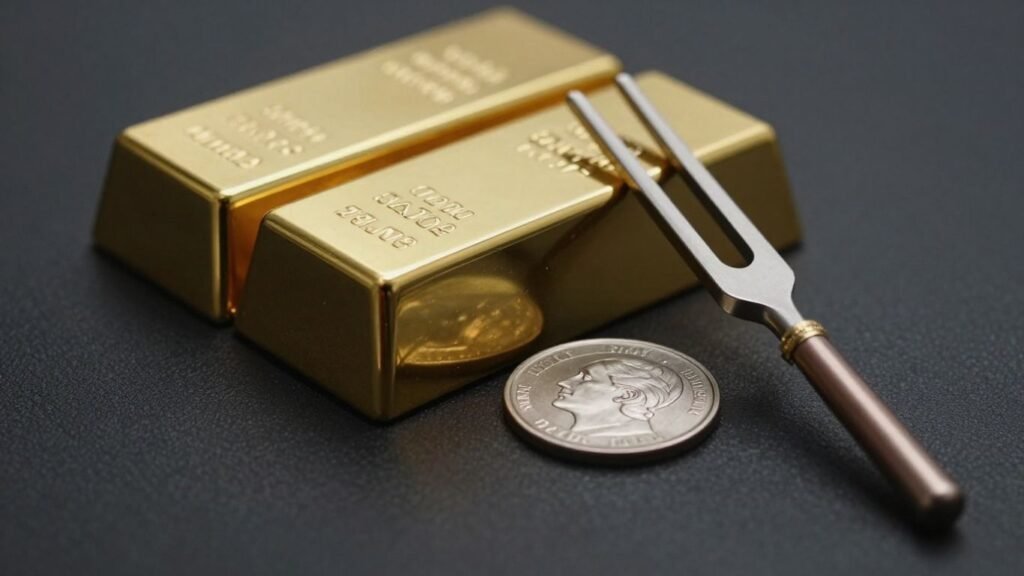
So, you’ve got a piece of metal that looks like gold or silver, but how do you really know? Before we get into fancy gadgets, let’s talk about something you can do with just your ears and a little practice: the acoustic ping test. It sounds simple, and honestly, it is, but don’t let that fool you. This old-school method can be surprisingly good at spotting fakes, especially when you’re dealing with coins or bars.
The Science Behind the Ping Test
Basically, different metals make different sounds when they’re tapped. Think about it – a steel pipe sounds nothing like a glass bottle, right? Precious metals like gold and silver have a unique way of vibrating. When you strike them, they ring with a clear, sustained tone. This happens because of their density and how the metal’s internal structure lets sound waves travel through it. Cheaper metals, or metals mixed with a lot of other stuff, just don’t have that same resonant quality. They tend to make a duller, shorter sound, more of a thud than a ring. The specific pitch and how long the sound lasts are your biggest clues.
Performing the Manual Ping Test
This is where you become the detective. You don’t need much. A known genuine piece of the same metal is ideal for comparison, but if you don’t have one, you can still get a good idea.
- Get a good grip: Hold the item loosely. For coins, balancing it on your fingertip works well. For jewelry, you might need to suspend it or hold it carefully.
- Give it a tap: Use a hard, non-abrasive object like another coin (a genuine one, if possible) or even a hard plastic pen. Gently tap the edge of the item you’re testing.
- Listen closely: Pay attention to the sound. Does it ring like a tiny bell? Does the sound linger for a second or two? Or is it a quick, dead sound?
This test is best for items that are relatively pure and not heavily damaged. If a coin is super worn down or has a big dent, the sound might be off, even if it’s real. Also, very small items can be tricky to get a good sound from.
Interpreting the Sonic Signature
So, what are you listening for? It’s all about the quality of the sound.
- Genuine Precious Metals (Gold, Silver, Platinum): Expect a clear, high-pitched, bell-like ring. The sound should sustain for a noticeable duration, fading gradually. Think of the sound a good quality cymbal makes.
- Base Metals or Plated Items: These usually produce a dull, short, thudding sound. There’s very little resonance, and the sound dies off almost immediately. It’s a dead sound, not a musical one.
- Alloys and Lower Karats: These can be a bit trickier. They might produce a sound that’s somewhere in between – not a clear ring, but not a dead thud either. This is where comparing to a known piece becomes really helpful.
Remember, this test takes practice. The more you do it, the better your ear will get at distinguishing the subtle differences. It’s a great first step before you move on to more complex methods.
Leveraging Electronic Devices for Precision
Alright, so you’ve got the basics down, maybe you’ve even gotten pretty good at listening to those pings. But what happens when you’re dealing with something really valuable, or a fake that’s just too good? That’s where the tech comes in. We’re talking about electronic metal testers, and they can really up your game.
Introduction to Electronic Metal Testers
Think of these gadgets as super-powered lie detectors for your metals. Instead of just listening to a sound, they send out signals and measure how the metal responds. This gives you a much more detailed picture than just a simple ping. They can tell you about the metal’s composition, how deep it goes, and even if there’s plating involved. This is a game-changer for spotting fakes that look perfect on the outside.
How Sigma Metalytics Enhances Verification
Sigma Metalytics is a name you’ll hear a lot in this space. Their devices use electromagnetic induction. Basically, they create a magnetic field and see how the metal piece affects it. Different metals and alloys react differently, and the Sigma tester reads these reactions. It’s not just looking at the surface; it’s checking the bulk of the metal. This means it can find things like a tungsten core hidden under a gold plating, or a copper core under silver plating – stuff that would fool most other tests.
Here’s a quick rundown of what makes them so useful:
- Depth Penetration: They test beyond just the surface, checking the actual metal composition.
- Plating Detection: Easily spots if something is just plated rather than solid precious metal.
- Sealed Item Testing: Can often test coins still in their protective slabs, which is a huge plus.
- Numerical Results: Gives you specific readings, not just a subjective ‘good’ or ‘bad’ sound.
Using these advanced testers means you’re not just relying on your ears or eyes anymore. You’re getting data that’s hard to fake. It adds a serious layer of confidence, especially when you’re dealing with significant investments.
Proper Usage for Accurate Readings
Now, even the best tech needs to be used right. Here’s the general idea:
- Calibration is Key: Before you test anything, you must calibrate the device. Most come with a calibration disc or a known genuine coin. This sets the baseline so the tester knows what a ‘normal’ reading looks like.
- Select the Right Setting: Make sure you tell the tester what kind of metal you’re checking. Is it pure gold? 90% silver? An American Eagle? Picking the wrong setting will give you bad results.
- Test Multiple Spots: Don’t just zap it once. For coins or bars, test different areas. This helps make sure the whole piece is consistent and not hiding a different metal inside.
- Keep it Updated: Like your phone, these testers get software updates. Check the manufacturer’s website to make sure you have the latest firmware. They often improve accuracy and add detection for new fakes.
Beyond the Ping: Complementary Authentication Methods
So, the ping test is pretty neat, right? It gives you a good idea of what you’re holding. But honestly, relying on just one test is like trying to build a house with only a hammer. You need more tools in your toolbox, and that’s where these other methods come in. They help paint a fuller picture and catch fakes that might slip past a simple sound test.
The Magnetic Test: A Quick Screening
This one’s super simple and fast. Most precious metals, like gold, silver, platinum, and palladium, aren’t magnetic. That means if you bring a strong magnet near your item and it sticks, you’ve likely got a fake or something plated. It’s a great first pass to weed out obvious imposters.
- How it works: Hold a strong neodymium magnet close to the item.
- What to look for: If the item is attracted to the magnet, it’s probably not solid precious metal.
- Exceptions: Some metals used in alloys might have slight magnetic properties, and some very rare precious metal alloys could be magnetic, but for most common bullion and jewelry, this is a solid indicator.
Remember, this test is best for identifying common fakes that use iron or steel cores. It won’t catch everything, but it’s a quick way to eliminate many possibilities.
Visual and Microscopic Examination
This is where you become a detective. You’re looking for details that just don’t add up. Genuine items are usually made with a lot of care. Fakes often have tell-tale signs of sloppy work.
- Look at the edges: Are they smooth and well-defined, or rough and uneven?
- Check the surfaces: Look for inconsistencies in the finish, pitting, or unusual textures. Genuine coins and bars have sharp details.
- Examine markings: Are the hallmarks, mint marks, or engravings crisp and clear, or do they look smudged or poorly applied?
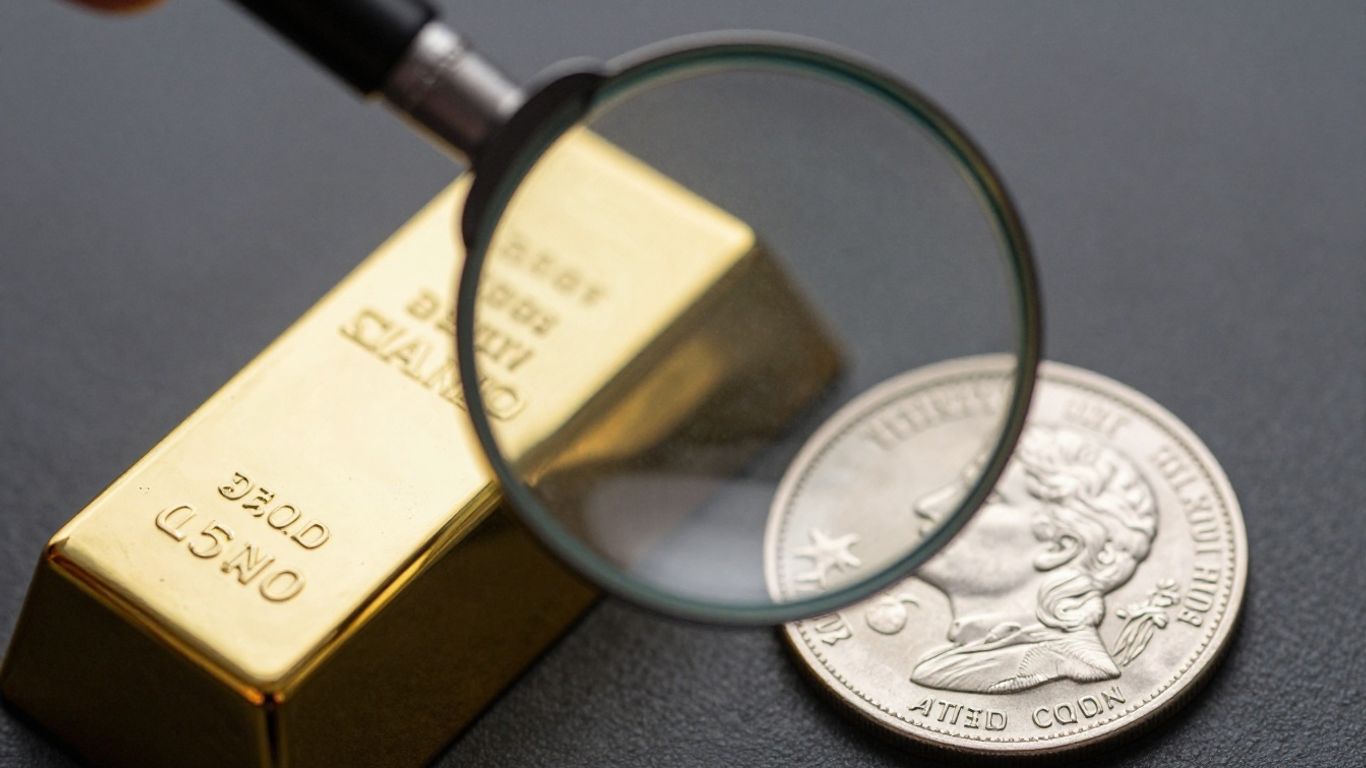
- Magnification helps: Even a simple 10x jeweler’s loupe can reveal details like casting lines or a lack of fine detail that you’d miss with the naked eye.
Weight and Density Analysis
This is a bit more involved than the magnetic test but still very doable. Precious metals have specific densities. If an item feels too light or too heavy for its size, or if its weight doesn’t match its known specifications, that’s a big clue.
- Precision Scale: You’ll need a digital scale that measures accurately, ideally to at least 0.01 grams. Compare the item’s weight to its stated weight.
- Dimensions: Measure the item’s diameter and thickness.
- Density Calculation: You can calculate density using the formula: Density = Mass / Volume. For round items like coins, Volume = π * (radius)² * thickness.
- Comparison: Compare your calculated density to the known density of the metal you suspect it is. For example, pure silver has a density of about 10.49 g/cm³, while pure gold is around 19.32 g/cm³.
Discrepancies in weight or calculated density are strong indicators of a counterfeit or plated item.
Advanced Techniques for In-Depth Analysis
Understanding X-Ray Fluorescence (XRF) Spectroscopy
X-Ray Fluorescence (XRF) is a pretty serious tool for figuring out exactly what a metal is made of. Think of it like a super-powered scanner that tells you the elemental makeup of your coin or bar. It works by shooting X-rays at the metal, which then makes the atoms inside give off their own X-rays. By measuring these secondary X-rays, the machine can identify each element present and how much of it there is. This gives you a unique metallic fingerprint for your item. It’s really good at catching fakes that look right on the surface but are made of different stuff underneath, like a gold coin filled with tungsten. It’s not something you’ll likely have at home, as the equipment is pricey and needs someone who knows how to use it, but it’s a go-to for high-value items or when you just need absolute certainty.
The Role of Ultraviolet (UV) Light Testing
UV light testing is a bit more accessible and can reveal hidden security features on certain modern coins and bars. Many mints now incorporate special inks or markings that only show up under ultraviolet light. This can be a quick way to spot a fake if it’s missing these security elements. You’ll need a UV flashlight, and you just shine it on the item in a darkened room. It’s a simple check, but it can be surprisingly effective for items that are supposed to have these features.
When to Employ Ultrasonic Thickness Measurement
Ultrasonic thickness measurement is another specialized technique, often used in conjunction with other methods like XRF. This test uses sound waves to measure the thickness of the metal. Why is this useful for authenticity? Well, it can help detect internal issues, like plating that’s too thick or thin, or even internal plugs used to add weight. If you’re testing something like a gold bar, knowing the precise thickness can help confirm it’s solid gold and not just a shell filled with something else. It’s a non-destructive way to get a look inside without actually cutting the item open.
Navigating Common Challenges in Testing
Even with the best intentions and tools, testing precious metals isn’t always straightforward. You’ll run into situations that can make you scratch your head. Let’s talk about some of the more common tricky spots.
Distinguishing Plating from Solid Precious Metals
This is a big one. Lots of items out there look like solid gold or silver but are actually just plated. Think of a gold-plated ring – it might look great at first glance, but the plating can wear off over time, especially in high-contact areas like the inside of the band or the edges. The magnet test is your first line of defense here; if a piece jumps to a magnet, it’s definitely not solid gold or silver (though some non-magnetic base metals can be used in fakes). For items that aren’t magnetic, you’ll need to look for signs of wear. If you see a different colored metal peeking through, that’s a pretty clear sign of plating.
- Look for wear: Check edges, clasps, and areas that rub against things.
- Color consistency: Does the color look uniform everywhere, or are there spots that look different?
- Weight: Plated items often feel lighter than solid ones of the same size.
Sometimes, a piece might be heavily worn, making it hard to tell if it was plated or if the base metal is just showing through from damage to a solid piece. This is where other tests become more important.
Addressing Variations in Gold Karats
Gold isn’t always pure 24-karat. You’ll see 14K, 10K, and other variations. These lower karats mean there’s more alloy mixed in with the gold. This can affect how a piece reacts to certain tests. For instance, a 10K gold item has a lot of other metals mixed in, which can change its density and even its sound when pinged. You might need to adjust your expectations for the ‘ping’ sound or the density readings. It’s not that it’s fake, it’s just a different composition. Always try to know the karat marking if there is one, and remember that lower karats will behave differently than pure gold.
Interpreting Tarnish and Wear on Silver
Silver is notorious for tarnishing. That black or dull coating you see isn’t necessarily a sign of a fake; it’s just a chemical reaction with the air. A good silver polishing cloth can often bring back the shine. However, tarnish can sometimes hide other issues, like plating wear. If you try to polish a tarnished piece and the tarnish comes off but reveals a different colored metal underneath, then you’ve likely got a plated item. For heavily worn silver pieces, the original markings might be completely gone, making identification harder. In these cases, relying on density and the ping test becomes more important, but remember that significant wear can alter the sound.
| Test Type | Challenge | How to Approach |
|---|---|---|
| Visual Inspection | Worn plating, illegible hallmarks | Look for color differences at edges; research old hallmarks if possible. |
| Ping Test | Altered sound due to damage or alloys | Compare to known genuine pieces of the same karat; use other tests to confirm. |
| Density/Weight | Variations in alloys, plating thickness | Use precise scales and calipers; be aware of expected ranges for different karats. |
| Magnetic Test | Non-magnetic base metals used in fakes | Always use a strong magnet; if it sticks, it’s not solid gold or silver. |
Recognizing Deceptive Imitations
Sometimes, even with the best intentions, you might come across something that looks like the real deal but isn’t. It’s like finding a cool old coin, only to realize it’s a really well-made fake. This happens more often than you’d think, especially with popular items. Forgers are getting pretty good, and they use all sorts of tricks to make their fakes look convincing. Knowing what to look for is key to not getting fooled.
Identifying 'Fool's Gold' (Pyrite)
Fool’s gold, or pyrite, is a mineral that looks a lot like real gold, especially to the untrained eye. It’s got that shiny, metallic luster. But here’s the thing: pyrite is much harder than gold and it’s brittle. If you try to scratch it with a knife, it might crumble or leave a greenish-black streak, whereas gold will just show a yellow streak or a scratch. Also, pyrite is usually found in rock formations, not typically in nuggets or veins like actual gold. Genuine gold has a distinct softness and malleability that pyrite just doesn’t possess.
Understanding Unusual Alloy Reactions
Precious metals are often mixed with other metals to create alloys, like different karats of gold. Sometimes, counterfeiters use alloys that behave strangely. They might plate a cheaper metal with a thin layer of gold or silver. When you test these, the plating might look good initially, but under closer inspection or with certain tests, the underlying metal can show through or react differently. For instance, a fake silver coin might have a copper core. If you scratch it, you’ll see the reddish color of copper. Even the ping test can reveal issues; a plated item might not have the same resonant ring as solid precious metal. It’s why understanding the expected properties of different alloys is so important when you’re looking at gold and silver coins.
The Impact of Antique and Vintage Pieces
Older items can be tricky. They might have wear and tear that makes them look less pristine, or they might have patina that can hide surface details. Sometimes, older pieces were made with slightly different standards or alloys than we see today. A vintage silver piece might have a slightly different tone than a brand-new one. Also, antique coins or jewelry might have been repaired over the years, which can affect their weight or even their sound when pinged. You have to consider the history of the piece. It’s not just about the metal itself, but how it’s aged and what might have happened to it over time. This is where a good visual inspection and knowing the typical characteristics of items from a certain era really come into play.
Knowing When to Seek Professional Expertise
Look, sometimes you’ve done all the tests you can, and you’re still not sure. That’s totally okay. Precious metals can be tricky, and even the best home methods have their limits. If you’re staring at a piece and your gut feeling is screaming "something’s off," or if the results from your ping test and magnetic test just don’t add up, it’s probably time to call in the cavalry.
When Home Testing Yields Ambiguous Results
It happens. Maybe your ping test sounds a little dull, but not quite wrong. Or perhaps a visual inspection shows some wear that makes you wonder if it’s plating. These are the moments when your own testing has reached its ceiling. Instead of guessing and potentially making a bad decision, it’s smart to get a second opinion from someone who does this for a living. They have tools and experience that can clear up any confusion.
The Necessity for High-Value Items
If you’re dealing with something that’s worth a significant amount of money, or maybe it’s a family heirloom with sentimental value, you just can’t afford to be wrong. A small mistake could mean losing a lot of cash or, worse, damaging something irreplaceable. For these kinds of pieces, a professional appraisal isn’t just a good idea; it’s pretty much a requirement. They can use methods like X-ray fluorescence (XRF) spectroscopy, which is super accurate and doesn’t harm the item.
The Value of Certified Appraisals
Sometimes, you need more than just a "yes" or "no" on authenticity. Maybe you need to insure a piece, sell it, or settle an estate. In these situations, a formal appraisal from a certified gemologist or jeweler is what you need. They’ll give you a detailed report that’s recognized and trusted. This isn’t just about confirming it’s real; it’s about establishing its exact worth. They can also spot things you might miss, like hidden maker’s marks or specific alloy compositions that affect value.
Don’t feel bad if you can’t identify every single piece perfectly. The world of precious metals is vast and complex. Relying on professionals for the final word, especially when the stakes are high, is a sign of good judgment, not weakness. It’s about protecting your investment and your peace of mind.
Building Confidence Through a Multi-Layered Approach
The Synergy of Multiple Testing Methods
Look, nobody wants to get stuck with a fake, right? That’s why relying on just one test, like the ping test or even a magnetic check, isn’t really enough. It’s like trying to build a sturdy house with only one type of material. You need a mix. Combining different methods gives you a much clearer picture. Think of it as building a case for authenticity. Each test you do adds another piece of evidence, making your conclusion stronger. A quick visual check might make you pause, then weighing it could confirm your suspicion, and finally, a ping test might seal the deal. This systematic way of checking turns you from just a buyer into someone who really knows their stuff.
Documenting Your Authentication Process
Keeping records is super important, especially for the more valuable pieces in your collection. Jotting down the weight, the specific gravity, whether it reacted to a magnet, and any little details you noticed under magnification can be a lifesaver later. This documentation is handy for insurance purposes, if you ever decide to sell, and honestly, just for your own learning. It helps you track what you’ve done and why you believe a piece is genuine. It’s a good habit to get into.
Continuous Learning in Precious Metals Verification
Honestly, becoming good at spotting fakes is a journey. It’s not something you learn overnight. Every coin you look at, every test you perform, it all helps sharpen your skills and makes you appreciate the real deal even more. By thinking like an authenticator, you’re not just protecting your own money; you’re helping keep the whole precious metals market more honest for everyone. It’s about being a guardian of history, and these skills are your best tools. If you’re serious about collecting, checking out resources on verifying gold authenticity is a smart move.
The market for counterfeit items is always changing. New fakes pop up, and old tricks get refined. Staying curious and keeping up with new testing techniques means you’re always one step ahead. It’s about being proactive, not reactive, when it comes to protecting your investments.
Wrapping Up Your Precious Metal Checks
So, you’ve learned a bunch about how to check if that shiny thing is the real deal. We went over the simple stuff, like how it looks and if a magnet sticks, all the way to listening for that special ‘ping’ sound. It’s not rocket science, but it does take a little practice. The more you try these methods, the better you’ll get at spotting fakes. Remember, using these tricks helps you protect your money and know what you really have. And if you’re ever unsure, especially with something really valuable, it’s always smart to ask someone who knows their stuff. Now go ahead, take a closer look at your gold and silver – you’ve got this!
Frequently Asked Questions
What is the ping test, and why is it important for checking gold and silver?
The ping test is like giving your jewelry a little musical check-up! When you tap real gold or silver, it makes a clear, ringing sound, kind of like a tiny bell. Fake metals often make a dull thud. This sound helps us figure out if the metal is genuine because different metals have their own special sound when they vibrate. It’s a quick way to get a clue about whether your treasure is the real deal.
Besides the ping test, what are some easy ways to check if jewelry is real?
You can start with your eyes and a magnet! Look closely at the jewelry for any markings, like tiny stamps that might say ‘925’ for silver or a karat number for gold. Also, try a strong magnet – real gold and silver aren’t magnetic, so if the jewelry sticks to the magnet, it’s likely not pure precious metal. Sometimes, just looking at how the color is consistent all the way through can tell you a lot.
What's the deal with gold plating, and how can I spot it?
Gold plating means there’s a thin layer of real gold on top of a different, less valuable metal. It can fool you at first! Watch out for spots where the plating might be worn off, especially on edges or areas that rub a lot. You might see a different colored metal underneath. The ping test can also sometimes help, as the sound might not be as clear as solid gold.
Can I use my phone to do a ping test?
Yes, in a way! Some apps can listen to the sound your jewelry makes when tapped and compare it to sounds of known real metals. It’s like having a digital ear to help you decide if the ring sounds right. It’s a neat way to use technology to help with the test, but it’s still good to use your own ears too!
What if my silver jewelry looks dark or tarnished? Does that mean it's fake?
Not at all! Silver naturally gets dark over time when it’s exposed to air. This is called tarnish. It’s actually a sign that it might be real silver! You can usually clean off tarnish with a special silver polishing cloth to make it shiny again. Fake metals usually don’t tarnish in the same way.
Are there special tools that professionals use that I can't get?
Professionals have some fancier tools, like machines that use X-rays (called XRF scanners) to see exactly what metals are inside without damaging the jewelry. There are also electronic testers that give very precise readings. While these are super accurate, the basic tests like the ping test, magnet test, and careful looking are still very useful for most people.
When should I stop doing tests myself and ask an expert?
If you have a really expensive or very old piece of jewelry, it’s best to be extra careful. If your tests give confusing results, or if you’re just not sure, it’s always a good idea to take it to a jeweler or a certified appraiser. They have the right tools and knowledge to give you a definite answer without risking damage to your item.
What is 'Fool's Gold,' and how is it different from real gold?
‘Fool’s Gold’ is a mineral called pyrite. It looks shiny and yellowish, a bit like real gold, which is why it’s tricky! But if you scratch pyrite on an unglazed ceramic plate, it leaves a black streak, while real gold leaves a yellow streak. Also, pyrite doesn’t usually make that clear ringing sound in a ping test like real gold does.