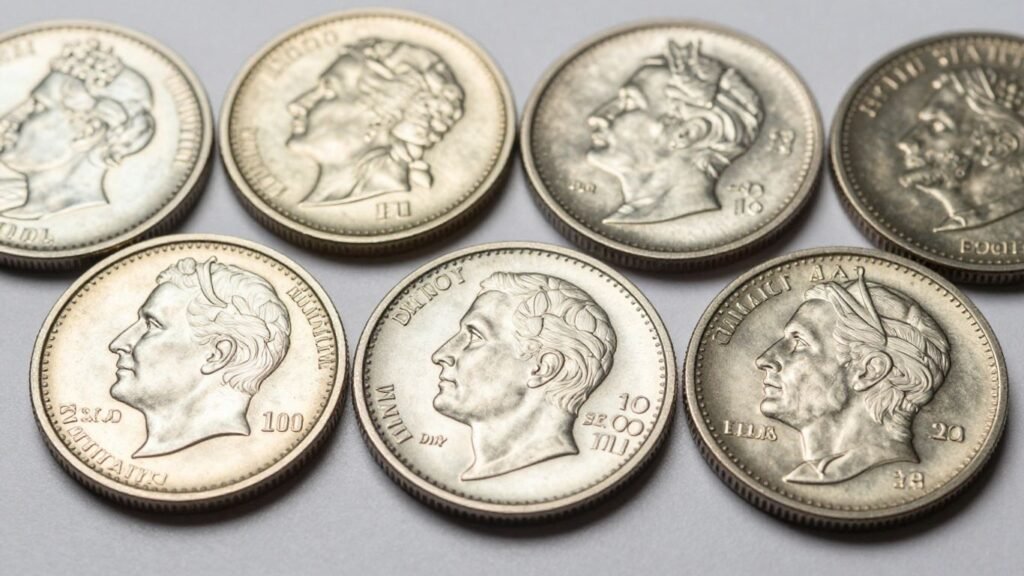
So, you’re looking into coin collecting and keep running into terms like ‘mint sets’ and ‘proof sets.’ It can be a little confusing at first, right? I remember when I started, I wasn’t sure what the big deal was or how they were different. Basically, they’re both special coin packages from the government mint, but they’re made and look quite different. Let’s break down what makes them unique so you can figure out which ones you might want to collect.
Key Takeaways
- Proof sets feature coins with a special finish, usually mirror-like fields and frosted designs, created through a meticulous striking process.
- Mint sets contain coins with a standard, uncirculated finish, essentially looking like they just came off the production line, but never intended for circulation.
- The way proof and mint sets are made is a major difference; proof coins get struck multiple times with polished dies and planchets, while mint set coins are struck once like regular coins.
- Visually, proof coins have a distinct contrast between shiny backgrounds and matte designs, whereas mint set coins have a uniform, uncirculated look.
- Historically, proof coins have been made for collectors for a long time, with official proof sets becoming more common in the 20th century, while mint sets are a more recent offering, starting in the mid-20th century.
Understanding Mint Sets Versus Proof Sets
So, you’re getting into coin collecting and you keep hearing about "mint sets" and "proof sets." They sound kind of similar, right? Both are official packages of coins from the U.S. Mint, usually featuring one of each denomination made that year. But let me tell you, they are actually pretty different critters, and knowing the difference is key to building a collection you’ll actually enjoy. It’s not just about shiny coins; it’s about how they’re made and what makes them special.
What Are Proof Sets?
Proof sets are where the Mint really shows off. These coins aren’t just regular coins; they’re made using a special process. Think highly polished dies and planchets (that’s the blank metal disc before it’s struck). This special treatment gives proof coins a really distinct look. Most proof coins since 1936 have these super shiny, mirror-like surfaces with the coin’s design appearing frosted or raised against that mirror background. It’s a look that really makes the details pop. The U.S. Mint has been making proof coins for a long time, but they started putting them into official sets regularly back in 1936. These sets usually contain one of every circulating coin denomination for that year, struck at the Philadelphia Mint before 1965, and then later from San Francisco.
What Are Mint Sets?
Mint sets, on the other hand, are more about showcasing the coins as they are produced for everyday use, just without ever hitting your pocket. These coins are considered "uncirculated," meaning they haven’t been spent or worn down. They look like they just came off the press. While they are in pristine condition, they don’t have that special, high-contrast finish you see on proof coins. They’re essentially brand-new coins straight from the Mint. Mint sets started being produced in 1947, and they typically include one of each coin denomination from a specific mint. Sometimes, mint sets even include coins that the Mint decided not to release into general circulation, which can make them pretty interesting finds.
Key Differences At A Glance
It can be a bit confusing, so here’s a quick rundown of the main things that set them apart:
- Manufacturing: Proof coins are specially struck with polished dies and planchets for a high-contrast, mirror-like finish. Mint set coins are struck using standard procedures, resulting in an uncirculated but less dramatic finish.
- Appearance: Proof sets typically feature mirror-like fields and frosted devices. Mint sets have a standard, brilliant uncirculated finish.
- Purpose: Proof sets are made for collectors and showcase special minting techniques. Mint sets are primarily for collectors to get uncirculated examples of circulating coinage, sometimes including special issues.
When you’re looking at these sets, remember that the way they’re made directly impacts how they look and, often, their value. It’s not just about the date or the metal content; the specific finish is a huge part of what makes a coin a proof or just a regular uncirculated coin.
Here’s a little table to help visualize:
| Feature | Proof Set | Mint Set |
|---|---|---|
| Finish | Mirror-like fields, frosted devices | Brilliant uncirculated |
| Striking | Special polished dies and planchets | Standard minting process |
| Intended For | Collectors, showcasing special techniques | Collectors, uncirculated circulating coins |
| Typical Look | High contrast, detailed, shiny | Standard, clean, new coin appearance |
The Manufacturing Process: Mint Sets Versus Proof Sets
So, how do these coins actually get made? It’s not just a matter of stamping them out. There are some pretty distinct differences in how proof coins and the coins found in mint sets are produced, and that’s a big part of what makes them special.
Special Striking Techniques for Proof Coins
Proof coins are treated like royalty at the mint. They go through a much more involved process than your everyday pocket change. The key here is multiple strikes. Each coin is struck at least twice, sometimes more, with specially prepared dies. This isn’t your standard, quick press. It’s a slower, more deliberate process designed to bring out every tiny detail.
- Polished Dies: The dies used for proof coins are polished to a mirror finish. Think of it like polishing a mirror until it’s perfectly smooth and reflective.
- Burnished Planchets: The blank metal discs, called planchets, are also polished and burnished until they gleam. This gives the coin its super shiny background.
- Multiple Strikes: As mentioned, each coin is struck multiple times. This ensures a sharp, clear image and that frosty look on the design elements.
This extra care is what gives proof coins their distinctive look, with those super shiny, mirror-like fields and frosted designs. It’s a labor-intensive method, and you can see why these coins are considered top-tier. You can find out more about the specialized minting process for proof coins.
Standard Production for Mint Set Coins
Coins destined for mint sets have a different journey. They’re essentially made using the regular production methods, but with a crucial difference: they never enter circulation. They are struck only once, just like regular coins, but they are handled more carefully to preserve their uncirculated condition.
- Single Strike: These coins receive a single strike from dies that are not necessarily polished to a mirror finish.
- Uncirculated Quality: The goal is to produce coins that are in perfect, uncirculated condition, straight from the mint.
- No Special Handling (Beyond Standard): While they aren’t tossed around, they don’t get the same meticulous, multi-strike treatment as proof coins.
So, while mint set coins are beautiful and pristine, they don’t have that extra level of detail and contrast that proof coins boast. They represent the standard coin production, just preserved.
The Role of Polished Dies and Planchets
This is where a lot of the magic happens, especially for proof coins. Imagine you’re trying to get a perfect photograph. You need good lighting and a clean lens, right? It’s kind of similar with coins.
- Dies: These are the metal tools that actually impress the design onto the coin. For proof coins, these dies are polished to an incredibly smooth, reflective surface. This is what creates those mirror-like backgrounds.
- Planchets: These are the blank metal discs before they get struck. For proof coins, the planchets are also polished and cleaned until they are spotless and shiny. This ensures that when the design is struck, it stands out against a perfectly reflective field.
For mint set coins, the dies and planchets aren’t prepared to this extreme level. They’re made to standard specifications, which is perfectly fine for creating a nice, uncirculated coin, but it doesn’t produce the dramatic contrast seen on proof coins. It’s this attention to detail in preparing the dies and planchets that really sets proof coins apart in their manufacturing.
The distinction in manufacturing isn’t just about making coins look pretty; it’s about a deliberate process to create different types of numismatic items. Proof coins are crafted for their aesthetic appeal and detail, while mint set coins showcase the standard minting output in pristine, uncirculated condition.
Visual Characteristics: Distinguishing Mint Sets Versus Proof Sets
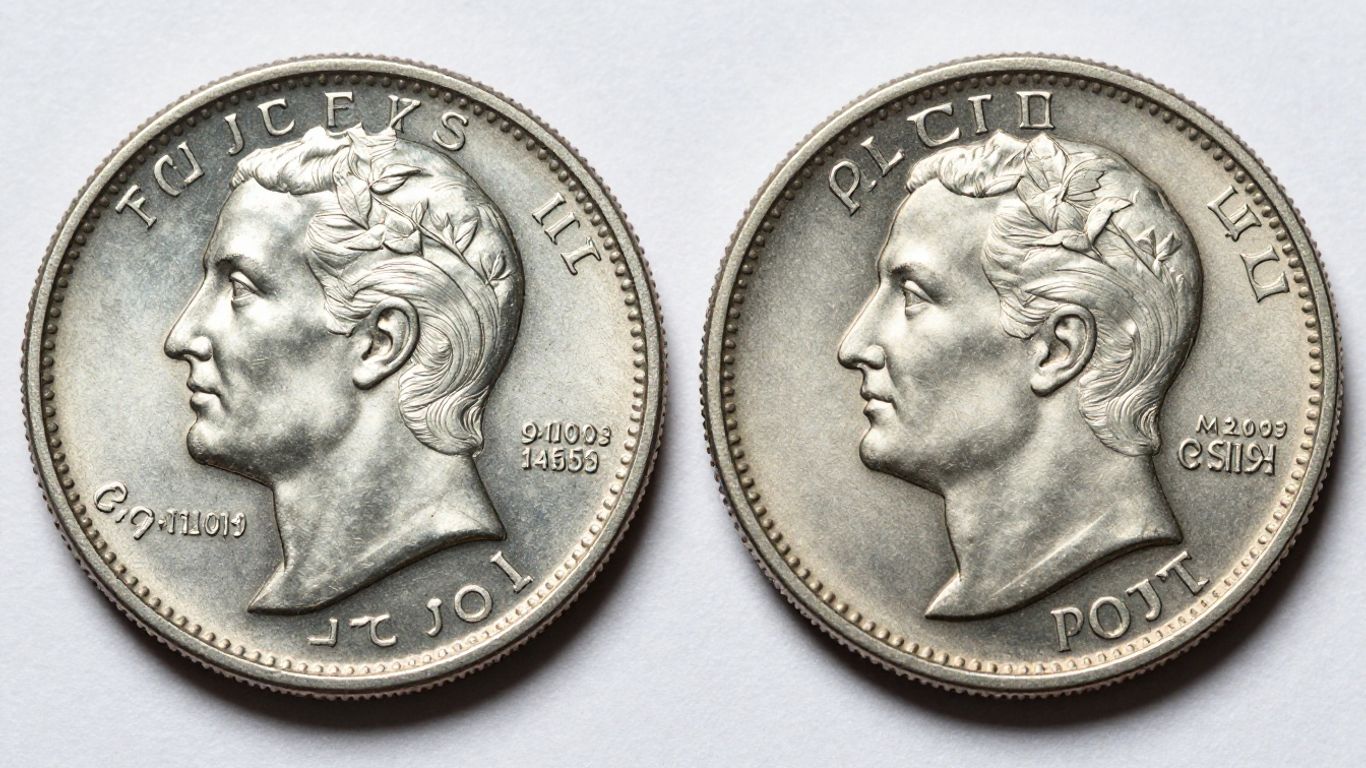
Alright, so you’ve got these coins, right? And you’re trying to figure out if they came from a mint set or a proof set. It can seem a little tricky at first, but once you know what to look for, it’s actually pretty straightforward. The biggest clues are usually in how the coin looks and feels.
Mirror-Like Fields and Frosted Devices
This is the classic look for a proof coin. Imagine a super shiny, almost liquid-like surface on the flat parts of the coin – that’s called the "field." Then, the raised parts, like the design or the lettering, have this frosty, matte finish. It really makes the design pop, giving it a dramatic contrast. This distinct appearance is the hallmark of a specially struck proof coin. It’s not something you typically see on coins made for everyday circulation or even in standard mint sets. It’s a deliberate artistic choice made during the minting process. If you’re looking at a coin with this kind of contrast, chances are it’s a proof coin, and it’s probably worth checking out its proof coin details.
Uncirculated Finish of Mint Set Coins
Now, mint set coins are a different story. They’re meant to look like they just came off the press, but without any special treatment to create that dramatic contrast. They have a "business strike" finish, which means they look like regular coins you might find in your pocket, but they haven’t been worn down by use. They’re generally bright and shiny, but the fields and the devices will have a similar luster. You won’t get that super-deep mirror effect or the frosted design. Think of them as pristine examples of regular coinage, straight from the source, but without the fancy finish. They’re still great for collectors because they’re in perfect condition, but visually, they’re much more subdued compared to proofs.
Identifying Cameo and Reverse Proof Finishes
While the mirror-and-frost look is the most common for proofs, there are a couple of other finishes to know about. "Cameo" is just another term for that frosted design on a mirrored field, so it’s the same idea. Then you have "Reverse Proofs." These are kind of the opposite – the fields are frosted, and the design is mirrored. It’s a really neat effect that flips the usual look on its head. You might also see coins that look like they have a satin finish, which is a bit less reflective than a standard uncirculated coin but doesn’t have the dramatic contrast of a proof. Knowing these different finishes helps you pinpoint exactly what kind of coin you’re holding.
Here’s a quick rundown:
- Proof Coins: Mirror-like fields, frosted designs (most common). High contrast.
- Mint Set Coins: "Business strike" finish. Uniform luster, no dramatic contrast. Looks like a brand-new regular coin.
- Reverse Proof Coins: Frosted fields, mirror-like designs. The opposite of a standard proof.
Handling proof coins requires extra care. Their highly reflective surfaces are easily smudged by fingerprints or scratched by even minor contact. It’s always best to handle them by their edges, ideally while wearing cotton gloves, to preserve their pristine appearance and value.
So, when you’re looking at your coins, pay attention to that surface finish. That’s usually your biggest clue to whether it’s a mint set coin or a proof coin. It’s like the difference between a regular photo and one with a special filter – both are pictures, but they have a very different feel.
Historical Evolution of Proof and Mint Sets
Early Proof Coinage and Set Assembly
Coin collecting has been around for a good while, and people have always liked special coins. The U.S. Mint started making what we now call proof coins way back in the early 1800s, around 1817. At first, these were probably just made to check the dies, but collectors noticed and wanted them. By the mid-1800s, the Mint began to make them more regularly to satisfy this growing interest. It wasn’t until 1861 that the Mint started selling actual sets of these special coins directly to collectors. These weren’t always complete sets of everything being made, though. You might buy a set of just the silver coins, or just the smaller denominations. This practice of selling partial sets stopped around 1901.
Things really picked up in the early 1900s. There was a brief period where the Mint issued special
Packaging and Presentation: Mint Sets Versus Proof Sets
When you get a mint set or a proof set, how it’s packaged tells you a lot about what’s inside and how it was made. It’s not just about looks; the packaging has changed a lot over the years, and it really shows the history of how these sets are put together for collectors.
Evolution of Proof Set Packaging
Proof sets have seen some interesting packaging changes. Back in the day, from 1936 to 1955, each proof coin was tucked into its own little clear plastic sleeve. These were then usually mailed out in cardboard boxes. Things shifted a bit in 1955 when the Mint started putting all the proof coins into one flat cellophane package, with each coin in its own little pouch within that larger seal. This cellophane style stuck around until 1964. Then, after a break, when proof sets came back in 1968, they moved into hard plastic cases. These cases have been the standard ever since, though the exact design has gotten a few tweaks here and there.
Mint Set Packaging: From Cardboard to Cellophane
Mint sets have their own packaging story. When they first started being made in 1947, they used cardboard holders. These panels held the coins, but the cardboard wasn’t always the best for long-term storage; it could sometimes cause toning or spots on the coins over time. Some collectors actually like certain types of toning, though! By 1958, the Mint switched to sealed cellophane containers, and this format, holding one coin of each type, has been pretty consistent. More recently, starting in 2007, mint sets began showing up in folders. You’ll often see a blue folder for coins from Philadelphia and a red one for coins from Denver. This color-coding has been a thing since the cellophane days, with blue strips for Philly and red for Denver (and sometimes San Francisco).
Modern Packaging for Both Set Types
Today, both mint sets and proof sets come in packaging designed to protect the coins while showing them off. Proof sets typically arrive in sturdy, clear plastic holders that make the coins’ special finishes really stand out. Mint sets often come in those colored folders we talked about, or sometimes in similar plastic holders, depending on the specific set. It’s always a good idea to keep them in their original packaging unless you’re sending them off for grading. The packaging is part of the set’s story and helps keep those coins in the best possible condition.
The way coins are packaged isn’t just for show; it’s a practical measure to keep them safe from damage and environmental issues. Over the years, packaging has evolved from simple sleeves and cardboard to more secure plastic holders and folders, reflecting advancements in preservation techniques and collector expectations.
Composition and Content: Mint Sets Versus Proof Sets
Standard Denominations in Both Sets
Both mint sets and proof sets typically feature one coin of each denomination that the U.S. Mint is producing for circulation that year. This usually means you’ll find pennies, nickels, dimes, quarters, and half dollars. Sometimes, especially in certain years, dollar coins are also included. The idea is to give collectors a complete snapshot of the circulating coinage for that specific year from a particular mint.
Inclusion of Special Issues in Mint Sets
This is where mint sets can sometimes surprise you. While they contain the regular circulating coins, they occasionally include special issues that weren’t actually released into general circulation. Think of coins like the 1970-D Kennedy half dollar or the 1996-W Roosevelt dime. These coins were minted specifically for inclusion in mint sets, making those sets a unique way to acquire them. It’s a neat little bonus for collectors who might otherwise miss out on these less common pieces.
Silver and Precious Metal Proof Sets
Proof sets, on the other hand, often have a premium version that includes coins made from silver. These are known as Silver Proof Sets. While the standard proof sets might contain base metal coins, the silver versions feature dimes, quarters, and half dollars struck in a silver composition. This adds an intrinsic metal value on top of the numismatic appeal. The U.S. Mint also occasionally releases special proof sets with other precious metals, though these are less common than the annual silver offerings.
Here’s a quick look at what you might find:
| Set Type | Typical Denominations | Special Inclusions |
|---|---|---|
| Standard Mint Set | Penny, Nickel, Dime, Quarter, Half Dollar, Dollar | Coins not released into circulation (e.g., 1970-D Half Dollar) |
| Standard Proof Set | Penny, Nickel, Dime, Quarter, Half Dollar, Dollar | All denominations struck with a proof finish (mirror fields, frosted devices) |
| Silver Proof Set | Silver Dime, Silver Quarter, Silver Half Dollar | Higher intrinsic metal value, premium packaging, often includes other silver coins |
The composition of coins within these sets can vary significantly, especially when you consider the shift from silver to clad coinage for circulating denominations and the special silver issues found in some proof sets. Always check the specific year and set type to know exactly what metals are involved.
It’s worth noting that the packaging has also evolved. Early mint sets from the 1940s and 50s used cardboard holders that could sometimes cause toning on the coins. Later, cellophane packaging became the standard for both mint and proof sets, offering better protection. Today, both types of sets are typically housed in hard plastic cases, designed to keep the coins safe and looking their best for years to come.
Value and Investment Considerations
Initial Premiums: Proof Sets vs. Mint Sets
When you first buy a proof set or a mint set, you’re usually paying a bit more than the face value of the coins inside. This extra cost, called a premium, covers the special manufacturing process, the packaging, and the mint’s profit. Proof sets generally have a higher initial premium because of the extra care and special techniques used to make them look so good. Mint sets, made with standard processes, typically have a lower premium. It’s like buying a regular car versus a luxury model – you expect to pay more for the fancy features.
Secondary Market Dynamics
What happens after you buy these sets? That’s where the secondary market comes in. The value of a set on the resale market can swing quite a bit. It depends on a lot of things, like how many were made (mintage), if there are any rare varieties, and, of course, what collectors are looking for at that moment. Sometimes, a set that wasn’t super popular when it first came out can become a hot item years later. It’s a bit unpredictable, honestly. You might see a set that cost $50 new selling for $20 or $200 a decade later. It really pays to keep an eye on what’s trending.
Factors Influencing Long-Term Value
So, what makes one set worth more than another over time? Several things play a role. First off, the metal content matters, especially for older sets made with silver. Then there’s the condition of the coins and the packaging – anything damaged or worn down will be worth less. Key dates and low-mintage sets are often the real winners in the long run. These are the ones that are harder to find, making them more desirable. Think of it like collecting rare books; the first edition with a limited print run is usually worth more than a mass-produced paperback. Plus, the overall demand from collectors is a huge driver. If a particular series or type of coin becomes popular, the sets containing those coins tend to go up in value. For those interested in the investment side, understanding these elements is key to assessing their potential proof coins can be valuable investments.
Here are some common factors that can affect a set’s value:
- Mintage Numbers: Lower production numbers usually mean higher value.
- Coin Condition: Coins and packaging in top shape are worth more.
- Metal Content: Sets with precious metals like silver or gold often hold their value better.
- Collector Demand: What’s popular right now can significantly impact prices.
- Rarity of Varieties: Special errors or unique features can make a set much more valuable.
It’s also worth noting that sometimes, common coins in a set might be worth more for their silver content than their collector value, especially older ones. A good dealer can help sort this out. They know which coins are just silver and which ones have that extra numismatic appeal.
Collecting Strategies for Mint Sets Versus Proof Sets
So, you’ve got a growing coin collection, and you’re wondering how to best add to it, especially when it comes to mint sets and proof sets. It can feel a bit overwhelming at first, trying to figure out what’s worth your time and money. Let’s break down some ways to approach building your collection, whether you’re leaning towards the shiny proof coins or the crisp mint set offerings.
Focusing on Key Dates and Low Mintage Sets
When you’re building any collection, whether it’s stamps, coins, or even vintage action figures, paying attention to the rare stuff is usually a good bet. For both mint and proof sets, this means looking for those specific years or mint marks that weren’t produced in huge numbers. Sometimes, a particular year might have had a lower mintage because of production issues, or maybe the U.S. Mint decided to make fewer of them. These sets often become more sought after down the line.
- Identify low mintage years: Check coin guides or online resources to see which years had fewer sets produced. This information is usually readily available.
- Look for special mint marks: Sometimes, coins from a specific mint (like San Francisco or West Point) are included in sets and have lower production numbers.
- Consider sets with unique errors or varieties: While less common in official sets, sometimes minor variations can occur that make a set more interesting to a dedicated collector.
The Appeal of Silver Proof Sets
If you’re interested in sets that have a bit more intrinsic value, silver proof sets are definitely worth a look. These aren’t just about the numismatic appeal; they contain coins made of actual silver. This means their value is tied not only to their collectibility but also to the fluctuating price of silver itself. They often come with a higher price tag initially, but for many collectors, the combination of the beautiful proof finish and the precious metal content is a winning combination.
- Higher initial cost: Be prepared to spend more upfront compared to standard clad proof sets.
- Metal value: The silver content provides a baseline value that can increase if silver prices rise.
- Desirability: These sets are often produced in more limited quantities and are highly desired by collectors who appreciate both the art and the metal.
Building a Comprehensive Collection
Deciding whether to focus on mint sets, proof sets, or a mix of both is a personal journey. Some collectors prefer the pristine, uncirculated look of mint set coins, while others are drawn to the mirror-like fields and frosted devices of proof coins. You might decide to collect by year, by denomination, or even by mint. Ultimately, the most rewarding approach is the one that brings you the most enjoyment and fits your budget.
Building a collection takes time and patience. Don’t feel pressured to buy everything at once. Start with what interests you most, learn as you go, and enjoy the process of discovery. Your collection is a reflection of your personal passion for numismatics.
Here’s a quick look at what you might find in each type of set:
| Set Type | Typical Content | Finish |
|---|---|---|
| Mint Set | One of each circulating denomination, uncirculated | Standard mint-state, uncirculated finish |
| Proof Set | One of each circulating denomination, specially struck | Mirror-like fields, frosted devices (cameo) |
| Silver Proof | One of each circulating denomination, silver alloy | Mirror-like fields, frosted devices (cameo) |
Remember, there’s no single ‘right’ way to collect. Whether you’re hunting for a rare mint set from the 1950s or admiring the sharp details on a modern silver proof coin, the goal is to build a collection that you’re proud of.
Handling and Preservation
Susceptibility of Proof Coins to Damage
Proof coins, with their super shiny fields and frosted designs, are really something to look at. But that beauty comes with a catch. Those mirror-like surfaces are like magnets for fingerprints, smudges, and tiny scratches. It’s easy to mess them up, even when you think you’re being careful. A single fingerprint left on a proof coin can be really hard to get off without leaving a mark, and that can seriously hurt its value. It’s why collectors treat these coins like delicate works of art. You’ll often see people wearing special cotton gloves when they handle them, and they’re always careful to only touch the coin’s edge. It’s a bit of a ritual, but it’s necessary if you want to keep your proofs looking their best.
Proper Care for Mint Set Coins
Mint set coins, while not as delicate as proofs, still need good care. They’re usually in pretty good shape right out of the mint, but over time, things can happen. The best way to keep them safe is to leave them in their original packaging if possible. If you do take them out, make sure to handle them by the edges, just like proofs. Avoid storing them in holders made of PVC, because that stuff can actually damage the coins over the years, causing a greenish film. Think about putting them in inert plastic capsules or Mylar holders instead. Keeping them in a stable environment, away from extreme temperatures and humidity, also goes a long way in preserving their condition.
The Importance of Grading Standards
When it comes to the value and desirability of both mint and proof sets, grading is a big deal. For proof coins, the grading scale goes from PR-60 (which is considered impaired) all the way up to PR-70 (which is perfect). Even a small difference in grade can mean a big jump in price, especially for rare or precious metal proofs. For mint set coins, the grading is usually based on the standard uncirculated scale, from MS-60 to MS-70. A coin that’s graded MS-65 or higher is often called a "Gem" uncirculated coin. Knowing these standards helps you understand what you’re buying and what to look for when building your collection. It’s also why many collectors choose to have their most valuable coins professionally graded by services like PCGS or NGC. They provide an objective assessment of a coin’s condition, which adds a layer of confidence for buyers and sellers alike.
Here’s a quick look at the proof grading scale:
- PR-70 (Perfect): The absolute best, with no flaws visible even under magnification.
- PR-69 (Near Perfect): Almost perfect, with only the slightest imperfections.
- PR-65 (Gem): A high-quality proof with good eye appeal.
- PR-60 (Impaired): Shows noticeable flaws or wear.
Remember, even a small scratch or a fingerprint can knock a proof coin down a grade or two, significantly impacting its value. It’s a tough lesson for many new collectors, but a vital one to learn early on.
So, Which Set is Right for You?
Alright, so we’ve gone over the nitty-gritty of mint sets and proof sets. Honestly, picking between them really comes down to what you’re looking for. If you want that super shiny, almost mirror-like finish with those frosted details, proof sets are probably your jam. They’re made with extra care, and you can really see it. On the other hand, mint sets give you a look at coins as they’re fresh from the mint, before they’ve ever seen a pocket or a vending machine. They might not have that fancy finish, but they offer a great way to get uncirculated coins, sometimes even ones you wouldn’t find out in the wild. Both have their own appeal, and honestly, there’s no wrong answer. It’s all about what catches your eye and fits your collecting style. Maybe you start with one, and then branch out. Happy collecting!
Frequently Asked Questions
What's the main difference between a mint set and a proof set?
Think of it like this: mint sets have coins that look like they just came off the regular production line, but they’ve never been used. Proof sets, on the other hand, are made with extra care, using special polished dies and planchets, giving them a super shiny, mirror-like background and often a frosty look on the raised parts of the design.
How can I tell a proof coin from a regular coin just by looking?
The easiest way is to look at the background, called the ‘field.’ Proof coins have a super shiny, mirror-like field that really stands out. Regular coins, even if they look shiny, won’t have that intense mirror effect. The raised parts of the design on proof coins often look frosted or matte, creating a cool contrast.
Are proof sets more valuable than mint sets?
Generally, proof sets cost more when they’re first released because of the special way they’re made. While both can gain value over time, proof sets, especially those with silver or from important dates, often have a higher potential for appreciation because they are made specifically for collectors.
Why are proof coins so delicate?
Because proof coins have those super shiny, mirror-like surfaces, they show fingerprints, smudges, and tiny scratches much more easily than regular coins. This means you have to be extra careful when handling them to keep them in good condition and maintain their value.
When did the U.S. Mint start making proof sets regularly?
The U.S. Mint officially started making proof sets available to collectors on a regular basis in 1936. Before that, proof coins were made, but not usually sold as complete, official sets like they are today.
What kind of coins are usually in a mint set?
Mint sets typically contain one of each coin denomination that the U.S. Mint is producing for that year, like pennies, nickels, dimes, quarters, and half dollars. The cool thing is, sometimes these sets include special coins that were never actually released into regular circulation!
How has the packaging for these sets changed over the years?
Packaging has changed a lot! Early proof sets were often in soft plastic pouches inside boxes. Mint sets used cardboard that could sometimes damage the coins. Later, both types moved to sealed cellophane and then to sturdy plastic cases. Today, they come in protective plastic holders designed to keep them safe.
What are 'cameo' proof coins?
Cameo proof coins are a type of proof coin where the raised design elements have a frosted or matte appearance, while the background (the field) remains mirror-like. This contrast makes the design really pop out and is a highly sought-after look by collectors, especially on newer proof coins.