Deciding between proof coins vs uncirculated coins can feel a bit confusing when you’re starting out in coin collecting. Both are special in their own way, but they’re made differently and have unique looks. I remember staring at two shiny coins, trying to figure out what made one a ‘proof’ and the other just ‘uncirculated.’ It took some digging, but understanding the differences really opened up my eyes to the finer points of collecting. This guide aims to clear up those distinctions, helping you appreciate what makes each type stand out.
Key Takeaways
- Proof coins are specially made for collectors, often featuring frosted designs against mirror-like fields, achieved through multiple strikes and polished dies.
- Uncirculated coins, also known as Mint State coins, are regular circulation strikes that never entered commerce and retain their original mint luster.
- Visual differences include the sharp, frosted look of proof coin designs and the deep, reflective fields, compared to the often more varied, but still lustrous, surfaces of uncirculated coins.
- Mint marks, edge details (reeded, plain, or lettered), and overall condition play significant roles in the value and identification of both proof and uncirculated coins.
- Proper handling and storage are vital for preserving the condition and value of both proof and uncirculated coins, preventing damage like scratches or toning.
Understanding Proof Coins vs Uncirculated Coins
Alright, let’s get down to brass tacks about proof coins and uncirculated coins. It’s easy to get them mixed up, especially when you’re just starting out, but they’re actually quite different. Think of it like comparing a factory-fresh car right off the assembly line to a car that’s been specially detailed and polished for a car show. Both are new, in a way, but one has had extra attention paid to its appearance.
The Minting Process for Each
So, how are these coins actually made? It’s not just a simple stamping process for both. The mint uses special techniques for each type.
- Proof Coins: These are made using specially prepared dies and planchets (the blank metal discs). The dies are polished to a mirror finish, and the planchets are often burnished. Then, the coins are struck multiple times, sometimes with lower speed and higher pressure, to bring out every tiny detail. After striking, they’re usually handled with extreme care and often individually inspected.
- Uncirculated Coins: These are the coins you’d typically find in circulation if they weren’t saved by collectors. They are struck once, usually at high speed, on a regular press. While they aren’t meant to be handled extensively, they can get nicks and scratches from the minting process itself, like bouncing around in bags with other coins. They’re not given the same special treatment as proof coins.
Visual Distinctions to Note
When you look at a proof coin next to an uncirculated one, you’ll usually see some pretty clear differences. It’s not always about the design itself, but how that design looks.
- Surface Finish: Proof coins typically have a mirror-like background. You can often see your reflection in the flat, open areas. Uncirculated coins, on the other hand, will have a more satiny or frosty finish, and you’ll likely see tiny lines or marks from where they bumped into other coins during production.
- Design Sharpness: Both types should have sharp designs, but proof coins often have a higher level of detail and contrast. The raised parts of the design on a proof coin tend to be very crisp and well-defined against that mirror background.
- Overall Appearance: A proof coin just looks ‘finished’ in a way that an uncirculated coin doesn’t. It’s the result of that extra care and special striking process.
Purpose and Intended Audience
Why does the mint go through the trouble of making proof coins? It really comes down to who they’re for and what they represent.
Proof coins are primarily made for collectors. They are not intended for general circulation and are produced with a focus on aesthetic perfection and showcasing the coin’s design in the best possible light. Their higher production cost and special nature mean they are sold at a premium.
Uncirculated coins, while also collected, represent the standard output from the mint. They are the coins that would have entered everyday commerce if they hadn’t been set aside. Collectors seek out uncirculated coins to get examples that are as close as possible to their original state, free from the wear and tear of being used as money.
Key Characteristics of Proof Coins
Proof coins are something special, aren’t they? They’re not just regular coins that happened to come off the minting press looking good. Nope, these are made with a whole different approach, aiming for absolute perfection. Think of them as the collector’s edition of coins, crafted with extra care and attention.
Mirror-Like Surfaces
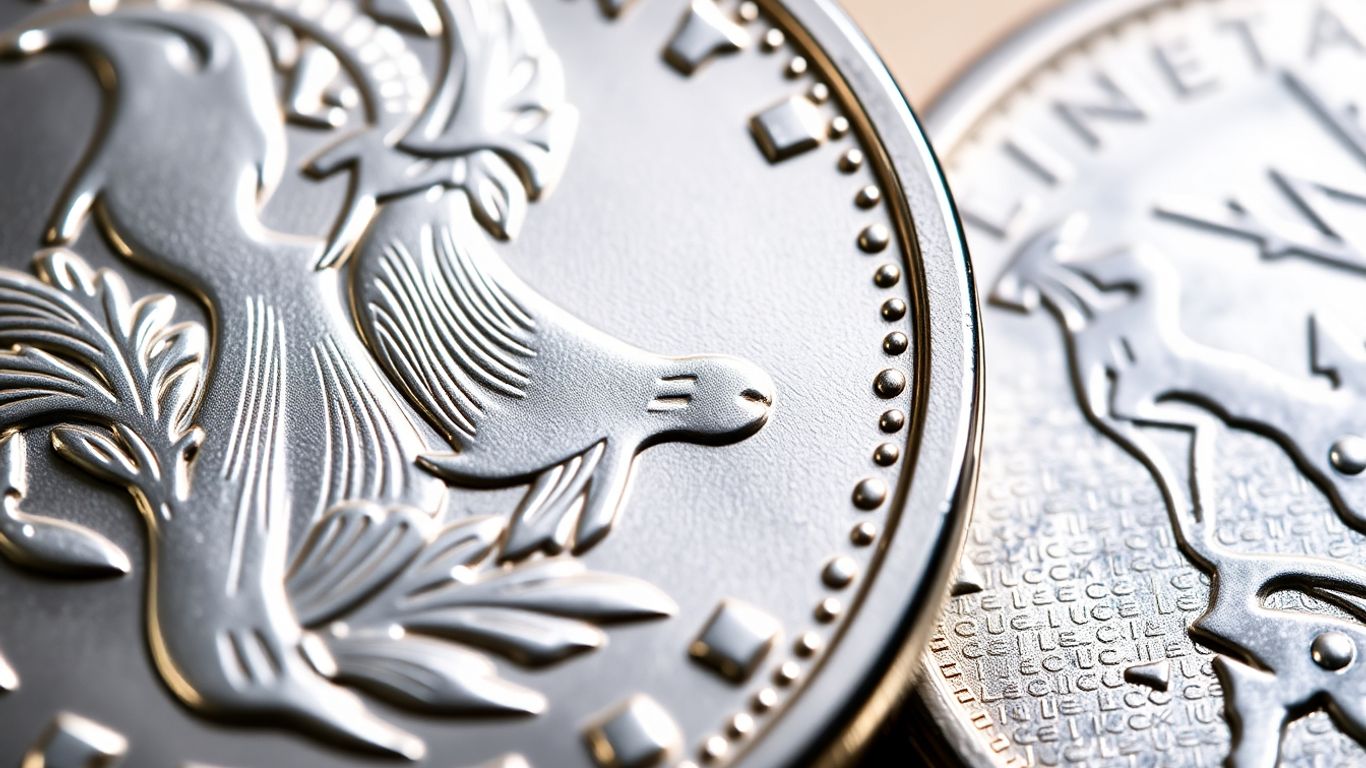
One of the first things you’ll notice about a proof coin is its surface. It’s incredibly shiny, almost like a mirror. This isn’t accidental. The mint uses specially polished dies and planchets (the blank metal discs) for proof coins. They strike each coin multiple times, often with lower pressure than regular coins, to get that super smooth, reflective background. This contrast makes the design elements really pop out. It’s a look that regular uncirculated coins just don’t have.
Sharp, Detailed Designs
Because they’re struck multiple times with polished dies, proof coins boast incredibly sharp and detailed designs. Every little line, every curve, every bit of texture is usually very clear. You can often see fine details that might be a bit soft or mushy on a standard uncirculated coin. It’s like looking at a high-definition version of the coin’s artwork. This level of detail is a big part of what makes them so appealing to collectors.
Special Striking Techniques
Making a proof coin involves more than just a standard strike. The minting process is more involved. They often use specially prepared dies that are polished to a mirror finish. The planchets themselves are also polished before striking. Then, each coin is struck at least twice, sometimes more, with each strike carefully controlled. This multi-strike process helps ensure that all the fine details are fully impressed into the metal. It’s a slower, more deliberate method compared to the high-speed production of circulating coins. This careful process is what gives proof coins their distinctive look and feel.
Proof coins are made using a special minting process that involves polished dies and planchets, multiple strikes, and careful handling. This results in a coin with a mirror-like background and exceptionally sharp, detailed designs, setting them apart from regular uncirculated coins.
Key Characteristics of Uncirculated Coins
Uncirculated coins, often called "Mint State" (MS) coins by collectors, are those that have never been used in commerce. This means they haven’t passed from person to person, been dropped in a cash register, or otherwise seen the wear and tear of everyday transactions. They’ve essentially gone straight from the minting press into a collector’s hands, or at least, that’s the ideal.
Original Mint Luster
One of the most striking features of a true uncirculated coin is its original mint luster. This isn’t just shininess; it’s a unique sheen that reflects light in a particular way, often described as frosty or satiny. Think of it like the original paint on a classic car – it has a depth and quality that can’t be replicated. When you tilt an uncirculated coin under a good light source, you should see this luster dance across its surfaces. Coins that have been "dipped" in cleaning solutions, even if they look shiny, lose this natural luster, and collectors generally frown upon it because it damages the coin’s surface.
Minimal Wear and Tear
While "uncirculated" means no wear from circulation, it doesn’t always mean perfect. These coins can still have minor imperfections. These might include:
- Contact Marks: Tiny nicks or scratches that happen when coins bump into each other during the minting or packaging process. These are normal and expected to some degree.
- Die Characteristics: Sometimes the metal dies used to strike the coins can show wear or minor damage, leading to slight imperfections in the design itself.
- Bag Marks: A term specifically for marks acquired while coins are bagged and transported from the mint. These can range from very light to more noticeable.
The key is that these imperfections do not look like wear from being handled or spent. They are surface issues, not the flattening or smoothing that happens when a coin is used.
Variations in Strike Quality
Even though uncirculated coins come directly from the mint, the quality of the strike can vary quite a bit. A "strong strike" means the dies hit the coin with enough force to impress every detail crisply and fully. You’ll see sharp lines, full designs, and clear lettering. On the other hand, a "weak strike" occurs when the dies aren’t hitting with full force, perhaps because the dies are worn out or there’s an issue with the minting machinery. This results in softer, less defined details, especially on the coin’s highest points. For collectors, a strong, sharp strike significantly improves a coin’s appearance and desirability.
Assessing the strike quality is really important. Sometimes a coin might look okay at first glance, but when you look closer, you realize the details are just not there. It’s like looking at a blurry photograph – it’s recognizable, but it’s missing that crispness that makes it truly impressive. A coin with a weak strike, even if it’s technically uncirculated, just doesn’t have the same ‘wow’ factor as one that was struck with vigor.
Identifying Proof Coins vs Uncirculated Coins
So, you’ve got a coin, and you’re trying to figure out if it’s a fancy proof or just a regular uncirculated piece. It can be tricky, especially when you’re starting out. Honestly, sometimes even seasoned collectors get fooled. But don’t worry, there are some key things to look at that can help you tell them apart. It’s all about paying attention to the details.
Examining the Surface Finish
This is usually the biggest giveaway. Proof coins are made with special dies and struck multiple times, often on polished planchets (the blank metal discs). This process gives them a unique look. Uncirculated coins, on the other hand, come straight from the mint bag and have their original mint luster, which can range from frosty to cartwheel-like. The mirror-like background on a proof coin is its most distinctive feature. You’ll often see a sharp contrast between the frosted design elements and the highly reflective, almost liquid-like fields. Uncirculated coins, while they might be shiny, won’t have that same deep, glassy mirror finish. They might show bag marks or minor scuffs from being handled at the mint, which proofs generally don’t have.
Assessing Design Sharpness
Proof coins are all about detail. Because they’re struck multiple times with specially prepared dies, the designs tend to be incredibly sharp and well-defined. You’ll see every little line, every hair, every detail crisp and clear. Uncirculated coins can also have sharp details, especially if they received a strong strike. However, sometimes the details on uncirculated coins can appear a bit softer or less defined, particularly if the dies were worn. Look closely at the lettering, the fine lines in the design, and any small features. Proofs usually win the sharpness contest.
Looking for Proof-Specific Markings
While not always present, some proof coins have specific markings or characteristics that can help identify them. Sometimes, the mint might use special dies for proofs that result in subtle differences. Also, the way the coin is struck can leave clues. Proofs are often struck multiple times, which can create a slightly raised appearance to the design elements. Another thing to consider is the edge. While many coins have reeded edges, some proofs might have a different finish or even a special inscription on the edge. It’s worth checking if the coin has any unusual edge treatments that aren’t typical for its regular issue counterpart.
Here’s a quick rundown of what to look for:
- Proof Coins: Look for a mirror-like background, frosted design elements, extremely sharp details, and often a higher level of overall finish. They feel almost too perfect.
- Uncirculated Coins: Expect original mint luster (frosty or satiny), details that are generally sharp but might be slightly softer than proofs, and potentially minor imperfections like bag marks. They look like they just came off the production line.
Remember, the key difference lies in the intent and the minting process. Proofs are made to be admired, showcasing the design in the best possible light, while uncirculated coins are intended for circulation, even if they never make it there. This difference in purpose leads to the distinct visual characteristics you’ll observe.
The Role of Mint Marks
Mint marks are like a coin’s birthplace, a tiny symbol that tells you exactly where it was made. For collectors, these little letters are more than just a location tag; they can seriously impact a coin’s rarity and, consequently, its value. Think of it like this: a coin made at a busy mint might have millions of siblings, but one from a smaller, less productive mint could be much harder to find.
Mint Marks on Proof Coins
Proof coins, being special strikes made for collectors, often have mint marks that reflect their limited production runs. Mints like San Francisco (S) or West Point (W) are known for producing proof coins, and their marks can add a premium. Sometimes, proof coins might not have a mint mark at all, especially older ones from the Philadelphia Mint, which historically didn’t use one. It’s always worth checking the coin’s surface, usually near the date or on the reverse, for these subtle identifiers.
Mint Marks on Uncirculated Coins
For uncirculated coins, the mint mark is just as important, if not more so, for identifying key dates and varieties. A coin that looks identical to another might be worth a lot more simply because it came from a mint with a lower output. For example, a Lincoln cent from the Denver Mint (D) might be common, but a specific year with a rare mint mark could be a real treasure. You’ll typically find these marks on the obverse or reverse, depending on the coin series.
Impact of Mint Location on Value
The location where a coin is struck can really change its story. Here’s a quick rundown:
- Philadelphia Mint (P): Historically, this mint often didn’t use a mint mark. Coins from Philly can be very common, but some special issues do exist.
- Denver Mint (D): Known for producing large quantities of coins, but certain dates and mintages can still be scarce.
- San Francisco Mint (S): Often produces proof coins and collector issues, which tend to be made in smaller numbers and can command higher prices.
- West Point Mint (W): Famous for its bullion and special collector coins, often with limited mintages, making them desirable.
- Other Mints (e.g., Carson City – CC): Historical mints like Carson City produced coins that are now very rare and highly sought after due to their limited production and historical significance.
Understanding mint marks is a bit like learning a secret code. It takes a keen eye and a bit of research, but cracking the code can lead you to some truly special coins. Don’t overlook these tiny symbols; they hold a lot of power in the coin collecting world.
Grading and Condition
So, you’ve got a coin, and you want to know how good it is, right? That’s where grading comes in. It’s basically a way to describe how worn or perfect a coin looks. The better the grade, generally the higher the price tag. Think of it like rating a car – a brand new one is worth way more than one that’s been driven for years.
Grading Proof Coins
Proof coins have their own grading considerations because they’re made differently. The goal with proofs is to look for that super sharp detail and those amazing mirror-like fields. Even though they aren’t meant for circulation, they can still get damaged. Things like hairlines (tiny scratches), milk spots, or even just a weak strike can affect a proof coin’s grade. Professional services often use terms like PR-65 or PR-70, with 70 being the absolute best. It’s all about that pristine, flawless appearance.
Grading Uncirculated Coins
When we talk about uncirculated coins, we’re looking at coins that never made it into your pocket or a cash register. They should still have their original shine, or what collectors call "mint luster." The grading here focuses on wear, but also on "contact marks" – little nicks and dings that happen when coins bump into each other at the mint or in bags. A coin might look pretty good to the naked eye, but under magnification, you might see a bunch of tiny marks that lower its grade. The Sheldon scale, from 1 to 70, is the standard here, with MS-60 being the lowest uncirculated grade and MS-70 being perfect. A coin that’s graded MS-65, for example, is considered "Gem Uncirculated" and has great eye appeal with minimal marks. Understanding the difference between an MS-65 and an MS-67 can mean a big jump in value, especially for popular series.
How Condition Affects Value
Condition is pretty much everything in coin collecting. A coin that looks almost identical to another can have a price difference of hundreds or even thousands of dollars, just based on its grade. It’s not just about wear; it’s about the overall appearance, the quality of the strike, and how much original luster remains. Even minor imperfections can significantly impact what a coin is worth. For instance, a coin with a few light scratches might be worth considerably less than one with the same basic grade but a cleaner surface. It’s why collectors often spend a lot of time searching for that one coin with the best possible condition for its grade. This attention to detail is what separates a good collection from a great one, and it’s why understanding grading is so important for any serious collector looking to get the best value for their money. It’s also why many collectors turn to professional grading services for authentication and grading.
Grading isn’t just about numbers; it’s about understanding the subtle details that make one coin more desirable than another. It requires a keen eye and a good understanding of what collectors are looking for. The difference between a coin that’s just okay and one that’s truly special often comes down to its condition and how well it represents its assigned grade.
Edge Details: A Subtle Differentiator
You know, it’s easy to get caught up looking at the shiny faces and intricate designs on coins, but there’s a whole other part that often gets overlooked: the edge. This outer rim, sometimes called the "third side" of a coin, can tell you a lot. It’s not just about looks; it can be a clue to a coin’s authenticity, its minting process, or even a rare error. I remember finding an old silver dollar where the edge was completely smooth, which was odd because most of them have those little grooves. Turns out, it was a minting mistake, and that little detail made it way more interesting (and valuable!).
So, what should you be looking for when you examine a coin’s edge?
- Reeded Edges: These are the ones with the parallel lines, like you see on most U.S. quarters and dimes. Historically, this was a security feature to stop people from shaving off bits of metal. Nowadays, it’s mostly just part of the design for many coins.
- Plain Edges: Some coins just have a smooth, uninterrupted edge. This can be standard for certain denominations or mintages, but it can also signal a minting error, like a coin that was struck without the reeding mechanism engaged. Finding a plain edge on a coin that’s supposed to have reeding can be a real find.
- Lettered Edges: This is where you’ll find inscriptions right on the edge of the coin. Think of the U.S. Presidential dollars, which have "IN GOD WE TRUST" and the year of minting right there on the rim. You usually have to tilt the coin under good light to read these.
The edge might seem like a minor detail, but it’s often where subtle differences lie. For collectors, especially those looking for errors or specific minting characteristics, the edge can be a treasure trove of information. Don’t just flip a coin over; give its edge a good look too.
Sometimes, modern coins, especially bullion pieces meant to be secure investments, might have very specific patterns or designs on the edge. These are often added security features to make counterfeiting harder. So, next time you’re looking at a coin, don’t forget to check out its edge – you might be surprised what you discover!
Collector Value and Investment Potential
So, you’ve got these coins, proof or uncirculated, and you’re wondering what they’re actually worth, right? It’s not just about the metal they’re made of, though that’s part of it. A few things really make a coin desirable to collectors and, potentially, a good investment.
Rarity and Mintage Numbers
This is a big one. If only a few thousand of a certain coin were ever made, it’s naturally going to be worth more than one that the mint churned out by the millions. Proof coins, by their nature, are usually made in smaller batches than regular uncirculated coins, which can make them rarer. Think about it: if a coin is hard to find, people will pay more to get their hands on it. It’s basic supply and demand, really. You can often find mintage figures in coin catalogs or online databases, which helps give you an idea of scarcity. For instance, coins with very low mintages, like certain early commemoratives, are often highly sought after by collectors. This scarcity is a primary driver of value, sometimes even more so than the coin’s condition. Understanding these numbers is key to spotting potential gems. The limited production runs of proof coins often contribute to their higher market value compared to their uncirculated counterparts. For more on this, you can check out resources on coin rarity.
Market Demand
Even if a coin is rare, it won’t fetch top dollar if nobody wants it. Demand is all about what collectors are looking for right now. Sometimes, a particular series or type of coin becomes really popular for a while, and prices go up. Other times, historical events or even pop culture can spark interest in certain coins. For example, coins from specific historical periods, like World War II, can see increased interest due to their connection to those times. It’s a bit like fashion; what’s hot one year might not be the next. Keeping an eye on auction results and what’s selling well at coin shows can give you a good sense of current demand. It’s not just about rarity; it’s about desirability.
Long-Term Investment Considerations
When you’re thinking about coins as an investment, you’ve got to look beyond the immediate market. Some collectors focus on coins that have a history of steady appreciation over many years. This often means looking at well-established series with consistent collector bases. Coins with excellent eye appeal and sharp strikes, even if they aren’t the absolute highest grade, can sometimes outperform technically higher-graded coins with flaws. It’s also worth considering the metal content for gold and silver coins, as their value will naturally track with the precious metal markets. But for numismatic coins (those valued for their rarity and collectibility), it’s a blend of rarity, condition, and sustained demand that usually leads to the best long-term results. It takes patience, but building a collection of quality pieces can be rewarding both personally and financially.
When evaluating a coin for its investment potential, it’s wise to look at its overall condition and appearance. A coin that looks great, with clear details and minimal distracting marks, often holds its value better. Even if a coin has a slightly lower official grade, if it possesses superior ‘eye appeal’ – meaning it’s just plain attractive – it can be a more solid choice than a coin with a higher grade but noticeable flaws. This focus on visual quality is something experienced collectors pay close attention to.
Handling and Preservation
So, you’ve got these shiny proof coins or maybe some crisp uncirculated ones. That’s awesome! But what do you do with them now? It’s not just about buying them; keeping them in good shape is a whole other ballgame. Trust me, I learned that the hard way when a few of my older coins started looking a bit sad because I just tossed them in a drawer. It’s really about protecting your investment, and honestly, just keeping them looking their best.
Proper Handling Techniques
This is probably the most important thing to get right. Your hands have oils and dirt on them, and even the tiniest bit can mess with a coin’s surface over time. It’s not like you’re going to leave fingerprints on a coin and have it instantly ruined, but over years? Yeah, it can cause problems. So, what’s the fix?
- Always use gloves: Cotton gloves are your best friend here. They create a barrier between your skin and the coin.
- Hold by the edge: If you absolutely have to handle a coin without gloves (try not to!), always grip it by its rim. Never touch the flat parts, the obverse or reverse.
- Work on a clean surface: Make sure the table or desk you’re using is clean and free of debris. You don’t want a stray crumb scratching your prize.
Storage Solutions for Both Types
Okay, so you’ve got your coins. Now, where do they live? This is where things can get a little detailed, because proof and uncirculated coins, while both needing care, might have slightly different needs depending on their condition and what you plan to do with them.
- Coin Holders: For individual coins, you’ve got options like 2×2 cardboard holders, plastic flips, or even professional "slabs" from grading companies. Just make sure whatever you use is made of archival-quality material. Avoid anything with PVC (polyvinyl chloride) – that stuff can actually damage coins over time. I’ve found that Mylar or polyethylene holders are a good bet.
- Albums: If you’re building a set, coin albums are great. They keep coins organized and protected. Dansco albums are pretty popular and hold up well.
- Environment: Keep your storage area cool, dry, and stable. Extreme temperature or humidity changes aren’t good for metal. A safe deposit box or a secure home safe can work, especially if you add some silica gel packets to absorb moisture.
Storing coins properly is just as vital as acquiring them. The wrong storage can lead to tarnishing, corrosion, or even chemical damage, significantly reducing a coin’s appeal and worth. Think of it as giving your coins a safe, climate-controlled home.
Avoiding Damage and Contamination
This ties into handling and storage, but it’s worth repeating. The goal is to keep the coin’s surface as close to its original mint state as possible. This means:
- No cleaning: Seriously, don’t do it. Even "gentle" cleaning can remove original luster or leave microscopic scratches. If a coin looks dirty, it’s usually better to leave it as is, especially if it’s a valuable uncirculated coin. Cleaning can really hurt its value. For bullion coins, knowing their specifications like fineness is important, but even those shouldn’t be cleaned.
- Watch out for "dipping": This is a chemical process some people use to "clean" coins. It removes toning but also strips away original surface characteristics, which collectors often value. It’s a big no-no for most serious collectors.
- Prevent "artificial toning": Sometimes people try to "tone" coins to make them look older or more attractive. This is usually done with chemicals and is easily detectable by experts. It’s best to let toning happen naturally, if at all.
Uncirculated coins are generally more common because they are minted in larger quantities. In contrast, proof coins are produced in limited numbers, making them rarer and harder to find. This difference in mintage is a key factor in their respective values and how collectors approach their preservation.
Common Pitfalls for Collectors
Getting into coin collecting is exciting, but it’s easy to stumble into a few traps if you’re not careful. Knowing these common mistakes can save you a lot of headaches and money down the road. It’s like learning to ride a bike; you might wobble a bit at first, but with a little awareness, you can stay upright.
Mistaking Uncirculated for Proof
This is a big one, especially for newer collectors. Uncirculated coins, often called Mint State (MS) coins, are simply coins that left the mint and went straight into circulation or a collection without being handled much. They still have their original mint luster. Proof coins, on the other hand, are made using special dies and striking processes to create a mirror-like finish and sharp, frosted details. They’re made for collectors, not for spending. The visual difference can be striking, with proof coins often looking like tiny works of art compared to the more utilitarian look of uncirculated coins. Trying to pass off a nice uncirculated coin as a proof, or vice versa, is a common error that can lead to misidentification and incorrect valuations.
Here’s a quick rundown:
- Uncirculated Coins: Have original mint luster, may show bag marks from being handled at the mint, and have a generally consistent finish across the field.
- Proof Coins: Feature highly polished, mirror-like fields and frosted, raised design elements. They are typically struck multiple times to achieve this effect.
Identifying Counterfeit Coins
Unfortunately, the coin collecting world has its share of fakes. Counterfeits can range from crude imitations to incredibly sophisticated copies that can fool even experienced eyes. Spotting them takes practice and a good eye. Always buy from reputable dealers, especially those who are members of recognized numismatic organizations. At coin shows, I always ask about a dealer’s return policy and look for references or reviews. Online, stick to established auction houses or marketplaces with buyer protection. The more you handle genuine coins and learn about their characteristics, the easier it becomes to spot a fake. If a deal seems too good to be true, it probably is.
Some red flags to watch for:
- Weight and Size: Counterfeits might be slightly off in weight or diameter.
- Edge Details: The reeding or lettering on the edge might be poorly executed or missing.
- Strike and Detail: Designs may appear mushy, lack sharpness, or have odd imperfections not found on genuine coins.
- Metal Composition: The coin might not have the correct metallic properties.
Ultimately, the best defense against counterfeit coins is education and vigilance. Trust your instincts—if a deal seems too good to be true, it probably is. By staying informed and cautious, collectors can protect both their coin collections and the value of their coins.
Understanding Artificial Toning
Natural toning is when a coin develops a patina over time due to its environment. It can add character and even value to a coin, especially if it’s attractive and evenly distributed. Artificial toning, however, is when someone tries to make a coin look old or naturally toned using chemicals or heat. This process can significantly damage the coin’s surface and drastically reduce its value. It’s a way to try and make a less desirable coin look more appealing, but it’s essentially a form of alteration. Learning to distinguish between the subtle beauty of natural toning and the often garish or uneven look of artificial toning is a skill that comes with experience and careful observation. You might find some interesting US mint error coins that have developed unique toning over the years, but always be wary of artificially enhanced pieces.
Wrapping It Up
So, we’ve looked at proof coins and uncirculated coins, and hopefully, it’s a bit clearer now. Proof coins are special, made with extra care for collectors, often showing off a shiny, detailed look. Uncirculated coins, on the other hand, are just regular coins that never made it into circulation, so they’re in pretty good shape, but not quite the same as a proof. Knowing the difference helps you figure out what you’re buying and what you’re really looking for in your collection. It’s all about understanding what makes each coin unique and why that matters to you as a collector.
Frequently Asked Questions
What's the main difference between proof coins and uncirculated coins?
Proof coins are special coins made for collectors. They are struck twice with polished dies and planchets, giving them a mirror-like background and frosted design. Uncirculated coins, on the other hand, are regular coins made for spending. They come straight from the mint with their original shine but without the extra polish and detail of proof coins.
How can I tell if a coin is a proof coin just by looking at it?
Proof coins usually have a very shiny, mirror-like surface behind the design, and the design itself often looks frosty or raised. Uncirculated coins will have a more even, sometimes duller shine all over, or a frosty look that isn’t as dramatic as a proof coin’s contrast.
Are proof coins more valuable than uncirculated coins?
Often, yes! Proof coins are usually made in smaller numbers and have a special finish, which makes them more desirable to collectors. This higher demand and lower supply can lead to a higher price compared to regular uncirculated coins.
What does 'mint luster' mean for uncirculated coins?
Mint luster is the original shine or glow a coin has when it’s first made at the mint. Think of it like the sparkle on a brand-new car. Uncirculated coins should still have this shine, showing they haven’t been handled or used.
Why do some uncirculated coins look better than others?
Even among uncirculated coins, there can be differences. This comes down to ‘strike quality’ – how well the design was pressed into the metal. Some coins have very sharp, clear details, while others might look a bit soft or blurry, especially in certain areas.
What is the 'edge' of a coin, and why is it important?
The edge is the side of the coin, like the rim. Some coins have reeding (little lines), some have words or designs, and some are plain. The type of edge, or any errors on it, can be important clues for collectors and can affect a coin’s value.
How do I properly store my coins to keep them in good condition?
It’s best to store coins in holders made from safe materials that won’t harm the metal, like Mylar or special plastic slabs. Avoid touching coins with your bare fingers, as oils can cause damage over time. Cotton gloves are a good idea, or handle coins carefully by their edges.
What should I watch out for to avoid buying fake coins?
Be careful of coins that feel too light or too heavy, or have blurry details and uneven edges. Comparing a suspect coin to a known real one, checking its weight and measurements, and looking closely at the design under magnification can help spot fakes. When in doubt, consult a trusted expert.