
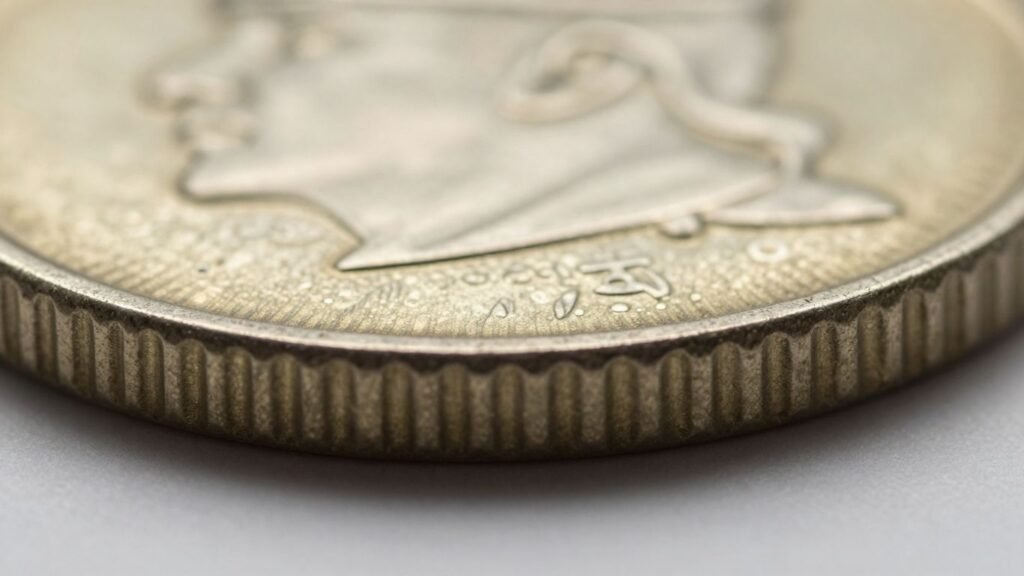
You know, I’ve always wondered about those little ridges on the edges of some coins. Like, why are they there? It’s not like they make the coin look super fancy or anything. I figured it was probably something to do with how they’re made, or maybe a way to tell different coins apart. Turns out, there’s actually a pretty interesting history behind the reeded edges purpose coins have. It’s not just random; there are real reasons why they put those lines there, and some of them go way back. Let’s take a look at the reeded edges purpose coins have.
Key Takeaways
- The reeded edges purpose coins have originally helped stop people from shaving off precious metal from gold and silver coins.
- These ridges make it harder for counterfeiters to make fake coins that look real.
- Today, reeded edges help people who can’t see well identify coins by touch, like telling a dime from a nickel.
- The ridges also make it easier to put coins into machines like vending machines.
- While many coins are no longer made of precious metals, the reeded edges purpose coins have persists due to tradition and modern utility.
Understanding Coin Edge Variations
Have you ever really looked at the edge of a coin? Most of the time, we just shove them into our pockets or vending machines without a second thought. But the edges aren’t all the same, and that’s actually pretty interesting.
The Distinctive Appearance of Reeded Edges
So, what’s the deal with those little lines you see on the edges of some coins, like dimes and quarters? Those are called reeds, and they give the coin a sort of ridged or grooved look. It’s probably the most common edge design you’ll see. Think of it like the tread on a tire, but much, much smaller and more uniform. These reeds are created during the minting process, and they’re not just for show. They have a history tied to how coins were made and used, especially when they were made of more valuable metals.
Exploring Lettered and Decorative Coin Edges
But not all coins have reeds. Some have completely smooth edges, which we call plain edges. Then there are the fancy ones. You might have seen coins with words or phrases stamped right onto the edge – that’s a lettered edge. The U.S. Presidential dollars are a good example, often featuring things like "IN GOD WE TRUST" or the year. Other coins might have decorative patterns, like stars or other symbols, etched into their sides. These decorative edges can make a coin look pretty unique and sometimes add to its collectible appeal.
Distinguishing Between Edge and Rim
It’s easy to get the edge and the rim mixed up, but they’re actually different parts of the coin. The rim is the raised border that runs around the very outside of the coin’s face, both the front (obverse) and the back (reverse). It’s designed to protect the main design from wear and tear. The edge, on the other hand, is the side surface that connects the obverse to the reverse. It’s the part you’d feel if you ran your finger around the coin’s circumference. So, while the rim is about protecting the artwork, the edge is a whole other story with its own set of purposes and variations.
The edge of a coin, often overlooked, is a key feature that can tell you a lot about its history and purpose. From preventing theft to aiding identification, this seemingly simple detail has played a significant role in coinage.
The Historical Rationale for Reeded Edges
Preventing Precious Metal Theft Through Clipping
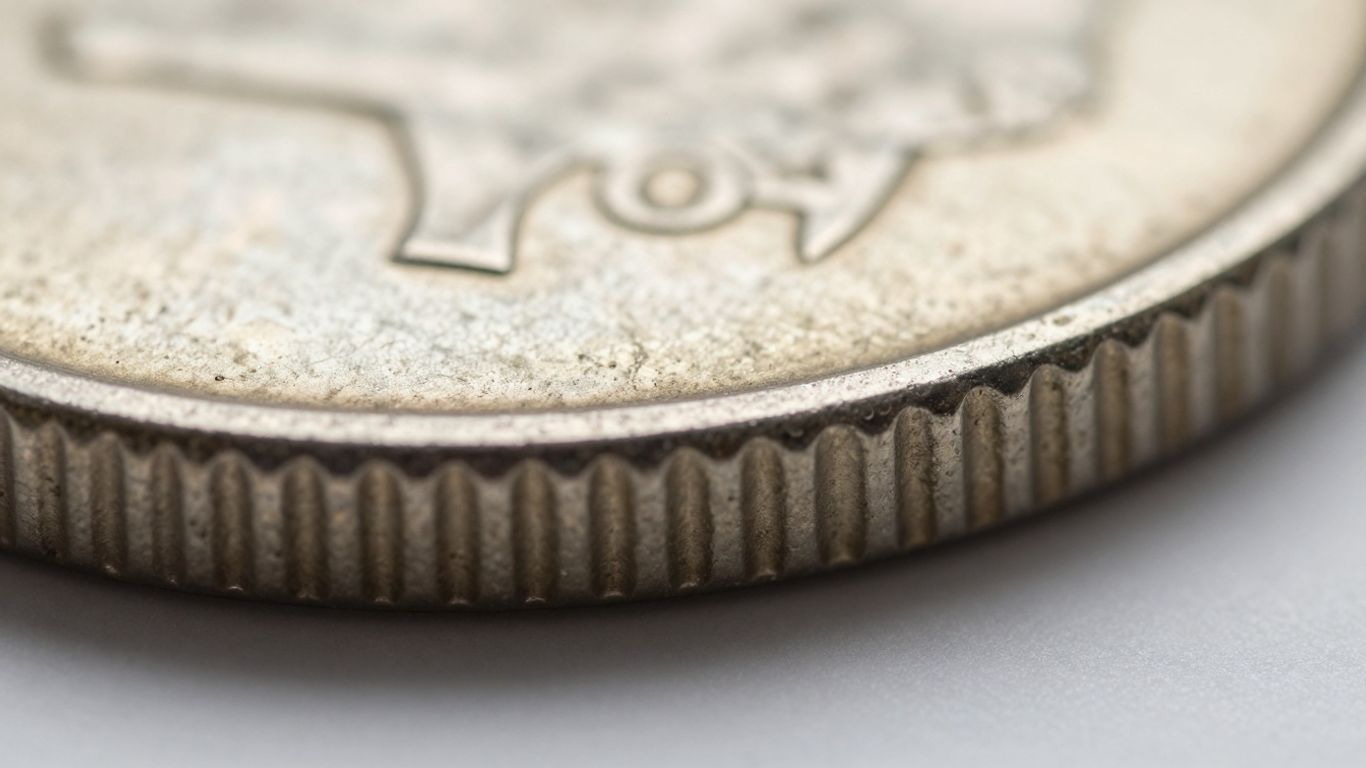
Back in the day, when coins were actually made of valuable stuff like gold and silver, people weren’t always honest. Some folks figured out a sneaky way to make a little extra cash: they’d shave off tiny bits of metal from the edges of these coins. This practice, known as "clipping," meant they could collect the precious metal shavings and then try to pass off the slightly smaller coin as if it were full value. It was a pretty common scam. The reeded edges were introduced to make this kind of theft immediately obvious. If a coin’s edge looked smooth or uneven where the ridges should have been, you knew it had been tampered with.
Identifying Debased or Tampered Coins
So, how did the reeding help identify these tampered coins? It was simple, really. The ridges were a consistent, manufactured pattern. If someone shaved off the edge, that pattern would be broken or missing entirely. This made it easy for people to spot a "clipped" coin. Merchants and banks could quickly reject these coins, preventing the cheaters from getting away with it. It was a visual cue that said, "Hey, this coin isn’t what it seems."
Here’s a quick look at which coins historically featured reeding:
| Coin Type | Metal Content | Reeded Edge | Smooth Edge |
|---|---|---|---|
| Gold Coins | Gold | Yes | No |
| Silver Dollars | Silver | Yes | No |
| Half Dollars | Silver | Yes | No |
| Quarters | Silver | Yes | No |
| Dimes | Silver | Yes | No |
| Nickels (5 cents) | Copper-Nickel | No | Yes |
| Pennies (1 cent) | Copper/Zinc | No | Yes |
The Role of Reeded Edges on Gold and Silver
For coins made of gold and silver, the reeded edge was a critical security feature. These coins had significant intrinsic value beyond their face value. Clipping them wasn’t just about stealing a bit of metal; it was about devaluing the currency itself. The reeding acted as a deterrent, making it much harder to discreetly steal the precious metal without being noticed. It was a way to maintain the integrity and trust in the coinage system when the coins themselves were worth a lot of money.
Reeded Edges as a Counterfeiting Deterrent
The Intricacy of Reeded Designs
Think about trying to perfectly copy something with a lot of tiny, repeating lines. That’s kind of what counterfeiters faced when trying to fake coins with reeded edges. These aren’t just random scratches; they’re precise patterns. Making these lines look just right, with the correct spacing and depth, is tough. It requires specialized equipment and a lot of skill to get it spot on.
Challenges for Counterfeiters
Counterfeiters often struggle with the details. If they miss the reeding entirely, or if the lines are uneven, blurry, or just plain wrong, the fake coin stands out. It’s like trying to forge a signature – if it’s not quite right, people notice. The reeded edge acts as an extra layer of security, making it harder for fakes to pass unnoticed. A well-executed reeded edge is a clear sign of authenticity.
Enhancing Coin Security Through Edge Detail
Adding these intricate patterns to the coin’s edge wasn’t just about making things look fancy. It was a practical step to make coins harder to fake. The more complex the design, the more difficult it is for someone to replicate it accurately. This complexity means that even if a counterfeiter gets the main design right, they might slip up on the edge, giving away their deception. It’s a simple but effective way to add a layer of security that requires more effort and precision to copy.
Modern Functions of Reeded Edges
So, the old reasons for reeded edges – like stopping people from shaving off precious metal – don’t really apply much anymore, right? Most coins today aren’t made of gold or silver. But that doesn’t mean those little ridges are useless. Nope, they’ve found some new jobs.
Assisting the Visually Impaired
One of the biggest modern uses for reeding is helping people who can’t see well. It’s pretty neat, actually. You can feel the difference between coins just by touching them. This is a big deal for folks who rely on touch to figure out what’s in their hand.
Facilitating Coin Identification by Touch
Think about it: you reach into your pocket for change. If you have a dime and a nickel, you can usually tell them apart by feel. That’s thanks to the reeding. The ridges on a dime make it distinct from the smooth edge of a nickel. It’s a simple but effective way to sort out your money without needing to see it.
Here’s a quick rundown of how reeding helps tell some common coins apart:
- Dimes: Have reeded edges. You can feel those distinct ridges.
- Quarters: Also have reeded edges, similar to dimes but on a larger coin.
- Nickels: Have smooth edges. You won’t feel any ridges here.
- Pennies: Also have smooth edges, like nickels.
The ability to identify coins by touch is more than just a convenience; it’s a matter of independence for many individuals. The simple act of reeding on a coin’s edge provides a tactile cue that makes everyday transactions more accessible.
Distinguishing Between Denominations
Beyond just helping the visually impaired, reeding also helps everyone distinguish between different coins more easily, especially when using coin-operated machines. When you’re trying to quickly feed quarters into a parking meter or dimes into a vending machine, the ridges give you a better grip. It makes it easier to hold the coin just right between your thumb and finger as you slide it into the slot. It might seem like a small thing, but it makes the process smoother and less fumbling.
Practical Applications of Coin Edges
So, we’ve talked about why coins used to have those ridged edges, mostly to stop people from shaving off precious metals. But what about today? Most of our coins aren’t made of gold or silver anymore, so that original reason doesn’t really hold up. Yet, the reeding is still there on many coins. Why? Turns out, those little ridges are still pretty handy in a few ways.
Ease of Insertion into Machines
Think about using a vending machine or a laundromat dryer. You grab a coin, usually a dime or a quarter, and you need to get it into that slot just right. Those reeded edges actually give your fingers a better grip. It’s not a huge thing, but it makes it a bit easier to hold onto the coin and guide it in without fumbling. It helps the coin roll smoothly into the machine’s mechanism. It’s one of those things you don’t really notice until you try to do it with a smooth-edged coin and it feels a bit trickier.
Improving Grip for Handling
This ties into the machine thing, but it’s broader. Having those ridges just makes coins easier to handle overall. It’s not just about machines; it’s about picking them up, sorting them, or just holding them. For people with certain dexterity issues, that little bit of texture can make a difference. It gives a bit of tactile feedback that a smooth coin just doesn’t offer.
The Evolution of Edge Functionality
It’s interesting how something designed for one purpose can find new uses over time. The reeded edge started as a security feature, a way to prevent theft of valuable metals. Now, while that’s not the primary concern, the texture it provides has become useful for everyday interactions with coin-operated devices and simply for better handling. It’s a good example of how design can adapt. The number of reeds and their depth can vary, and while not always obvious, this variation can sometimes help distinguish between different coins by feel alone, especially for those who rely on touch.
Here’s a quick look at some common coins and their edges:
| Coin Type | Edge Type | Primary Function Today |
|---|---|---|
| Penny (1 cent) | Plain | None specific |
| Nickel (5 cents) | Plain | None specific |
| Dime (10 cents) | Reeded | Easier insertion into machines, tactile identification |
| Quarter (25 cents) | Reeded | Easier insertion into machines, tactile identification |
While the original reason for reeded edges was to prevent the clipping of precious metals, their continued presence on modern coinage serves practical purposes. These include providing a better grip for insertion into machines and aiding in tactile identification, particularly for individuals with visual impairments. The simple ridges have become a subtle but useful feature in our daily use of currency.
The Manufacturing Process of Reeded Edges
The Role of the Planchet and Dies
So, how do these little ridges get onto the edge of a coin? It all starts with a blank piece of metal, called a planchet. Think of it as the coin’s canvas before the art is applied. This planchet is essentially a pre-cut metal disc. Then you have the dies – these are the metal stamps that carry the coin’s design, one for the front (obverse) and one for the back (reverse). When the coin is made, these dies are what press the design onto the planchet. It’s a high-pressure situation, literally.
How the Retaining Collar Shapes the Edge
Now, for the edge itself. While the dies are busy impressing the main designs, a crucial piece of equipment called a retaining collar does its job around the outside. This collar is like a metal ring that holds the planchet in place during the striking process. For coins that need reeded edges, this collar isn’t just a plain ring; it has the reeding pattern already built into its inner surface. So, as the planchet is squeezed between the dies, the metal is forced outwards and upwards, filling in the grooves of the collar. This is how the ridges are formed.
The Striking Process and Metal Flow
The actual striking is where all the magic happens. Imagine immense pressure being applied. The planchet is sandwiched between the two dies, and the retaining collar surrounds it. The metal of the planchet flows under this pressure, filling every tiny detail of the dies and, importantly, the reeded pattern on the collar. This process not only creates the raised designs on the coin’s faces but also forms the reeded edge all at once. It’s a pretty neat bit of engineering, really. The amount of pressure and the precise fit of the collar are key to getting those clean, consistent ridges we see on most dimes and quarters today.
The entire process happens incredibly fast, with tons of force applied in a fraction of a second. It’s a testament to precision manufacturing that these edges come out so uniform.
Here’s a quick look at the typical reed counts on modern US coins:
| Coin | Edge Type | Reed Count |
|---|---|---|
| Penny | Plain | 0 |
| Nickel | Plain | 0 |
| Dime | Reeded | 118 |
| Quarter | Reeded | 119 |
| Half Dollar | Reeded | 150 |
| Dollar | Lettered | 0 |
Variations in Reed Count Across Denominations
So, you’ve probably noticed that not all coins have the same number of ridges, or "reeds," on their edges. It’s not just random; there’s a method to the madness, and the count can actually tell you something about the coin itself. While pennies and nickels just have plain, smooth edges, the coins with reeds have specific numbers that have been pretty consistent for a while now.
The Number of Ridges on U.S. Dimes
Dimes are pretty small, right? Yet, they pack a surprising number of reeds. A standard U.S. dime has 118 reeds. It’s a lot of tiny lines packed onto that small edge. This high count helps make them distinct, especially when you’re trying to tell them apart by feel.
The Number of Ridges on U.S. Quarters
Quarters are a bit bigger than dimes, and they also have a slightly different reed count. You’ll find that a typical U.S. quarter sports 119 reeds along its edge. Just one more reed than a dime, which is a subtle difference but still part of what makes each coin unique.
Reed Counts on Other U.S. Coinage
It’s not just dimes and quarters. Other coins have their own reed counts too, though some have plain edges or even lettered ones. Here’s a quick rundown:
- Half Dollar: These larger coins have 150 reeds.
- Eisenhower Dollar: An older dollar coin, it features 198 reeds.
- Susan B. Anthony Dollar: This smaller dollar coin has 133 reeds.
- Golden Dollar: Interestingly, these often have a lettered edge instead of reeds, so they have 0 reeds.
- Penny & Nickel: As mentioned, these have plain edges, meaning 0 reeds.
The number of reeds on a coin’s edge isn’t just for show. Historically, it was a security feature. Today, it helps with identification by touch and even makes it easier to feed coins into machines. The specific count for each denomination is a deliberate design choice that contributes to the coin’s overall functionality and security.
It’s pretty neat when you think about it – all these little details that we often overlook actually have a purpose and a history behind them. Next time you’re handling change, give the edges a feel; you might be surprised what you can learn!
Understanding Coin Edge Errors
So, you’ve been looking at your coins, maybe sorting through some change, and you notice something a little off about the edge. It’s not always about the picture on the front or back, you know? Sometimes, the real story is on the side. And when that side isn’t quite right, it can be a pretty big deal for collectors. We’re talking about coin edge errors here.
Identifying Smooth Edge Errors
Sometimes, a coin that’s supposed to have those nice little ridges, like a dime or a quarter, comes out of the mint with a completely smooth edge. It’s like a car missing a tire – just not right. Most of the time, if you find a dime or quarter with a smooth edge, it’s probably just a coin that’s been used a lot, maybe in vending machines, and the reeds have just worn away. Those usually aren’t worth much more than face value. But, and this is a big ‘but’, sometimes it’s a genuine minting error. These are the ones that can get interesting.
The Value of Broadstrike Errors
Now, when we talk about smooth edges that are valuable, we’re usually talking about a specific kind of error called a "broadstrike." This happens when the coin isn’t properly contained by the collar during the striking process. Think of it like a cookie cutter that’s a bit too loose. The metal spreads out more than it should.
Broadstrike coins often look a bit thinner and wider than they’re supposed to. The rim, that raised edge that normally protects the design, might be weak or even missing entirely.
Here’s a rough idea of what you might find:
- Dimes (Clad Roosevelt): These can sometimes be worth around $10 to $20.
- Quarters (Clad Washington): You might see values from $20 to $30.
Keep in mind, these are just general figures. The actual value can depend on the coin’s condition and how rare that specific error is.
Distinguishing Errors from Worn Coins
This is where it gets tricky, and honestly, a bit of detective work is involved. How do you tell if that smooth edge is a rare mistake or just a coin that’s seen better days? Well, a heavily worn coin will often show other signs of wear all over its surface. The design details will be softened, and it might just look generally ‘tired.’
A true mint error, like a broadstrike, often has a distinct look. The metal might appear to have flowed outwards in a way that’s different from normal wear. The lack of a proper rim is a big clue. It’s not just that the reeds are gone; it’s that the entire edge structure might be different. You’re looking for a coin that seems ‘off’ in its overall shape and form, not just its edge texture.
So, always check the whole coin. If the design is still sharp and clear, but the edge is smooth and looks like it spread out, you might have found something special. If the whole coin looks like it’s been through a rock tumbler, it’s probably just worn out. It’s a subtle difference, but it’s the difference between a common coin and a potentially valuable find.
Beyond Reeded Edges: Other Edge Treatments
While reeded edges are super common, they’re definitely not the only way coin edges get treated. It’s kind of like how cars come in different colors and styles, right? Coins have their own variations too, and these different edge styles tell their own stories.
The Significance of Plain Edges
Sometimes, the simplest approach is the best. Plain edges, also known as smooth or flat edges, are exactly what they sound like – no ridges, no lettering, just a clean, unadorned side. You see this a lot on coins made from less valuable metals, where the historical need to prevent clipping just isn’t there anymore. Think about pennies and nickels; they usually have plain edges. It’s a straightforward design choice that keeps manufacturing simple and cost-effective. It’s a practical decision driven by the coin’s material and intended use.
The Appeal of Lettered Edges
Now, things get a bit more interesting with lettered edges. Instead of ridges, you’ll find words or phrases stamped right onto the coin’s edge. This isn’t just for show; it adds another layer of security and information. Historically, this was another way to make coins harder to tamper with. Imagine trying to shave metal off a coin that has "UNITED STATES OF AMERICA" running all the way around its side – pretty tough to do without it being obvious! Today, you might see lettered edges on special collector coins or some commemorative issues. It’s a way to add a bit of flair and detail that makes the coin stand out. Some modern dollar coins, like the Sacagawea dollar, feature a lettered edge.
Decorative Edges in Numismatics
Numismatics, the study of coins, also looks at decorative edges. These go beyond simple reeding or lettering. We’re talking about patterns, symbols, or intricate designs that make the edge a work of art in itself. Think of things like stars, geometric patterns, or even tiny sculpted images. These are often found on higher-value coins, collector editions, or coins from different countries that want to showcase unique artistry. These decorative edges can be quite complex to produce, which adds to the coin’s overall appeal and security. It’s a way to make a coin not just a piece of currency, but a small collectible item. For example, some custom coins might feature scalloped or diamond-cut edges for a truly unique look.
Here’s a quick rundown of common edge types:
- Reeded: Vertical ridges, like on dimes and quarters.
- Plain: Smooth and unadorned, common on pennies and nickels.
- Lettered: Inscriptions or words along the edge.
- Decorative: Unique patterns, symbols, or designs.
The choice of edge treatment isn’t random. It’s a blend of historical necessity, manufacturing capabilities, the value of the metal used, and the coin’s intended purpose, whether for everyday circulation or for collectors.
The Enduring Legacy of Reeded Edges
Why Reeded Edges Persist Today
So, why do we still see those little ridges on the edges of coins like dimes and quarters when most of them aren’t even made of precious metals anymore? It’s a good question, right? You’d think with all the changes in technology and materials, we’d have ditched them by now. But nope, they’re still here. It turns out, even though the original reasons for reeding have mostly faded away, new uses have popped up. Plus, there’s just something about sticking with what works, even if it’s just a habit.
The 'Way We've Always Done It' Factor
Honestly, a big part of it is just tradition. For centuries, coins had reeded edges, especially the ones made of gold and silver. It was the standard way to make them. When mints started using less valuable metals, they could have just gone with plain edges, but why fix what isn’t broken? It’s like that old saying, "If it ain’t broke, don’t fix it." People are used to seeing them, and changing it would probably just confuse things more than it would help. It’s a familiar sight, and in the world of currency, familiarity can be a good thing.
Appreciating the Overlooked Edge Detail
Think about it – most of us barely even notice the edge of a coin. We see the faces, the numbers, maybe a cool design on the back. But that edge? It’s usually just… there. Yet, those reeds do more than just look pretty (or, you know, not look pretty, depending on your taste). They help people who can’t see well tell coins apart just by touch. That’s a pretty big deal for accessibility. Also, those ridges give vending machines and coin slots a better grip, making transactions smoother. It’s a small detail, but it actually makes a difference in our daily lives, even if we don’t think about it.
Here’s a quick look at how many reeds you’ll find on some common U.S. coins:
| Coin | Reed Count |
|---|---|
| Penny | 0 (Plain) |
| Nickel | 0 (Plain) |
| Dime | 118 |
| Quarter | 119 |
| Half Dollar | 150 |
It’s funny how something so simple, born out of necessity to stop people from shaving off gold, can still be useful today for totally different reasons. It’s a little piece of history that’s still working hard.
So, What's the Big Deal with Coin Edges?
So, we’ve talked about why coins have those little lines on their edges. It started out as a smart way to stop people from shaving off bits of gold and silver coins back in the day. Pretty clever, right? It also made it harder for folks to fake coins. Now, even though most coins aren’t made of precious metals anymore, those ridges still do a job. They help people who can’t see well tell coins apart just by feeling them, and they make it easier to pop coins into machines. It’s kind of neat how something so small has such a long history and still works for us today. Next time you find some change, give the edge a feel – you’ll know exactly why it’s there.
Frequently Asked Questions
Why do some coins have ridges on their edges?
The ridges, also called reeding, on the edges of coins were first used a long time ago. Back then, many coins were made of real gold and silver. People would try to shave off tiny bits of these precious metals to steal them. The ridges made it easy to see if the edge had been tampered with, like if someone tried to file it down. If the ridges were gone, people knew the coin might be fake or less valuable.
Are ridges still important for stopping theft today?
Not really, because most coins made today aren’t from valuable metals like gold or silver. They’re made from cheaper metals. So, there’s not much to gain by trying to shave off bits of the edge. The ridges still help make coins harder to copy, though.
How do ridges help prevent fake coins?
Making fake coins is tricky. The ridges on the edge are a small detail, but they can be hard for counterfeiters to get just right. If the ridges on a fake coin don’t look exactly like the real ones, or if they’re missing, it’s a clue that the coin isn’t genuine.
Do ridges have any other uses besides stopping theft and fakes?
Yes! One important use today is to help people who can’t see well. The ridges make it easier to tell different coins apart just by feeling them. For example, you can feel the ridges on a dime or a quarter to know which one you’re holding, even without looking.
Can you feel the difference between coins with ridges?
Definitely! Coins like dimes and quarters have those distinct ridges. Pennies and nickels, on the other hand, have smooth edges. This difference in feel helps people identify coins quickly by touch.
Do ridges make it easier to use coins in machines?
They sure do! The ridges give your fingers a better grip when you’re putting coins into vending machines, parking meters, or laundry machines. It makes it easier to hold the coin and slide it into the slot.
How are the ridges actually made on a coin?
When a coin is being made, a blank metal disc called a planchet is placed inside a metal ring called a collar. This collar has the pattern for the ridges on its inside. When the coin’s design is pressed onto the metal from both sides, the metal is squeezed into the collar, creating the reeded edge.
Why do some coins have smooth edges then?
Some coins, like pennies and nickels, are made with plain edges on purpose. Also, sometimes coins can lose their ridges over time from a lot of use, especially in machines. Very rarely, a coin might be made with a smooth edge by mistake during the minting process, and these are considered special errors.