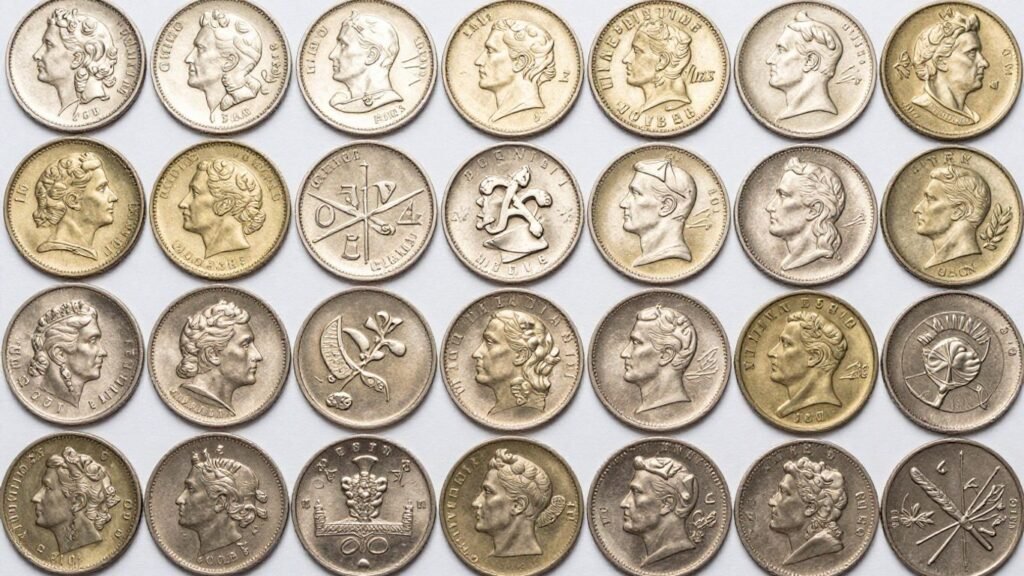
So, you’re thinking about starting a coin collection, huh? It can seem a little overwhelming at first, but there’s a pretty cool way to approach it called type set collecting. Basically, instead of trying to get every single coin ever made, you focus on getting one example of each different design or type of coin. It’s a great way to learn about coins and build a really interesting collection without breaking the bank. This guide will walk you through the whole process, from understanding what a type set is to putting together your own collection, especially focusing on coins from the 20th century. We’ll cover some popular choices and give you some pointers on where to find information and what to look for. Let’s get started with type set collecting explained!
Key Takeaways
- Type set collecting means gathering one example of each coin design, rather than every single coin of a series.
- Focusing on 20th-century American coins is a popular and accessible starting point for type sets.
- Key design eras and denominations like cents, nickels, dimes, quarters, and half dollars offer many options for a type set.
- Consider factors like eye appeal, condition (like Mint State), and even natural toning when selecting coins for your set.
- Resources like coin collecting guides (e.g., ‘The Red Book’) and dealer networks are helpful for assembling your collection.
Understanding Type Set Collecting Explained
So, what exactly is type set collecting? At its heart, it’s about gathering one example of each distinct coin design, or ‘type,’ rather than collecting every single date and mint mark of a particular series. Think of it like collecting one representative from each major car model ever made, instead of every single variation of a Ford Mustang. It’s a way to get a broad overview of a country’s coinage history or a specific era without needing the space or budget for thousands of coins.
Defining A Type Set
A type set is a collection where the goal is to acquire a single coin representing each distinct design type. For example, in U.S. coinage, the Lincoln Cent has had several design types over the years, including the early
Assembling Your First Type Set
So, you’re ready to start building a type set? That’s awesome! It’s a really satisfying way to collect coins, focusing on the different designs rather than just hunting for every single date and mint mark of one series. But where do you even begin? Don’t worry, it’s not as complicated as it might sound. We’ll break it down.
Choosing A Time Period
First off, you need to decide on the scope of your collection. Are you interested in coins from a specific era, like the early 1900s, or maybe just the last 50 years? Picking a time frame really helps narrow things down. For beginners, focusing on a more recent period, like 20th-century American coinage, is often a good bet. Many of these coins are still relatively easy to find, and you can even start by looking through pocket change. This accessible approach allows enthusiasts to build a collection without significant initial investment.
Selecting A Coin Denomination
Once you have a time period in mind, think about which coin types you want to include. Do you want to represent every major denomination – cents, nickels, dimes, quarters, half dollars, and dollars – within your chosen era? Or maybe you want to focus on just one or two denominations to start? For example, a 20th-century type set could include:
- Cent: Lincoln Cent (various designs)
- Nickel: Buffalo Nickel, Jefferson Nickel
- Dime: Mercury Dime, Roosevelt Dime
- Quarter: Standing Liberty Quarter, Washington Quarter
- Half Dollar: Walking Liberty Half Dollar, Franklin Half Dollar
- Dollar: Peace Dollar, Eisenhower Dollar
Budgeting For Your Collection
This is a big one. How much are you looking to spend? Type sets can range from super affordable to quite pricey, depending on the coins you choose. If you’re just starting, you can find many common type coins in circulated condition for just a few dollars each. For instance, a circulated Lincoln cent or a Washington quarter from the mid-20th century won’t break the bank. As you get more serious, you might aim for higher grades, like Mint State (uncirculated) coins, which will naturally cost more. It’s smart to set a budget early on, maybe even for each coin or denomination, to keep yourself on track. You can always upgrade coins later as your budget allows or your collecting goals evolve. Remember, you can always start with coins readily available in circulation, exploring various designs, dates, and mintmarks. Starting a coin collection can be an enjoyable and affordable hobby.
Building a type set is about appreciating the artistry and history behind each coin’s design. It’s a journey of discovery, where each piece tells a story about the time it was made. Don’t feel pressured to get the rarest or most expensive coins right away. The most important thing is to enjoy the process and build a collection that speaks to you.
Focusing On 20th Century American Coinage
The Workhorse Denominations
When you start thinking about a 20th-century type set, you’re probably going to be looking at the coins most people recognize. These are the "workhorse" denominations – the ones that saw the most use and were minted in the largest numbers. We’re talking about cents, nickels, dimes, quarters, and half dollars. Building a basic type set with common examples of each design from this era is totally doable without breaking the bank. Many of these coins are still around, and you can often find Mint State examples for less than a hundred bucks. It’s a great starting point.
But a 20th-century type set can be so much more than just the usual suspects. It’s a chance to really explore the history and artistry of American coinage during a really dynamic period. Think about it: from the turn of the century right up to the year 2000, we saw massive changes in design, technology, and even the metals used to make our money.
Key Design Eras
The 20th century was a period of significant artistic shifts on U.S. coins. You have the Barber series, which carried over from the late 19th century, giving way to the more artistic Liberty Head designs like the Lincoln Cent and the Buffalo Nickel. Then came the period of iconic designs like the Standing Liberty Quarter and the Mercury Dime, followed by the mid-century classics such as the Franklin Half Dollar and the Roosevelt Dime. The latter half of the century brought us the Jefferson Nickel’s enduring design, the Kennedy Half Dollar, and eventually, the Sacagawea Dollar and the State Quarters. Each era has its own distinct look and feel, reflecting the times they were made in.
Here’s a quick look at some major design shifts:
- Early 1900s – 1916: Barber coinage (dimes, quarters, half dollars) still in use, alongside early Lincoln Cents and Buffalo Nickels.
- 1916 – 1940s: Introduction of more artistic designs like the Standing Liberty Quarter, Mercury Dime, and the Jefferson Nickel.
- Mid-Century (1940s – 1970s): The Franklin Half Dollar, Roosevelt Dime, and Kennedy Half Dollar become prominent.
- Late Century (1970s – 2000): The transition to clad coinage, the introduction of new dollar coin designs, and the massive State Quarter program.
Mint State Specimens
When building a type set, especially one focused on the 20th century, aiming for Mint State (MS) specimens is a popular goal. This means the coins were never circulated and retain their original mint luster. For many common 20th-century type coins, finding high-grade MS examples is quite achievable. You might look for coins graded MS-63 or MS-65, which represent a good balance between quality and cost. These coins will look fantastic in your collection and represent the design as it was originally intended.
Choosing Mint State coins for your type set means you’re getting pieces that look as close to how they did when they first left the mint. It makes the collection visually appealing and shows off the details of each design really well. It’s a way to appreciate the artistry without the wear and tear of everyday use.
For example, consider the Lincoln Cent. While you can find circulated examples easily, a Mint State Lincoln Cent, especially one with full red luster (often designated as "RD"), really stands out. Similarly, a Gem Mint State (MS-65 or higher) Jefferson Nickel or Roosevelt Dime will showcase the intricate details of their designs beautifully. It’s about presenting each coin type in its best possible condition.
Exploring Early 20th Century Type Coins
Alright, let’s talk about the early part of the 20th century for coin collectors. This era is really interesting because it bridges older designs with some that feel more modern. When you’re building a type set, focusing on this period means you’re looking at coins that represent a significant shift in American coinage.
The Barber Quarter's Dominance
For the first 16 years of the 1900s, the Barber quarter was the main silver quarter you’d find. Designed by Charles Barber, these coins were a staple. They eventually got replaced in 1916, making the Barber quarter a distinct type for that early period. Finding one in good shape can be a bit of a hunt, but it’s a key piece for any early 20th-century type set.
- Design: Features Liberty’s profile on the obverse and a shield on the reverse.
- Dates: 1901-1916 (for the 20th-century portion).
- Significance: Represents the last of the Barber coinage series for quarters.
Standing Liberty Quarters
Then came the Standing Liberty quarter, introduced in 1916. This design was a big change, showing Lady Liberty standing tall and holding a shield and a torch. It’s one of the most iconic designs of the early 20th century. The original design even had dolphins, though they were removed later for practical reasons. This coin is a must-have for its artistic merit and historical context.
Early Silver Dollar Designs
Silver dollars from this time also offer some great type coins. You’ll find the Morgan dollar continuing into the early years, and then the introduction of the Peace dollar in 1921. Each represents a different artistic style and historical moment. The Morgan dollar, with its classic design, and the Peace dollar, commemorating the end of World War I, are both significant type coins.
| Coin Type | Dates (Early 20th C.) | Key Features |
|---|---|---|
| Morgan Dollar | 1901-1921 | Lady Liberty’s profile, eagle on reverse |
| Peace Dollar | 1921-1935 | Liberty’s profile, eagle with olive branch, sun |
Collecting these early 20th-century type coins isn’t just about getting a coin from a certain year. It’s about holding a piece of history that shows how American art and identity were expressed on our money during a time of big changes. Each coin tells a story of its own.
Mid-Century Type Set Highlights
Alright, let’s talk about the coins that really defined the middle of the 20th century for collectors. This era brought us some seriously iconic designs that are still super popular today. When you’re building a type set, these are the pieces that often come to mind first because they’re just so recognizable.
The Franklin Half Dollar
This half dollar, featuring Benjamin Franklin on the obverse and the Liberty Bell on the reverse, ran from 1948 to 1963. It’s a really handsome coin, and finding one in great shape isn’t too tough. The design is a real winner, blending historical significance with artistic merit. Many collectors aim for Mint State examples, which are readily available. You can often find them with nice original toning, which adds a lot of character.
The Roosevelt Dime
Introduced in 1946, the Roosevelt dime replaced the Mercury dime. Designed by John R. Sinnock, it features President Franklin D. Roosevelt on the obverse and a torch, an olive branch, and an oak branch on the reverse. This dime is a staple in many 20th-century type sets. It’s a common coin, so you can easily find high-grade examples without breaking the bank. Look for ones with sharp details and minimal wear.
Jefferson Nickel Varieties
While the Jefferson nickel design itself (introduced in 1938) spans a good chunk of the mid-century, there are a couple of interesting points for type set collectors. The most notable is the transition from silver to the "nickel clad" composition in 1965. However, for the mid-century focus, you’re primarily looking at the silver "nickels" (35% silver) from 1942-1945, often called "War Nickels" because of the palladium or silver used in place of nickel. These have a distinct look due to the black mint mark on the reverse indicating their composition. It’s a small detail, but it makes a difference for a type set.
Here’s a quick look at what you might be aiming for:
- Franklin Half Dollar: 1948-1963 (Silver)
- Roosevelt Dime: 1946-1964 (Silver)
- Jefferson Nickel: 1938-1964 (Silver, with 1942-1945 "War Nickels" being a distinct variety)
When assembling your mid-century type set, focus on coins that show off the design well. Even common coins can be special if they have great eye appeal and are well-preserved. It’s about appreciating the artistry and history each piece represents, not just filling a slot.
Late 20th Century Coinage Considerations
The Clad Quarter Era
As we move into the latter half of the 20th century, the coinage landscape shifts quite a bit, especially with the introduction of clad metal. For quarters, this means moving past the silver issues and into the familiar clad composition that started in 1965. When building a type set for this era, you’re looking at the Washington quarter, which continued its run with a new metal composition. The key is to find a representative example of the clad Washington quarter, often sought in Mint State condition to showcase its original luster. While many of these are readily available, focusing on higher grades can really make your type set shine.
Modern Dollar Coin Designs
Dollar coins saw some interesting developments in the late 20th century. We had the Eisenhower Dollar, which ran from 1971 to 1978, and then the Susan B. Anthony Dollar from 1979 to 1981, with a brief revival in 1999. Both represent distinct design periods and metal compositions. The Eisenhower dollar, a larger silver-clad coin, offers a different feel compared to the smaller, copper-nickel clad Susan B. Anthony. Including both gives a good snapshot of the dollar coin’s evolution during this time.
Commemorative Coin Inclusion
While not strictly part of the regular circulating coinage, commemorative coins from the late 20th century can add a lot of character to a type set. Congress authorized a variety of these to honor specific events, people, or places. Think about the Bicentennial coins of 1976, or the various state quarters that started rolling out in 1999. Deciding whether to include commemoratives depends on your personal collecting goals. Some collectors stick strictly to circulating types, while others enjoy the added variety and historical context that commemoratives bring. It’s a personal choice, but they can certainly make a type set more engaging.
The shift to clad coinage in the mid-1960s marked a significant change in American money. While silver coins have a certain historical weight and aesthetic appeal, the clad era brought coins that were more durable and less expensive to produce. For collectors, this means a wider availability of Mint State examples, allowing for the acquisition of high-quality pieces without breaking the bank. It’s a different kind of collecting challenge, focusing on condition and subtle design variations within these more common issues.
Advanced Type Set Strategies
Seeking Conditional Rarities
So, you’ve got the basics down and your type set is looking pretty solid. Now, how do you take it to the next level? One way is by looking for what we call "conditional rarities." This just means coins that are rare in a specific, high-grade condition. Think about a coin that was made in huge numbers, but finding one that’s practically perfect, with no dings or scratches, is incredibly tough. These aren’t necessarily rare dates, but they’re rare because of their condition. It’s like finding a needle in a haystack, but way more rewarding when you finally pull it out.
The Importance of Eye Appeal
Beyond just the grade and the date, how a coin looks really matters. This is "eye appeal." Some coins just have this certain something – maybe it’s the way the light hits them, or a really pleasing color, or just a clean, sharp strike. A coin with great eye appeal can make a common date look like a million bucks. It’s subjective, sure, but most collectors can spot a coin that just pops. When you’re building a type set, especially if you’re aiming for something special, don’t overlook how good the coin looks. It makes a huge difference when you’re showing off your collection.
Incorporating Toned Coins
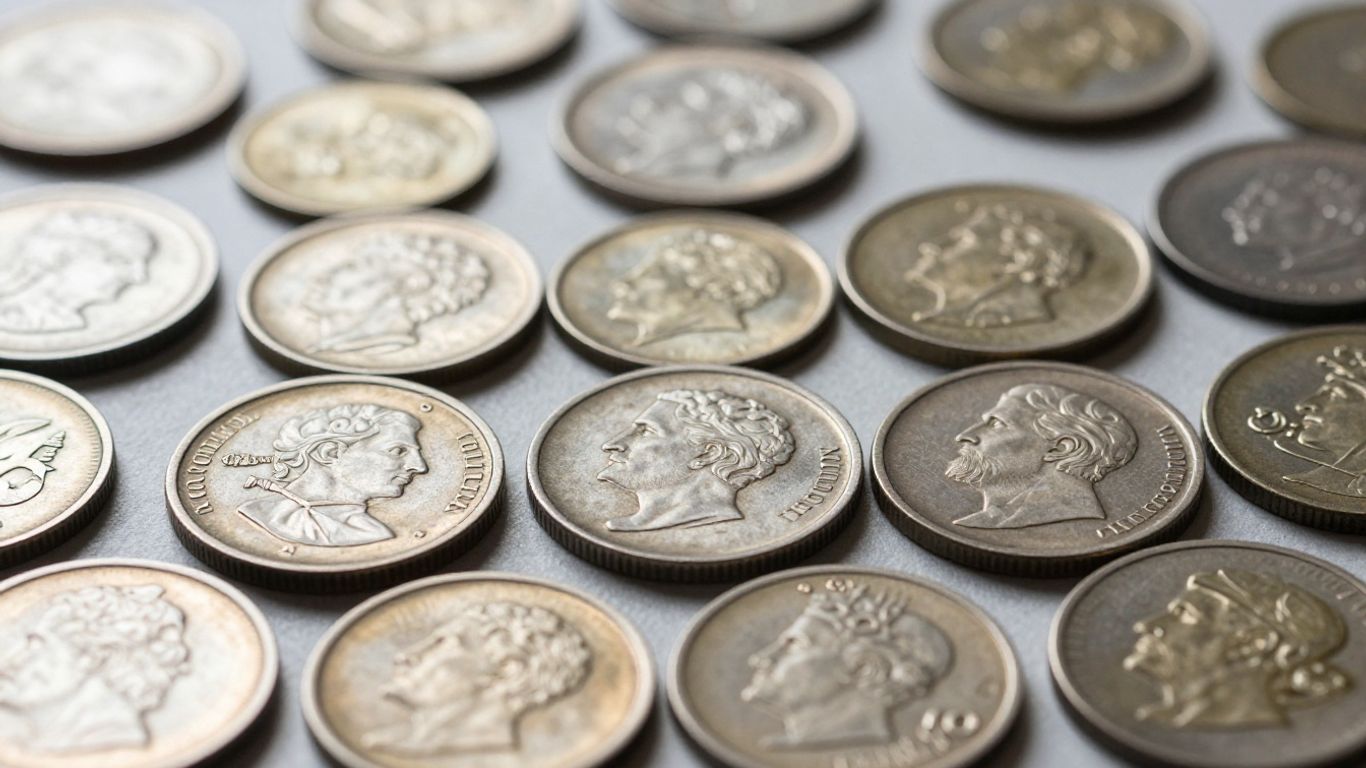
Now, let’s talk about toning. This is the natural discoloration that happens to a coin over time as it reacts with its environment. Some people hate it, but many collectors, myself included, find it adds a lot of character. Beautiful, colorful toning – think blues, purples, golds – can make a coin truly stand out. It’s a sign of originality and can be a real indicator of a coin that hasn’t been messed with. When you’re looking for those conditional rarities or just want your set to have that extra wow factor, a nicely toned coin can be just the ticket. It shows you’re not just collecting dates and grades, but also the history and natural aging process of the metal itself.
Valuable Resources For Type Set Collectors
Utilizing Coin Collecting Guides
So, you’re diving into type set collecting, huh? It’s a fantastic way to get a feel for different coin designs without needing to chase down every single date and mint mark in a series. But where do you even start? Well, coin collecting guides are your best friend here. Think of them like a roadmap for your coin adventures. They list out what coins make up a "type set" for different periods or denominations. You’ll find these guides can be pretty detailed, sometimes even suggesting specific coins that represent a "type" really well. Some guides even break down what to look for in terms of condition and what you might expect to pay. It’s not just about knowing what to collect, but also why certain coins are considered representative.
Understanding Coin Grading
This is a big one, folks. When you’re looking at coins, especially for a type set where you want representative examples, you’ll hear a lot about grading. Grading is basically a way to describe a coin’s condition, from worn-out to practically perfect. You’ll see terms like Mint State (MS) followed by a number, like MS-65. The higher the number, the better the condition. Knowing the basics of grading helps you avoid overpaying for a coin that’s in rough shape or missing out on a really nice one. It’s a skill that takes practice, but there are plenty of resources to help you learn. Many guides will show you pictures of coins at different grades, which is super helpful.
Leveraging Dealer Networks
Building a collection, especially a type set, often involves interacting with coin dealers. These folks are the backbone of the hobby for many collectors. You’ve got local coin shops, which are great for browsing and getting a feel for coins in person. Then there are national dealers, often found at coin shows or online, who might have a wider selection, especially for more specific or higher-grade coins. Don’t be shy about talking to them! Good dealers can offer advice, help you find the coins you need, and sometimes even point you toward other collectors or resources. Building relationships with a few trusted dealers can make a huge difference in your collecting journey. They often have access to coins before they hit the general market.
- Local Coin Shops: Good for everyday finds and building local connections.
- Coin Shows: Great for seeing a lot of coins and dealers in one place.
- Online Dealers: Offer convenience and a vast inventory, but require careful vetting.
When you’re starting out, it’s easy to feel overwhelmed by all the information. Remember that most collectors began with just a few coins and a lot of curiosity. Don’t be afraid to ask questions, whether it’s at a coin shop, a club meeting, or even online forums. Every experienced collector was once a beginner, and the community is generally happy to share knowledge.
Specific Coin Series Within Type Sets
When you’re building a type set, you’re essentially trying to grab one example of each distinct coin design. But sometimes, focusing on a specific series within that larger goal can really make your collection shine. It’s like picking out the best songs from an album instead of just grabbing one track from every album ever made. It adds a layer of depth, you know?
The Indian Head Cent
This little guy, the Indian Head Cent, ran from 1859 all the way to 1909. It’s a classic. The design, featuring Lady Liberty with a Native American headdress, is instantly recognizable. Collecting these can be a journey through American history, showing changes in minting and design over fifty years. You’ve got your basic business strikes, but then there are proofs, different metals (like the bronze and nickel-bronze variations early on), and even some interesting die varieties if you want to get really deep into it.
- Early Years (1859-1864): Look for the transition from copper-nickel to bronze. These can be a bit trickier to find in top shape.
- Mid-Series (1864-1879): This is where you see the most common dates, but finding ones with full red color (often called "Red" or "RD" in grading terms) can be a challenge.
- Late Years (1880-1909): These are generally more available, but watch out for wear, especially on the headdress and the date.
The Lincoln Cent Series
Following the Indian Head Cent, the Lincoln Cent kicked off in 1909 and is still going strong today. It’s probably the most collected coin in the US, and for good reason. It’s the first US coin to feature a real person’s portrait. You’ve got the original Lincoln portrait by Victor David Brenner, and then the switch to the Lincoln Memorial reverse in 1959. That’s a big split right there for type set collectors.
- Wheat Cents (1909-1958): These are the originals. Key dates like the 1909-S VDB (that’s the San Francisco mint with Victor David Brenner’s initials) are famous, but you can build a great set with more common dates in nice condition.
- Memorial Cents (1959-2008): The design change in 1959 is a major type distinction. Finding examples with full steps on the Memorial building is a popular goal for many collectors.
- Bicentennial Cents (2009): A special year with four different reverse designs celebrating Lincoln’s 200th birthday. These are definitely a distinct type.
Memorial Cent Varieties
Okay, so you’ve got the Lincoln Memorial Cent. But within that, there are some really interesting variations that can make a type set more exciting. It’s not just about the date and mint mark anymore. Think about things like doubled dies or different finishes.
Sometimes, the smallest details can make a coin stand out. For the Memorial Cent, looking for things like a strong strike on the Lincoln Memorial’s steps or a pleasing overall color can really make a difference in how much you enjoy the coin, even if it’s not a super rare date.
- Doubled Dies: The 1972 Doubled Die Obverse is a well-known example. The doubling is quite dramatic and makes it a popular choice.
- Proof Coins: These are made specifically for collectors with a mirrored finish and frosted devices. They represent a different minting process and are a distinct type.
- Mint Errors: While not strictly a
The State Quarter Series In Type Sets
Collecting State Quarters
The State Quarter program, running from 1999 to 2008, was a massive undertaking by the U.S. Mint, releasing five new quarter designs each year to honor the 50 states. This initiative brought a lot of new people into coin collecting, and for good reason. It made assembling a type set much more accessible, especially for those just starting out. You could find these coins pretty easily, often at face value or just a little more. The sheer variety of designs means a complete set offers a colorful snapshot of American geography and history.
When building a type set around these quarters, you’re essentially looking for one representative coin from each state. It’s not about finding every single mint mark or every possible variety, but rather capturing the essence of the series. Think of it as collecting a "type" of coin that represents each state’s unique contribution to the program.
Identifying Premium Examples
While many State Quarters are common, finding truly top-notch examples can be a bit more challenging than you might initially think. We’re talking about coins that are not just problem-free but also have excellent strike quality and sharp details. For many states, finding a coin that’s graded MS-67 or higher, with full, sharp details, can be a real hunt. Most collectors are happy with a nice, raw coin kept in a protective holder, and honestly, unless you’re aiming for the absolute highest grades, that’s often the most practical approach. It keeps costs down and still gives you a great-looking coin.
However, if you do want to hunt for those premium pieces, here are a few things to keep an eye on:
- Full Strike: Look for coins where all the design elements are fully rendered, especially on Liberty’s hair and the eagle’s feathers. Some designs are notoriously weakly struck.
- Surface Preservation: Aim for coins with clean, original surfaces. Avoid those with noticeable scratches, bag marks, or other distractions.
- Eye Appeal: This is subjective, but a coin that just looks good to you, with pleasing luster and color, is always a winner.
The Appeal of Natural Toning
Now, here’s where things get interesting, especially for type set collectors looking for something a little extra. While clad coinage like State Quarters typically develops yellowish toning over time, some pieces can develop truly spectacular, multi-colored natural toning. These aren’t artificially treated coins; this is the result of the metal reacting with its environment over years. These vibrant, naturally toned coins can command a significant premium over their un-toned counterparts.
Finding a State Quarter with attractive, multi-colored natural toning can really make a type set pop. While the market for these can be unpredictable, a visually stunning piece is always going to catch a collector’s eye and often fetches a much higher price than a standard example. It’s a great way to add some unique character to your collection.
These toned coins are where you can find some real hidden gems. While the market for State Quarters as a whole might not be booming, a complete set of these colorful, naturally toned pieces is becoming increasingly popular. So, when you’re sifting through coins, keep an eye out for that unusual splash of color – it might just be the standout piece your type set needs.
Wrapping It Up
So, that’s a look at putting together a type set. It’s not just about grabbing any old coin, you know? It’s about picking pieces that tell a story, that represent a time or a design really well. Whether you’re aiming for the fancy, high-grade stuff or just want a solid collection that looks good and teaches you something, the main thing is to have fun with it. Don’t get too caught up in chasing the rarest of the rare if it’s not your thing. Find what excites you, learn about it, and enjoy the hunt. Happy collecting!
Frequently Asked Questions
What exactly is a type set in coin collecting?
A type set is like a greatest hits album for coins! Instead of collecting every single coin from a certain year or mint, you collect one example of each different design or type of coin. Think of it as collecting one coin for each distinct style of penny, nickel, dime, and so on, from a specific time.
Why would someone want to collect a type set instead of a regular series?
It’s a way to get a broad overview of a country’s coinage history without needing thousands of coins. You get to see how designs changed over time, learn about different historical periods, and it can be more budget-friendly than trying to collect every single variation of one coin type.
Is it hard to put together a 20th-century American type set?
For the most part, no! Many 20th-century coins are quite common, and you can find nice ones without spending a fortune. However, if you want to find the really special or perfect condition examples, that’s where it can get a bit more challenging and expensive.
What are some popular coin types from the early 1900s that are good for a type set?
For early 20th-century sets, you might consider coins like the Barber Quarter, the Standing Liberty Quarter, and early Silver Dollar designs. These coins represent significant design changes and historical moments from that era.
What about coins from the middle of the 20th century?
Mid-century American coinage offers some great choices too! The Franklin Half Dollar, the Roosevelt Dime, and different varieties of the Jefferson Nickel are all popular and represent distinct designs from that period.
Are modern coins, like State Quarters, suitable for a type set?
Absolutely! The State Quarter series, for example, is a huge hit. While finding common ones is easy, hunting for really eye-catching or naturally toned examples can add a unique flair to your collection. Even modern dollar coins can be included.
What makes a coin 'eye appealing' in a type set?
Eye appeal is all about how attractive the coin looks. This includes things like vibrant colors (especially natural toning), sharp details, and a lack of distracting marks or blemishes. A coin that looks great to the eye is often more desirable, even if it’s not technically the rarest.
Where can I find reliable information to help me build my type set?
There are many great resources! ‘The Red Book’ (A Guide Book of United States Coins) is a classic guide that provides tons of information on coin values, designs, and history. Learning about coin grading and talking to reputable coin dealers are also super helpful steps.