Thinking about coins with silver in them? You’ve probably heard about different silver percentages. Today, we’re going to talk about coins that have 40 percent silver content explained. It’s a bit different from the older coins, but still pretty interesting. We’ll cover what they are, why people like them, and what you need to know if you’re thinking about getting some.
Key Takeaways
- Coins with 40 percent silver content were made in the U.S. for a short time, mainly from 1965 to 1976.
- The most common coins you’ll find with this silver mix are Kennedy Half-Dollars (1965-1970) and Eisenhower Silver Dollars (1971-1974, 1976).
- People often buy these coins because they’re more affordable than older, higher-silver coins and can be a good way to own some silver without paying a huge premium.
- When looking at value, remember it’s not just about the silver. Certain dates, mint marks, and the coin’s condition can make them worth more to collectors.
- Owning 40 percent silver coins means you’ll need a place to store them, and figuring out their exact silver weight takes a little math, but it’s manageable.
Understanding 40 Percent Silver Content Explained
What Constitutes 40 Percent Silver Coins?
When we talk about "40 percent silver" coins, we’re generally referring to a specific group of U.S. coins produced during a particular time frame. These aren’t your everyday pocket change from recent years. Instead, they represent a brief chapter in American coinage history where the silver content was intentionally reduced from the higher levels found in older coins. The key coins that fall into this category are Kennedy Half-Dollars minted between 1965 and 1970, and Eisenhower Silver Dollars made from 1971 to 1974, and again in 1976. It’s important to distinguish these from pre-1965 coins, which typically held 90% silver, and from modern coins that contain no silver at all. There was also a special Bicentennial Quarter Dollar with 40% silver, but these were mainly found in collector sets and didn’t see general circulation.
The Era of 40 Percent Silver Coinage
The shift to 40% silver was a direct response to rising silver prices and the need to keep coinage in circulation. Before this period, most circulating silver coins, like dimes, quarters, and half-dollars, were made of 90% silver. However, as the value of silver increased, these coins started disappearing from circulation because people would hoard them or melt them down for their silver content. To combat this, the U.S. Mint changed the composition of some coins.
Here’s a quick look at the timeline:
- Kennedy Half-Dollars: Minted with 40% silver from 1965 through 1970.
- Eisenhower Silver Dollars: Produced with 40% silver from 1971 through 1974, and also in 1976.
- Bicentennial Quarter Dollar: A special edition for 1976, but primarily available in collector sets.
This change effectively made these coins less attractive for melting while still retaining some silver content, allowing them to continue functioning as currency.
Distinguishing From Other Silver Compositions
It’s easy to get confused when talking about silver coins, so let’s break down the main types:
- 90% Silver Coins: These are the older circulating coins, generally minted before 1965. Think dimes, quarters, and half-dollars from that era. They have a higher silver content and are often referred to as "junk silver" by investors, though many collectors value them for their numismatic appeal too.
- 40% Silver Coins: As discussed, these are the Kennedy Half-Dollars (1965-1970) and Eisenhower Silver Dollars (1971-1974, 1976). They represent a middle ground in silver content.
- Clad Coins: These are the coins most of us use daily. Since the mid-1960s, circulating U.S. coins (like the modern Lincoln cent, Jefferson nickel, Roosevelt dime, Washington quarter, and Kennedy half-dollar) are made of layers of copper and nickel, with no silver content.
Understanding these different compositions is key to knowing what you’re dealing with, whether you’re buying, selling, or just curious about the coins in your pocket or collection. It’s not just about the silver; it’s about the history and the specific metal mix that defines each coin.
Key U.S. Coins Featuring 40 Percent Silver
When the U.S. Mint shifted away from 90% silver coinage, a brief period saw the introduction of coins with a 40% silver composition. These coins, while not as silver-rich as their predecessors, represent a unique chapter in American numismatics and are often sought after for their silver content and historical connection. The primary coins you’ll encounter with this 40% silver makeup are the Kennedy Half-Dollar and the Eisenhower Silver Dollar.
Kennedy Half-Dollars: A Popular Choice
From 1965 through 1970, the Kennedy Half-Dollar was struck with a 40% silver clad composition. These coins are quite common and are often favored by those looking to acquire silver at a lower price point compared to older, higher-silver-content coins. Because they were minted in large numbers and didn’t circulate as heavily as earlier denominations, they are readily available for collectors and investors alike. Many people find these coins appealing due to their connection to President John F. Kennedy.
Eisenhower Silver Dollars: Historical Significance
The Eisenhower Dollar, minted from 1971 to 1974 and again in 1976 (for the Bicentennial), also featured a 40% silver composition in certain issues. These larger dollar coins carry significant historical weight, commemorating President Dwight D. Eisenhower. While not all Eisenhower Dollars contain silver, the specific 40% silver versions are notable. These were often produced for collectors and special sets, though some did see limited circulation, particularly in places like Nevada casinos.
Bicentennial Quarter Dollar: A Special Edition
While not intended for general circulation, a special 40% silver version of the Quarter Dollar was produced in 1976 to celebrate the United States’ Bicentennial. These coins were exclusively available in uncirculated Mint sets and Proof sets. They are distinct from the circulating clad quarters of the same year and are primarily of interest to collectors focused on commemorative issues and specific mint products.
Here’s a quick look at the key 40% silver coins:
- Kennedy Half-Dollars: Minted from 1965-1970.
- Eisenhower Silver Dollars: Minted from 1971-1974 and 1976.
- Bicentennial Quarter Dollars: Minted in 1976, exclusively for collector sets.
It’s important to remember that not every coin from these years is 40% silver. For Kennedy Half-Dollars, the 1965-1970 dates are the ones to look for. For Eisenhower Dollars, the silver versions are typically dated 1971-1974 and 1976. Always check the specific coin’s composition if you’re unsure.
Coin Specifications (Approximate):
| Coin Type | Weight (grams) | Diameter (mm) | Silver Weight (troy oz) |
|---|---|---|---|
| Kennedy Half-Dollar | 11.50 | 30.6 | 0.1479 |
| Eisenhower Silver Dollar | 24.59 | 38.1 | 0.3161 |
| Bicentennial Quarter | 5.67 | 24.26 | 0.0473 |
Note: The Bicentennial Quarter Dollar’s silver content is based on the 40% silver clad composition found in collector sets.
Reasons for Owning 40 Percent Silver
So, why would someone want to pick up coins that are only 40% silver? It might seem a bit odd when you hear about 90% silver or even pure bullion. But there are some pretty good reasons, especially if you’re not looking to break the bank or fill up a whole vault. These coins offer a nice middle ground for a lot of people.
Practicality and Accessibility
One of the main draws of 40% silver coins is that they’re generally more accessible than their higher-content counterparts. Because they contain less silver per coin, their individual value isn’t as high. This makes them easier to buy in smaller quantities without a huge upfront cost. Think of it like this: you can get a few of these without feeling like you’re making a massive financial commitment. They’re also not as dense as pure silver, which can make them a bit easier to handle and store if you’re just starting out or don’t have a lot of space.
Lower Premiums Over Spot Price
This is a big one for many people looking to get some silver exposure. Generally, 40% silver coins tend to have lower premiums over the current spot price of silver compared to 90% silver coins. What does that mean? It means you’re paying less extra above the actual silver value of the coin. If your main goal is to acquire silver at a good price and you’re okay with a slightly lower silver purity, these coins can be a smart choice. You get more silver for your dollar, relatively speaking.
Unique Gift Potential
Looking for a gift that’s a bit different? 40% silver coins can be a fantastic option. Imagine giving a Kennedy half-dollar from a loved one’s birth year (as long as it’s within the 1965-1970 or 1976 range, of course). It’s a tangible piece of history that also has intrinsic metal value. It’s more personal than a generic silver round and often more affordable than a rare collectible coin. These coins can serve as a memorable present for birthdays, anniversaries, or holidays, offering a unique blend of sentiment and value.
Here are a few ideas for using 40% silver coins as gifts:
- Birth Year Coins: Find a coin minted in the recipient’s birth year. It’s a personal touch that connects the gift to their history.
- Anniversary Gifts: A coin from the year of a couple’s wedding can be a thoughtful and lasting present.
- Educational Tools: For younger people, these coins can be a fun way to introduce them to silver, history, and basic economics.
Owning 40% silver coins offers a practical entry point into precious metals. They provide a way to hold silver without the high cost of pure bullion or the often higher premiums associated with older, higher-purity silver coins. Their historical context and relative affordability make them an appealing choice for both new and seasoned collectors or investors.
Anatomy and Specifications of 40 Percent Silver Coins
When you’re looking at coins with 40 percent silver content, it’s helpful to know what you’re actually holding. These aren’t just random old coins; they have specific physical characteristics and a defined amount of silver. Let’s break down the details for the main players.
Kennedy Half-Dollar Dimensions and Silver Weight
The Kennedy Half-Dollar is probably the most common 40% silver coin you’ll come across. From 1965 to 1970, these coins were struck with a 40% silver clad composition. They’re not huge, but they have a decent heft.
- Weight: 11.50 grams
- Diameter: 30.6 millimeters
- Thickness: 2.15 millimeters
- Actual Silver Weight (ASW): Approximately 0.1479 troy ounces
Eisenhower Silver Dollar Dimensions and Silver Weight
These larger dollar coins, minted from 1971 to 1974 and again in 1976 (for the Bicentennial), also featured a 40% silver clad composition for certain issues. They’re noticeably bigger and heavier than the Kennedy half-dollars.
- Weight: 24.59 grams
- Diameter: 38.1 millimeters (about 1.5 inches)
- Thickness: 2.58 millimeters
- Actual Silver Weight (ASW): Approximately 0.3161 troy ounces
Actual Silver Weight Calculations
Figuring out the exact silver value, or melt value, involves a bit of math. You take the coin’s total weight and multiply it by the percentage of silver, then convert that to troy ounces. For example, to find the silver content of a Kennedy Half-Dollar:
11.50 grams (total weight) * 0.40 (silver content) = 4.6 grams of silver.
Then, you’d convert grams to troy ounces (1 troy ounce is about 31.1 grams). So, 4.6 grams / 31.1 grams/troy ounce ≈ 0.1479 troy ounces of pure silver.
It’s important to remember that these calculations give you the melt value, which is the value of the silver itself. The actual price you might pay for the coin, or sell it for, can be higher due to collector interest, rarity of the date or mint mark, and overall market demand. Don’t just assume melt value is the final word on a coin’s worth.
Knowing these specs helps you appreciate what you’re holding, whether you’re just curious or looking to figure out its silver worth.
Mint Marks and Their Significance
Mint marks are like tiny fingerprints on coins, telling us where they were made. For coins with 40 percent silver content, understanding these marks is pretty important, especially if you’re looking at Kennedy Half-Dollars or Eisenhower Dollars. They can tell you a lot about a coin’s history and sometimes even its collectibility.
Identifying Mint Marks on Kennedy Half-Dollars
When you’re looking at Kennedy Half-Dollars made with 40 percent silver, which were minted from 1965 to 1970, the mint mark is usually found on the reverse side. You’ll see it below the left side of the word "STATES" in "UNITED STATES OF AMERICA," near the rim. The main mint marks you’ll encounter are:
- D: Denver Mint
- S: San Francisco Mint
Coins made in Philadelphia don’t have a mint mark. So, if you see a ‘D’ or an ‘S’, it means it came from those specific mints. This can matter because sometimes one mint produced fewer coins, making them a bit more sought after by collectors.
Understanding Mint Marks on Eisenhower Dollars
Eisenhower Dollars that contain 40 percent silver were made between 1971 and 1978. These are a bit different. The mint mark is located on the obverse (front) of the coin, just below the eagle’s left wing. You’ll find:
- D: Denver Mint
- S: San Francisco Mint
Again, Philadelphia-minted coins won’t have a mint mark. It’s worth noting that the ‘S’ mint mark on Eisenhower Dollars can appear in two ways: on the copper-nickel clad versions and on the silver clad versions. For the 40 percent silver ones, the ‘S’ mint mark is usually found on coins that were part of special collector sets.
Mint Marks for Proof and Mint Sets
Sometimes, mint marks can indicate whether a coin was intended for general circulation or for special collector sets. Proof coins, for example, are made with extra care and are often struck multiple times to get a very sharp, detailed image. These are typically made at the San Francisco Mint and will bear an ‘S’ mint mark.
- Proof Kennedy Half-Dollars (40% Silver): These were made in San Francisco (‘S’ mint mark) and are distinct from the regular issue coins.
- Eisenhower Dollars (40% Silver): While some ‘S’ mint Eisenhower Dollars were made for circulation, many of the 40% silver versions were specifically produced for collector proof sets and uncirculated mint sets, also bearing the ‘S’ mint mark.
The presence and location of a mint mark are key identifiers. They help distinguish between coins intended for everyday use and those created for collectors, which often carry different values and appeal. Always check the specific location for the mint mark relevant to the coin series you are examining.
So, when you’re looking at these 40 percent silver coins, take a moment to find that mint mark. It’s a small detail, but it can add a whole layer of information to the coin’s story and its place in your collection.
Navigating the Value of 40 Percent Silver
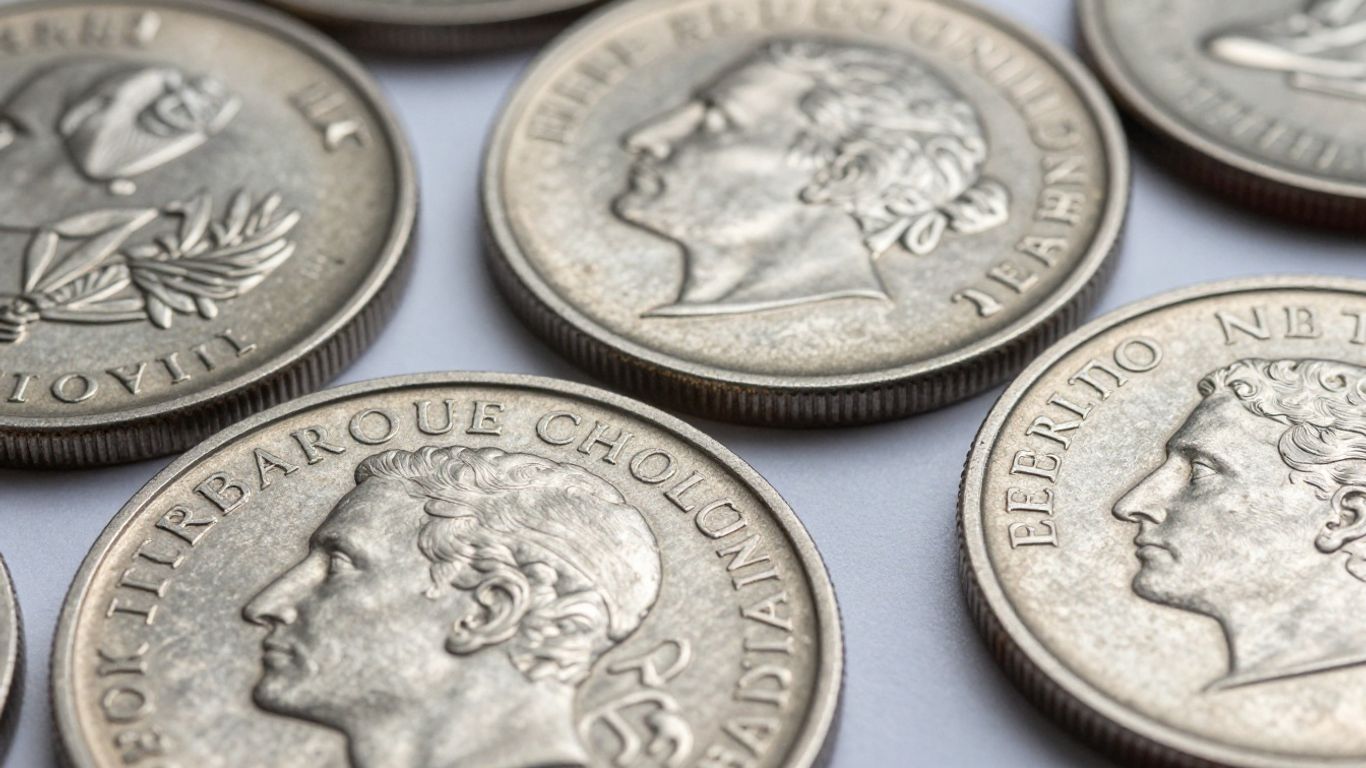
Figuring out what these 40% silver coins are actually worth can seem a bit tricky at first, especially when you’re used to dealing with other types of silver. It’s not just about the silver content, though that’s a big part of it. There are other things that can bump the price up or down.
Factors Beyond Melt Value
While the amount of silver in a coin is a primary driver of its value, it’s not the only thing. Think about it like this: two identical cars might have the same engine size, but one could be worth more because it’s a rarer model or in better condition. The same applies to coins.
- Condition: A coin that’s been kept in good shape, with minimal scratches or wear, will generally be worth more than one that’s seen better days.
- Rarity: Even within the 40% silver category, some mint dates or mint marks are harder to find than others. This scarcity can increase demand and, therefore, price.
- Historical Significance: Coins tied to important events or figures, like the Kennedy Half-Dollars, often carry a bit more appeal beyond their silver weight.
Key Dates and Numismatic Premiums
Some specific dates on these 40% silver coins are more sought after by collectors. These aren’t necessarily the oldest ones, but rather those that were produced in smaller quantities or have some other interesting characteristic. When a coin is in demand for reasons other than just its silver, it can fetch a price higher than its melt value. This extra amount is what people in the coin world call a "numismatic premium." It’s that little bit extra someone is willing to pay to own a specific coin for its collector appeal, not just its metal content.
Market Reality for Dealers
Dealers look at these coins a bit differently. They need to make a profit, so they’ll buy at a price that allows them to resell for more. They’re often buying in bulk, so they’re usually paying closer to the melt value, maybe with a small discount. If you’re selling to a dealer, don’t expect to get the full retail price you might see a coin listed for online. They have overhead, and they need to move inventory. It’s a business, after all.
When you’re looking at the value of 40% silver coins, remember it’s a mix of the silver’s worth, how rare the specific coin is, its condition, and what collectors are willing to pay for its history or unique features. It’s not always a straightforward calculation, but understanding these different pieces helps you get a better picture.
Practical Considerations for Owning 40 Percent Silver
So, you’re thinking about picking up some of these 40% silver coins, huh? That’s cool. But before you go filling up your pockets, let’s chat about a few things you’ll want to keep in mind. It’s not just about the silver itself; there are some practical bits that can make owning them easier, or maybe a little trickier, depending on how you look at it.
Weight and Storage Requirements
First off, these coins have some heft. If you’re buying in bulk, like a $1,000 face value bag of Eisenhower dollars, you’re going to be dealing with a significant amount of weight. We’re talking potentially 50 pounds or more. So, make sure you’ve got the physical ability to handle that kind of load. Storage is another thing. While individual coins or rolls might not take up much room, a large quantity can start to add up. You’ll need a secure, dry place to keep them. Think about a safe or a sturdy box, away from moisture which can cause toning or damage over time.
Space Efficiency Compared to Bullion
When you compare these 40% silver coins to pure silver bullion like bars or rounds, they’re not quite as space-efficient. Bullion is designed to pack as much silver into the smallest possible volume. These older coins, with their lower silver content and larger size, take up more space for the same amount of actual silver. So, if you’re really tight on space and want to maximize your silver per square inch, pure bullion might be a better bet. But, if you’ve got a bit of room and like the historical aspect, the coins are perfectly fine.
The Mathematics of Silver Content
Okay, let’s talk numbers. Figuring out the exact silver value of these coins can be a bit more involved than you might think, especially if math isn’t your favorite subject. Since they’re only 40% silver, you need to calculate the actual silver weight (ASW) for each coin. This means you’ll need to know the coin’s total weight and then multiply it by 0.40. It’s not rocket science, but it does require a bit more attention than just assuming a coin is 90% or 99.9% silver. Having a chart or a calculator handy is a good idea.
Here’s a quick look at the approximate silver content:
| Coin Type | Total Weight (approx.) | Actual Silver Weight (40%) |
|---|---|---|
| Kennedy Half-Dollar | 11.5 grams | 4.6 grams |
| Eisenhower Silver Dollar | 24.6 grams | 9.84 grams |
Remember, these are just approximations. The exact weight can vary slightly from coin to coin. Always double-check if precision is key for your calculations.
Investment Perspective on 40 Percent Silver
When you’re thinking about adding 40% silver coins to your collection or portfolio, it’s good to know where they fit in the bigger picture. They’re not quite like the high-silver content bullion coins, but they’re also more than just pocket change. It’s a bit of a middle ground, really.
Advantages of Silver Content and Authenticity
One of the main draws is that these coins are guaranteed by the U.S. government to contain a specific amount of silver. You know what you’re getting, which is a nice bit of certainty. Unlike some other collectibles, the silver content itself provides a baseline value. Plus, since they were official U.S. currency, their authenticity isn’t really in question. This government backing gives them a solid foundation for value.
Considerations for Numismatic Value
Now, numismatic value – that’s the value a coin has beyond its metal content, based on rarity, condition, and collector demand. For most 40% silver coins, like the common Kennedy half-dollars or Eisenhower dollars, this value is pretty low. They weren’t made in super limited numbers, and many were saved, so there’s a decent supply. However, there can be exceptions. Certain dates or mint marks might be a bit harder to find, and if a coin is in really top-notch condition, a collector might pay a bit more. But generally, don’t expect huge numismatic premiums on these.
Market Liquidity and Storage Needs
When it comes to selling, 40% silver coins are usually pretty easy to move. Dealers are familiar with them, and there’s a steady demand, especially when silver prices are up. You can often sell them in bulk bags for close to their melt value. Storage is also fairly straightforward. They’re not as dense as pure silver bars, so you’ll need a bit more space for the same amount of silver, but they’re still quite compact compared to, say, a collection of old comic books. Just keep them in a dry place to avoid any unwanted toning.
Here’s a quick look at what to keep in mind:
- Silver Content: You get a known amount of silver, backed by the government. It’s a reliable part of their value.
- Numismatic Value: Usually low, but some specific coins or conditions can fetch a bit more.
- Liquidity: Generally good; dealers know them and buy them.
- Storage: Requires more space than pure silver bullion but is manageable.
It’s worth remembering that the market for these coins is influenced by both the price of silver and the interest from collectors. While the silver content provides a floor, the historical aspect and the specific coin’s condition can add layers to its worth. It’s a blend that appeals to different types of buyers.
Historical Context of 40 Percent Silver Coinage
So, why did the U.S. Mint start making coins with only 40% silver? It all comes down to a pretty big shift in how we made money.
The Coinage Act of 1965
Before 1965, most of our silver coins, like dimes, quarters, and half-dollars, were made with 90% silver. That was the standard for a long time. But then, the Coinage Act of 1965 changed everything. The price of silver was going up, and the government was worried we’d run out of silver to make coins. So, they decided to reduce the silver content in circulating coins. This act effectively ended the era of 90% silver circulating coinage in the United States.
Depletion of Treasury Silver Stocks
Think about it: millions of people using coins every day. All that silver had to come from somewhere, usually from the U.S. Treasury’s silver reserves. As more and more silver was used for coinage and other industrial purposes, those reserves started to dwindle. It became clear that continuing to make coins with such a high silver content wasn’t sustainable in the long run.
Transition to Clad Coinage
After the Coinage Act of 1965, the U.S. Mint transitioned to what’s called ‘clad’ coinage for most denominations. This means the coins are made of layers. For the half-dollars and dollar coins that contained 40% silver, it was a bit different. These coins had a core of copper sandwiched between two outer layers of a copper-nickel alloy, with a thin layer of 80% silver and 20% copper on the outside. This gave them that silver look and feel but used much less of the precious metal. The Kennedy half-dollars from 1965 to 1970, and then again in 1976, were made this way, as were the Eisenhower dollars from 1971 to 1974 and in 1976. It was a compromise, keeping some silver in circulation but at a significantly reduced amount compared to what came before.
Wrapping Up 40% Silver
So, that’s the lowdown on coins with 40% silver. We’ve talked about why they were made, like the Kennedy Half-Dollars and Eisenhower Dollars, and how they’re different from the older 90% silver coins. They can be a practical way to get some silver without paying as much extra over the silver price compared to some other options. Just remember to think about how much space they’ll take up and that figuring out their exact silver weight might take a little more effort. Whether you’re collecting or just looking to own some silver, these coins offer a unique piece of history.
Frequently Asked Questions
What does '40 percent silver' mean for coins?
When we talk about 40% silver coins, we’re referring to U.S. coins made between 1965 and 1976 that contain 40% pure silver mixed with other metals. This is different from older coins that had more silver, or newer coins that have none.
Which U.S. coins are made with 40% silver?
The main coins with 40% silver content are Kennedy Half-Dollars made from 1965 to 1970, and some Eisenhower Silver Dollars from 1971 to 1974 and in 1976. There was also a special 40% silver Bicentennial Quarter, but it was only available in special sets, not for everyday use.
Why did the U.S. Mint start making 40% silver coins?
The U.S. Mint changed coin compositions because the price of silver was going up a lot. Making coins with less silver, like 40%, helped save the country’s silver supply and made it more affordable to produce coins.
Are 40% silver coins valuable?
Yes, 40% silver coins have value based on the amount of silver they contain, which changes with the market price of silver. Some specific coins might be worth even more if they are rare or in very good condition.
How can I tell if a coin has 40% silver?
You can usually tell by the date on the coin. Kennedy Half-Dollars from 1965-1970 and Eisenhower Dollars from 1971-1974 and 1976 are the ones to look for. These are different from the 90% silver coins made before 1965 and the silver-less coins made after.
Are 40% silver coins good for investing?
They can be a good option for investors who want to own silver at a lower price compared to other silver coins. They offer a way to get silver content without paying as much extra, but it’s important to know that their value is tied to silver prices.
What are the most popular 40% silver coins?
Kennedy Half-Dollars from the 1965-1970 period are very popular, especially for people buying in larger quantities because they are more affordable. Eisenhower Silver Dollars from the same years are also quite sought after.
Do I need special storage for 40% silver coins?
While they don’t need extremely specialized storage, it’s best to keep them in a dry place. Unlike pure silver, the mix of metals in these coins can sometimes lead to toning (color changes) over time, so handling them carefully is a good idea.