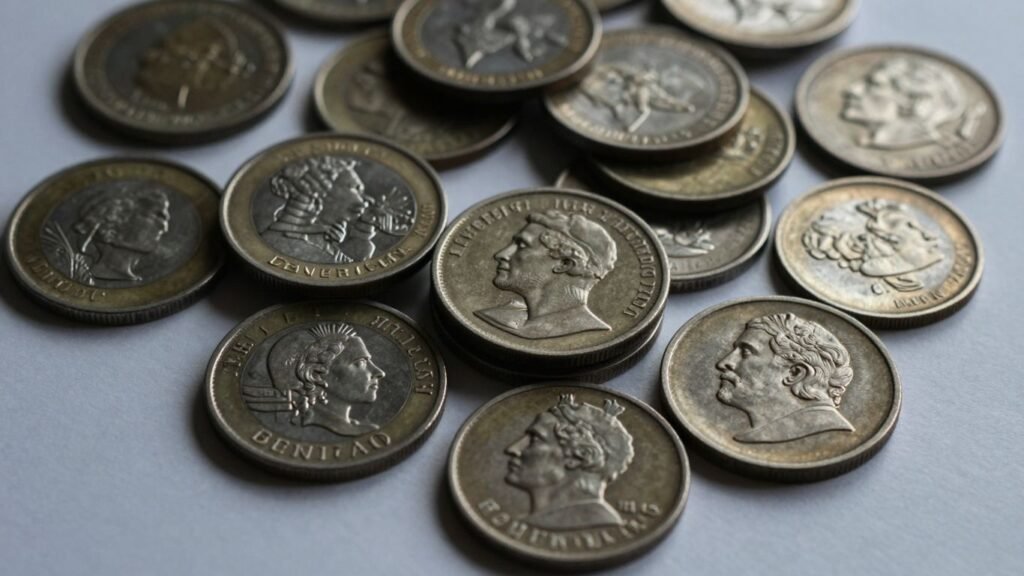
So, you’ve got some old coins lying around and you’re wondering if they’re worth more than just pocket change? It’s a common question, and the answer usually lies in something called numismatic value. It’s not just about what the coin says it’s worth on the front; there’s a whole world of factors that go into determining what a coin is really worth to collectors. We’re going to break down what numismatic value definition means and what makes some coins way more interesting, and valuable, than others. It’s more than just metal content, that’s for sure.
Key Takeaways
- Numismatic value is what a coin is worth to collectors, going way beyond its printed face value. Things like how rare it is and how many people want it play a big part.
- The number of coins made (mintage) and any special features or errors can really change how much a coin is worth.
- A coin’s condition is super important. A coin that looks almost new will almost always be worth more than one that’s seen a lot of use.
- Professional grading services help give a standard way to assess a coin’s condition, making it easier to know its true worth.
- While age and historical background add interest, rarity, condition, and current collector demand are usually the biggest drivers of a coin’s numismatic value.
Understanding Numismatic Value Definition
When you look at a coin, you probably see its face value, right? Like a quarter is worth 25 cents. But for collectors and people who study coins, there’s a whole other layer of worth. This is called numismatic value, and it’s what makes some old pennies worth a fortune, while others are just… well, pennies. It’s the value a coin holds beyond its printed denomination, driven by factors that make it special to collectors.
Beyond Face Value: Defining Numismatic Worth
Think of it this way: a regular dollar bill is worth a dollar. But a dollar bill signed by a famous person, or one with a printing error, might be worth way more to someone who collects such things. Coins are similar. Their numismatic worth comes from a mix of things that make them interesting or hard to find. It’s not just about the metal they’re made of, or what the government says they’re worth. It’s about their story, their scarcity, and how many people want them.
The Core Components of Coin Value
So, what actually makes up this numismatic value? It’s not just one thing. Several pieces fit together to create the overall picture:
- Rarity: How many of these coins were made? If only a few thousand were ever produced, they’re naturally going to be more sought after than coins made in the millions.
- Condition: Is the coin shiny and new-looking, or is it worn down from years of use? Even tiny scratches can make a big difference.
- Demand: How many people actually want this specific coin for their collection? If a coin is popular, its price goes up.
- Historical Significance: Does the coin represent an important event, person, or time period? Coins can be like tiny pieces of history.
- Minting Characteristics: Sometimes, small differences in how or where a coin was made can make it unique and more desirable.
The value of a coin isn’t static. It can change over time based on what collectors are looking for and what’s happening in the wider economy. What’s rare and valuable today might be less so tomorrow, and vice versa.
Numismatics: The Study of Coin Worth
This whole field of studying and collecting coins is called numismatics. People who do this are called numismatists. They spend their time learning about coins, figuring out what makes them tick, and, of course, trying to find those rare gems. It’s a hobby that combines history, art, and a bit of detective work. Numismatists use various resources to figure out what a coin is really worth, looking at things like old sales records, expert opinions, and specialized price guides. It’s a deep dive into the world of currency, far beyond just spending it.
Key Factors Influencing Coin Valuation
When you’re looking at a coin and wondering what makes it worth more than just its face value, a few big things come into play. It’s not just about how old it is or if it’s made of silver. Several elements combine to give a coin its numismatic worth.
Rarity and Mintage Numbers
This is probably the most straightforward factor. If there aren’t many of a certain coin out there, it’s naturally going to be more sought after. Think about it: if everyone has one, it’s not special. But if only a handful exist, collectors will really want it. The number of coins a mint actually produced, known as the mintage number, is a huge clue here. Lower mintages usually mean higher potential value. For instance, a coin with only 10,000 made will likely be worth more than one with 10 million made, assuming all other factors are equal.
- Low Mintage: Fewer coins produced means greater scarcity.
- High Demand: If many collectors want the rare coin, the price goes up.
- Survival Rate: Even if a coin had a high mintage, if most were melted down or lost, the few remaining can become rare.
The sheer number of coins produced is a primary driver of rarity. A coin minted in the thousands is inherently scarcer than one produced in the millions, directly impacting its desirability among collectors.
Demand and Market Trends
Even the rarest coin won’t fetch a high price if nobody wants it. That’s where demand comes in. Collector interest can shift over time. A coin that was popular a decade ago might be less so now, and vice versa. Sometimes, economic conditions play a role too. When people have more disposable income, they might spend more on collectibles. Other times, coins might be seen as a safe investment, driving up demand. It’s a bit like the stock market; prices go up and down based on what people are willing to pay.
Special Designations and Variations
Sometimes, a coin isn’t just rare or in demand; it has something extra special about it. This could be a unique design feature, a mistake made during the minting process (like a doubled die or an off-center strike), or even a special mark indicating where it was made (a mint mark). These variations can make a coin stand out from others of the same type. For example, a coin from a less common mint, or one with a known error that’s hard to find, can be worth significantly more than a standard version.
- Mint Marks: Indicate the specific mint that produced the coin (e.g., ‘D’ for Denver, ‘S’ for San Francisco).
- Die Varieties: Variations in the dies used for striking coins, leading to different appearances (e.g., repunched mint marks, doubled dies).
- Error Coins: Coins produced with mistakes, such as clipping, off-center strikes, or incorrect metal composition.
The Critical Role of Coin Condition
When you’re looking at coins, especially older ones or ones that might be worth something, how beat up they are makes a huge difference. It’s not just about how old a coin is or how many were made; its physical state is a massive part of its story and its price tag. Think of it like a used car – one that’s been babied and kept in a garage will always fetch more than one that’s been driven through mud puddles for years.
Understanding Coin Grading Scales
So, how do people talk about a coin’s condition? There’s a whole system for it, and it’s pretty standardized. It’s called the Sheldon scale, and it basically gives coins a number from 1 to 70. A coin with a 70 is practically perfect, like it just came off the minting press and you can barely see anything wrong even with a magnifier. On the flip side, a coin with a low grade, maybe a 1 or 2, is pretty rough. You might have trouble even telling what it is because it’s so worn down.
Here’s a quick look at what some of those grades mean:
- MS-70 (Mint State): Absolutely flawless. No marks, perfect strike, full luster. The best of the best.
- AU-58 (About Uncirculated): Shows very light wear, but most of the original mint luster is still there. You can see it if you look closely.
- XF-45 (Extremely Fine): Some wear is visible on the high points of the design, but the coin still looks pretty sharp overall.
- VF-20 (Very Fine): Moderate wear across the entire coin. Details are clear but softened.
- F-12 (Fine): Significant wear, but the main features of the design are still visible.
- VG-8 (Very Good): Heavy wear, but the coin is still identifiable. Letters and numbers might be worn flat.
- G-4 (Good): Very heavy wear. The coin is flat and worn, but the outline of the design is visible.
- Poor (P-1): Extremely worn, often with damage. Barely recognizable.
The Impact of Wear and Preservation
This is where things get really interesting. Even tiny scratches or nicks can knock a coin’s grade down, and with it, its worth. A coin that’s been rattling around in someone’s pocket for decades will naturally show more wear than one that’s been kept safe in a holder since it was minted. The less a coin has been handled and the better it has been preserved, the higher its potential numismatic value. Things like cleaning a coin, even with good intentions, can actually damage its surface and lower its grade significantly because it removes the original mint luster or can leave microscopic scratches.
Handling coins improperly, especially valuable ones, is a quick way to reduce their worth. Using cotton gloves is a good idea to keep oils and dirt from your hands off the coin’s surface. It might seem like a small thing, but these details really add up when you’re trying to figure out what a coin is truly worth.
Professional Grading Services
Because judging a coin’s condition can be tricky, and people might disagree, there are professional services that do this for you. Companies like PCGS and NGC have experts who look at coins under magnification and assign them a grade based on those established scales. When a coin is professionally graded, it usually comes back in a sealed holder with its grade clearly marked. This gives buyers a lot of confidence because they know an impartial expert has assessed it. It also makes selling easier because the grade is already established, and it helps protect the coin from further damage. It’s kind of like getting a certificate of authenticity and condition all in one.
Minting Characteristics and Their Impact
When you look at a coin, it’s not just about what it looks like or how old it is. How it was actually made plays a big part in its story and, believe it or not, its worth. Think of it like a car – two cars might be the same model, but one has a special engine or a unique paint job that makes it more special. Coins are kind of like that.
The Significance of Mint Marks
Ever notice those tiny letters on a coin, like ‘S’ for San Francisco or ‘D’ for Denver? Those are mint marks, and they tell you where a coin was produced. This matters because different mints had different production levels. A coin made at a smaller mint, or in a year when that mint produced fewer coins, is often rarer. For example, a coin from the Carson City mint (‘CC’) is usually more sought after than one from Philadelphia (‘P’) simply because fewer were made there.
- Philadelphia (‘P’): Often the main mint, usually producing the largest quantities.
- Denver (‘D’): Another major mint, also typically high mintage.
- San Francisco (‘S’): Known for lower mintages in certain years, making its coins scarcer.
- Carson City (‘CC’): Historically significant and produced very limited numbers, making these coins highly collectible.
Variations in Production Runs
Beyond just the mint mark, the actual number of coins struck in a given year and at a specific mint – known as the mintage number – is a huge deal. If a mint churned out millions of a particular coin, there are plenty to go around, which usually keeps the price down. But if they only made a few thousand, that coin becomes much harder to find. Low mintage numbers often mean a coin is rarer and therefore more desirable to collectors.
Here’s a simplified look at how mintage can affect value:
| Mintage Quantity | Rarity Level | Typical Value Impact |
|---|---|---|
| Over 10 Million | Common | Lower |
| 1 Million – 10 Million | Less Common | Moderate |
| 100,000 – 1 Million | Scarce | Higher |
| Under 100,000 | Rare | Significantly Higher |
Identifying Minting Errors
Sometimes, the machines at the mint aren’t perfect. When something goes wrong during the striking process, it can create a mint error. These aren’t just flaws; they can turn a regular coin into something quite special. Things like a "double die" (where the design is struck twice, slightly offset) or a coin struck on the wrong planchet (the blank metal disc) can make a coin incredibly valuable because they are unique or very rare mistakes.
Minting errors are fascinating because they represent a deviation from the norm. What might seem like a simple mistake to the untrained eye can be a significant marker of rarity and desirability for a collector. These anomalies are often what make a coin stand out from thousands of others that came off the same production line.
These production details – the mint mark, the number made, and any errors – all add layers to a coin’s story and its potential value. They’re not just technicalities; they’re part of what makes each coin unique.
Historical Context and Age in Numismatics
When you look at an old coin, it’s not just metal. It’s a piece of history. The story behind a coin, where it came from, and what was happening when it was made can really add to its worth. Think about it – a coin minted during a major war or a significant cultural shift might be way more interesting to a collector than one made during a quiet period. This connection to the past is a big part of what makes numismatics so fascinating.
Historical Significance of Coins
Coins are like tiny time capsules. They can tell us about the rulers of the time, the art styles, the economy, and even the religious beliefs of a society. For example, coins from ancient Rome often feature portraits of emperors, giving us a direct link to those figures. Similarly, coins from periods of great upheaval, like wartime, might show unique designs or be made from different materials due to shortages, making them historically noteworthy. Understanding the broader historical events surrounding a coin’s creation is key to appreciating its full story.
The Role of Age in Value
Generally speaking, older coins tend to be rarer simply because more time has passed for them to be lost, damaged, or melted down. However, age alone isn’t the deciding factor. A coin’s value is a mix of how old it is, how many were made, how many still exist, and how many people want it. A 1,000-year-old coin might be worth less than a 100-year-old coin if millions of the older ones were produced and are still around, while the younger one is quite scarce.
Here’s a quick look at how age can play a role:
- Ancient Coins (Pre-500 AD): Often highly sought after for their historical importance and rarity, but condition is paramount.
- Medieval Coins (500-1500 AD): Can vary widely in value depending on the region, ruler, and survival rate.
- Early Modern Coins (1500-1800 AD): As minting became more organized, some dates and mints become more common, but significant historical events can still boost value.
- Modern Coins (1800s-Present): While many are common, specific rare dates, mint errors, or special issues can command high prices.
Connecting Coins to Past Eras
To really get a feel for a coin’s historical context, you need to do a little digging. What was going on in the world when this coin was struck? Was it a time of peace or conflict? Was there a major technological advancement? For instance, the U.S. steel cents from World War II are a great example. They were made because of metal shortages, and that historical fact makes them stand out to collectors. Learning about the era helps you understand why a coin looks the way it does and why it might be special. It’s like reading a history book, but you can hold it in your hand. You can find out more about the study of money at numismatics.
The story a coin tells goes far beyond its metal content or face value. It’s a tangible link to the people, events, and societies of the past. Understanding this historical narrative is just as important as knowing its condition or rarity when determining its true numismatic worth.
Market Dynamics and Investor Demand
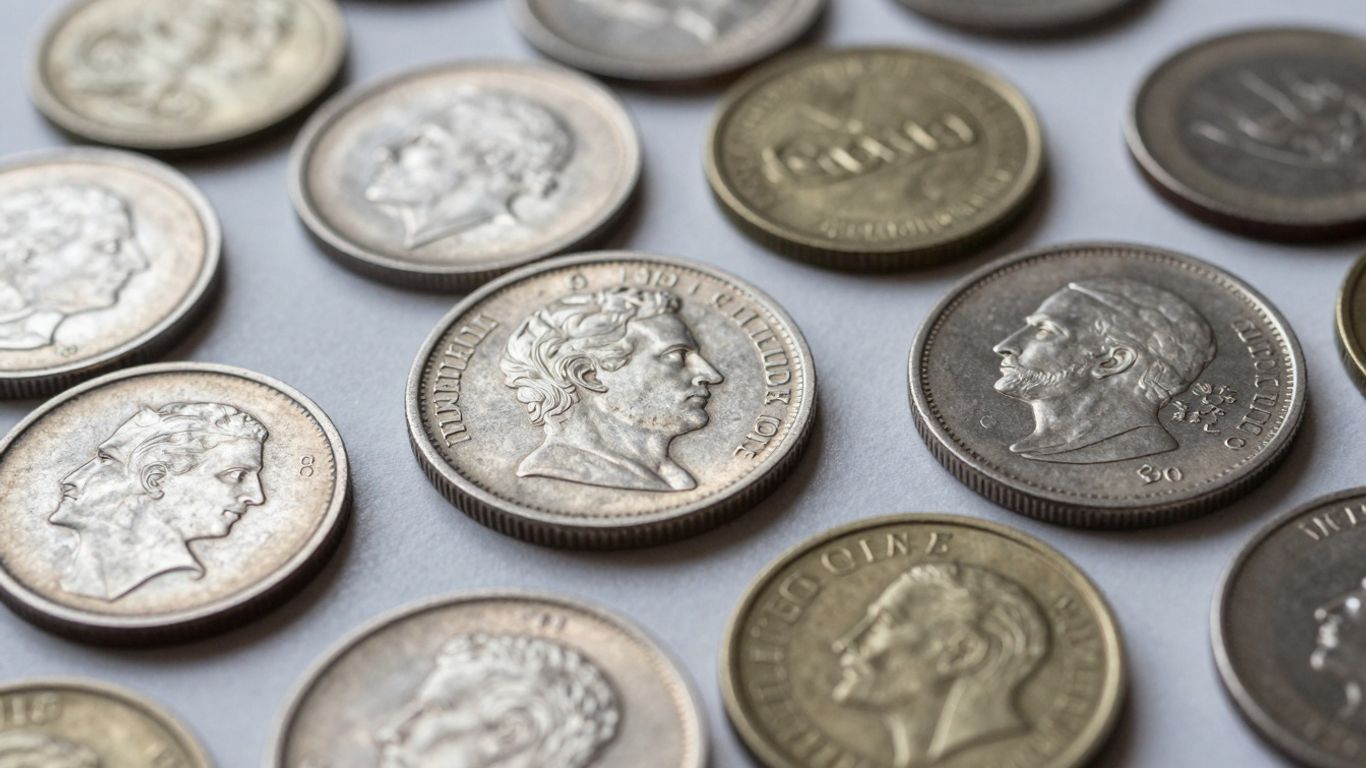
You know, coins aren’t just about how old they are or if they look pretty. There’s a whole other layer to their value, and that’s what’s happening in the market right now. Think of it like the stock market, but for coins. Sometimes, everyone suddenly wants a specific type of coin, and poof, its price goes up. Other times, interest just fades away, and the value can drop. It’s not always easy to figure out why this happens, but it’s a big part of what makes a coin worth what it is.
Fluctuations in Collector Interest
Collector interest can be a bit like a fickle friend. One year, everyone’s talking about Morgan dollars, and their prices climb. The next, maybe it’s Buffalo nickels that are suddenly popular. This ebb and flow is driven by all sorts of things – maybe a new book came out, or a famous collection was sold at auction. It’s hard to predict, but if a coin suddenly becomes the ‘hot’ item, you’ll see its price jump, sometimes quite a bit.
- Popular Series: Coins like Morgan and Peace dollars have a long-standing appeal.
- Cyclical Trends: Interest in series like Buffalo nickels or Mercury dimes can rise and fall over time.
- Less Popular Series: Some coins, like half cents, consistently have lower demand and thus lower prices, even if they’re rare.
Economic Influences on Coin Prices
Beyond just what collectors want, the bigger economic picture plays a role too. When the economy is doing well, people often have more disposable income and might spend more on hobbies like coin collecting. Conversely, during tough economic times, people might hold onto their money, and the demand for collectibles can decrease. It’s not a direct one-to-one relationship, but general economic health can certainly affect how much people are willing to spend on coins.
The value of a coin isn’t just set in stone by its history or condition. What people are willing to pay for it today is a huge factor. This means prices can change, sometimes quickly, based on what’s happening in the world and in the collecting community.
Navigating the Volatile Market
Trying to time the coin market can feel like trying to catch lightning in a bottle. It’s tough to know when to buy and when to sell. What seems like a good deal today might be worth less tomorrow, or it could be worth a lot more. For new collectors, it can be a bit overwhelming. The best advice is usually to focus on coins you genuinely like and that fit your budget, rather than trying to chase the next big price increase. Building a collection based on passion, rather than just profit, often leads to more satisfaction in the long run. Understanding these market forces is as important as knowing a coin’s grade.
| Coin Series | Typical Demand Level | Notes |
|---|---|---|
| Morgan Dollars | High | Consistently popular |
| Peace Dollars | High | Similar appeal to Morgan Dollars |
| Buffalo Nickels | Moderate (Cyclical) | Interest can fluctuate |
| Mercury Dimes | Moderate (Cyclical) | Interest can fluctuate |
| Half Cents | Low | Generally less popular |
Assessing Coin Value: Practical Approaches
So, you’ve got a pile of old coins and you’re wondering what they’re actually worth, right? It’s not always as simple as looking at the number stamped on the front. Figuring out the real numismatic value involves a few different steps. It’s like being a detective, but instead of clues, you’re looking at mint marks, wear, and how many of these things were even made.
Utilizing Price Guides and Resources
First off, don’t just guess. There are tons of resources out there to help you get a handle on coin values. Think of these as your starting point. You can find lists and catalogs that show what similar coins have sold for recently. This gives you a baseline, a general idea of what to expect. The key is to use up-to-date information, because coin prices can change. Checking out resources like the Coin Value Checker can give you a good idea of current market prices for common U.S. coins.
Here’s a quick look at what you’ll typically find in these guides:
- Coin Identification: Details on the date, mint mark, and specific design of the coin.
- Condition Notes: Descriptions of how different levels of wear affect value.
- Price Ranges: Estimated values based on the coin’s grade and market demand.
Expert Evaluation by Numismatists
Sometimes, you just can’t get a clear answer from a book or a website. That’s where the pros come in. Numismatists, or coin experts, have spent years studying coins. They can spot details that most of us would miss. They know the history, the rare variations, and what collectors are actually looking for. If you have something you think might be really special, getting an opinion from a reputable numismatist is a smart move. They can tell you if that tiny scratch really matters or if that odd color is a sign of something rare.
Comparing Similar Coin Offerings
Another practical way to get a feel for value is to look at what’s currently for sale or what has recently sold. Check out auction sites, dealer inventories, and even coin shows. See what people are asking for coins that look just like yours. Pay attention to the condition they’re listed in. If you see a coin in similar condition to yours selling for a certain price, that’s a pretty good indicator of its worth. It’s all about putting your coin in context with the rest of the market.
When you’re trying to figure out what your coins are worth, remember that condition is a huge part of the puzzle. Even a rare coin can lose a lot of its appeal if it’s been heavily damaged or worn down. Always handle your coins carefully, preferably with cotton gloves, to avoid adding any new marks or smudges that could affect their value.
Physical Properties and Their Valuation
When you look at a coin, what’s the first thing you notice? Probably its size, color, and maybe the picture on it, right? Well, for people who study coins, called numismatists, those surface-level details are just the beginning. They look much, much closer. The tiniest imperfections or unique marks can make a huge difference in how much a coin is worth.
Think about it like this: two coins might look almost identical at first glance, but one could have a slight doubling on a letter, or a tiny scratch that’s barely visible. A numismatist, often using a magnifying glass, can spot these differences. These aren’t just random flaws; they can be clues about how the coin was made or if it’s even real.
Minute Details Matter
It’s the small stuff that really counts here. Things like:
- Die Varieties: Sometimes, the metal stamp (the die) used to strike the coin gets damaged or altered. This can lead to doubled letters, extra lines, or other oddities that are only visible under magnification. A coin with a known die variety can be much more sought after.
- Surface Texture: The way the metal looks and feels is important. Is it smooth and lustrous, or does it have a dull, worn appearance? Even subtle differences in the surface can affect value.
- Edge Details: Don’t forget the rim! Some coins have reeding (those little lines), while others are smooth. Any unusual features or damage on the edge are also noted.
Identifying Authenticity
This is a big one. With valuable coins, there are always people trying to make fakes. Numismatists have to be detectives. They check:
- Weight and Dimensions: Real coins have precise specifications. Even a slight deviation can be a red flag.
- Metal Content: For coins made of precious metals, verifying the actual metal content is key. Sometimes, a coin might look right but be made of cheaper stuff inside.
- Strike Quality: How clearly are the design elements imprinted? Counterfeits often have a weaker or mushier strike compared to genuine coins.
It’s not just about spotting a fake; it’s about appreciating the craftsmanship of the original minting process. The sharpness of a design, the way the metal flows, and the overall strike quality all speak to the coin’s origin and the care taken in its production. These physical characteristics are a direct link to the coin’s journey from mint to collector.
The Importance of Surface Appearance
What a coin looks like on the outside tells a story. Numismatists look at:
- Color and Luster: Does the coin still have its original shine, or has it been cleaned or damaged? Original luster is highly prized.
- Patina: For older coins, a natural patina (a surface film that develops over time) can add character and value, as long as it’s not the result of corrosion or artificial treatment.
- Marks and Scratches: Any nicks, dings, or scratches are carefully examined. The location, depth, and visibility of these marks significantly impact the coin’s grade and, therefore, its worth. A coin in excellent condition, with minimal signs of wear, will always be more desirable than one that’s been handled roughly. Understanding these physical traits is a big part of assessing a coin’s true numismatic value, going far beyond just its face value Understanding Numismatic Value Definition.
Wrapping It Up
So, we’ve gone over what makes a coin more than just pocket change. It’s not just about how old it is or if it’s made of gold. Things like how many were made, if anyone actually wants to collect it, and what kind of shape it’s in all really matter. Knowing these bits and pieces helps you figure out what your coins are truly worth, whether you’re just starting out or have been collecting for ages. It’s a whole world out there, and understanding these values makes it way more interesting.
Frequently Asked Questions
What exactly is numismatic value?
Numismatic value is basically the worth of a coin that’s more than what it says on its face. Think of it as a coin’s collector value, which can be way higher than its regular money value because it’s rare, in great shape, or historically important.
What makes a coin valuable?
Several things make a coin valuable. The number of coins made (mintage), how many are still around (rarity), how many people want it (demand), its condition, and any special features or mistakes all play a big part.
Does the age of a coin always mean it's worth more?
Not always! While old coins can be valuable, age isn’t the main factor. A brand new coin that’s super rare and in perfect condition could be worth much more than a very old coin that’s common and worn out.
Why is the condition of a coin so important?
A coin’s condition, or ‘grade,’ is super important because coins that look almost new or have very little wear are much more valuable. Collectors prefer coins that have been well-preserved.
What does 'mintage' mean for coin value?
Mintage refers to the total number of coins a mint produced for a specific year and design. If only a small number of coins were made (low mintage), they are usually rarer and therefore more valuable.
Are there special services to check a coin's condition?
Yes, there are professional grading services. Companies like PCGS and NGC examine coins very carefully and give them a grade. This official grade helps buyers and sellers agree on the coin’s condition and value.
How do I find out what my coin is worth?
You can use coin price guides, check online resources, or ask an expert numismatist. Comparing your coin to similar ones that have recently sold can also give you a good idea of its value.
What's the difference between a regular coin and a numismatic coin?
A regular coin is just money you use every day. A numismatic coin is one that collectors value for reasons beyond its face value, like its rarity, history, or condition. It’s more of a collectible item than just currency.