Ever wondered why coin collectors and investors get so worked up about the weight of a coin? It turns out, it’s a pretty big deal, especially when you’re talking about authenticity and how much a coin is actually worth. We’re not just talking about a few grams here and there; these specifications are like a coin’s fingerprint, telling a story about its origins, its metal content, and its place in history. Understanding the coin weight specifications importance can seriously change how you look at your collection or your next investment.
Key Takeaways
- Coin weight is a primary indicator of authenticity, helping to distinguish genuine pieces from counterfeits.
- Historical changes in coin weight, like the shift from silver to base metals in quarters, directly impact their intrinsic and collectible value.
- For precious metals investors, accurate weight verification is vital for assessing market pricing and mitigating risks.
- Industry standards and certifications from grading agencies play a key role in confirming a coin’s weight, purity, and overall integrity.
- Understanding coin weight specifications empowers collectors and investors to make more informed decisions, enhancing both confidence and potential returns.
Foundation of Coin Authentication Through Weight Analysis
When you’re trying to figure out if a coin is the real deal, its weight is one of the first things you should check. It sounds simple, right? But there’s a lot to it. Think of it like this: if you’re baking a cake, using the right amount of flour and sugar is super important for it to turn out right. Coins are kind of the same way. The mint has very specific ideas about how much each coin should weigh, and sticking to those specs is a big part of making sure it’s authentic.
Physical Characteristics That Indicate Authenticity
Beyond just weight, a coin’s physical makeup tells a story. You’ve got the metal it’s made from, its diameter, and how thick it is. All these things have to be just right. If a coin feels too light or too heavy, or if it looks a bit off in size, it’s a red flag. It’s like noticing a weird smell coming from your fridge – something’s probably not quite right.
- Metal Composition: Is it the right mix of metals? For example, older U.S. quarters (pre-1965) were made with 90% silver, while newer ones are copper-nickel. A silver quarter that weighs like a modern one, or vice-versa, is a big clue.
- Edge Details: Look closely at the edge. Does it have reeding (those little lines)? Is it smooth? The type of edge should match what the mint intended for that specific coin.
- Surface Appearance: Genuine coins usually have a certain luster and wear pattern. Fakes might look too shiny, too dull, or have odd marks that don’t make sense.
Recognizing Consistency in Minting Standards
Every coin type has a standard weight. The U.S. Mint, for instance, publishes these specifications. For a standard U.S. quarter minted after 1965, the official weight is 5.67 grams. If you pick up a bunch of these quarters, they should all be pretty close to that number. A few hundredths of a gram difference might be okay due to normal wear, but a coin that’s significantly heavier or lighter is suspicious.
| Coin Type (Post-1965) | Standard Weight (grams) |
|---|---|
| Quarter | 5.67 |
| Dime | 2.268 |
| Nickel | 5.00 |
| Penny (post-1982) | 2.50 |
The consistency in minting isn’t just about making coins look the same; it’s about ensuring they have a predictable physical identity. This predictability is what allows us to spot anomalies that might indicate a problem, whether it’s wear and tear or something more deliberate like counterfeiting.
Link Between Weight and Legal Tender Status
Historically, the weight of a coin was directly tied to its value, especially for coins made of precious metals like gold and silver. The weight represented the actual amount of valuable metal in the coin. This is why governments set strict weight standards – it guaranteed the coin’s worth and its status as legal tender. If a coin was underweight, it meant it had less precious metal, and therefore, less intrinsic value. This connection between weight and value is still important today, even for coins not made of precious metals, as it forms the basis for their accepted face value.
Coin Weight Specifications Importance in Precious Metals Investment
When you’re looking at investing in precious metals, like gold or silver coins, the weight of that coin is a really big deal. It’s not just about how heavy it feels in your hand; it directly ties into how much the metal inside is worth. Think about old U.S. quarters, for example. The ones made before 1965 had a good amount of silver in them and weighed about 6.25 grams. Today’s quarters, though, are mostly copper and nickel, weigh a bit less at 5.67 grams, and don’t have that silver value. This difference in weight, and more importantly, what that weight is made of, is key for investors.
Influence on Market Pricing
The market price for precious metals is pretty straightforward: it’s largely based on the weight and purity of the metal. If you’re buying a gold coin, its price will closely follow the current price of gold per ounce. A coin that’s supposed to be one ounce of gold but weighs less, or is less pure, will be worth less. It’s that simple. This is why mints are so careful about getting the weight exactly right. For investors, knowing the exact weight helps you figure out if you’re getting a fair price. It’s like checking the ingredients on a food package – you want to know what you’re actually paying for.
Role in Portfolio Diversification
Precious metals can be a smart part of a bigger investment plan. They often behave differently than stocks or bonds, which can help balance things out when other investments are doing poorly. When you’re thinking about diversifying, you can look at different types of precious metals – gold, silver, platinum – and even different forms, like coins or bars. The weight of these items is what determines their base value. So, if you have a portfolio with a mix of, say, one-ounce gold coins and a few larger silver bars, their respective weights are the starting point for understanding their contribution to your overall investment.
Mitigating Investment Risks with Accurate Weight Data
One of the biggest worries when investing in precious metals is getting ripped off, either by buying fakes or paying too much. Accurate weight data is a big help here. If a coin is supposed to weigh a certain amount and it’s lighter, that’s a red flag. It could mean it’s not pure metal, or worse, it could be a counterfeit. Reputable dealers and grading services always verify the weight. Having reliable weight information helps you avoid these pitfalls. It’s a basic check that can save you a lot of money and headaches.
Here’s a quick look at how weights can differ:
| Coin Type | Pre-1965 US Quarter | Modern US Quarter | 1 oz Gold Eagle | 1 oz Silver Maple Leaf |
|---|---|---|---|---|
| Approximate Weight | 6.25 grams | 5.67 grams | ~31.1 grams | ~31.1 grams |
| Primary Metal | Silver (90%) | Copper/Nickel | Gold | Silver |
The weight of a coin is the most direct indicator of its intrinsic metal value. While rarity and condition add to collectible value, the weight is the foundation for understanding the raw material worth, especially in bullion coins. Always verify the weight against official specifications.
So, when you’re looking at precious metals, don’t just glance at the price. Pay attention to the weight. It’s a simple but powerful piece of information that can tell you a lot about what you’re buying and help you make smarter investment choices.
Historical Evolution of Coin Weight Standards
Impact of Economic Changes on Specifications
Coin weights haven’t always been what they are today. Think back to times when silver and gold were the main game in town for coinage. The actual metal content was a huge part of a coin’s worth. So, if the economy got shaky, or if there was a shortage of silver, governments might actually change the weight of their coins. This wasn’t just about saving money; it was a way to manage the money supply and keep things stable. It’s kind of wild to think that a coin’s physical weight was directly tied to its buying power in a way that’s pretty different from today’s fiat money.
Minting Technology and Material Shifts
As time went on, minting got way more sophisticated. We went from hand-struck coins to machines that could churn them out with incredible precision. This meant that mints could stick to exact weight specifications much more reliably. Plus, the materials changed. We moved away from pure silver and gold for everyday coins, opting for more durable and less valuable metals like copper, nickel, and zinc. This shift meant that the weight of a coin became less about its intrinsic metal value and more about its face value and the cost of production. It’s a big change from when a heavier coin meant more actual precious metal.
Comparing Silver and Modern Quarters
Let’s look at U.S. quarters as a quick example. Before 1965, quarters were made of 90% silver and weighed about 6.25 grams. They had a significant intrinsic value just from the silver content. Fast forward to today, and modern quarters weigh around 5.67 grams and are made of a copper-nickel clad composition. They don’t have much precious metal value at all. The weight difference is noticeable, and it highlights the massive shift in how coins are made and what gives them their value. It’s a clear illustration of how technology and economic decisions have reshaped coin standards over the decades.
- Pre-1965 Silver Quarters: 90% silver, 6.25 grams.
- Post-1965 Clad Quarters: Copper-nickel clad, 5.67 grams.
- Value Shift: From intrinsic metal worth to face value.
The evolution of coin weight standards is a fascinating reflection of economic pressures, technological advancements, and changing societal needs. What was once a direct measure of precious metal content has transformed into a standardized unit of account, managed through increasingly precise minting processes.
Certified Coin Grading: Upholding Weight Integrity
Leading Grading Agencies and Their Processes
When you’re looking at coins, especially those made of precious metals, how do you know you’re getting the real deal? That’s where grading services come in. Think of them as the quality control experts for the coin world. Companies like PCGS (Professional Coin Grading Service) and NGC (Numismatic Guaranty Corporation) have built their reputations on carefully examining coins. They don’t just glance at them; they use magnification and have teams of people who know coins inside and out. They look at everything – the strike, the surface, the eye appeal, and yes, the weight. A coin’s weight is a fundamental characteristic that these agencies verify as part of their authentication process. It’s a key piece of data that helps confirm a coin is what it claims to be.
These agencies have pretty strict standards. They’ve developed grading scales, usually from 1 to 70, where a higher number means a coin is in better condition. But it’s not just about how pretty a coin looks; it’s about its history, its metal content, and its overall authenticity. They’re looking for consistency, and weight is a big part of that consistency. If a coin is supposed to weigh a certain amount, and it doesn’t, that’s a red flag they’ll investigate further.
Importance of Tamper-Proof Holders
Once a coin passes the grading process, it doesn’t just get handed back to you. It’s sealed in a special holder, often called a "slab." These aren’t just plastic cases; they’re designed to be tamper-evident. This means if someone tries to open the holder to swap out the coin or mess with it, it’s usually pretty obvious. This is super important for collectors and investors because it means the coin inside is the one that was graded, and its condition hasn’t been altered since. It protects the coin’s integrity and, by extension, its value. You can usually see the coin clearly through the holder, and it will have a label with the coin’s details, its grade, and a unique certification number. This number is tied to the grading agency’s database, so you can look it up online to confirm its details.
Here’s a quick look at what you typically find on a graded coin’s label:
- Coin Identification: The type of coin, its date, and mint mark.
- Grade: The numerical grade assigned by the service (e.g., MS-65 for Mint State).
- Certification Number: A unique ID for that specific coin.
- Security Features: Holograms or special seals to prevent counterfeiting of the label itself.
Market Trust Reinforced by Certification
All of this – the careful grading, the secure holders – builds trust in the market. When you buy a coin that’s been certified by a reputable agency, you have a much higher degree of confidence in what you’re purchasing. You know that its weight, purity, and condition have been verified by professionals. This makes transactions smoother and more secure, whether you’re buying from a dealer, at an auction, or even trading with another collector. It’s like having a stamp of approval that says, "This coin is legitimate." This reliability is what allows the market for rare and valuable coins to function and grow. Without these standards and the trust they create, it would be much harder for people to invest in coins, and the hobby might not be as popular as it is today.
The process of certification, from initial weight verification to the final tamper-proof holder, is designed to provide a clear, reliable record of a coin’s characteristics. This transparency is key to building confidence among buyers and sellers alike, making the numismatic market more accessible and secure for everyone involved. It’s a system that aims to protect both the collector’s passion and their investment.
For example, consider the difference in weight between a pre-1965 U.S. silver quarter and a modern clad quarter:
| Coin Type | Composition | Weight (grams) | Silver Content |
|---|---|---|---|
| Silver Quarter (1964 & earlier) | 90% Silver, 10% Copper | 6.25 | 90% |
| Clad Quarter (1965 & later) | Copper-Nickel Clad | 5.67 | 0% |
This clear distinction in weight, directly tied to metal content, is something grading services account for and verify, adding another layer of assurance for investors and collectors.
Counterfeit Detection: The Critical Role of Weight Verification
Nobody likes finding out a treasured coin is a fake. It’s not just about the money—it can leave you doubting future purchases, too. While counterfeiters have gotten really clever, being careful with weight checks puts you a step ahead. The subtle job of verifying a coin’s weight is often the line that separates genuine coins from convincing fakes.
Common Counterfeiting Tactics and Risks
Counterfeiters often target widely collected coins and aim for imperfections that can slip past an untrained eye, but weight rarely lies. Here’s what to watch for:
- Swapping out metals: Fakes are often made with cheaper metals plated to look like the real thing but will weigh differently.
- Adding or removing material: Some fakes shave off small amounts of precious metal, leaving the coin lighter than official specs.
- Details cut corners: The design and color might look great, but getting the core weight just right is difficult without proper minting capacity.
| Popular Coin Targets | Typical Fake Weight Difference |
|---|---|
| Silver American Eagle | 0.2 – 0.4 grams less |
| Gold Krugerrand | 0.1 – 0.3 grams less |
| Old US Quarters | Up to 0.6 grams less |
Technological Tools for Precise Verification
Modern tools let you check weight quickly and reliably—even if you’re not an expert. Here are some ways technology helps:
- Digital micro-scales: Measure down to the milligram. Place the coin, check against official specs.
- Ultrasonic testers: Analyze how sound travels through the coin—odd sounds can mean wrong metal inside.
- X-ray fluorescence (XRF): Scans a coin’s metal makeup, confirming whether the metal mix matches official standards.
If you don’t have access to expensive lab gear, a solid digital scale is usually enough for hobbyists and smaller transactions.
Educational Strategies for Collectors
Knowing what to look for can save a lot of frustration. Here’s how you can build your own routine:
- Compare: Always have official weight specs handy (from reliable sources).
- Buy smart: Only buy from trusted dealers or insist on certified coins with clear grading information.
- Join communities: Connect with local coin clubs or online groups. Sharing info helps spot trends in new counterfeits.
Being proactive keeps your collection—and your trust in the market—safe. Learn the specs for your favorite coins, stay curious, and ask for help when you’re unsure.
Global Perspectives on Coin Weight Standards
Contrasting US and International Mint Practices
When you look at coins from different countries, you notice pretty quickly that they don’t all weigh the same, even if they’re supposed to be for a similar purpose, like a dollar or a euro. The United States Mint, for example, has a long history of specific weight requirements for its currency. Think about the old silver quarters – they had a set weight because silver itself had a set value. Modern US coins, like the quarters we use today, are made of different metals and have different weights, which is mostly about making them cheaper to produce and harder to counterfeit with base metals.
Other countries have their own ways of doing things. Some might stick closer to historical weights for certain coins, especially if they have a strong tradition of using precious metals in their coinage. Others might adopt weights based on international standards or simply what makes the most sense for their economy and manufacturing capabilities. It’s not a one-size-fits-all situation. The key takeaway is that each mint has its own set of rules and reasons behind the weights they choose.
Case Studies of Notable Foreign Coins
Let’s look at a couple of examples. The British Pound Sterling, for instance, has seen its coins change weight and composition over centuries. The old silver shillings and florins had specific weights tied to the silver content. Today’s coins are different, but the historical weights are still important for collectors and historians.
Then there’s the Euro. When the Euro was introduced, there was a need for standardization across many countries. The coins have specific weights and diameters designed to be easily recognized by machines and people alike. For example, a 1 Euro coin has a defined weight and composition that’s consistent across all Eurozone countries. This uniformity is a big deal for trade and everyday use.
Role of Certification in Cross-Border Transactions
Buying or selling coins internationally can get complicated fast. You might find a great deal on a rare coin from another country, but how do you know it’s real and weighs what it’s supposed to? That’s where certification really shines. Reputable grading services, like PCGS or NGC, examine coins thoroughly. They check the weight, dimensions, and metal composition.
When a coin is certified and placed in a tamper-evident holder, it comes with a guarantee. This makes it much easier to trust when you’re dealing with someone across the globe. You’re not just buying a coin; you’re buying a verified piece. This trust is super important for collectors and investors who want to move coins between countries without a lot of hassle or risk. It simplifies things a lot, making the global coin market a bit more accessible for everyone.
Collector Confidence and Coin Weight Reliability
When you’re building a coin collection, especially one that involves precious metals, trust is a really big deal. You want to know that what you’re buying is the real deal, and that its value is what it’s supposed to be. This is where coin weight specifications come into play, acting as a quiet but important guardian of your confidence.
Transparency in Transaction Processes
Think about it: when you buy a coin, especially a more valuable one, you want to be sure about what you’re getting. Clear weight specifications, readily available and understood, make transactions feel a lot more open. It’s like having a clear receipt that tells you exactly what you paid for. This openness helps everyone feel more comfortable, from seasoned collectors to folks just starting out. It means fewer surprises down the road.
Verification Methods for Secure Purchases
So, how do you actually check that weight? It’s not as complicated as it might sound. For most collectors, having a decent digital scale is enough. You don’t need a lab-grade instrument, but something accurate to a tenth of a gram makes a big difference. For example, a U.S. quarter minted before 1965 should weigh 6.25 grams, while modern ones weigh 5.67 grams. Knowing these standard weights for the coins you’re interested in is your first line of defense. If a coin feels too light or too heavy, it’s a signal to investigate further. This simple check can save you a lot of trouble.
Here are some basic steps for verifying a coin’s weight:
- Get a reliable scale: Look for a digital scale that can measure in grams with at least one decimal place of accuracy.
- Know your coin’s standard weight: Research the official weight for the specific coin you are examining. This information is usually found in coin catalogs or online resources.
- Weigh the coin carefully: Place the coin gently on the scale, ensuring it’s centered and not touching anything else. Record the weight immediately.
- Compare and investigate: If the weight deviates significantly from the standard, it might be a sign of a counterfeit or a damaged coin. Further examination or consultation with an expert might be needed.
The simple act of weighing a coin can reveal a lot about its authenticity and intrinsic value. It’s a tangible piece of information that complements visual inspection and historical data, building a stronger case for a coin’s legitimacy.
Trust Building in Numismatic Communities
When collectors can rely on weight specifications, it builds a stronger sense of community. People feel more confident trading with each other, attending coin shows, and investing in the hobby. This shared understanding of what makes a coin genuine, down to its precise weight, helps create a more stable and trustworthy market. It’s this reliability that keeps people coming back and encourages new collectors to join. For those interested in the specifics of coin grading and what makes a coin authentic, understanding professional grading is essential for recognizing and evaluating differences in coin quality. This attention to detail, including weight, is what makes the numismatic world so fascinating and dependable for its participants. You can find more information on how to assess coin authenticity by looking into professional grading.
| Coin Type (Pre-1965 Silver) | Standard Weight (grams) |
|---|---|
| U.S. Quarter | 6.25 |
| U.S. Half Dollar | 12.50 |
| U.S. Silver Dollar | 26.73 |
| Coin Type (Modern Clad) | Standard Weight (grams) |
|---|---|
| U.S. Quarter | 5.67 |
| U.S. Dime | 2.268 |
| U.S. Nickel | 5.00 |
This kind of data helps ground discussions and transactions in facts, not just opinions. It’s a practical way to ensure that everyone involved is on the same page, making the whole experience of collecting more enjoyable and secure.
Economic Relevance of Accurate Coin Weight Data
When you’re looking at coins, especially those made with precious metals, their weight isn’t just a number; it’s a big deal for figuring out what they’re worth. Think about it, if you’re buying silver or gold, you want to know exactly how much metal you’re getting, right? That’s where accurate weight comes in. It helps set the price, plain and simple.
Impacts on Valuation for Rare Coins
For rare coins, weight can be a bit more complicated than just the metal content. Sometimes, a coin might be heavier or lighter than expected due to its history or how it was made. This can actually make it more interesting to collectors, and that can drive up the price beyond just the silver or gold it contains. It’s like a unique fingerprint for the coin. For example, a slight variation in weight on an old coin might point to a rare minting error, making it super desirable.
Relationship Between Metal Content and Market Demand
This is where things get really practical. The price of gold and silver changes daily, and the weight of a coin directly tells you how much of that metal is in it. So, if silver prices jump, a coin with a lot of silver in it becomes more valuable, just based on its weight. It’s a pretty direct link. This is why investors pay close attention to the weight specifications, especially for bullion coins that are mostly about the metal.
Here’s a quick look at how weight relates to metal content for some common examples:
| Coin Type | Standard Weight (grams) | Approximate Metal Content | Notes |
|---|---|---|---|
| Pre-1965 Silver Quarter | 6.25 | 90% Silver, 10% Copper | Historically significant silver content |
| Modern US Quarter | 5.67 | Copper-Nickel Clad | Primarily for circulation, not bullion |
| 1 oz Gold Eagle | 33.93 | 91.67% Gold, Copper, Silver | Standardized for investment |
Macroeconomic Trends Reflected in Coin Specifications
Coin specifications, including weight, have changed over time, and these changes often tell a story about the economy. Back in the day, coins were made with more silver because it was more common and stable. As economic conditions shifted, or when metals became scarce or too expensive, mints changed the recipes. They might reduce the amount of precious metal or switch to cheaper alloys. Watching these shifts in weight and composition can give you clues about past economic pressures and how governments managed their currency.
The history of coin weights is a history of economic policy. When governments needed to save on precious metals, they often reduced the weight or purity of coins. This was a way to stretch resources, but it also changed the intrinsic value of the money people carried every day. Understanding these historical adjustments helps us appreciate why current standards are what they are.
So, when you’re looking at a coin, don’t just see it as a piece of history or a shiny object. Its weight is a key piece of information that connects it to market prices, collector interest, and even the broader economic story of its time.
Enhancing Investment Strategies Using Weight Insights
When you’re looking at coins as an investment, especially those with precious metals, their weight is a big deal. It’s not just about how heavy they feel; it’s a direct link to their actual material value and can tell you a lot about how to build a smarter portfolio. Thinking about coin weight can really change how you approach buying and selling.
Identifying Undervalued Coins by Weight
Sometimes, a coin might be overlooked by the market, but its weight tells a different story. If a coin is supposed to have a certain amount of silver or gold, and its weight matches that standard, it’s a good sign. But what if you find a coin that’s priced lower than you’d expect, yet it has the correct weight for its metal content? That could be a chance to snag something for less than it’s really worth. It’s like finding a good deal at a garage sale – you just have to know what to look for.
- Check the standard weight: Know what the coin should weigh based on its type and date. Pre-1965 silver quarters, for example, have a specific weight and silver content.
- Compare with market price: See if the current price reflects the metal value indicated by its weight.
- Look for discrepancies: A coin priced below its melt value, assuming it has the correct weight and purity, might be undervalued.
Aligning Acquisitions with Precious Metal Fluctuations
Precious metals like gold and silver don’t have stable prices; they go up and down. If you’re investing in coins, paying attention to these price swings is smart. When the price of silver drops, for instance, buying silver coins might make more sense because you’re getting more metal for your money. The weight of the coin is your direct measure of how much metal you’re actually getting. So, if you’re buying a silver eagle, its weight tells you exactly how much silver you own, no matter the daily price changes.
The weight of a coin is a constant, a tangible measure of its intrinsic worth, even as market prices for the metals themselves dance around.
Leveraging Weight Trends for Portfolio Growth
Thinking about weight trends can also help you grow your collection over time. For instance, if you notice that coins with higher silver content (and thus, more weight) are becoming more sought after, you might decide to focus on acquiring those. It’s about looking at the physical properties of the coins and how they relate to what collectors and investors want. This approach helps you make more informed decisions, rather than just guessing. It’s a bit like knowing when to buy more of something because you think its value is going to climb based on its solid, measurable qualities.
| Coin Type (Example) | Standard Weight (grams) | Metal Content (Pre-1965) | Modern Metal Content | Potential Investment Insight |
|---|---|---|---|---|
| Silver Quarter | 6.25 | 90% Silver | Copper/Nickel | Higher intrinsic value due to silver weight |
| Modern Quarter | 5.67 | N/A | Copper/Nickel | Primarily collectible or face value |
| Gold Eagle (1 oz) | ~33.93 | N/A | Gold | Direct measure of gold investment |
Distinguishing Intrinsic versus Collectible Value by Weight
So, you’ve got a coin, and you’re wondering what it’s really worth. It’s not just about the metal it’s made of, though that’s a big part of it. We’ve got to look at two main things: intrinsic value and collectible value.
Intrinsic value is pretty straightforward; it’s basically the melt value of the metal. Think about old silver quarters. Before 1965, they were made of 90% silver and weighed about 6.25 grams. Today, those quarters are worth more for their silver content than as pocket change. A modern quarter, on the other hand, weighs 5.67 grams and is mostly copper and nickel, so its intrinsic value is super low. It’s all about the raw materials.
Collectible value, though? That’s where things get interesting. This is the value a coin has because people want it – for its history, its rarity, or how good it looks. Weight plays a role here too, but in a different way. For instance, if a coin is supposed to weigh a certain amount but it’s off, that could be a sign it’s fake, which kills its collectible value. Or, if a coin is rare and in amazing condition, its weight might be standard, but its rarity and condition make it super desirable.
Here’s a quick breakdown:
- Intrinsic Value: Based on the metal content. A heavier silver quarter has more silver, so higher intrinsic value.
- Collectible Value: Driven by rarity, condition, historical significance, and demand. A rare coin in top shape can be worth way more than its metal.
- Weight’s Role: Verifies authenticity (is it the right metal and amount?) and can sometimes hint at historical variations or minting errors that add to collectible interest.
Let’s look at how rarity bumps up value:
| Coin Type | Description | Approximate Value (Intrinsic) | Approximate Value (Collectible) |
|---|---|---|---|
| Modern Quarter | Copper-Nickel | ~$0.05 | ~$0.25 |
| Pre-1965 Silver Quarter | 90% Silver | ~$3.00 (varies with silver price) | ~$5.00 – $10.00+ (depending on date/condition) |
| Rare Date Silver Dollar | High Rarity, Good Condition | ~$25.00 (silver content) | $1,000+ |
You see, a coin’s weight is a solid starting point for figuring out its worth. It tells you about the metal inside, which is the baseline. But when you start looking at how many were made, how many are left, and how well they’ve been kept over the years, that’s when you get into the real collectible magic. It’s a mix of science and history, really.
Practical Guide to Weighing Coins Accurately
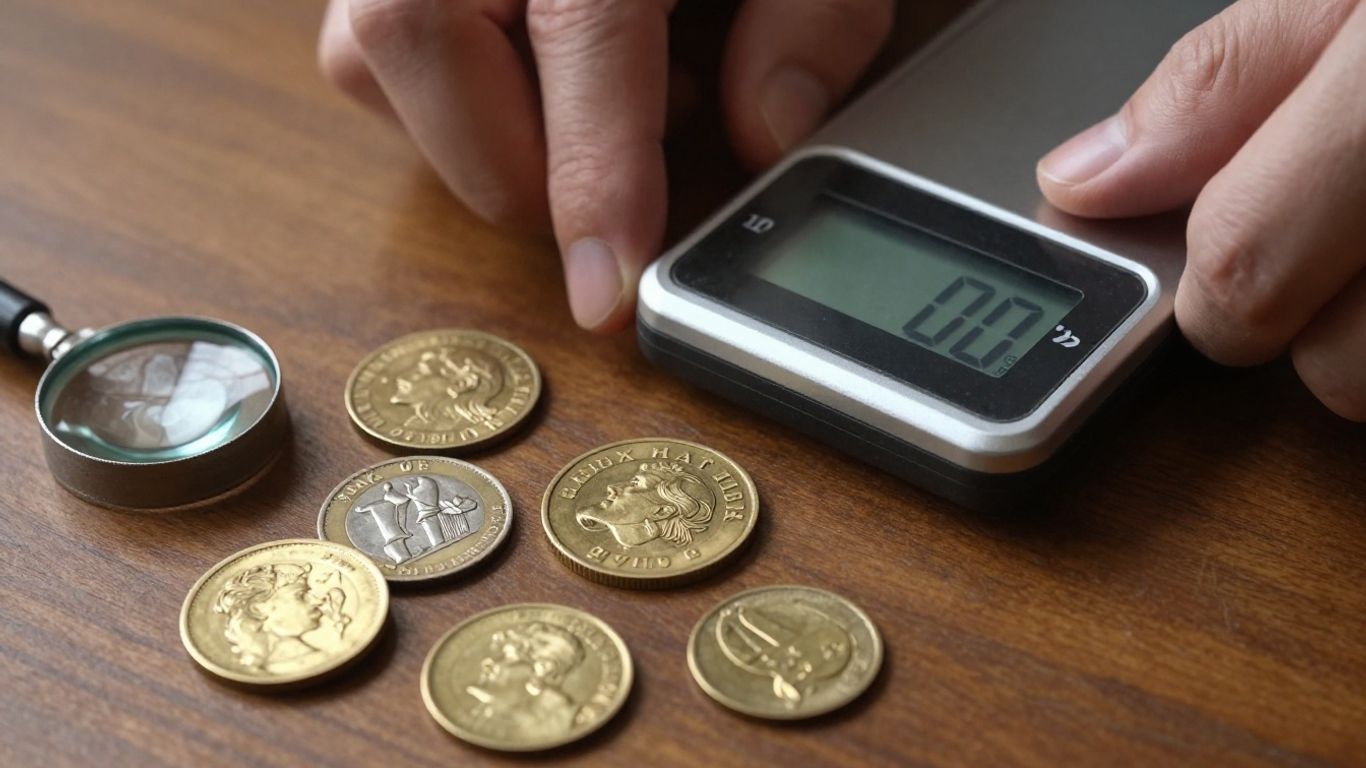
Alright, so you’ve got some coins, maybe you’re looking to sell them, maybe you’re just curious about what they’re really worth. One of the simplest, yet most important, things you can do is weigh them. It sounds basic, but getting it right makes a big difference, especially if you’re dealing with anything that has precious metal in it. Accurate weighing is your first line of defense against fakes and a solid step toward knowing a coin’s true value.
Recommended Tools and Scales for Precision
When you’re talking about coin weights, precision is key. You can’t just grab any old kitchen scale and expect good results. Those things are usually off by a gram or two, which is a lot when you’re dealing with small coins or valuable metals. You need something designed for accuracy.
- Digital Jewelers Scales: These are your best bet for most collectors. They’re relatively inexpensive and can measure down to a tenth or even a hundredth of a gram. Look for ones with a capacity of at least 100 grams, just in case you get your hands on something a bit heavier.
- Bullion Scales: If you’re serious about precious metals, a dedicated bullion scale is the way to go. They’re built for higher capacities and even greater precision, often measuring in troy ounces, grams, and pennyweights.
- Calibration Weights: Scales can drift over time. It’s a good idea to have a set of certified calibration weights to check your scale’s accuracy regularly. Think of it like tuning up a car; it keeps things running right.
Handling Techniques to Avoid Weight Distortion
It’s not just about the scale; how you handle the coin matters too. Even a little bit of dirt or oil from your fingers can add weight. And dropping a coin? Forget about it – you could damage it and definitely mess up your reading.
- Cleanliness is Next to Godliness (for Coins): Always wash and dry your hands thoroughly before handling coins you intend to weigh. Any oils or residue can affect the measurement.
- Use Tweezers or Gloves: For delicate or valuable coins, use soft-tipped tweezers or cotton gloves. This protects both the coin’s surface and your reading from contamination.
- Stable Surface: Make sure your scale is on a flat, stable surface, away from any vibrations or drafts. Even a slight wobble can throw off a sensitive reading.
- Zero Out the Scale: Always zero out your scale before placing the coin on it. If you’re using a container to hold the coin, make sure to tare (zero) the scale with the container on it first.
Maintenance and Calibration Best Practices
Just like any tool, your scale needs a little TLC to keep performing its best. Neglecting it means you’ll start getting unreliable numbers, which defeats the whole purpose.
- Regular Calibration: As mentioned, use calibration weights periodically. Most manufacturers recommend calibrating before first use and then at least monthly, or more often if the scale is used frequently or moved.
- Gentle Cleaning: Keep the weighing pan clean. Wipe it down with a soft, dry cloth. Avoid harsh chemicals that could damage the surface or the scale’s internal components.
- Proper Storage: Store your scale in a safe place, preferably in its original box or a protective case, away from extreme temperatures, humidity, and dust.
- Battery Check: If you’re using a battery-powered scale, keep an eye on the battery level. Low batteries can lead to inaccurate readings.
Weighing coins might seem like a small detail in the grand scheme of collecting or investing, but it’s one of those foundational steps that builds confidence. When you can verify a coin’s weight against its known specifications, you’re not just getting a number; you’re getting a piece of objective data that supports its authenticity and potential value. It’s a simple act that can save you a lot of headaches down the road.
Putting It All Together
So, when you’re looking at coins, whether it’s an old quarter or a shiny new gold piece, don’t forget about the weight. It’s not just about how heavy it feels in your hand; it tells a story about what the coin is made of and if it’s the real deal. Knowing the specs, like weight and purity, helps you figure out what something’s actually worth and keeps you from getting stuck with fakes. It’s a simple thing, really, but paying attention to weight is a smart move for anyone interested in collecting or investing in coins. It’s the little details that make a big difference in the long run.
Frequently Asked Questions
Why is a coin's weight so important for collectors and investors?
A coin’s weight is a key clue to its authenticity and its value. For coins made of precious metals like silver or gold, the weight directly tells you how much metal is in it, which is a big part of its worth. It also helps spot fake coins because they often don’t match the official weight.
How does the weight of a U.S. quarter differ from older ones?
Older U.S. quarters, especially those made before 1965, contained silver and weighed about 6.25 grams. Today’s quarters are made of copper and nickel, weigh less (around 5.67 grams), and don’t have the same silver value.
Can coin weight help determine if a coin is real or fake?
Absolutely! Authentic coins are made to specific weight standards. If a coin feels too light or too heavy, it’s a strong sign it might be a counterfeit. Professional dealers and collectors often use precise scales to check this.
How does the weight of a coin affect its price in the market?
For coins made with valuable metals, their weight is a major factor in their price. More weight usually means more metal, which means a higher base value. This is especially true for investment-grade coins like gold or silver bullion.
What role do grading services play in verifying coin weight?
Top grading services like PCGS and NGC carefully check a coin’s weight, along with other features, as part of their authentication process. When a coin is certified and sealed in a protective holder, it means its weight and authenticity have been verified by experts.
Are there special tools needed to accurately weigh coins?
Yes, for serious collectors and investors, a high-precision digital scale is essential. These scales can measure very small differences in weight, down to a tenth of a gram or even less, which is crucial for identifying authenticity and value.
How has minting technology changed coin weights over time?
As minting technology improved, it allowed for more consistent and precise production of coins. This means modern coins generally have very accurate and uniform weights compared to older coins, where variations might have been more common due to less advanced methods.
Why is understanding coin weight important for investing in precious metals?
Knowing the exact weight and purity of precious metal coins helps investors accurately gauge their real worth, compare different investment options, and avoid being misled by fakes. It’s a fundamental step in making smart investment decisions in the precious metals market.