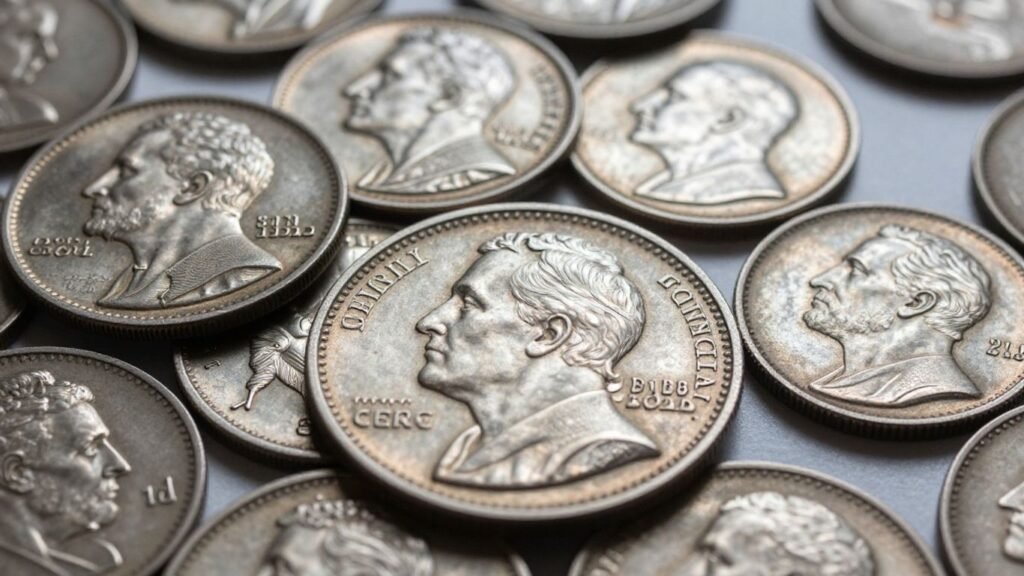
Ever found an old coin and wondered if it was worth more than just its face value? You’re not alone. Many people have these silver coins lying around, and they’re more than just pocket change. We’re going to talk about the history of these coins, why they’re special, and what they might be worth today. It’s a look into how money used to be made and why some people still collect these pieces of history. Let’s explore the world of constitutional silver coins history.
Key Takeaways
- “Junk silver” refers to U.S. coins made before 1965 that are valued for their silver content, not their collectible status.
- The Coinage Act of 1965 ended the use of silver in dimes and quarters, causing these coins to be hoarded and disappear from circulation.
- Constitutional silver coins, like dimes and quarters made before 1965, contain 90% silver and are worth more for their metal content than their face value.
- A $100 face value bag of these coins contains about 71.5 troy ounces of silver and can be a mix of dimes, quarters, and half dollars.
- Owning constitutional silver coins offers a tangible asset, a hedge against inflation, and a divisible form of silver for potential barter.
The Allure of Constitutional Silver Coins History
Defining "Junk Silver": More Than Just Metal
That term "junk silver" can sound a bit off-putting, right? Like it’s just old, worn-out metal. But honestly, it’s a bit of a misnomer. Back in the day, especially during the silver price run-ups of the 1970s, people started calling these older U.S. coins "junk" because their value wasn’t really about their collectible status anymore. It was all about the silver content. So, even if a dime or quarter looks pretty beat up from years of use, the actual silver inside is still there, holding its worth. It’s a way to own physical silver without paying a huge premium.
The Intrinsic Value Beyond Face Value
It’s pretty wild when you think about it. For a long stretch, from 1795 all the way up to 1964, the dimes, quarters, and half dollars you got as change were actually made of 90% silver. That’s a significant amount of precious metal. When silver prices started climbing, the metal inside these coins became worth more than the coin’s face value. Imagine a pre-1965 quarter. At one point, when silver was around $20 an ounce, that quarter held about $3.62 worth of silver. That’s almost 15 times its 25-cent face value! It’s a clear example of how the metal’s worth can far outshine what’s stamped on it.
Understanding Bullion vs. Numismatic Worth
When you’re looking at these older silver coins, there are two main ways to think about their value. First, there’s the bullion value, which is simply the worth of the silver metal itself. This is what most people are after when they buy "junk silver." Then, there’s numismatic value. This is the collector’s value, which can be influenced by things like rarity, condition, historical significance, and specific mint marks or dates. While most circulated silver coins are valued primarily for their silver content, sometimes you can stumble upon a coin that has a special numismatic premium attached to it, making it more than just silver.
- Bullion Value: Based on the current market price of silver.
- Numismatic Value: Based on rarity, condition, and collector demand.
- Constitutional Silver: Refers to U.S. coins minted before 1965 that contain 90% silver.
A Shift in U.S. Coinage Composition
The 90% Silver Era: Dimes, Quarters, and Half Dollars
For a long stretch, almost 175 years to be exact, the United States Mint churned out dimes, quarters, and half dollars made from a 90% silver alloy. This wasn’t just about making coins pretty; that silver content gave them a solid intrinsic value. Think about it – these coins were a common way for everyday folks to hold onto a bit of precious metal. They were durable enough for daily use but also carried that inherent worth that people recognized.
The Coinage Act of 1965: A Pivotal Change
Then came 1965. This year marked a pretty big turning point for American money. The government passed the Coinage Act, and it changed what our coins were made of. Suddenly, the dimes and quarters we were using weren’t silver anymore. They switched to a copper-nickel clad composition. Even the half dollars got a makeover, though they kept some silver for a little while longer before going fully clad too. This change wasn’t just a minor tweak; it really altered the landscape of U.S. coinage and had ripple effects we still see today. It’s a significant moment in US coinage history.
Gresham’s Law in Action: Silver Coins Vanish
So, what happened when they switched to the new, less valuable coins? Well, it’s a classic case of Gresham’s Law playing out. You know, the saying "bad money drives out good." As the price of silver started climbing, those older 90% silver coins became worth more for their metal content than their face value. People naturally started holding onto them, tucking them away instead of spending them. It’s like finding a $20 bill in your pocket – you’re not going to spend it on a pack of gum, right? The new, clad coins, which were essentially "bad money" in comparison, kept circulating, while the good, silver money just disappeared from everyday use. It’s fascinating how economic forces can make tangible items vanish from sight.
The shift away from silver in coinage wasn’t just a policy change; it was a direct response to market realities. As silver prices rose, the metal’s value within the coins outstripped their stamped worth, leading to a natural hoarding effect. This phenomenon is a textbook example of how economic incentives can alter the circulation patterns of currency.
The Economic Forces Behind Silver Coinage
You know, it’s funny how money works. Sometimes, the metal it’s made from becomes worth more than the number stamped on it. That’s exactly what happened with a lot of U.S. silver coins.
Rising Silver Prices and Industrial Demand
For a long time, the U.S. Mint used a good amount of silver in its coins – dimes, quarters, and half dollars were all 90% silver until 1965. But as the years went by, silver wasn’t just for coins anymore. Industries started needing it for things like electronics and photography. This increased demand, both from industry and from people wanting to hold onto silver, started pushing the price of silver up. It’s like anything else, really; when more people want something and there’s only so much of it, the price goes up.
Melt Value Exceeding Face Value
This is where things got interesting. As the market price for silver climbed, the actual amount of silver in a coin started being worth more than the coin’s face value. Think about a pre-1965 quarter. It had about 0.18 troy ounces of silver. If silver was trading at, say, $20 an ounce, that quarter had roughly $3.60 worth of silver in it! That’s way more than the 25 cents it was supposed to be worth. This made people realize they could get more money by melting down the coins for their silver content than by using them as money.
The Impact on Coin Hoarding and Circulation
So, what happens when coins are worth more as metal than as money? People stop spending them, right? They start pulling them out of circulation and tucking them away. This is a classic example of Gresham’s Law, which basically says "bad money drives out good." In this case, the new, silver-less coins (made of copper and nickel) became the "bad money" that circulated, while the older, silver-filled coins became the "good money" that disappeared into people’s savings. It’s why finding those old silver coins in circulation today is pretty rare. They were either melted down or, more commonly, hoarded away by folks who understood their true worth.
Identifying Constitutional Silver Coins
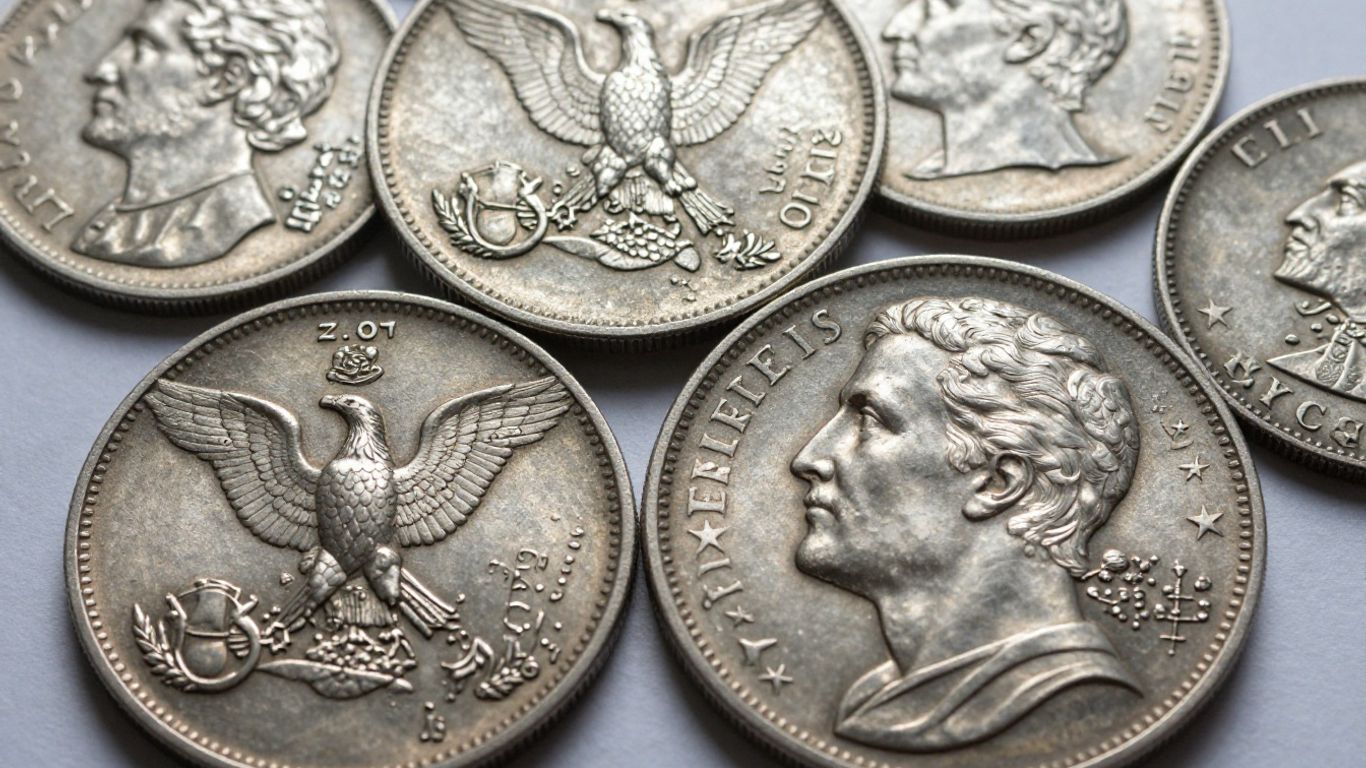
So, you’ve got some old coins lying around, or maybe you’re thinking about picking some up. How do you actually know if you’re holding onto some of that good old constitutional silver? It’s not as complicated as it might sound, and a few simple checks can tell you a lot.
Visual Clues: The Edge Test for Silver Content
This is probably the easiest way to spot a silver coin from the "junk silver" era. Remember, before 1965, dimes, quarters, and half dollars were made of 90% silver. After that, the government switched to a copper-nickel clad composition. The easiest way to see this change is by looking at the edge of the coin.
- Pre-1965 Silver Coins: If you look at the edge of a dime, quarter, or half dollar minted before 1965, you’ll see a solid, silvery-white edge. There’s no distinct stripe of a different color.
- Post-1965 Clad Coins: Coins made after 1965 have a copper core sandwiched between two layers of nickel-silver alloy. When you look at the edge of these, you’ll notice a distinct copper-colored stripe running through the middle. It’s a pretty clear giveaway.
This simple "edge test" is a quick way to differentiate between the silver coins we’re talking about and the more modern, non-silver ones.
Key Dates and Mint Marks of Significance
While most "junk silver" coins are valued primarily for their silver content, some dates and mint marks can make them more interesting to collectors, potentially adding a bit of numismatic value on top of the melt value. It’s like finding a rare comic book in a box of old comics – the story behind it matters.
- Key Dates: These are specific years or mint marks that had lower production numbers or are otherwise considered rare by collectors. For example, certain years of Walking Liberty Half Dollars or Mercury Dimes are more sought after.
- Mint Marks: These small letters (like ‘D’ for Denver, ‘S’ for San Francisco, or sometimes no mark for Philadelphia) indicate where the coin was minted. Some mint marks for certain years are much rarer than others.
- Varieties: Sometimes, errors or slight variations in the coin’s design during the minting process can create rare varieties that collectors hunt for.
While you’re mostly buying these coins for their silver, keeping an eye out for these details can be a fun part of the process. You might just stumble upon something a little extra special.
Recognizing Common Silver Coin Denominations
When people talk about "constitutional silver" or "junk silver," they’re usually referring to a specific set of U.S. coins that were once common in circulation but are now prized for their silver. These are the workhorses of the silver coin world.
- Dimes: Before 1965, U.S. dimes were 90% silver. Think of the Mercury dimes (1916-1945) and the Roosevelt dimes (1946-1964).
- Quarters: Similarly, quarters minted before 1965 contain 90% silver. This includes the classic Washington quarters (1932-1964) and the earlier Barber quarters (1892-1916).
- Half Dollars: The 90% silver content also applies to half dollars made before 1965, such as the Franklin half dollars (1948-1963) and the Walking Liberty half dollars (1916-1947).
It’s important to note that half dollars minted between 1965 and 1970 were made with 40% silver, a different composition than the earlier 90% silver coins. After 1970, all these denominations transitioned to the copper-nickel clad composition we see today.
The shift away from silver in U.S. coinage wasn’t just a minor change; it marked the end of an era. For over a century, these coins were a tangible representation of value, carrying both their face value and a significant precious metal content. When the melt value surpassed the face value, the silver coins effectively disappeared from circulation, a clear demonstration of economic principles at play.
The Anatomy of a $100 Face Value Silver Bag
Standardized Silver Content: Actual Silver Weight
So, you’re looking at a bag labeled "$100 Face Value" and wondering what’s really inside. It’s not just a random pile of old coins. These bags are pretty standardized when it comes to the silver they hold. The main point is the Actual Silver Weight (ASW), which is typically around 71.5 troy ounces of pure silver. This consistent amount of silver is what makes these bags a reliable way to own physical silver, kind of like a bulk purchase of bullion.
The Mix of Coins: Dealer’s Choice
Now, about the actual coins you’ll find in that bag. While the total silver content is fixed, the specific coins are usually up to the dealer. Think of it as "dealer’s choice." This means you might get a bag full of dimes, or maybe all quarters. Sometimes you’ll find a mix. Half dollars are around, but they’re not as common in these standard $100 bags. It’s part of the fun, though – you never know exactly what you’re going to get, coin-wise.
Common Denominations Found Within
Even though the mix varies, there are some usual suspects you’ll likely see. These are all pre-1965 U.S. coins, meaning they’re 90% silver. Here’s a quick rundown of what you might find:
- Dimes: These could be Roosevelt dimes (1946-1964) or Mercury dimes (1916-1945). Each dime has about 0.0723 troy ounces of silver.
- Quarters: You’ll probably see Washington quarters (1932-1964). Standing Liberty quarters (1916-1930) are less common but still possible. Each quarter holds roughly 0.1808 troy ounces of silver.
- Half Dollars: These are less frequent in a standard bag, but if you do find them, they could be Franklin half dollars (1948-1963) or Walking Liberty half dollars (1916-1947). Each half dollar contains about 0.3617 troy ounces of silver.
Owning these bags means you’re holding tangible assets. Their value comes directly from the silver content, which has historically held its own during uncertain economic times. It’s a way to own physical silver in a form that’s easy to recognize and divide if needed.
Investing in Silver Coins: A Strategic Approach
Thinking about adding some silver coins to your collection or investment portfolio? It’s a smart move, honestly. These old U.S. coins, often called "junk silver," aren’t just pocket change; they’re tangible assets that can really help balance things out when the economy gets shaky.
Portfolio Diversification with Tangible Assets
Look, nobody wants all their eggs in one basket, right? That’s where silver coins come in. They’re physical. You can hold them. This is different from stocks or bonds that just exist on paper or a computer screen. When markets are unpredictable, having something real, like these silver dimes and quarters, can make you feel a lot more secure. It’s like having a backup plan for your money.
A Hedge Against Inflation and Economic Uncertainty
Ever feel like your money just doesn’t buy as much as it used to? That’s inflation. Fiat currency, the kind we use every day, can lose its buying power over time. Silver, on the other hand, has a history of holding its value, and sometimes even increasing, when the dollar weakens. So, if prices for everything else are going up, your silver might be holding steady or even gaining.
- Holds Value: Silver tends to keep its worth when paper money loses ground.
- Recognizable: These are U.S. coins, so people know what they are.
- Divisible: You can break down a bag of coins into smaller amounts for trades.
When you buy these older silver coins, you’re not just buying metal. You’re buying a piece of history that has a real, intrinsic value separate from what the government says it’s worth. It’s a different kind of security.
The Role of Silver as a Safe-Haven Asset
When things get really uncertain – maybe there’s a big market crash or some other economic scare – people tend to run to things they trust. Gold and silver have always been those go-to safe spots for money. Owning these U.S. silver coins means you have a piece of that historical safety net. It’s a way to protect your savings when the financial news sounds a bit scary. It’s about having a reliable store of wealth that’s stood the test of time.
Practical Advantages of Owning Silver Coinage
So, why bother with these old silver coins when you can just buy a shiny new silver bar? Well, it turns out there are some pretty good reasons, especially if you’re thinking about things beyond just the raw metal content. These coins, often called "junk silver," have a history, and that history brings some practical perks.
Divisibility for Barter and Transactions
One of the biggest pluses is that you can actually use these coins for stuff. Think about it: a bag of $100 face value silver coins is made up of dimes, quarters, and half-dollars. If things got weird and you needed to trade for, say, some groceries or gas, you could break down that $100 bag into smaller, usable chunks. A single silver quarter is still a quarter, even if it’s worth way more in silver. This is a huge difference compared to a big silver bar, which you can’t exactly use to buy a cup of coffee. It’s like having a bunch of small bills versus one big bill – much more flexible for everyday needs.
Recognizability and Trust in U.S. Minted Coins
Everyone knows what a U.S. quarter looks like, right? These coins were made by the U.S. Mint, and they’ve been around forever. That means people generally recognize them and trust them. When you’re dealing with physical silver, authenticity is key. You don’t want to accidentally end up with fake silver. Because these coins are so common and have been around for so long, it’s much harder for someone to pass off a fake as the real deal, especially if you’re buying from a reputable dealer. It’s a level of trust that you don’t always get with generic silver bars or rounds from less-known private mints. This familiarity is a big part of why junk silver is an affordable and accessible way to invest in silver.
Comparing Silver Coins to Bars and Rounds
When you stack up silver coins against bars and rounds, they each have their place. Bars are usually the most efficient for storing large amounts of silver, often with the lowest premiums per ounce if you buy big ones. Rounds, which are like silver medals, are often a good middle ground – easier to handle than coins and usually with lower premiums than collectible silver coins. But coins, especially the old 90% silver ones, bring something different to the table.
Here’s a quick look at how they stack up:
| Feature | 90% Silver Coins | Silver Bars | Silver Rounds |
|---|---|---|---|
| Divisibility | Excellent | Poor | Good |
| Recognizability | Very High | High | Moderate to High |
| Legal Tender | Yes | No | No |
| Storage | Moderate | High | High |
Owning these coins means you’re holding something tangible that has a history. It’s not just about the silver; it’s about having a piece of the past that can also serve a practical purpose in the present, especially if you’re thinking about diversifying your assets beyond traditional paper money or stocks. They offer a unique blend of historical connection and practical utility that pure bullion often lacks.
Uncovering Hidden Gems: Numismatic Value
The Thrill of Finding Rare Varieties
So, you’ve got a bag of these old silver coins, right? Most people buy them just for the silver content, figuring they’re just ‘junk’ coins. But here’s the cool part: sometimes, tucked away in those bags, you might find something way more interesting than just its weight in silver. We’re talking about coins that collectors really want, coins that are worth more than just the metal they’re made of. It’s like finding a rare comic book in a box of old paperbacks.
Specific Coins That May Carry a Premium
While dealers usually sort out the really obvious valuable stuff, there’s always a chance a rare variety or a special date slipped through. These coins aren’t just common change; they have a history and a rarity that collectors are willing to pay extra for. Think of it as a treasure hunt where the prize isn’t just silver, but a piece of history with a story.
Here are a few examples of coins that, even in circulated condition, might be worth more than their silver:
- Barber Dimes, Quarters, and Half Dollars (1892-1916): These older designs can be quite sought after.
- 1932-D and 1932-S Washington Quarters: These are famous for being scarce.
- 1916-D Mercury Dime: A classic example of a coin with significant numismatic value.
- Key Date Walking Liberty Half Dollars: Certain years and mint marks, like the 1916-S or 1921, are particularly desirable.
Blurring the Lines Between Stacker and Collector
This is where things get really interesting. You start out just wanting to own some physical silver, you know, a ‘stacker’. But then you find a coin that’s a bit unusual, maybe it’s a rare date or has a cool error. Suddenly, you’re not just stacking metal; you’re starting to collect. It’s a natural progression for many people who get into silver coins. You might buy a $100 bag of silver hoping for about 7.23 troy ounces of silver, but you end up with a few coins that are worth way more than their silver content alone. It’s a fun surprise that adds another layer to owning these coins.
The excitement of potentially finding a coin with numismatic value transforms a simple silver purchase into an engaging treasure hunt. It’s a reminder that history and rarity can add significant worth beyond the metal itself.
Ensuring Authenticity and Dealer Reputation
The Importance of Dealer Guarantees
When you’re looking to buy constitutional silver coins, especially in larger quantities like a $100 face value bag, you want to be sure you’re getting the real deal. A good dealer will stand behind their products. This means they should offer some kind of guarantee that the coins you’re buying are indeed genuine U.S. silver coinage. It’s not just about the silver content; it’s about knowing you’re not getting fakes or something that’s been tampered with. A solid guarantee from your dealer is your first line of defense.
Understanding Circulated Condition
Most of the time, when people talk about "junk silver," they’re referring to coins that have been used in everyday commerce for decades. This means they’re going to show signs of wear. You’ll see scratches, nicks, and maybe some dullness. Don’t let this worry you too much. This circulated condition is totally normal for these coins. They’re valued for the silver they contain, not for their perfect, uncirculated appearance. The wear and tear doesn’t really affect the melt value, which is what most buyers are focused on.
Building Trust with Reputable Dealers
Finding a dealer you can trust is a big deal. It’s like finding a mechanic you know won’t rip you off. A dealer with a good reputation usually means they’ve been around, they’re honest about their pricing, and they treat their customers well. They’ll be upfront about what you’re buying and won’t try to pull a fast one. Building a relationship with a dealer means you can feel more comfortable making larger purchases over time. It’s about having someone reliable to turn to.
Here’s what to look for in a dealer:
- Transparency: They clearly show their pricing, including any premiums over the current silver price.
- Customer Service: They are patient, answer your questions, and make the buying process easy.
- Longevity: A dealer who has been in business for a while often has a solid track record.
- Guarantees: They back up their products with authenticity assurances.
Buying constitutional silver is a tangible way to own precious metal. It’s important to feel confident about your purchase. This confidence comes from understanding what you’re buying and knowing that your dealer is someone you can rely on. They should be willing to educate you and make sure you’re comfortable with the transaction, whether you’re buying a few coins or a large bag.
The Enduring Legacy of Silver Coinage
Tangible Assets in Uncertain Times
Even though the U.S. Mint stopped using silver in most circulating coins decades ago, these old silver pieces, often called "junk silver," are still around. They’re not just old metal; they represent a tangible link to our financial past and a way to hold onto something real when the economy feels shaky. Think of them as little silver anchors in a sea of digital transactions and fluctuating markets. These coins offer a way to own physical silver that’s easily divisible and widely recognized.
Historical Significance in Every Coin
Every dime, quarter, and half dollar minted before 1965 tells a story. For over 170 years, these coins were made with 90% silver, a standard that changed with the Coinage Act of 1965. This shift happened because the price of silver went up, making the metal inside the coins worth more than their face value. It’s a classic case of Gresham’s Law – the good stuff (silver coins) got saved, and the less valuable stuff (new clad coins) kept circulating. It’s pretty neat to hold a piece of history that was once part of everyday commerce.
The Continued Appeal for Collectors and Investors
So, why do people still buy these coins today? Well, for investors, they’re a straightforward way to get into physical silver. You can buy them in bags, like a $100 face value bag, which gives you a good amount of silver without paying huge markups. It’s a practical way to diversify a portfolio and have something that might hold its value when other investments don’t.
For collectors, there’s always the chance of finding something special. While most of these coins are valued for their silver content, sometimes a rare date or a mint mark can make a coin much more valuable than just its silver weight. It adds a bit of treasure-hunting excitement to owning them.
Here’s a quick look at what you might find in a $100 face value bag:
- Dimes: Typically a mix of Mercury and Roosevelt dimes.
- Quarters: Often Washington quarters, but you might find some older Barber quarters.
- Half Dollars: Usually Franklin or Kennedy half dollars, with a possibility of older Walking Liberty or Barber halves.
Owning these silver coins means you have something physical, something with a history, and something that has maintained value for generations. It’s a connection to the past and a potential hedge for the future, all in the palm of your hand.
More Than Just Old Coins
So, we’ve looked at these old silver coins, the ones folks call "junk silver." It turns out they’re not really junk at all. For a long time, they were just regular money, but then silver got more expensive, and the government changed what coins were made of. Now, these older coins are mostly valued for the silver inside them, not for how rare they are to collectors. They’re a way to own a bit of physical silver, something that’s held its value through different times. Whether you’re looking to diversify your savings or just curious about history you can hold, these coins have a story to tell and a tangible worth that still matters today.
Frequently Asked Questions
What exactly is “junk silver”?
The term “junk silver” might sound bad, but it’s actually a nickname for old U.S. coins made before 1965. These coins, like dimes, quarters, and half-dollars, are mostly valued for the silver they contain, not because they’re rare collector’s items. Think of them as tiny silver bars you can actually use!
Why are these old silver coins worth more than their printed value?
It’s all about the silver! For many years, these coins were made with 90% real silver. As the price of silver went up, the metal inside the coins became worth more than the coin’s face value (like 25 cents for a quarter). So, people started saving them instead of spending them.
When did the U.S. stop making coins out of silver?
The U.S. government changed the way coins were made in 1965. Before that, dimes, quarters, and half-dollars were 90% silver. After 1965, they started making them from a mix of copper and nickel, which is why you’ll see a copper line on the edge of newer coins.
How can I tell if a coin is made of silver?
A simple way is to look at the edge. If it’s a dime, quarter, or half-dollar made before 1965, the edge will look solid silver. Coins made after 1965 have a copper stripe in the middle of their edge because they’re made of different metals.
What’s usually in a $100 bag of silver coins?
When you buy a $100 bag of these old coins, you’re getting about 71.5 ounces of pure silver. The exact mix of coins can vary – you might get mostly dimes, or a mix of dimes, quarters, and maybe some half-dollars. It’s usually up to the seller what coins go in!
Is buying silver coins a good way to invest money?
Many people see silver coins as a smart investment. They’re a physical asset you can hold, and they can help protect your money if the economy gets shaky or prices rise a lot (inflation). Plus, they’re easier to trade in smaller amounts than big silver bars.
Can I actually use these silver coins to buy things?
While their face value is very low (like 10 cents for a dime), these coins are very divisible. In a tough economic situation, you could break them down into smaller parts for trading. They’re also easily recognized, which helps people trust them as a form of payment.
Could I find a rare coin in a bag of junk silver?
It’s possible! While most coins in these bags are common and valued just for their silver, sometimes a rare date or a special mint mark can be mixed in. Finding one of these would make the coin worth much more than just its silver.