So, you’ve got some gold coins and want to make sure they’re the real deal? It’s a smart move, especially with all the stuff out there that looks good but isn’t. We’re going to talk about a classic way to check: specific gravity coin testing. It sounds fancy, but it’s really about density, and it’s a pretty reliable method. We’ll go over why it’s important, how it works, and how it fits in with other ways to check if your coin is authentic. Stick around, and you’ll get a better idea of how to be sure about what you have.
Key Takeaways
- Specific gravity coin testing checks a coin’s density, which is a good indicator of its material composition and purity.
- This method is useful for spotting fakes, especially those that are gold-plated but made of less dense metals.
- While not the only test, specific gravity testing is a solid, traditional technique that complements other authentication methods.
- Understanding a coin’s specific gravity helps determine its authenticity and can aid in accurate valuation.
- This testing method is used by professionals in labs and is also accessible for collectors and investors to verify their holdings.
Understanding Coin Authenticity
The Importance of Verification
When you’re dealing with coins, especially those made of precious metals like gold or silver, knowing if they’re the real deal is pretty important. It’s not just about having something pretty to look at; it’s about the actual value. A fake coin, no matter how convincing it looks, is basically worthless in terms of its metal content. This is why checking authenticity is the very first step before anything else. You wouldn’t buy a house without checking the paperwork, right? Same idea here. Getting it right means you know what you have, and you can trust its worth.
Bullion Versus Numismatic Value
Coins can be valuable for two main reasons. First, there’s the bullion value. This is simply the worth of the metal the coin is made from. Think of a pure gold coin; its value is tied directly to the current price of gold. Then, there’s numismatic value. This comes from the coin’s rarity, its historical significance, its condition, and how many were made. A rare coin, even if it’s not made of much gold, can be worth way more than its metal content. Sometimes, a coin might have both – good bullion value and collector appeal. Figuring out which value is dominant is key.
Here’s a quick look at the difference:
| Value Type | Based On |
|---|---|
| Bullion Value | Intrinsic worth of the metal (gold, silver) |
| Numismatic Value | Rarity, history, condition, demand, mintage |
Why Professional Appraisal Is Crucial
Look, you can learn a lot from books and online guides, and that’s great. But when it comes to coins, especially valuable ones, there’s no substitute for a professional appraisal. These folks have seen thousands of coins, they know the subtle signs of fakes, and they have access to specialized equipment. They can tell you not just if a coin is real, but also its exact grade and market value. It saves you from making costly mistakes and gives you peace of mind. Plus, they can often spot things you’d never notice, like tiny details that counterfeiters get wrong.
Relying solely on visual checks or simple home tests can lead you astray. The market for coins, particularly precious metals, attracts a lot of fakes and reproductions. A professional’s trained eye and scientific tools are your best defense against being misled and losing money.
Foundational Coin Authentication Methods
Before we get into the fancy science stuff, there are some basic checks that can tell you a lot about a coin. These are the first lines of defense when you’re trying to figure out if something is the real deal.
Precise Weight Measurement
Every coin made by a mint has a specific weight. It’s like a fingerprint for that particular coin. We use really sensitive scales, the kind that measure down to tiny fractions of a gram, to check this. If a coin’s weight is off, even by a little bit, it’s a big warning sign. It means something isn’t right with the metal or how it was made. For example, a common fake might be a bit lighter because it’s not solid gold all the way through.
Dimensional Analysis
Just like weight, a coin’s size and thickness are set by the mint. We use digital calipers, which are pretty accurate tools, to measure the diameter and thickness. These measurements have to match the official specs exactly. It’s a straightforward test, but a lot of counterfeit coins don’t get these details right. They might be slightly too thick or too thin, or the diameter might be a millimeter off. It’s a simple but critical test that counterfeit coins often fail.
Initial Visual Inspection
This is where you just look closely at the coin. We use magnification, like a jeweler’s loupe or a microscope, to see the fine details. We’re checking the sharpness of the design, the clarity of the lettering, and especially the mint mark. Counterfeiters often struggle with these tiny details. The edges might be too smooth, or the design might look a bit mushy instead of crisp. It’s amazing what you can spot just by looking carefully.
These initial checks might seem basic, but they catch a surprising number of fakes. They’re quick, don’t require expensive equipment, and give you a good starting point before moving on to more advanced methods. It’s all about building a case for authenticity piece by piece.
Here’s a quick look at what we check visually:
- Strike Quality: Is the design pressed into the metal clearly and sharply?
- Surface Details: Are there any unusual marks, scratches, or signs of wear that don’t match a genuine coin?
- Edge Features: Does the edge have reeding, lettering, or a smooth finish as expected?
- Mint Mark: Is the mint mark present, correctly formed, and in the right location?
Advanced Scientific Coin Testing
Beyond the initial visual checks and basic measurements, we step into the realm of advanced scientific methods to really nail down a coin’s authenticity. These techniques go beyond what the naked eye can see, looking right into the metal itself.
X-Ray Fluorescence (XRF) Analysis
XRF is a pretty neat, non-destructive way to figure out exactly what a coin is made of. You place the coin under the XRF scanner, and it shoots out X-rays. When these X-rays hit the metal, they cause the atoms in the coin to give off their own characteristic fluorescent X-rays. By analyzing the energy and intensity of these secondary X-rays, the machine can tell you the precise elemental composition of the coin. This means we can see the exact percentage of gold, silver, copper, or any other metal present, right down to the decimal point. It’s super useful for spotting fakes that might be plated or made from the wrong alloys. It’s a quick process, and importantly, it doesn’t harm the coin at all.
Laser-Induced Breakdown Spectroscopy (LIBS)
LIBS is another advanced technique that uses a laser pulse to vaporize a tiny amount of the coin’s surface. This creates a plasma, and the light emitted by this plasma is then analyzed. Each element emits light at specific wavelengths, so by looking at the spectrum of light, we can identify the elements present and their concentrations. Like XRF, LIBS is fast and non-destructive, giving us detailed information about the coin’s material makeup. It’s particularly good for identifying surface composition and can be used in the field.
Conductivity Testing
Different metals conduct electricity differently. For example, gold is a good conductor, but not as good as silver or copper. By measuring how easily an electric current passes through a coin, we can get clues about its metallic composition. This test is especially helpful when trying to distinguish between solid gold coins and those that might be gold-plated over a less conductive base metal. It’s a simple test, but when combined with other methods, it adds another layer of certainty. You can check out the CoinValueChecker app for more on how technology helps assess coin condition.
These scientific methods are vital because they provide objective, data-driven proof of a coin’s composition. They move beyond subjective opinions and offer a clear, verifiable assessment of authenticity, which is incredibly important when dealing with valuable precious metals.
The Science Behind Specific Gravity Coin Testing
So, why is specific gravity such a big deal when we’re talking about coins? It all comes down to density. Think about it: different materials just naturally weigh more or less for the same amount of space they take up. Gold, for instance, is famously dense. This means a pure gold coin will feel surprisingly heavy for its size compared to, say, a coin made of brass or even a gold-plated one.
Density and Material Composition
Every element and alloy has its own unique density. This is a physical property, meaning it doesn’t change based on the shape or size of the object, only what it’s made of. When we test a coin’s specific gravity, we’re essentially measuring its density and comparing it to known values. This is a really straightforward way to get a clue about what the coin is actually made from.
Comparing Coin Density to Pure Gold
Pure gold has a density of about 19.32 grams per cubic centimeter (g/cm³). Most coins that are supposed to be pure gold, or very close to it, will have a density very near this number. If a coin’s measured density is significantly lower, it’s a pretty good sign that it’s not pure gold. It might be an alloy with other metals mixed in, or worse, it could be a base metal coated with a thin layer of gold.
Identifying Less-Dense Fakes
Counterfeiters often try to cut costs by using cheaper, less dense metals like copper, nickel, or zinc, and then plating them with gold. Because these base metals are much less dense than gold, the resulting fake coin will also be less dense. The specific gravity test is excellent at catching these fakes because the density difference is usually quite noticeable. Even alloys that are supposed to be gold, like 14K or 18K, have densities lower than pure gold, but they still fall within a predictable range. A coin that falls way outside of any expected range is definitely suspect.
Here’s a quick look at some densities:
| Material | Density (g/cm³) |
|---|---|
| Pure Gold (24K) | 19.32 |
| 18K Gold | ~15.2 – 15.9 |
| 14K Gold | ~12.9 – 14.6 |
| Copper | 8.96 |
| Silver | 10.49 |
| Lead | 11.34 |
This test relies on a simple principle: if you know the weight of an object and the volume it takes up, you can figure out its density. For coins, this is usually done using a hydrostatic weighing system, which involves weighing the coin in air and then again submerged in water. The difference in weight, combined with the known density of water, lets us calculate the coin’s volume and, subsequently, its density.
Leveraging Specific Gravity Coin Testing
A Classic Method for Purity
Specific gravity testing is a time-tested technique that really shines when you’re trying to figure out if a coin is what it claims to be, especially when it comes to precious metals like gold. It’s all about density. Gold is naturally very dense, meaning a little bit of it weighs a lot. This property is hard to fake. When you compare a coin’s density to the known density of pure gold, you can quickly spot pieces that might be hollow, made of a lighter metal, or just plated with a thin layer of gold over something else entirely. It’s a straightforward way to get a good initial read on a coin’s composition.
Detecting Gold-Plated Materials
One of the most common ways counterfeiters try to trick people is by creating gold-plated items. These look like the real deal on the surface, but they’re made of a cheaper base metal underneath. Specific gravity testing is fantastic at uncovering this deception. Because the base metal is usually much less dense than gold, a gold-plated coin will often have a lower specific gravity than a solid gold coin of the same size. This test can reveal that the coin isn’t solid gold, even if it passes a visual inspection. It’s a simple yet effective way to avoid being fooled by a shiny exterior. For smaller items, a tester like the QUICKTEST Specific Gravity tester can be quite useful.
Ensuring Accurate Valuations
When it comes to selling or buying coins, knowing their true composition is key to getting a fair price. Specific gravity testing provides a reliable measurement of a coin’s density, which directly relates to its purity. This information is vital for appraisers and buyers alike. If a coin’s specific gravity is lower than expected for its stated metal content, it signals that the coin might be less pure or even fake. This can significantly impact its value. Accurate density measurements help prevent overpaying for a counterfeit or undervaluing a genuine piece. It’s a step that helps maintain trust and fairness in the precious metals market.
Here’s a simplified look at how density can indicate authenticity:
| Metal | Approximate Density (g/cm³) |
|---|---|
| Pure Gold | 19.32 |
| Pure Silver | 10.49 |
| Copper | 8.96 |
| Lead | 11.34 |
| Tungsten | 19.25 |
As you can see, gold is quite dense. If a coin claiming to be gold has a density closer to silver or copper, it’s a big warning sign. Tungsten is interesting because it has a similar density to gold, which is why sometimes counterfeiters use it for gold bars, but coins are usually a different story. The specific gravity test helps differentiate these possibilities.
The beauty of specific gravity testing lies in its simplicity and effectiveness. It doesn’t require complex machinery or destructive methods, making it accessible for many situations. This makes it a go-to test for quickly assessing the material of a coin or precious metal object.
Beyond Density: Complementary Authentication Techniques
While specific gravity testing is a fantastic tool for checking a coin’s density and material makeup, it’s not the only trick up our sleeve. Think of it like this: density tells you what something is made of, but other tests help confirm if it’s supposed to be that thing in the first place. Combining a few different methods gives you a much clearer picture and helps catch fakes that might slip through with just one test.
Mint Mark and Detail Verification
This is where you really get into the nitty-gritty of a coin’s design. Every coin, especially those from official mints, has specific details that are hard to replicate perfectly. We’re talking about the sharpness of the lettering, the fine lines in the artwork, and, of course, the mint mark itself – that little symbol indicating where the coin was made. Counterfeiters often struggle with these fine points. The edges of letters might be a bit fuzzy, or the relief might not be quite right. It’s these subtle differences that experienced eyes can spot.
Sound and Resonance Testing
Ever tap a glass and hear a clear ring? Coins can do something similar. When you strike a genuine precious metal coin, it produces a distinct sound, often a clear, high-pitched ring. Cheaper metals or plated fakes tend to sound dull or thud-like. This is because the density and composition of the metal affect how it vibrates. It’s a bit like tuning an instrument; you’re listening for the right note. While it takes some practice, it’s a quick way to get a feel for a coin’s authenticity.
Non-Destructive Evaluation
Nobody wants their valuable coin to get scratched or damaged during an authenticity check. That’s why non-destructive methods are so important. Specific gravity testing itself is non-destructive, but so are other techniques like X-ray fluorescence (XRF) analysis, which we touched on earlier. These methods allow us to analyze the coin’s composition without altering it in any way. It’s all about getting the information you need while keeping the coin in its original condition. For collectors, this is a big deal, as the condition of a coin significantly impacts its value. You can check a coin’s certification number using apps from NGC or PCGS to confirm its authenticity.
It’s the combination of these different checks – the visual details, the sound it makes, and its physical properties like density – that builds a strong case for a coin’s genuineness. Relying on just one test, even a good one like specific gravity, leaves room for error. A truly authentic coin will pass muster across multiple verification methods.
Here’s a quick look at how these methods complement each other:
- Visual Inspection: Checks for design accuracy, wear patterns, and surface anomalies.
- Specific Gravity: Confirms density and material composition.
- Sound Test: Assesses the metallic resonance.
- Mint Mark/Detail Check: Verifies specific design elements unique to genuine coins.
- XRF Analysis: Provides a precise elemental breakdown of the metal.
The Role of Specific Gravity in Precious Metal Labs
Precious metal labs really lean on specific gravity testing. It’s not just for coins, you know. Think about material characterization – figuring out exactly what something is made of. Labs use specific gravity to nail down the density and purity of gold, silver, platinum, and other valuable metals. This information is super important for understanding the properties of these materials.
Material Characterization
Labs use specific gravity to get a precise read on the density and purity of precious metals. This data helps them understand the composition of samples. It’s a key step in identifying unknown metals or verifying known ones. For instance, knowing the specific gravity of a sample helps distinguish between pure gold and various alloys.
Alloy Development Insights
When developing new alloys, specific gravity testing is a big help. Researchers can see how adding different elements changes the density of the base metal. This helps them create new materials with specific characteristics, like increased hardness or a different color, while still maintaining a certain gold content. It’s a way to fine-tune the properties of precious metal mixes.
Precise Analytical Chemistry
In analytical chemistry, accuracy is everything. Specific gravity measurements provide a non-destructive way to get quantitative data about a sample’s composition. This is especially useful when dealing with valuable or rare materials where destructive testing isn’t an option. It’s a reliable method for checking if a sample meets certain purity standards, like those required for high-purity gold.
Specific gravity testing offers a straightforward yet powerful method for labs to confirm material identity and purity without altering the sample. This makes it indispensable for quality control and research involving precious metals.
Here’s a quick look at how specific gravity helps in labs:
- Verification: Confirming the stated purity of incoming materials.
- Research: Studying the physical properties of new alloys.
- Quality Control: Ensuring consistency in manufactured precious metal products.
- Troubleshooting: Identifying unexpected materials or contaminants in samples.
Specific Gravity Coin Testing for Collectors and Investors
So, you’ve got some gold coins, maybe inherited, maybe bought. How do you know for sure they’re the real deal, and not just fancy plated fakes? This is where specific gravity testing really shines for folks like you and me. It’s a classic technique, and honestly, pretty straightforward once you get the hang of it. It helps you quickly tell if a coin has the density expected of pure gold, or if it’s something less dense trying to pass itself off as the real thing.
Authenticity Verification
When you’re looking at a gold coin, especially one you didn’t buy directly from a mint, you want to be sure. Specific gravity testing is a big help here. It works by comparing the coin’s density to that of pure gold. Gold is really dense, meaning a little bit of it weighs a lot. If a coin feels lighter than it should for its size, or if its calculated density doesn’t match up, it’s a major warning sign. This test is particularly good at spotting coins that are just gold-plated, because the base metal underneath is usually much less dense than gold.
Here’s a simplified look at how it works:
- Weigh the coin in air: Get its normal weight.
- Weigh the coin submerged in water: This measurement will be less than the air weight.
- Calculate density: Using the two weights and the density of water, you can figure out the coin’s density.
- Compare: Does the calculated density match the known density of gold (or the specific alloy the coin should be)?
Valuation and Appraisal Assistance
Knowing your coin is authentic is the first step. The next is figuring out what it’s actually worth. While specific gravity testing primarily confirms authenticity, it indirectly helps with valuation. If a coin passes the test, you know you’re dealing with genuine gold content, which is the base for its bullion value. If it fails, its value plummets, as it’s likely not solid gold.
This test is especially useful when you’re trying to get a fair price. You can go into a dealer or appraisal with more confidence, knowing that the coin’s material composition has been preliminarily verified. It helps distinguish between a coin that’s pure gold and one that might be a less valuable alloy or plated item, which can significantly impact its appraisal.
Protecting Your Portfolio
For anyone holding precious metals, whether it’s a few coins or a larger collection, authenticity is key. Counterfeits can sneak into even the most careful portfolios. Specific gravity testing offers a practical, accessible method for collectors and investors to perform a preliminary check on their holdings. It’s a way to add a layer of security to your investments without needing highly specialized, expensive equipment right away.
Relying on a single test isn’t always enough, but specific gravity is a strong indicator. It’s a physical property that’s hard to fake convincingly, especially when dealing with solid metal versus plated items. It gives you a solid piece of information to build upon when assessing your collection’s true worth and security.
Think of it as a smart first step. If a coin passes this density check, you can then move on to other verification methods or feel more comfortable taking it to a professional for a full appraisal. It’s about being informed and taking proactive steps to safeguard your assets against fraud and ensure you’re holding genuine value.
Practical Application of Specific Gravity Testing
So, you’ve got a coin, maybe it’s gold, maybe it’s something else valuable, and you want to know if it’s the real deal. Specific gravity testing, while sounding a bit science-y, is actually a pretty straightforward way to get a good idea of what you’re holding. It’s all about how much space something takes up versus how much it weighs. Think about it – a lead fishing weight feels way heavier than a plastic toy of the same size, right? That’s density at play, and specific gravity is just a way to measure that.
Utilizing Hydrostatic Weighing Systems
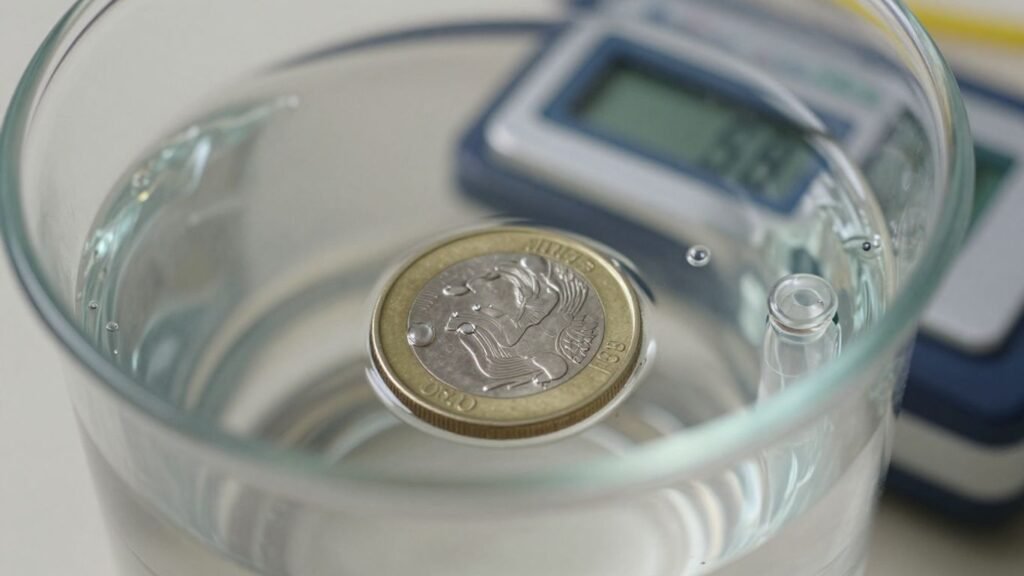
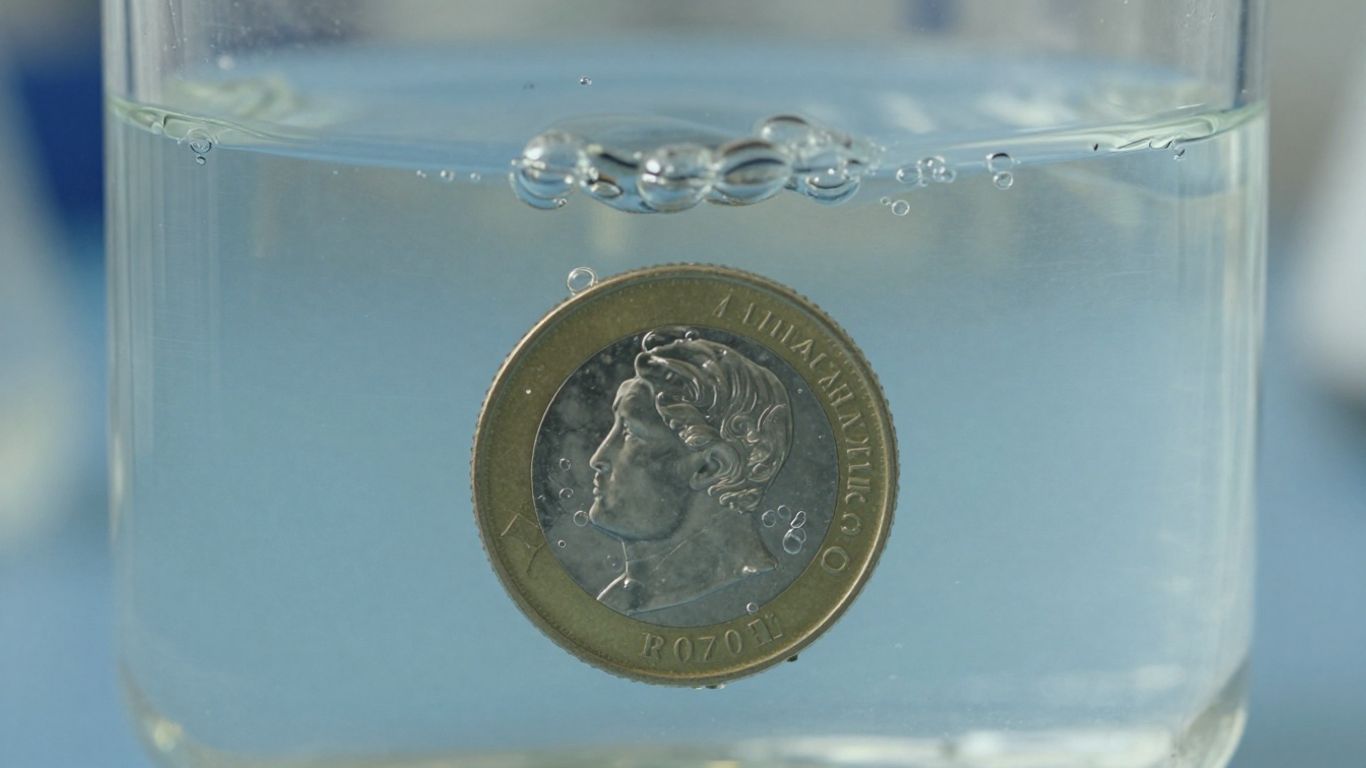
This is where the actual testing happens. You’ll need a setup that lets you weigh your coin in the air and then weigh it again while it’s submerged in water. These systems, often called hydrostatic weighing systems, are designed for this. They usually involve a scale that can be suspended, with a container of water placed underneath. You weigh the coin dry, then carefully lower it into the water (making sure it’s fully submerged but not touching the sides or bottom) and weigh it again. The difference in weight, when you do the math, tells you the coin’s density.
Here’s a simplified look at the process:
- Weigh the coin in air: Get its dry weight. This is your baseline.
- Weigh the coin submerged in water: Use a basket or a thin wire to suspend the coin in distilled water. Record this weight.
- Calculate the specific gravity: Using the formula: Specific Gravity = (Weight in Air) / (Weight in Air – Weight in Water).
Temperature Compensation Factors
Water isn’t always the same. Its density changes a bit with temperature. If the water is warmer, it’s slightly less dense, and if it’s colder, it’s a bit denser. For really precise measurements, especially with valuable items, you need to account for this. Many modern testing devices have built-in temperature sensors that automatically adjust the calculation. If you’re doing it manually, you’ll need to look up the density of water at the specific temperature you’re testing at and use that value in your calculations instead of just assuming water’s density is 1.000 g/cm³.
User-Friendly Testing Platforms
While the science behind it is solid, the actual testing doesn’t have to be complicated. There are now many platforms designed to make this process easier, even for folks who aren’t lab technicians. These can range from simple, affordable kits you can buy online to more sophisticated digital scales with integrated water baths and automatic calculations. Some even connect to computers or apps to log your results. The goal is to take the guesswork out of it, so you can get a reliable density reading without needing a full chemistry lab setup.
The beauty of specific gravity testing is its ability to reveal discrepancies without damaging the item. It’s a non-invasive check that relies on basic physical properties, making it accessible for a wide range of users looking to verify precious metals.
Ensuring Authenticity in the Market
In today’s market, with gold and other precious metals seeing steady demand, keeping fakes out is a big deal. It’s not just about protecting buyers; it’s about keeping the whole system honest. When you can’t trust what you’re buying, the market itself starts to wobble. That’s where reliable testing methods, like specific gravity, really come into play.
Detecting Counterfeit Gold Items
Fake gold items pop up more often than you might think. Sometimes they’re obvious, but other times they’re pretty convincing. Think about gold-plated coins or bars. They might look the part, but they’re not solid gold. Specific gravity testing is a straightforward way to catch these. If a piece is supposed to be pure gold but its density is off, it’s a big red flag. This simple test can save a lot of people from losing money.
- Spotting Plating: A gold-plated item will have a lower specific gravity than solid gold because the base metal underneath is less dense.
- Identifying Alloys: Even if an item is made of a gold alloy, its specific gravity will differ from pure gold, allowing experts to identify the exact metal composition.
- Catching Base Metals: Some fakes are just base metals painted gold. Their density will be wildly different, making them easy to spot with this method.
Safeguarding Against Fraud
Fraudsters are always looking for new ways to trick people. They might try to pass off fake coins or bars as genuine, especially online where you can’t inspect them closely. This is where methods like specific gravity testing become really important for anyone buying or selling precious metals. It’s a tool that helps prevent financial loss and builds trust.
Relying on a single test isn’t always enough. Combining specific gravity with other checks, like visual inspection for mint marks and details, or even a simple sound test, provides a more robust defense against deception.
Maintaining Market Integrity
When everyone knows that authenticity can be reliably checked, it makes the market a safer place. Buyers feel more confident, and sellers can prove their items are genuine. This transparency is good for everyone involved. It means that the value you’re paying for is based on real material, not a clever imitation. Specific gravity testing, while not the only method, is a solid, scientific way to contribute to this honest marketplace.
| Material | Approximate Specific Gravity |
|---|---|
| Pure Gold (24k) | 19.32 |
| Sterling Silver | 10.49 |
| Copper | 8.96 |
| Lead | 11.34 |
| Tungsten | 19.25 (very close to gold) |
Note: Tungsten is sometimes used in sophisticated fakes due to its similar density to gold. However, other properties, like hardness and magnetic susceptibility, can help differentiate it.
Wrapping Up Your Coin Authenticity Journey
So, we’ve gone over how to check if a coin is the real deal, and specific gravity testing is a big part of that. It’s not the only test, of course, but it’s a solid way to get a good idea about a coin’s density, which is pretty important. Remember, a lot of these methods, like checking weight and size, or even the sound a coin makes, all work together. When you combine these simple checks with more advanced stuff like XRF scanning, you get a really clear picture. It’s all about being thorough so you know exactly what you’ve got. Whether you’re a seasoned collector or just starting out, understanding these techniques helps you feel more confident when buying or selling.
Frequently Asked Questions
What is specific gravity and why is it important for coin testing?
Specific gravity is like a coin’s secret code related to its density. It tells us how much space it takes up compared to its weight. Real gold is super dense, so if a coin’s specific gravity is off, it might be fake or not pure gold, maybe just gold-plated.
How does specific gravity testing help detect fake coins?
Imagine comparing a heavy bowling ball to a light beach ball. Specific gravity testing does something similar. If a coin feels lighter than it should for its size, or if its specific gravity doesn’t match pure gold, it’s a big clue that it’s not the real deal. Cheaper metals or plating won’t have the same density.
Is specific gravity testing the only way to check if a coin is real?
Not at all! It’s a powerful tool, but it’s best used with other methods. Checking the coin’s weight, size, and looking closely at its details, like the design and any markings, are also super important steps. Think of it like a detective using multiple clues to solve a case.
Do I need special equipment to test a coin's specific gravity?
Yes, you do. Typically, you’ll need a special scale that can weigh the coin both in the air and when it’s underwater. This is called hydrostatic weighing. There are also user-friendly kits available that make the process easier for collectors.
Can specific gravity testing tell me if a coin is made of pure gold?
It can give you a very good idea! Pure gold has a known specific gravity. If your coin’s specific gravity is close to that number, it’s likely pure gold. If it’s lower, it might be an alloy (a mix of metals) or even a fake with less gold.
What's the difference between bullion value and numismatic value for coins?
Bullion value is simply the worth of the gold itself, based on its weight and purity. Numismatic value is about the coin’s history, rarity, and collector appeal. A rare old coin might be worth much more than just its gold content!
How does temperature affect specific gravity testing?
Water changes density slightly with temperature. To get the most accurate results, especially with precise scientific testing, you need to account for the water’s temperature. This helps ensure the measurements are spot on.
Why is it important to verify the authenticity of gold coins?
Verifying authenticity is crucial to make sure you’re getting what you pay for. It protects you from buying fakes, ensures you get a fair price whether you’re buying or selling, and helps maintain trust in the precious metals market. Nobody wants to accidentally own a counterfeit!