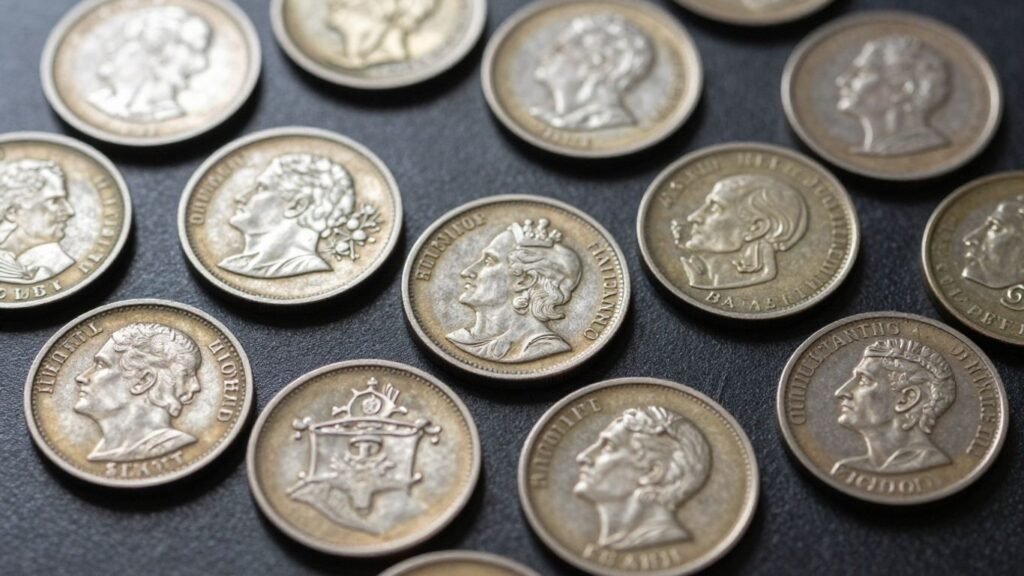
So, you’ve got some old coins lying around, maybe from a grandparent or a lucky find. You’re probably wondering what they’re actually worth. It’s not always as simple as looking at the number stamped on the coin, or even what it’s made of. There are two main ways to think about a coin’s worth: its melt value and its collector value. Figuring out the difference between these is key to knowing if you’ve got a hidden treasure or just some old metal. We’ll explore how experts in Austin figure out the real old coins value in Austin.
Key Takeaways
- Coins have two main values: melt value (based on metal) and collector value (based on rarity, condition, and demand).
- How rare a coin is, including how many were made and how many still exist, really affects its collector worth.
- A coin’s condition, judged by grading standards, is a big deal; even small issues can change its price a lot.
- While metal prices matter for melt value, collector interest, history, and looks can make a coin worth much more than its metal content.
- To get a fair price, research market trends, understand grading, and avoid common mistakes like cleaning coins, which can ruin their collector value.
Understanding Old Coins Value In Austin
So, you’ve got some old coins lying around, maybe from a grandparent or found tucked away in a drawer. You’re probably wondering, ‘What are these actually worth?’ It’s not always as simple as looking up the price of gold or silver. There are two main ways to think about a coin’s worth: its melt value and its collector value.
Melt value is pretty straightforward. It’s basically what the metal the coin is made of would be worth if you melted it down. For coins made of gold, silver, or platinum, this can be a significant amount. However, for most coins made of copper or nickel, the melt value is usually quite low, often just a few cents.
Collector value, or numismatic value, is different. This is what someone is willing to pay for the coin because of its rarity, condition, historical significance, or desirability among collectors. Often, a coin’s collector value can be many times higher than its melt value.
Several things play a role in how much a coin is worth to a collector:
- Rarity: How many of these coins were originally made, and how many still exist today? Fewer coins usually mean higher value.
- Condition: Is the coin worn out, or does it look almost new? The better the condition, the more it’s worth.
- Demand: Are a lot of people looking to collect this specific type of coin right now?
- Historical Significance: Does the coin represent an important event or era?
Think of it like this: a plain silver dollar might be worth its silver content. But a rare silver dollar from a specific year, in perfect condition, with a fascinating history? That coin could be worth thousands, even if the silver inside is worth much less. Collectors aren’t just buying metal; they’re buying a piece of history, a rare artifact, or a beautiful object. The demand from these collectors is what drives the numismatic value far beyond what the metal alone would fetch.
Key Value Factors For Your Coins
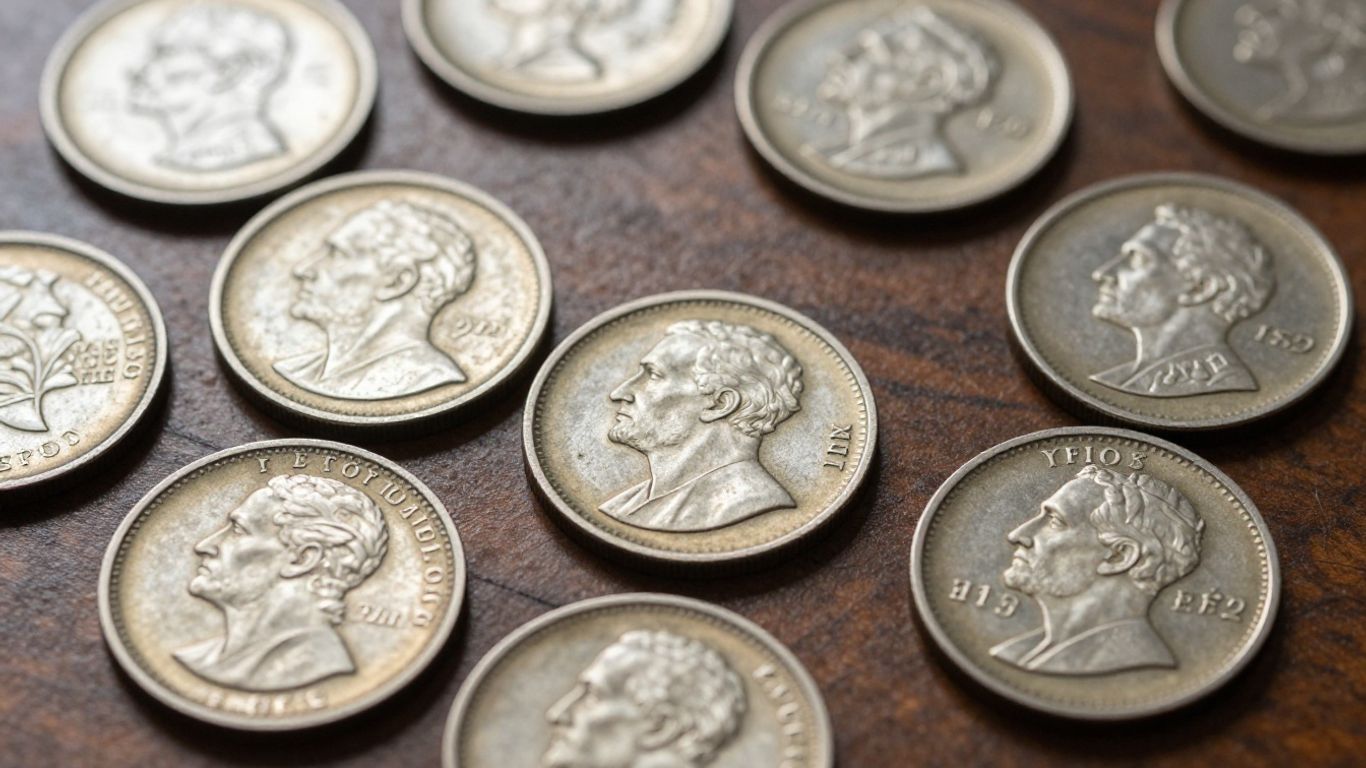
So, you’ve got some old coins lying around and you’re wondering what makes them tick, value-wise. It’s not just about whether they’re made of silver or gold, though that’s definitely a piece of the puzzle. Several things come into play when collectors and experts try to figure out what a coin is really worth. Think of it like assessing a piece of art – there’s more to it than just the canvas and paint.
Rarity and Mintage Significance
This is a big one. How many of a particular coin were actually made? That’s what mintage refers to. A coin with a low mintage number, meaning fewer were produced, is generally going to be more sought after than one that was churned out by the millions. It’s simple supply and demand, really. If there are only a few hundred of a certain coin out there, and a bunch of people want it, the price naturally goes up. Sometimes, a coin might have a high mintage, but a significant portion of them were melted down later, making the surviving ones rare.
- Low Mintage: Fewer coins produced means higher potential value.
- Survival Rate: How many of those low-mintage coins are still around today?
- Collector Demand: Even a rare coin needs people wanting to buy it.
The number of coins a mint produces, known as the mintage, is a primary driver of a coin’s scarcity. When fewer coins are made, they become harder to find, which often increases their desirability among collectors.
Condition and Grading's Impact
This is where things can get a bit technical, but it’s super important. A coin’s condition, or its grade, can dramatically change its worth. Even a coin made of precious metal will be worth a lot less if it’s heavily scratched, dented, or worn down. Professional grading services use a scale, usually from 1 to 70, to assess a coin’s state. A coin that looks pretty good to your eye might get a much lower grade from an expert, and that difference can mean a lot in terms of price. For example, a coin in "Mint State" condition (meaning it looks like it just left the mint, with no wear) will fetch a much higher price than the exact same coin with visible scratches or wear.
| Grade Category | Description |
|---|---|
| Mint State | No wear, as-mint condition |
| About Uncirculated | Very light wear, almost MS |
| Extremely Fine | Slight wear, sharp details |
| Very Fine | Moderate wear, design visible |
| Fine | Significant wear, outline clear |
| Good | Heavy wear, outline visible |
| Poor | Heavily damaged, barely identifiable |
Eye Appeal and Originality
Sometimes, a coin just looks good. It’s that simple. Beyond the technical grading, how attractive is the coin visually? Does it have a pleasing color, a sharp strike, and interesting toning? Collectors often talk about "eye appeal." A coin that has a beautiful, original surface, without being messed with, is usually more desirable. This means avoiding cleaning your coins, even if you think it will make them look better. Cleaning can often remove that natural patina and luster that collectors prize, and it can significantly lower the coin’s value. Originality and a coin’s natural beauty are often just as important as its technical grade.
Resist the urge to clean old coins. Even a gentle wipe can remove microscopic details and natural toning, which are highly prized by collectors. What might look like dirt to you could be a valuable part of the coin’s history and appeal.
How Austin Coin Experts Appraise Your Collection
Numismatic-Expert Evaluations
When you bring your coins to Austin Coins & Jewelry, you’re not just getting a quick glance. Each coin is studied by someone who spends every workday handling and researching coins, so patterns, oddities, and hidden qualities really stand out. We aren’t looking only at the metal—details such as mint mark, date, rare varieties, and overall integrity matter just as much.
Here’s how it usually goes:
- First, we separate your coins by type and era—U.S., foreign, commemorative, etc.
- We check the coin’s surface for signs of authenticity, cleaning, or damage.
- Certificates and third-party slabs are checked for any premium status or rare grades.
Consulting Market Data and Scarcity
Price isn’t pulled out of thin air. We track what similar coins are actually selling for in auctions, on dealer sites, and within trusted coin networks—recent sales tell us more about current value than old catalogues. Scarcity also plays a part; if your coin rarely hits the market, there’s a good chance it’s in higher demand now.
Here’s a simple look at what we compare:
| Factor | Source Example |
|---|---|
| Recent Auction Results | Heritage Auctions, eBay |
| Population Reports | PCGS, NGC, Greysheet |
| Market Trends | Industry bulletins, dealer networks |
Transparent Evaluation Process
It’s not some backroom mystery; we show you every factor we consider as we work through your collection. You’ll see us compare coins side by side, check databases, and explain grading choices. We write up an explicit, no-pressure offer.
- Review your coins—clear, on-the-spot assessment
- Share findings about rarity, grade, and demand
- Walk you through our offer so nothing is hidden
The goal is for you to walk out with clarity and confidence—knowing what you have, what it’s worth in today’s Austin market, and why we made our offer. No question is a bother. Bring your doubts, your curiosity, and your coins. We handle the rest.
Types Of Old Coins We Buy
When you’re looking to sell your old coins, it’s good to know what kinds of pieces we’re most interested in. We handle a pretty wide range, so chances are, if you’ve got something interesting, we’ll want to take a look.
Historic U.S. Coins
We’re always on the lookout for significant pieces of American history. This includes things like silver dollars, gold eagles, and those pre-1933 gold coins that have a story to tell. Early cents, dimes, and quarters are also on our radar, especially if they’re key-date issues or proofs. Basically, if it’s a coin that played a part in U.S. history, we’re interested in seeing it. You can find out more about historic U.S. Coins we purchase.
Vintage and Foreign Coins
It’s not just U.S. currency that catches our eye. We also buy vintage coins from other countries, as well as coins that have historical significance from around the world. If you have a collection of foreign currency or older pieces that represent a different time or place, bring them in.
Graded and Ungraded Coins
Don’t worry if your coins aren’t in fancy plastic cases. We buy both graded (or ‘slabbed’) coins, which have been certified by services like PCGS or NGC, and ungraded coins. As long as the coin has potential value based on its condition and rarity, we’ll evaluate it.
Error, Proof, and Low-Mintage Coins
These are the types of coins that often have a special appeal to collectors. We’re interested in coins that have mint errors, meaning they were struck incorrectly. Proof coins, which are specially struck for collectors, and coins with very low mintages, meaning not many were originally produced, are also highly sought after. These unique pieces can sometimes be worth much more than their face value or even their metal content.
It’s important to remember that even coins that look similar can have vastly different values. Factors like the year they were made, where they were minted, their condition, and how many were originally produced all play a big role in determining their worth to collectors.
The Coin Selling Process In Austin
If you’re thinking about selling your old coins in Austin, the process is actually pretty clear-cut. Working with local coin buyers means you skip a lot of the guesswork that comes with online auctions or marketplaces. Here’s how the selling process usually unfolds:
Book Your Private Consultation
- Call or go online to schedule a time that works for you.
- Bring your coins (and any other precious metals, if you want).
- Your privacy and security are taken seriously; appointments are usually held in private offices.
There’s no need to feel nervous—the first step is just a conversation, and you aren’t pressured to sell.
Expert Evaluation and Fair Offer
The next phase is the appraisal. Here’s what happens:
- Each coin is checked for its date, mint mark, and what shape it’s in.
- The buyer will look at collector demand and current market prices, not just melt value.
- If you’ve got third-party graded coins, bring those too—that can mean a higher offer.
After a thorough evaluation, you’ll get a written, transparent offer that clearly explains how your coins were valued.
| Step | What Happens |
|---|---|
| Physical Inspection | Examine coins for condition and authenticity |
| Market Research | Check current prices and recent sales |
| Written Offer | Receive a clear, upfront offer—no hidden fees |
Accept and Get Paid Immediately
If you like the offer, you’re paid right then—no waiting, no long forms. Usually, you walk out with cash or a certified check. The whole thing can take less than an hour.
- Instant payment (cash or check)
- No obligation if you decide not to sell
- If you do sell, any appraisal fees are usually waived
It’s a straightforward process and, in most cases, it’s finished faster than you’d expect. You can walk in with questions and leave with answers—and cash.
Why Choose Austin Coins & Jewelry
Decades of Trusted Experience
When you’re looking to get a fair price for your old coins, experience really matters. We’ve been doing this in Austin since 1989, which is a pretty long time in the coin world. Think about it – that’s over three and a half decades of buying, selling, and evaluating all sorts of coins. We’ve seen trends come and go, and we’ve handled transactions that add up to a significant amount, well over a billion dollars in gold, silver, and rare coins. This kind of history means we know the market inside and out. Our long-standing presence isn’t just about time served; it’s about building a reputation for honesty and deep knowledge.
Specializing in Rare and Collectible Coins
It’s easy to find someone who will buy your coins based on their metal weight alone. That’s the melt value, and it’s usually just a fraction of what a truly collectible coin is worth. We focus on the numismatic value – the collector’s value. This means we look at things like:
- Rarity: How many of these coins were originally made, and how many still exist today?
- Condition: Is the coin worn down, or is it in near-perfect shape?
- Historical Significance: Does the coin come from an important time period or event?
- Demand: Are collectors actively looking for this particular coin right now?
We don’t just see metal; we see history, rarity, and potential collector interest. That’s why we specialize in coins that have value beyond their silver or gold content.
Commitment to Fair Offers
We get it. Selling something you’ve held onto, maybe for years, can feel a bit nerve-wracking. You want to be sure you’re getting a good deal. Our process is designed to be completely open. When we look at your coins, we’ll explain what we’re seeing – the date, the mint mark, the condition, why it’s rare (or not), and how that all adds up to our offer. We consult current market data and compare your coins to recent sales of similar items. You’ll see how we arrive at our number, and there’s never any pressure to accept if you’re not comfortable. We want you to feel confident that you’re getting a price that reflects the true worth of your collection.
When you bring your coins to us, you’re not just selling metal. You’re selling pieces of history, and we treat them with the respect they deserve. Our goal is to make the selling process straightforward and rewarding for you.
Common Pitfalls In Coin Valuation
When you’re trying to figure out what your old coins are really worth, it’s easy to fall into a few traps. People often get stuck thinking about just one aspect, like the metal content, and completely miss the bigger picture. This can lead to selling your treasures for way less than they’re actually worth.
Overlooking Condition and Grading's Impact on Worth
This is a big one. You might have a coin made of silver, but if it’s heavily worn, scratched, or damaged, its collector value can drop significantly. Grading is how experts assess a coin’s condition, using a scale that goes from poor to perfect mint state. A coin that looks okay to you might be considered only "Good" or "Very Good" by a professional, and that difference matters a lot to buyers. It’s not just about the metal; it’s about how well the coin has survived.
The Danger of Cleaning Coins
It might seem like a good idea to make a dull coin shine, but resist the urge! Cleaning a coin, even with a soft cloth, can remove its natural patina and microscopic details. This damage is usually permanent and can drastically reduce a coin’s numismatic value, sometimes by 30% or even more. Collectors often prefer coins with their original surfaces, even if they show some age. That natural wear and toning are part of the coin’s history. Think of it like trying to restore an old painting – you wouldn’t just scrub it with soap and water, right?
Distinguishing Face Value from Real Value
It’s easy to get confused when you first start looking at coins, especially when you see a dollar amount printed right on them. That number, the face value, is what the coin is officially worth as money in the country it came from. Think of a U.S. quarter – its face value is 25 cents. Simple enough, right? But here’s where things get interesting: for many coins, especially those made with precious metals, that face value is practically meaningless when it comes to what someone would actually pay for it.
- Precious Metal Content as a Baseline: When you’re looking at a coin, especially one made of gold, silver, or platinum, the first thing to consider is what it’s actually made of. This is often called the melt value or intrinsic value. It’s basically the value of the metal itself, separate from any numismatic appeal. Think of it as the floor price for that coin.
- How Spot Prices Affect Coin Valuation: The current market price for precious metals directly impacts the melt value of coins containing them. If silver prices go up, so does the minimum value of your silver coins.
- Ignoring Demand and Market Sentiment: Sometimes, a coin’s value isn’t just about its rarity or condition; it’s also about how many people want it right now. Market sentiment plays a huge role. A coin might be rare, but if there aren’t many collectors actively seeking it out, its price might not be as high as you’d expect.
Always be cautious of deals that seem too good to be true. If someone is selling a coin that should be worth hundreds or thousands of dollars for just a fraction of that price, there’s usually a reason. It might be fake, damaged, or misrepresented in some way. It’s better to pay a bit more for a coin from a source you trust than to get a bargain that turns out to be worthless.
Understanding Coin Grading Standards
So, you’ve got some old coins and you’re wondering what they’re worth. One of the biggest things that affects a coin’s value is its condition. It’s not just about whether it’s old; it’s about how well it’s held up over the years. This is where coin grading comes in. Think of it like a report card for your coin, telling you how much wear and tear it has seen.
The 1-70 Grading Scale Explained
Professionals use a pretty detailed scale to grade coins, usually from 1 to 70. The higher the number, the better the condition. It’s not just a few categories; it’s a whole spectrum. A coin that looks pretty good to you might be a 40, while a coin that’s practically perfect could be a 67. That jump in numbers can mean a huge difference in price.
Here’s a quick look at what some of those numbers generally mean:
- MS-60 to MS-70 (Mint State): These coins have never been used for everyday spending. MS-70 is the absolute top, meaning it’s flawless. Lower numbers in this range (like MS-60 to MS-64) still mean uncirculated, but they might have tiny marks or imperfections visible under magnification.
- AU-50 to AU-58 (About Uncirculated): These coins have seen very little circulation. You might see a hint of wear on the highest points, but most of the original detail is still there.
- XF/EF-40 to XF/EF-45 (Extremely Fine): You can see some wear on this coin, but all the major design elements are still sharp and clear.
- VF-20 to VF-35 (Very Fine): There’s moderate wear visible across the coin, but the main details are still quite distinct.
- F-12 to F-15 (Fine): Significant wear is apparent, but you can still make out the coin’s outline and its main features.
- G-4 to G-6 (Good): Heavy wear has smoothed out a lot of the detail, but the coin’s overall design and date are still identifiable.
- P-1 (Poor): This is the lowest grade. The coin is barely recognizable, often damaged, and might only be identifiable by its general shape or a few worn features.
Mint State to Poor Condition
As you can see, the difference between a coin that’s considered ‘Mint State’ (meaning it never went into circulation) and one that’s ‘Good’ or ‘Poor’ can be massive. A coin that looks almost perfect, with no scratches or wear, will fetch a much higher price than one that’s been handled a lot, dropped, or put through a washing machine. Even a small jump in grade, say from XF-45 to AU-50, can significantly increase a coin’s worth.
The condition of a coin is often the most significant factor in its value. A coin that appears similar to another might be worth ten times as much simply because it has survived with fewer marks and more of its original shine. It’s not just about the metal it’s made of; it’s about how well it has been preserved.
How Grade Dramatically Affects Value
Let’s say you have two identical coins from the same year and mint. One is in beautiful, uncirculated condition (say, MS-65), and the other has been worn down from years of use (maybe VF-20). The difference in value between those two coins could be thousands of dollars. Collectors are often willing to pay a premium for coins that are in top-notch condition because they are harder to find. So, when you’re looking at your old coins, pay close attention to how worn they look, if they have any scratches, and if they still have that original mint luster. It all adds up!
Researching Your Old Coins Value
So, you’ve got some old coins and you’re curious about what they might be worth. It’s a common question, and thankfully, there are several ways to get a handle on their value without needing to be a seasoned numismatist. It’s not just about the metal they’re made of, though that’s a piece of the puzzle. The real story often lies in their history, condition, and how many other collectors are looking for them.
Utilizing Online Marketplaces
When you’re trying to get a feel for what your coins are worth, the internet is your friend. Websites like eBay can be surprisingly helpful. Don’t just look at what people are asking for their coins; check what they actually sold for. This is a big difference! You want to find coins that are similar to yours in terms of date, mint mark (that little letter indicating where it was made), and condition. Seeing completed sales gives you a much more realistic idea of the current market.
Consulting Auction Records
For rarer or higher-grade coins, auction records are gold. Major auction houses that deal with coins often publish their past sales results. These records can provide a benchmark for what serious collectors are willing to pay for specific items. It’s a good way to gauge the value of something a bit more special than your average pocket change. You can often find these records on the auction houses’ own websites.
Checking Reputable Dealer Websites
Many coin dealers have websites where they list their inventory. You can browse these sites to see what similar coins are priced at. Just remember that dealers need to make a profit, so their listed prices might be a bit higher than what you could get if you were selling directly to another collector. Still, it’s a useful way to get a general idea of pricing and to see what’s available on the market. You can use this information to get a sense of your coin’s potential value, and it’s a good starting point before you even think about selling. For a broad overview of coin types and their histories, a good coin index can be very informative collectible coin facts.
Figuring out coin value involves looking at more than just the metal. Rarity, condition, and how many people want a coin all play a big part. It’s a mix of objective facts and market demand.
Here’s a quick rundown of what to consider:
- Mintage: How many of this coin were made originally?
- Condition (Grading): How worn or pristine is the coin?
- Rarity: How many of these coins still exist today?
- Demand: Are collectors actively looking for this type of coin?
- Historical Significance: Does the coin have an interesting story or connection to an event?
The Importance of Mintage and Rarity
When you’re trying to figure out what your old coins are worth, two things really stand out: how many were made (that’s mintage) and how many are still around today (that’s rarity). It’s not just about the metal content; these factors can seriously change a coin’s value.
What Mintage Means for Value
Mintage refers to the total number of coins produced by a mint in a specific year for a particular design. A coin with a low mintage number, say only a few thousand were ever struck, is naturally going to be rarer than one where millions were churned out. Think of it like limited edition prints versus mass-produced posters – fewer copies usually mean higher demand and price for collectors.
How Scarcity Drives Demand
Rarity isn’t just about the initial mintage number, though. It’s also about survival. Over the years, many coins get lost, damaged, or melted down, especially those made of silver or gold. So, a coin that had a high mintage might still be quite rare today if most of them are no longer in existence. The fewer coins that survive in good condition, the more collectors will compete for the ones that are available. This competition is what really drives up the collector value, often far beyond the coin’s face value or even its melt value.
Predicting Future Coin Value
Figuring out a coin’s future worth is tricky business, but looking at mintage and rarity gives you a good starting point. You have to consider:
- Supply: How many of these coins are out there right now, and how many are likely to survive in the coming decades?
- Demand: How popular is this particular coin or series among collectors? Are people actively seeking them out?
- Condition: Even rare coins can lose value if they’re heavily worn or damaged. Coins that have held up well over time are always more desirable.
The coin market is a bit like a long-term investment. What seems common today might become scarce later if fewer are preserved. It’s a game of supply and demand playing out over many, many years. Understanding these basics helps you see beyond just the metal.
So, What's Your Coin Worth?
Figuring out the value of old coins isn’t just about the metal they’re made of. While melt value is a starting point, especially for gold and silver pieces, it’s often just a fraction of the real worth. Things like how many were made, their condition, and even their history can make a coin much more valuable to collectors. Don’t rush into selling. Take some time to look into what makes your coin special, compare offers, and understand its true numismatic value. Getting a fair price means knowing what you have before you make a deal.
Frequently Asked Questions
What's the difference between melt value and collector value?
Think of melt value as the price of the metal if you melted the coin down. Collector value, also called numismatic value, is what someone will pay for the coin because it’s rare, has a cool design, or is historically important. Usually, collector value is much higher than melt value for special coins.
How does the condition of a coin affect its value?
A coin’s condition is super important! Coins that look brand new, with no scratches or wear, are worth way more than coins that are worn out or damaged. Experts have a grading system to rate how good a coin’s condition is, and this greatly impacts its price.
Does the rarity of a coin really matter?
Absolutely! If only a few of a certain coin were ever made, or if most of them have been lost or melted down, it becomes very rare. Rare coins are usually much more valuable because many collectors want them, and there aren’t many available.
Can the price of gold and silver change how much my coin is worth?
Yes, if your coin is made of gold or silver, its value will go up and down with the market price of those metals. When gold and silver get more expensive, coins made from them often become more valuable too, especially coins that are mainly valued for their metal content.
Why is cleaning a coin a bad idea?
You might think cleaning makes a coin look better, but it can actually hurt its value. Collectors often prefer coins with their original, natural look, including any toning or patina that developed over time. Cleaning can remove these historical features and significantly lower the coin’s collector value.
What is 'mintage' and why is it important?
Mintage refers to the total number of coins a mint (where coins are made) produced for a specific coin type and year. A lower mintage number generally means fewer coins were made, which can make that coin rarer and more desirable to collectors.
How can I find out the real value of my coin?
To get a good idea of your coin’s worth, you should do some research. Look at what similar coins have sold for recently at auctions or on reliable coin websites. Also, understanding coin grading and considering a professional appraisal from an expert can give you a clearer picture.
Is the face value of a coin ever important for its worth?
For most collectible coins, the face value (like the 50 cents on a Canadian silver dollar) is pretty much ignored. The coin’s worth comes from its metal content and its collector appeal. The face value is just a leftover from when it was used as regular money.