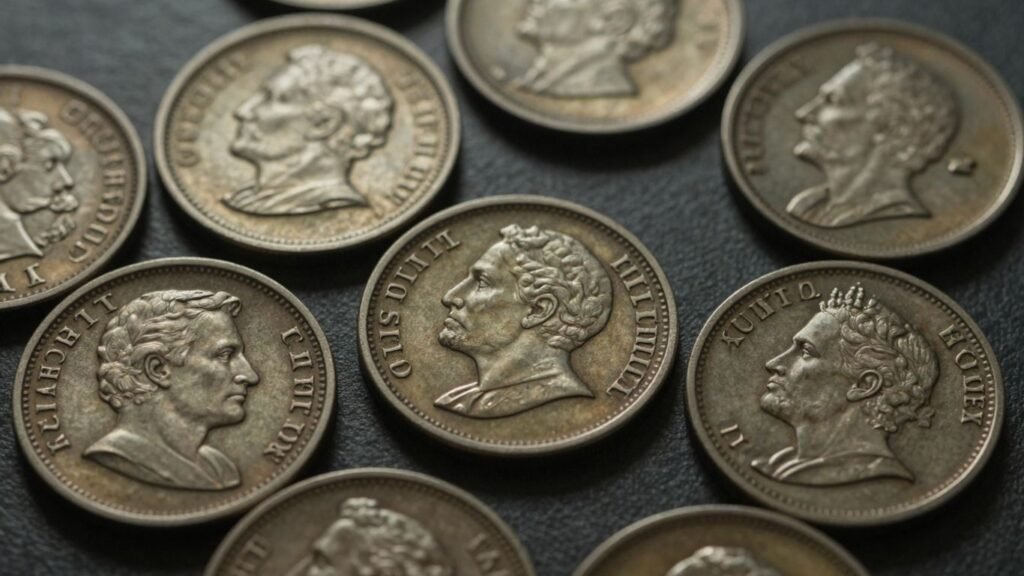
Thinking about selling some of your old coins in Austin? Maybe you’ve got some Capped Bust Half Dollars lying around, or perhaps some other older U.S. currency. It can be tough to figure out where to get a fair price for these items. This guide is here to help you find some good coin dealers in the Austin area who know their stuff and can give you a fair deal when you want to sell capped bust coins Austin.
Key Takeaways
- When you want to sell capped bust coins Austin, look for dealers who specialize in early American coins.
- Some dealers buy a wide range of coins, from Half Cents to Liberty Seated Halves, so check their inventory.
- Online forums and coin collecting sites can sometimes point you toward reputable dealers.
- Consider the condition and rarity of your coins; this will affect their value.
- It’s often best to get an idea of your coin’s value before approaching a dealer.
1. Capped Bust Half Dollars
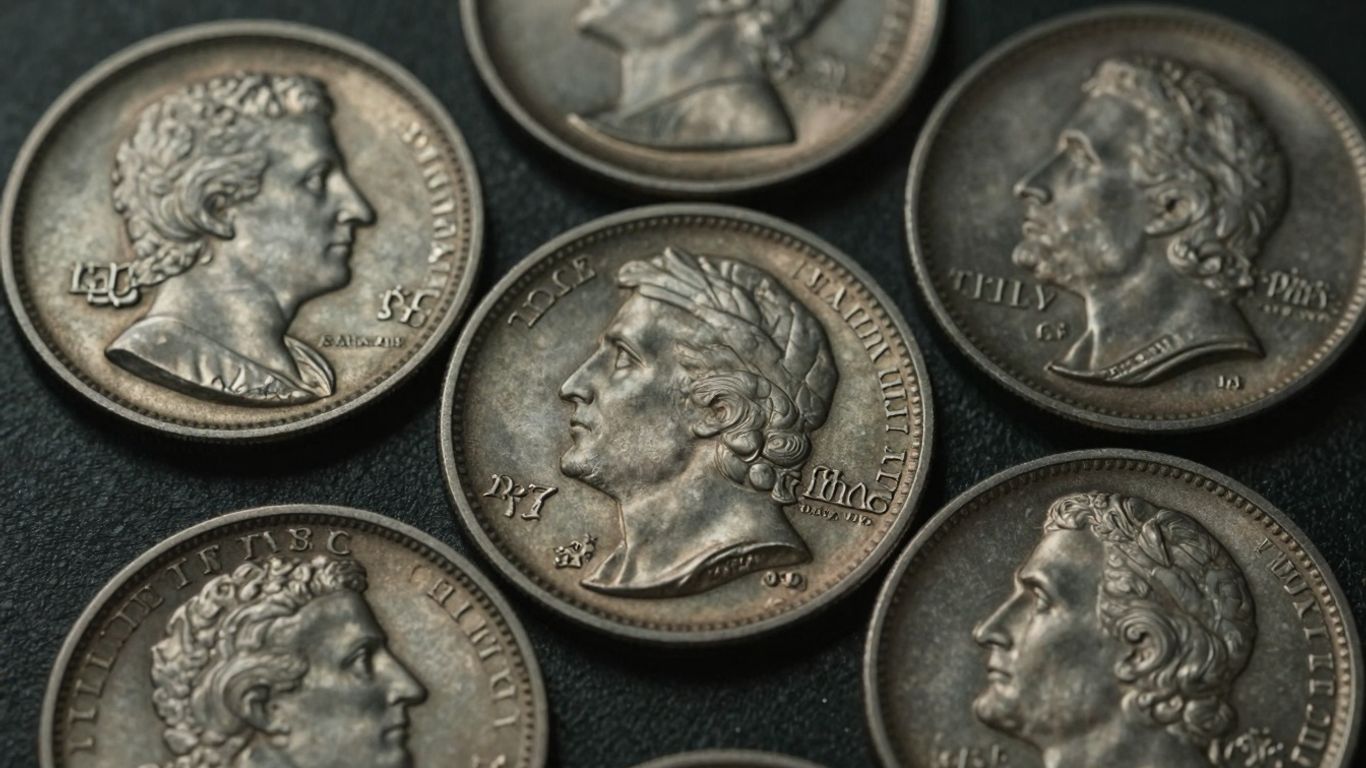
The Capped Bust half dollar series, minted from 1807 to 1836, represents a significant era in early American coinage. These coins are distinguished by the profile of Lady Liberty wearing a Phrygian cap, often referred to as a liberty cap. The series includes a variety of die pairings and varieties, cataloged by numismatists like Eliasberg and Overton, making them a popular choice for collectors who enjoy variety and historical depth.
Collecting Capped Bust half dollars can be a rewarding pursuit, offering a tangible connection to the nation’s formative years. The design, featuring Liberty with flowing hair and a cap, is iconic. The reverse typically displays a heraldic eagle.
When looking to sell your Capped Bust half dollars in Austin, it’s important to know what makes these coins desirable. Factors like condition, rarity of the specific die variety, and overall eye appeal play a big role in their value. Some key dates and varieties are particularly sought after by collectors.
Here are a few things to consider when evaluating your Capped Bust half dollars:
- Date and Mint Mark: While most were minted in Philadelphia, some later dates had mint marks. The date itself is the primary identifier.
- Condition (Grade): Coins are graded from Poor (P) to Mint State (MS). Higher grades generally command higher prices, but even lower-grade examples can be valuable if they are rare.
- Overton Varieties: Numismatist A.W. Overton cataloged numerous die varieties within the Capped Bust series. Identifying these specific varieties (e.g., O-101, O-102) is crucial for accurate valuation.
- Surface Preservation: Look for coins with original surfaces, free from excessive cleaning, scratches, or damage. Luster and toning can also add to a coin’s appeal.
The Capped Bust half dollar series, though relatively short-lived, showcases a fascinating evolution in minting techniques and design. Collectors often focus on specific dates, mint marks, or Overton varieties, seeking out pieces that represent key points in the series’ history or possess exceptional aesthetic qualities. The transition from the early issues to the later ones, including those with different reverses, adds layers of complexity and interest for dedicated numismatists.
If you’re looking to sell, Austin has several reputable coin dealers who understand the nuances of these early American coins. Dealers who specialize in U.S. type coins or early American copper and silver will be your best bet. They can help you understand the market value of your Capped Bust half dollars, whether you have a common date in circulated condition or a rare variety in high grade. You might find that a dealer like LCR Coin has a good understanding of these historical pieces.
2. Liberty Seated Halves
Liberty Seated half dollars are a really interesting part of U.S. coinage history. These coins were made from 1839 all the way up to 1891, and they feature Lady Liberty with her hair flowing, seated on a throne. They come in a few different varieties, like those with and without a motto, and some have arrows at the date or rays around the eagle on the reverse.
Finding a good dealer in Austin who knows these coins is key to getting a fair price. They can spot the subtle differences that affect value, like die varieties, mint marks, and the overall condition of the coin.
Here’s a quick look at some things dealers consider:
- Date and Mint Mark: Some dates and mint marks are much rarer than others. For example, coins from San Francisco (S) or New Orleans (O) can be quite valuable, especially in higher grades.
- Condition (Grade): This is a big one. Coins in mint state (uncirculated) are worth significantly more than those that have seen a lot of use. Dealers look at things like wear, scratches, and how sharp the details are.
- Varieties: Like the 1853 Arrows and Rays issue, or specific die pairings (like WB-2 or WB-4), these can add a premium.
- Surface Quality and Toning: A coin with attractive, original toning can sometimes be more desirable than a plain, white uncirculated coin.
When you’re looking to sell, remember that the market for these coins can be quite strong, especially for well-preserved examples. A knowledgeable dealer will appreciate the history and rarity of your Liberty Seated halves and offer a price that reflects their true numismatic worth. Don’t be afraid to ask questions about how they arrived at their valuation.
3. Draped Bust Coins
The Draped Bust coinage series, spanning from 1795 to 1807, represents a significant era in early American numismatics. These coins, featuring Lady Liberty with flowing hair, are highly sought after by collectors for their historical importance and aesthetic appeal. Finding a well-preserved Draped Bust coin can be a real treasure hunt.
When you’re looking to sell your Draped Bust coins in Austin, it’s important to know what makes them special. The series includes denominations like the half dollar, quarter, dime, and half dime. Each denomination has its own unique characteristics and varieties that collectors look for. For instance, the half dollars from this period are particularly popular, with certain dates and mint marks commanding higher prices.
Here are some key denominations within the Draped Bust series:
- Half Dollars (1795-1807): These are perhaps the most recognizable, with designs by Robert Scot. Early issues can be quite rare.
- Quarter Dollars (1796-1807): The first U.S. quarters were part of this series. They are generally scarcer than the half dollars.
- Dimes (1796-1807): Draped Bust dimes are also quite collectible, especially in higher grades.
- Half Dimes (1796-1805): These smaller silver coins complete the Draped Bust set.
When evaluating your Draped Bust coins, dealers will look at several factors:
- Date and Mint Mark: Certain dates are rarer than others. For example, the 1804 Draped Bust half dollar is a key date.
- Condition (Grade): As with any collectible coin, the better the condition, the higher the value. A coin graded AU 53, for instance, would be in very good shape [9db1].
- Rarity and Varieties: Specific die varieties or errors can significantly increase a coin’s desirability.
- Overall Eye Appeal: This includes the coin’s color, strike, and surface preservation.
Selling early American silver like Draped Bust coins requires a dealer who understands their historical context and market demand. It’s not just about the silver content; it’s about the history they represent. A good dealer will appreciate the nuances of these early issues.
If you have Draped Bust coins you’re considering selling, Austin has several reputable coin dealers who specialize in early American coinage. They can provide accurate appraisals and fair offers. Remember to do a little research on the dealers beforehand to ensure you’re working with someone knowledgeable and trustworthy. You might want to check out dealers who are members of organizations like the American Numismatic Association (ANA).
4. Half Dimes
Half dimes, with their smaller size and often intricate designs, represent a fascinating segment of early American coinage. These little silver coins were produced from 1792 all the way up to 1873, seeing several design changes along the way. The Capped Bust design, which ran from 1829 to 1837, is particularly sought after by collectors. These coins often feature a portrait of Lady Liberty with her hair tucked under a cap, and the reverse typically shows a heraldic eagle.
When you’re looking to sell your half dimes in Austin, it’s good to know what makes certain ones more desirable. Factors like the specific design (Capped Bust, Seated Liberty, etc.), the date, the mint mark, and the coin’s condition play a big role in its value. For instance, a rare date in a high grade will naturally fetch more than a common date in worn condition.
Here are some things to consider when evaluating your half dimes:
- Design Series: Capped Bust, Liberty Seated, and even earlier types have different collector bases.
- Rarity: Some dates and mint marks were produced in much smaller numbers than others.
- Condition (Grade): A coin that looks almost new will be worth more than one that’s heavily worn.
- Errors and Varieties: Sometimes, mistakes during the minting process can create valuable errors or unique die varieties.
The 1836 Capped Bust half dime, specifically the LM-7 variety, is noted for its rarity in mint state grades. Dealers who specialize in early American coins will be your best bet for getting a fair price for these smaller silver pieces. They understand the nuances of these older denominations and can properly assess their market value.
5. Half Cents
When you’re looking to sell your Half Cents in Austin, remember these little coins pack a historical punch. They were the smallest denomination of U.S. currency for a good chunk of time, first minted in 1793. The designs changed over the years, with the Liberty Cap, Draped Bust, and Classic Head types being some of the more common ones you’ll encounter. Finding a dealer who appreciates the nuances of these early pieces is key to getting a fair price.
Most collectors focus on specific series or dates, so condition and rarity play a big role in value. A Half Cent in mint state condition will obviously fetch a lot more than one that’s been heavily worn. Some dates are just plain scarce, making them more desirable. For instance, the 1840 issue is a one-year type, and while not super rare, nice examples are sought after.
Here’s a quick look at some key Half Cent series:
- Liberty Cap Half Cent (1793-1797): These are among the earliest U.S. coins. The design features a profile of Liberty wearing a cap.
- Draped Bust Half Cent (1800-1809): This series shows Liberty with flowing hair.
- Classic Head Half Cent (1809-1836): Liberty is depicted with a more severe hairstyle and a band around her head.
Dealing with older coins like Half Cents requires a bit of specialized knowledge. A good coin dealer will know the key dates, mint marks, and varieties that collectors are actively searching for. They can also properly assess the condition, which is super important for these older, often scarce, coins.
When you’re ready to sell, look for dealers who specialize in early American copper or U.S. type coins. They’ll have a better understanding of the market for your Half Cents. You might find that places like LCR Coin have a good reputation for handling these types of early U.S. coinage.
6. Large Cents
Large Cents are some of the earliest coins produced by the United States Mint, circulating from 1793 to 1857. These hefty copper coins are a favorite among collectors for their historical significance and the wide variety of designs and die varieties available. Finding a reputable dealer in Austin who understands the nuances of these early American coins is key to getting a fair price.
When you’re looking to sell your Large Cents, consider these points:
- Condition is King: The wear and tear on your coin significantly impacts its value. Coins that are heavily circulated will fetch less than those in uncirculated or near-uncirculated condition.
- Rarity and Varieties: Certain dates and mint marks are much rarer than others. Additionally, specific die varieties, like those with repunched dates or unusual mint marks, can command a premium.
- Grading: Professional grading by services like PCGS or NGC can authenticate your coin and provide an objective assessment of its condition, often increasing its marketability and value.
Here’s a quick look at some common Large Cent series and what to expect:
| Series Name | Dates | Key Features |
|---|---|---|
| Flowing Hair | 1793-1796 | Liberty with flowing hair, large or small date |
| Draped Bust | 1796-1807 | Liberty with hair in a bun, various reverses |
| Classic Head | 1808-1814 | Liberty with hair tied back, laurel wreath |
| Matron Head | 1816-1839 | Older Liberty, often with a braid |
| Braided Hair | 1839-1857 | Liberty with braided hair, more modern design |
Dealers specializing in U.S. type coins or early American copper will be your best bet. They can properly assess the condition, rarity, and market demand for your specific Large Cents. If you’re in the Austin area and need a confidential appraisal, Austin Coin Buyers can help you get a top cash offer for your collection.
Early copper coins like Large Cents can be tricky. Their value isn’t just about the date; it’s about the specific die used to strike the coin, the condition it’s in, and how many others like it still exist. A good dealer will know all this.
Remember, the market for Large Cents can fluctuate, so getting multiple opinions from trusted dealers is always a smart move before making a sale.
7. Flying Eagle Pennies
The Flying Eagle cent, minted from 1856 to 1858, was a significant shift in American coinage. It was the first small cent, replacing the much larger copper cents that had been in circulation. These coins are quite distinctive with their detailed eagle design on the obverse and the wreath on the reverse.
Collecting Flying Eagle pennies can be a rewarding experience, but it’s important to know what to look for. The series is relatively short, making it more approachable for collectors. However, condition plays a big role in value, especially for these early small cents.
Here are a few key points to consider when looking at Flying Eagle pennies:
- Mintages: The 1856 ‘pattern’ cent had a very limited mintage, making it the rarest and most sought-after. The regular issues of 1857 and 1858 had much higher mintages, but many were melted down or lost to circulation.
- Condition: Look for coins with sharp details, especially on the eagle’s feathers and the lettering. Wear on the high points can significantly reduce a coin’s value.
- Varieties: While not as complex as some later series, there are minor die varieties that can add interest for advanced collectors.
The transition to the Flying Eagle cent was driven by a desire for a more convenient and aesthetically pleasing coin. The public’s reaction was generally positive, though the short lifespan of the design meant it was quickly replaced by the Indian Head cent.
When you’re ready to sell your Flying Eagle pennies in Austin, dealers will be looking for coins in the best possible condition. High-grade examples, particularly the 1856, can command significant prices. Even circulated examples have value, but the difference between a Fine and an Uncirculated coin can be substantial.
8. Indian Pennies
Indian Head pennies, also known as Indian Head cents, are a really popular series of U.S. coins. They were made from 1859 all the way up to 1909. The design features a Native American chief wearing a headdress, which is pretty iconic. These coins are a favorite among collectors because they represent a significant period in American history and come in a wide range of conditions and mintages.
When you’re looking to sell your Indian pennies in Austin, it’s good to know a few things about them. The value can change a lot based on the year, the mint mark (or lack thereof), and how worn the coin is. Some years are much rarer than others. For example, the 1877 Indian penny is a key date and can be quite valuable, especially in good condition.
Here are some things that affect the value of your Indian pennies:
- Year and Mint Mark: Coins from certain years, like 1864 (especially the "small date" variety), 1873 (with "Arrows" and "No Arrows" variations), and the aforementioned 1877, are generally more sought after.
- Condition (Grade): A coin that looks like it just came from the mint (uncirculated) will be worth a lot more than one that’s been used in everyday transactions for years.
- Rarity: Some mints produced fewer coins in certain years, making them harder to find.
- Errors: Coins with minting errors can sometimes be worth more to specialized collectors.
Selling these coins often involves understanding their specific details. A dealer will look at the wear on Lady Liberty’s headdress and the details on the reverse side, like the wreath. Even small differences in strike or surface preservation can make a big difference in what a coin is worth.
If you have a collection of Indian pennies, it’s a good idea to get them appraised by a few different coin dealers in Austin. They can help you sort through them and give you a fair price. Remember, condition is king with these coins, so be sure to handle them carefully.
9. Two-Cent Pieces
The Two-Cent piece is a pretty interesting coin, mostly because it was the first U.S. coin to ever have the motto "In God We Trust" on it. It was only made for a few years, from 1864 to 1873, so they aren’t super common, but they aren’t incredibly rare either. Most of them were made in Philadelphia.
These coins are often overlooked by collectors, making them a potentially good buy. They come in two main varieties: the Shield Two-Cent piece and the Indian Head Two-Cent piece. The Shield version is the one with "In God We Trust" on the reverse. The Indian Head version, which came later, is a bit more scarce.
When you’re looking to sell your Two-Cent pieces in Austin, you’ll want to find a dealer who knows their stuff. Some dealers might not give these coins the attention they deserve, so it’s good to do a little homework. You’re looking for someone who understands the different dates, mint marks (though most are Philadelphia), and the condition of your coin. A good dealer will be able to tell you if your coin is a common date or something a bit more special.
Here’s a quick rundown of what to look for:
- Dates: 1864, 1865, 1866, 1867, 1869, 1870, 1871, 1872, 1873. Note that 1864 has two types (large and small date), and 1867 has two types (rays and no rays on the reverse).
- Condition: Like any coin, the better the condition, the more it’s worth. Look for sharp details, minimal wear, and no damage like scratches or bent rims.
- Varieties: The 1864 Large Date and 1867 No Rays are generally more sought after than their counterparts.
Selling coins can feel a bit like a treasure hunt. You’ve got these little pieces of history in your hand, and you want to make sure they go to someone who appreciates them and offers a fair price. Finding the right coin dealer is key to making that happen smoothly.
If you’re in the Austin area and need to find a place to sell your Two-Cent pieces, checking out local coin shops is your best bet. Places like The Village Coin Shop are known for handling a variety of U.S. coinage and can give you a solid appraisal. They’ll be able to assess the condition and rarity of your Two-Cent pieces and offer you a price based on the current market.
10. Three-Cent Pieces
When you’re looking to sell your three-cent pieces in Austin, it’s good to know what makes these coins tick. These little guys come in two main flavors: the Nickel three-cent piece and the Silver three-cent piece. The nickel version, introduced in 1865, is probably the one most people think of. It’s made of copper-nickel and features a shield on the obverse and a Roman numeral ‘III’ on the reverse. These were made to help ease the shortage of smaller coins after the Civil War. The silver version, on the other hand, was minted from 1851 to 1873 and is a much smaller, thinner coin made of 75% silver. It has a design with a star on the obverse and a laurel wreath on the reverse.
Here’s a quick rundown of what dealers look for:
- Date and Mint Mark: Just like with other coins, the year and where it was made (Philadelphia or San Francisco) are super important for value.
- Condition (Grade): Is it worn smooth, or is it sharp and clear? Higher grades mean more money.
- Rarity: Some dates and mint marks are just harder to find than others.
- Varieties: Sometimes there are small differences in the dies used to strike the coins, which can make certain ones more collectible.
It’s not super common to find these in top-notch condition, especially the silver ones, because they were meant for circulation and were pretty small. Most of the ones you’ll find will be in circulated grades, maybe from Very Fine (VF) to About Uncirculated (AU). Finding a Mint State (MS) example, particularly of the silver variety, is a real treat and will fetch a much higher price.
Dealers in Austin who handle early American coinage or general U.S. type coins are your best bet for three-cent pieces. They’ll know how to assess the condition and rarity, whether it’s a common nickel three-cent piece or a scarcer silver one. Don’t be afraid to shop around a bit to get a few opinions on your coin’s worth.
Wrapping Up Your Capped Bust Coin Sale
So, you’ve got these Capped Bust coins and you’re looking to sell them here in Austin. It can feel a bit overwhelming trying to figure out the best place to go. We’ve talked about a few options, from local coin shops that know their stuff to maybe even online avenues if you’re feeling adventurous. Remember, doing a little homework on the dealers you’re considering is always a good idea. Getting a fair price is important, but so is dealing with someone you feel good about. Hopefully, this guide has made that process a little clearer for you. Good luck with your sale!
Frequently Asked Questions
What kinds of old U.S. coins are valuable?
Many old U.S. coins can be quite valuable, especially if they are rare, in good condition, or have historical significance. Coins like Capped Bust halves, Liberty Seated coins, Draped Bust coins, and early U.S. pennies and half cents are often sought after by collectors. The condition and rarity play a big role in how much a coin is worth.
Where can I sell my old coins in Austin?
In Austin, you can sell your old coins at local coin dealers. These shops often specialize in buying and selling coins and can give you a fair price. It’s a good idea to visit a few different dealers to compare offers before you decide to sell.
How do coin dealers decide how much to pay for my coins?
Coin dealers look at several things to figure out a coin’s value. They consider its rarity, its condition (like how worn it is or if it has any damage), its historical importance, and what collectors are currently willing to pay for it. They also need to make a profit, so they usually offer less than the coin’s full retail value.
Should I get my coins appraised before selling?
Getting an appraisal can be helpful, especially for older or rarer coins. An appraisal can give you a better idea of your coin’s worth. However, remember that an appraisal is just an estimate, and a dealer’s offer might be different based on their own expertise and market knowledge.
What's the difference between selling to a dealer and selling online?
Selling to a local dealer is usually quicker and simpler. They can often buy your coins on the spot. Selling online, like on eBay, might reach more buyers and potentially get you a higher price, but it takes more effort to list, ship, and deal with potential issues. Dealers usually offer less but provide immediate payment and convenience.
Are coins with special marks or damage valuable?
Sometimes, special marks like counterstamps (designs added after the coin was made) can make certain coins more interesting to specific collectors, but they can also decrease the value for general collectors. Damage, like scratches or bends, usually lowers a coin’s value significantly unless the coin is extremely rare.
What are 'slabbed' coins?
‘Slabbed’ coins are coins that have been professionally graded and sealed in a protective plastic case, often called a ‘slab,’ by a reputable grading service. This process confirms the coin’s authenticity and grade, which can increase its value and make it easier to sell.
What should I do if I have a lot of old coins to sell?
If you have many old coins, it’s best to organize them first. You might want to group them by type or date. Visiting a reputable coin dealer or a coin show in Austin is a good way to get multiple opinions and offers for your collection. Some dealers might even come to you if you have a very large or valuable collection.