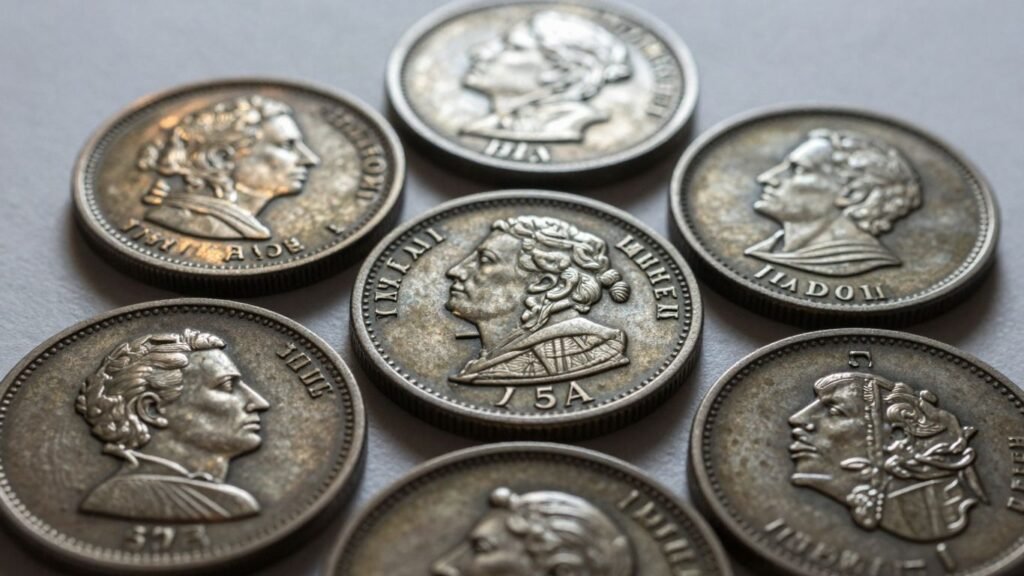
So, you’re looking to get into collecting coins, or maybe you already dabble and want to find those really special pieces? This whole world of coins can seem a bit overwhelming at first, especially when you hear about ‘key dates.’ Think of them as the rare gems in a big box of shiny things. This guide is here to help you figure out what makes a coin a ‘key date’ and how to spot them. We’ll go over some popular coin types and what collectors look for. It’s not just about finding old coins; it’s about understanding their story and why some are worth so much more than others. Let’s get started on this key date coins guide.
Key Takeaways
- A key date coin is typically the one with the lowest mintage in its series or the one that’s just plain hardest to find. It’s often the piece that completes a set.
- Mintage numbers are a good starting point, but actual rarity depends on how many coins survived over time, how many people want them, and historical events that might have removed them from circulation.
- Condition matters a lot. A coin that looks almost new, even if it wasn’t super rare to begin with, can be much more valuable than one that’s seen a lot of use.
- Don’t just focus on mintage figures alone. Look for design quirks, historical importance, and how the coin has been treated over the years. These all add to its story and potential value.
- When buying, stick to coins that have been checked by reputable grading services. Also, think about buying when the market is a bit slow, and try to spread your collection out across different types of coins, not just the super-famous ones.
Understanding Key Date Coins
So, what exactly makes a coin a "key date"? It’s not just about how many were made, though that’s a big part of it. Think of it like this: in any coin series, there’s usually one or two specific year-and-mintmark combinations that are just way harder to find than the others. These are your key dates. They’re the ones that collectors often need to complete a set, and because everyone wants them, they become quite sought after.
What Defines a Key Date Coin
At its core, a key date coin is typically the issue with the lowest mintage within its series, or it has simply become the rarest one out there over time. For example, the 1909-S VDB Lincoln cent is a classic key date because of its low production numbers and the fact that many were melted down. But sometimes, a coin with a higher mintage can actually be rarer today. This happens for all sorts of reasons, like coins being lost, melted by the government, or just not surviving in good condition over the decades. It’s a bit more complicated than just looking at the initial print run.
Mintage Versus Actual Rarity
This is where things get interesting. You might see a coin with a reported mintage of, say, 5 million, and another with only 1 million. Naturally, you’d think the 1 million one is rarer, right? Not always. Sometimes, those 5 million coins were used heavily, lost, or destroyed, leaving fewer survivors than the 1 million coins that might have been saved by collectors early on. It’s the survival rate that really matters in the long run. This is why understanding the history behind a coin series is so important for collectors looking to build a meaningful portfolio.
Here’s a quick look at how mintage and survival can differ:
| Year-Mintmark | Reported Mintage | Estimated Survivors | Notes |
|---|---|---|---|
| 1909-S VDB Lincoln Cent | 484,000 | Low | High demand, many melted |
| 1931-S Lincoln Cent | 424,000 | Moderate | Low mintage, but more survived than expected |
| 1916-D Mercury Dime | 264,000 | Low | Extremely sought after, low survival rate |
The Premium Value of Key Dates
Because these coins are so hard to find, they naturally command higher prices. Collectors are willing to pay a significant premium for these elusive pieces, especially if they’re in good condition. These aren’t just coins; they’re often the linchpin that holds a whole collection together. Finding one can be a major accomplishment, and owning it means you’ve got a piece of history that many others are still searching for. It’s this scarcity and demand that drives their value well beyond their face amount.
The true rarity of a coin isn’t just about how many were initially produced. Factors like historical events, government melt programs, and how well coins were preserved over time all play a huge role in determining how many actually exist today. This is why a coin with a higher mintage might sometimes be harder to find in good condition than one with a lower mintage.
Identifying Key Date Coins
So, you’ve got the bug for coin collecting, and you’re starting to look beyond the common change you find in your pocket. That’s great! But how do you actually spot those coins that are worth more than just their metal content? It all comes down to understanding what makes a coin a ‘key date’.
What Defines a Key Date Coin
Basically, a key date coin is the one coin in a specific series that’s the hardest to find. Think of it like the final, really tricky puzzle piece you need to finish a picture. It’s usually the coin with the lowest number made (that’s the mintage) for that year and mint mark, or it’s just become incredibly scarce over time for other reasons. For example, the 1909-S VDB Lincoln cent is a classic key date because it had a low mintage and a design feature that was quickly removed, making it tough to get.
Mintage Versus Actual Rarity
Now, here’s where it gets a little tricky. Just because a coin has a low mintage number doesn’t automatically make it a key date. Sometimes, coins with higher mintages can be rarer today. Why? Well, think about it: maybe a lot of those low-mintage coins were melted down later, or perhaps they just didn’t survive the years in good condition. It’s a bit like how some books printed in huge numbers are now hard to find in good shape because they were read to pieces.
- Survival Rate: How many of those coins are still around today?
- Collector Demand: How many people actually want this specific coin for their collection?
- Historical Events: Were coins melted, lost, or otherwise removed from circulation?
The real rarity of a coin isn’t just about how many were stamped at the mint. It’s a mix of how many are left, how many people want them, and what happened to them over the years. This is what gives key dates their special status.
The Premium Value of Key Dates
Because these coins are so hard to find and so many collectors want them, they command higher prices. We’re not just talking a few extra bucks; these coins can be worth hundreds or even thousands of times their original face value. They are the linchpins that complete sets, and collectors are willing to pay a premium to get their hands on them. It’s this combination of scarcity and demand that really drives up their value, making them stand out from more common coins in the same series.
Lincoln Cent Key Dates and Values
The Lincoln cent, first minted in 1909, is probably the most collected coin series in the United States. Seriously, almost everyone has a jar of pennies somewhere, right? This popularity means that certain dates and mint marks, known as key dates, are really hard to find and can be worth a good chunk of change. Knowing these is super important if you’re trying to build a complete set or just want to spot a potential treasure.
The Most Collected Series
It’s no surprise the Lincoln cent is so popular. It’s been around forever, has a recognizable design, and pennies are just… everywhere. This accessibility makes it a favorite for beginners and seasoned collectors alike. The series spans over a century, offering a vast landscape for collecting, from the early Wheat cents to the modern Lincoln Memorial and Shield designs.
Essential Knowledge for Collectors
When you’re hunting for Lincoln cents, a few specific issues really stand out. These aren’t just rare; they often have a story behind them, making them even more interesting. The 1909-S VDB is widely considered the ultimate prize for Lincoln cent collectors.
Here are some of the most sought-after key dates:
- 1909-S VDB: This is the big one. Only 484,000 were made before the designer’s initials (VDB) were removed from the reverse due to public complaints. It’s the classic key date.
- 1914-D: Often overlooked for years, this Denver mint cent has a relatively low mintage of just over 1.1 million. High-grade examples are particularly scarce.
- 1931-S: Minted during the Great Depression, this San Francisco cent had a very low mintage of only 866,000. It’s a tough coin to find in good condition.
- 1909-S (Regular): While not as famous as the VDB version, the regular 1909-S is still a significant key date with a mintage of 1.8 million, being the first-year, branch-mint Lincoln cent.
| Date & Mintmark | Mintage | Approx. Good-4 Value |
|---|---|---|
| 1909-S VDB | 484,000 | $600+ |
| 1914-D | 1,193,000 | $150+ |
| 1909-S | 1,825,000 | $100+ |
| 1931-S | 866,000 | $100+ |
Keep in mind that these values are rough estimates for coins in Good-4 condition. Higher grades, better eye appeal, and certified examples can command much higher prices. The survival rate of these coins, especially in circulated condition, plays a huge role in their actual rarity beyond just the initial mint figures.
Navigating Specific Coin Series
Beyond the general principles of key dates, diving into specific coin series is where the real treasure hunt begins. Each series has its own unique story, its own set of elusive dates and mint marks that collectors obsess over. It’s like learning the secret handshake for different clubs within the larger coin collecting world.
Buffalo Nickel Rarities
The Buffalo nickel, officially known as the Indian Head nickel, is a favorite for many. Its distinctive design and the fact that it was minted for a good chunk of time means there are plenty of them out there. However, some dates and mint marks are just plain tough to find in good condition. The 1931-S is a classic example of a key date, but even other dates can be surprisingly scarce depending on the mint mark and the coin’s overall condition. You’ll often see collectors hunting for the 1913 Type 1 and Type 2, which are rare due to their early production and design changes.
Jefferson Nickel Key Dates
When it comes to Jefferson nickels, the wartime nickels are where things get interesting. From 1942 to 1945, nickels were made with a higher silver content (35%) to save nickel for the war effort. These silver nickels are marked with a large mint mark on the reverse. The 1943/2 overdate is a famous one, but the 1942-P "D" mint mark variety is also a real head-scratcher for collectors. Beyond the war years, the 1938-D and 1939-S are generally considered the tougher dates to find in top shape.
Mercury Dime Collecting Essentials
The Mercury dime, with its winged cap design, is another series that draws a lot of attention. While many dates are common, a few stand out as particularly challenging. The 1916-D is probably the most famous key date in this series, with a very low mintage that makes it incredibly desirable. The 1942/1 overdate is another significant rarity. Beyond these big hitters, finding high-grade examples of dates like the 1921, 1921-D, and 1927-S can also be a challenge, pushing their value up considerably.
Understanding the specific challenges and rarities within each series is what separates a casual collector from a serious numismatist. It’s about knowing the stories behind the mintages and the survival rates of these small pieces of history.
Here’s a quick look at some of the more sought-after dates:
- Buffalo Nickels: 1913 (Type 1 & 2), 1931-S
- Jefferson Nickels: 1938-D, 1939-S, 1942-P (Silver)
- Mercury Dimes: 1916-D, 1921, 1921-D, 1927-S, 1942/1
Remember, condition is king. Even a common date can be quite valuable if it’s in pristine, uncirculated condition. For those looking to build a solid collection, focusing on these specific series can be a rewarding path. You can find more information on specific coin series and their key dates at valuable and rare coins.
Valuable Quarter Dollar Rarities
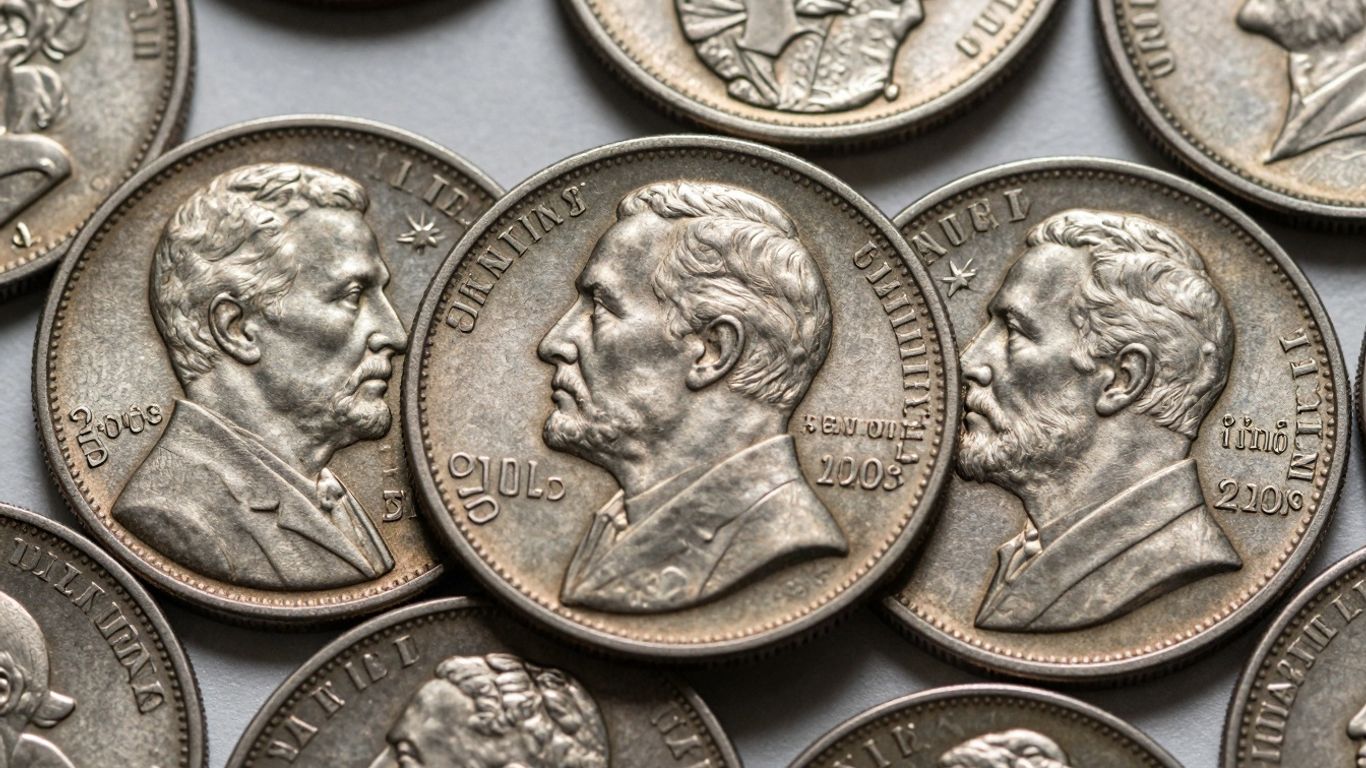
When you start looking at quarter dollars, things get really interesting, especially if you’re into coins with silver. The U.S. Mint has made quarters for a long time, and some of them are much harder to find than others. These aren’t just pocket change; they’re pieces of history that collectors actively seek out.
Standing Liberty Quarter Keys
The Standing Liberty quarter series ran from 1916 to 1930. It’s a pretty short series, but it packs a punch when it comes to key dates. The most famous one has to be the 1916 issue. Only about 52,000 were made, which is tiny. But here’s the tricky part: the date on these coins was raised and wore off easily. So, you’ll see a lot of Standing Liberty quarters with no date. This means a dateless coin might actually be a rare 1916 if you can prove it. It’s a real challenge for collectors because the design itself makes identifying the true rarity difficult. The wear on the date is a major factor in how valuable these coins are.
Washington Quarter Rarity Insights
Washington quarters have been around since 1932, and they’re a favorite for many. The ones made before 1965 are 90% silver, which adds another layer of appeal. The real rarities in this series usually pop up right at the beginning. The first year, 1932, had lower mintages, especially from the branch mints.
Here’s a quick look at the key dates from that first year:
- 1932-D: Minted 436,800. Often harder to find in top condition.
- 1932-S: Minted 408,000. This one is generally considered the scarcer of the two.
These early branch mint issues are what many collectors focus on. Even though the 1932-D had a slightly higher mintage, finding one in perfect, uncirculated shape can be tougher than finding a 1932-S in the same grade. It shows how mintage numbers aren’t the whole story; condition plays a huge role.
The shift away from silver in quarters after 1964 significantly changed the collecting landscape. While the silver content itself makes pre-1965 quarters desirable, the key dates from those earlier years hold a special numismatic value that goes beyond just the metal.
If you’re hunting for these, remember that finding any quarter dollar from before 1965 could mean you’ve got something special, especially if it’s one of these key dates. You can find out more about valuable quarters that might be hiding in your change.
Half Dollar Key Date Insights
When you start looking at half dollars, things get pretty interesting. These coins, with their larger size, often carry a bit more historical weight and artistic flair. For collectors, finding those special ‘key dates’ can be a real thrill, and sometimes, a significant investment.
Walking Liberty Half Dollar Keys
These coins, minted from 1916 to 1947, are just gorgeous. Seriously, the design is top-notch. But like many series, some dates and mint marks are way harder to find than others. The big one everyone talks about is the 1921-D Walking Liberty Half Dollar. With only 208,000 made, it’s the rarest business strike in the whole series. You’re looking at around $500 just for one in decent, circulated condition. The low mintages in the early 1920s, including this one, are mostly because of the economic slump after World War I. People just weren’t buying as many coins back then.
Capped Bust Half Dollar Rarest Coins
Okay, so Capped Bust halves are older, running from 1807 to 1839. These are a different beast entirely. Finding a complete set is tough, and the key dates here are often tied to specific mints or very low production years. For example, the 1817/4 overdate is a real prize. It’s not just about the number minted, but how many actually survived and are still around today. These coins were around during a time when coins were used a lot more heavily, so finding high-grade examples is a challenge.
Seated Liberty Half Dollar Secrets
The Seated Liberty half dollar series (1839-1891) is another area where key dates are crucial for completing a set. Some of the real tough ones come from the early years or specific branch mints. The 1873-CC (Carson City Mint) is a prime example of a key date that’s incredibly hard to find. Mintages were low, and the history of the Carson City Mint adds to its allure. It’s not just about the date; the mint mark plays a huge role in rarity here.
Collecting these older half dollars often means dealing with coins that have seen a lot of use. Finding a key date in good condition can be much harder than finding a common date in mint state. This survival rate is a big part of what makes them so sought after by serious numismatists.
Here’s a quick look at some notable key dates:
- Walking Liberty Half Dollars: 1921-D (lowest mintage)
- Capped Bust Half Dollars: 1817/4 (overdate), various early dates with low mintages.
- Seated Liberty Half Dollars: 1873-CC, 1870-CC, and certain early dates like 1840-O.
When you’re hunting for these, remember that condition is everything. A key date in a lower grade might be affordable, but a high-grade example can be worth a fortune. It’s always a good idea to check resources like value guides for the most current pricing information.
Exploring Other Notable Series
Beyond the most commonly collected series like Lincoln Cents or Washington Quarters, there are other fascinating areas of numismatics that hold significant key dates and rarities. These series might not always get the spotlight, but they offer unique collecting opportunities and can be just as rewarding. Let’s take a look at a couple of these.
Eisenhower Dollar Key Dates
The Eisenhower Dollar series, minted from 1971 to 1978, is often overlooked by newer collectors, but it contains some interesting key dates. While many were produced, certain mint marks and years saw much lower production numbers, making them harder to find in top condition.
- 1973-S (Uncirculated): This date is a conditional rarity, as most were only available in proof sets and are seldom seen in regular uncirculated grades.
- 1971-D (High Relief): While not a true key date by mintage, the high relief variety of the 1971-D is significantly rarer than the low relief version and is sought after by specialists.
- 1974-D: This year had a relatively high mintage, but finding one in a high Mint State grade (MS-65 or better) can be a challenge.
The Eisenhower Dollar series, though relatively short-lived, represents a significant period in American history. Collecting its key dates offers a chance to own a piece of that era, with some varieties presenting genuine challenges for even experienced collectors.
Barber Quarter Value
The Barber Quarter, designed by Charles E. Barber, was minted from 1892 to 1916. This series is known for its challenging key dates, particularly those from the early years and the San Francisco mint.
Here are some of the most sought-after Barber Quarters:
| Year | Mint Mark | Mintage | Notes |
|---|---|---|---|
| 1896 | S | 770,000 | Key date, low mintage for the series |
| 1901 | S | 1,400,000 | Scarce, especially in higher grades |
| 1913 | D | 1,200,000 | Low mintage for a Denver issue |
| 1914 | D | 1,140,000 | Another low mintage Denver issue |
| 1915 | S | 1,120,000 | Scarce, particularly in Mint State |
The 1896-S Barber Quarter is widely considered the toughest coin to acquire in this series. Finding any Barber Quarter in excellent condition can be difficult due to their age and the fact that many circulated heavily.
Kennedy Half Dollar Treasures
Introduced in 1964, the Kennedy Half Dollar has a rich history and several key dates that collectors actively pursue. While the series has seen massive mintages in many years, certain dates and mint mark combinations stand out.
- 1964 (Proof): The very first year of issue, especially in proof condition, is highly collectible.
- 1970-D: This date had a very low mintage for circulation strikes and is a significant key date.
- 1998-S (Matte Proof): A special issue with a unique matte finish, these are scarce and command a premium.
Many collectors focus on finding high-grade examples of the regular issue coins, as well as the special proof strikes. The Kennedy Half Dollar series offers a good mix of affordability for common dates and significant rarity for its key issues.
Factors Beyond Mintage Figures
So, you’ve looked at the mintage numbers, and maybe that’s how you started thinking about coin rarity. It’s a good starting point, for sure. But honestly, it’s not the whole story. Lots of things can make a coin rare or super desirable, even if a ton of them were originally made. It’s like knowing how many of a certain book were printed versus how many are still around and people actually want to read.
Design Variations and Anomalies
Sometimes, a coin isn’t rare just because of its year or mint mark. It could be a special version. Think about small changes in the design that happened during production, or maybe even mistakes. These can be things like a die crack, a double strike, or a coin that wasn’t struck perfectly in the center. These little quirks can make a coin stand out.
- Die Varieties: These happen when the metal die used to strike the coin gets damaged or altered. A small crack or a chip can create a unique mark on the coin.
- Minting Errors: Things can go wrong at the mint. Off-center strikes, double dies (where the die is struck twice, creating a doubled image), or even planchet errors (flaws in the blank metal disc before striking) can all lead to rare coins.
- Overdates: This is when a mint worker would punch a new date over an old one, and sometimes the old date shows through. Pretty neat!
Historical Significance of Coins
Coins are more than just metal; they’re little pieces of history. A coin’s story can really boost its appeal. Was it made during a major event? Does it represent a specific time or place? These details matter a lot to collectors.
Coins minted during times of upheaval, like wars or economic crises, often become rarer. Production might have been limited, or many coins might have been melted down or lost over time. This historical context adds a layer of scarcity that mintage figures alone don’t capture.
Circulation History's Impact
Think about how many coins were actually used. A coin might have had a high mintage, but if most of them were spent, lost, or melted down, the number of survivors can be very low. This is especially true for older coins or those made from silver or gold, which were often melted for their metal content.
- Melting Programs: Governments sometimes recall and melt older coins, especially if the metal content was worth more than the face value.
- Survival Rates: How many of those coins made it through the years without being damaged, lost, or melted? This is a huge factor.
- Regional Distribution: Sometimes, a coin was made in large numbers but only circulated in one area. If that area experienced a disaster or economic downturn, fewer coins might have survived there compared to other regions.
The Role of Coin Condition
Condition as a Rarity Indicator
When you’re hunting for those special key date coins, don’t just look at the numbers printed on them or how many were made. How a coin has held up over time is a massive part of what makes it rare and desirable. Think about it: a coin that’s been tossed around in pockets for decades is going to look a lot different than one that’s been tucked away safely since it was minted. The better a coin’s condition, the rarer it generally is. This isn’t just about looking pretty; it tells a story about the coin’s journey.
Understanding Coin Grading
So, how do we talk about a coin’s condition? That’s where coin grading comes in. It’s a system used by experts to describe exactly how worn or pristine a coin is. They look at things like:
- Luster: Does it still have that original shine or "mint bloom"?
- Detail: Are the fine lines, dates, and designs still sharp and clear, or are they smoothed over?
- Damage: Are there any scratches, nicks, or other marks that shouldn’t be there?
Grading usually falls on a scale, often from 1 (poor) to 70 (perfect mint state). A coin graded MS-65, for instance, is considered a very high-grade, uncirculated coin. Knowing this scale helps you understand why one coin might be worth way more than another, even if they have the same date and mint mark.
The Value of High-Grade Examples
It’s simple supply and demand, really. For most key date coins, a tiny fraction survive in top-notch condition. If a coin was made in, say, 1916-D (a famous key date Mercury dime), and only a few hundred thousand were ever struck, imagine how many of those are still out there looking like they just left the mint. Most are probably worn smooth or lost. So, finding one of those few that’s in an MS-67 or higher grade? That’s incredibly rare. These high-grade examples are what collectors who want the absolute best are searching for, and they command significantly higher prices because of their scarcity and visual appeal.
The journey a coin takes from the mint to a collector’s hands is often reflected in its physical state. While mintage figures give us a starting point for rarity, the wear and tear, or lack thereof, can dramatically alter a coin’s actual scarcity and desirability in the market. A coin’s condition is not just about aesthetics; it’s a direct measure of its survival and a primary driver of its numismatic value.
Here’s a quick look at how condition can impact value, using a hypothetical key date coin:
| Grade | Description | Hypothetical Value |
|---|---|---|
| VG (Very Good) | Visible, but worn details | $50 |
| F (Fine) | Clear but worn details | $100 |
| VF (Very Fine) | Moderate wear, some detail sharp | $250 |
| EF (Extremely Fine) | Slight wear, most details sharp | $600 |
| AU (About Uncirculated) | Very light wear, almost full detail | $1,200 |
| MS-63 (Mint State) | Uncirculated, minor imperfections | $2,500 |
| MS-67 (Mint State) | Uncirculated, sharp details, few imperfections | $10,000+ |
Smart Strategies for Key Date Collecting
Collecting key date coins can feel like a treasure hunt, but a little planning goes a long way. It’s not just about finding the rare coin; it’s about how you find it, when you buy it, and how it fits into your bigger picture. Think of it like building a really cool model airplane – you need the right parts, you need to know when to glue them, and you need to make sure they all fit together right in the end.
Prioritizing Authentication
This is super important. When you’re looking at a coin that could be worth a lot, you absolutely need to know it’s the real deal. Counterfeits are out there, and some are pretty convincing. The best way to be sure is to stick with coins that have been graded and certified by reputable third-party services like PCGS or NGC. They’re like the official referees of the coin world.
- Always buy certified coins from well-known grading companies.
- Deal with trusted sellers who have a good reputation and offer guarantees.
- Educate yourself on what genuine coins look like for the dates and mintmarks you’re interested in.
The temptation to grab a deal on an uncertified coin can be strong, but the risk of ending up with a fake or a problem coin is just too high for valuable pieces. It’s better to pay a bit more for peace of mind.
Timing Your Market Purchases
Coin prices, like most things, can go up and down. While key dates often hold their value well, knowing when to buy can save you money. Sometimes, when the price of gold or silver dips, the prices of related coins might also soften a bit, offering a good entry point. Auctions can also be a great place to find deals if you’re patient and know what you’re willing to pay.
- Watch market trends: Keep an eye on general coin market activity and precious metal prices.
- Look for opportunities: Sometimes, people sell collections during economic uncertainty, which can lead to good deals.
- Be patient: Don’t rush into a purchase. Wait for the right coin at the right price.
Balancing Your Collection Portfolio
Key dates are fantastic, but they shouldn’t be your only focus. Think about building a well-rounded collection. This means not just having a few super-expensive key dates, but also a good mix of other interesting coins. Maybe you collect a specific series, or perhaps you like coins from a certain era. Diversifying within your collection, and even across different types of collectibles, can be a smart move. It spreads out your risk and can make collecting more enjoyable.
- Mix it up: Don’t put all your eggs in one basket. Collect different series or types of coins.
- Consider bullion: While key dates are different from pure bullion, having some gold or silver coins can complement your collection.
- Think long-term: What are your goals for this collection in 5, 10, or 20 years? Plan accordingly.
Investment Considerations for Key Dates
Diversification Beyond Precious Metals
Key date coins offer a unique way to spread out your investments. Unlike just holding gold or silver, these coins have value tied to their rarity and historical appeal, not just the metal content. This means their prices can move differently than bullion, which can be a good thing for balancing risk. Think of it like adding different kinds of stocks to your portfolio; you don’t want all your eggs in one basket, right? Key dates can act as a hedge, potentially holding their value or even increasing when the broader precious metals market is down. It’s about owning a piece of history that also has a tangible asset backing it. For instance, the performance index of key date coins shows how these specific issues can track value over time, separate from just the spot price of silver or gold.
Long-Term Collecting Goals
When you’re thinking about investing in key dates, it’s really important to have a long-term view. These aren’t usually get-rich-quick items. Building a collection of key dates takes time, patience, and a good bit of research. You’re not just buying a coin; you’re acquiring a piece of history that has a limited supply. Over many years, as more people want these rare coins and fewer become available, their value tends to climb. It’s a marathon, not a sprint.
Here are a few things to keep in mind for the long haul:
- Patience is Key: Don’t rush into buying the first key date you see. Wait for the right coin at the right price.
- Continuous Learning: Keep reading, talking to other collectors, and attending shows. The more you know, the better decisions you’ll make.
- Focus on Quality: Always aim for the best condition coin you can afford. High-grade examples often perform better over time.
- Set Realistic Goals: Decide which series you want to focus on and what your budget looks like for the next 5, 10, or even 20 years.
Building a collection of key date coins is a journey that rewards diligence and foresight. It’s about more than just the potential financial return; it’s about the satisfaction of owning rare, historically significant items that have a proven track record of holding and increasing in value over extended periods. This dual nature—collectible and investment—is what makes key dates so appealing to a wide range of individuals.
Seeking Professional Numismatic Advice
Navigating the world of valuable coins can get complicated, especially when you’re talking about significant investments. Counterfeits are out there, and market values can shift. That’s where getting advice from experts really pays off. A good numismatist or a reputable coin dealer can help you spot fakes, understand true market value, and guide you toward smart purchases. They have the experience to know which coins are likely to perform well and can help you avoid costly mistakes. It’s like having a seasoned guide when you’re exploring unfamiliar territory. They can also help you with things like proper storage and insurance, which are important for protecting your collection.
Wrapping Up Your Key Date Journey
So, we’ve gone over what makes a coin a ‘key date’ – usually, it’s about how few were made or how hard they are to find now. It’s not just about the number stamped on it, though; things like history and how well the coin has been kept play a big part. Finding these special coins takes time and a bit of detective work, but it’s a rewarding part of collecting. Whether you’re aiming to finish a specific coin set or just looking for something interesting to add to your collection, these key dates are pretty neat. They connect us to the past and can be a solid part of a collection. Keep learning, keep looking, and happy hunting out there!
Frequently Asked Questions
What exactly makes a coin a 'key date' coin?
A key date coin is basically the hardest coin to find in a coin series. It usually has a really low number of coins made (low mintage) or has become super rare over time. Think of it as the puzzle piece that completes a collection, making it super valuable and sought after by collectors.
Are coins with lower mint numbers always rarer?
Not always! While a low mintage number is a big clue, other things can make a coin rare too. Sometimes, coins that were made in larger numbers might have been melted down or lost over the years, making them harder to find today than coins with fewer made initially.
How do collectors figure out which coins are key dates?
Collectors look at a few things. The number of coins made is a big hint. They also consider how many of those coins are still around today, how many people want them, and if any special events made them harder to find. Sometimes, a coin in amazing condition is considered rare even if lots were made.
Why are key date coins so much more valuable?
Their value goes up a lot because they are hard to find! When something is rare and many people want it, the price naturally goes higher. These coins can be worth way more than their original face value, sometimes hundreds or even thousands of times more.
Does the condition of a coin really matter for its rarity?
Yes, condition is super important! A coin that looks almost new, with sharp details and no scratches, is way rarer and more valuable than one that’s worn out from being used a lot. Even common coins can become rare if they are in top-notch shape.
Are there specific key dates I should know about for popular coin types like Lincoln Cents or Buffalo Nickels?
Absolutely! For Lincoln Cents, the 1909-S is a famous key date. For Buffalo Nickels, the 1937-D 3-Legged variety is incredibly rare and valuable. Knowing these specific tough-to-find coins is crucial for collectors of those series.
Besides mintage, what other factors make a coin rare?
Things like special design changes, minting errors (like a double strike), or if the coin was made during a significant historical event can make it rare. Also, how much a coin was used in everyday spending (circulation history) plays a big part in how many are left today.
Is collecting key date coins a good investment?
Many collectors see them as a good investment because their value can go up over time, sometimes even when the price of gold or silver isn’t doing well. They are unique pieces of history, and their rarity helps keep their value strong. However, always do your homework and maybe talk to an expert before buying.